Connect with us

News

What’s behind Europe’s efforts to ditch US software in favor of sovereign tech

info

Published

on

GettyImages 2232869668.jpg

Microsoft CEO Satya Nadella is far less vocal about his worldviews than Palantir’s Alex Karp. And yet, France is taking steps to reduce its reliance on Windows, while its domestic intelligence agency recently renewed its contract with the increasingly controversial data analytics company.

This paradox is representative of Europe’s messy breakup with U.S. tech. After painful realizations that it comes with strings attached, governments across the region are looking to rely less on American providers. But the steps taken so far have been uneven and often reactive.

The CLOUD Act changed the equation

One change Europe is reacting to dates back to the first Trump presidency. Enacted in 2018, the CLOUD Act forces U.S.-based tech companies to comply with law enforcement requests for data even if the information is stored abroad. This means that even servers located on European soil are no longer enough reassurance when critical data is concerned.

Of all the information that governments sit on, health data is arguably among the most sensitive. Still, the CLOUD Act’s extraterritorial reach didn’t stop the U.K. from striking deals with the likes of Google, Microsoft, and Palantir around data from its National Health Service (NHS) during the pandemic. But if critics have their way, it may end up following France’s lead.

One year ago, the French government announced that its Health Data Hub would be leaving Microsoft Azure in favor of a “sovereign cloud.” This contract has now been awarded to Scaleway, a French cloud provider with a rapidly expanding network of data centers across Europe.

A subsidiary of French group iliad, Scaleway was also one of four providers that won a €180 million sovereign cloud tender from the European Commission (approximately $211 million). AWS European Sovereign Cloud, which Amazon launched to address Europe’s concerns, is not on the list. However, some worry that the U.S. may still have a backdoor due to one winner using S3NS, a “trusted cloud” joint venture between Thales and Google Cloud.

Europe’s alternatives still face steep odds

It wouldn’t be the first time that solutions championed as alternatives to Big Tech face issues caused by their underlying dependencies. Qwant, for instance, was once recommended as the default search engine for public servants in France while relying on Microsoft’s Bing — a partnership that went sour when the French company accused the U.S. giant of abusing its position. The relevant watchdog declined to take action, but Qwant had already made its own move.

Techcrunch event

San Francisco, CA
|
October 13-15, 2026

Joining forces with German nonprofit Ecosia, Qwant launched Staan, a Europe-based and privacy-focused search index that could help search engines like theirs reduce their dependency on Google and Bing. But both partners still lag far behind their U.S. rivals in notoriety and reach — even the slightly more popular Ecosia has only about 20 million users, not billions.

Capturing market share is arguably the main issue facing companies challenging U.S. giants — but public contracts could give them a leg up. For instance, the European Commission’s tender will also benefit French cloud providers Clever Cloud and OVHCloud, as well as STACKIT, which Lidl’s parent company Schwarz Group created for its own needs but now commercializes.

The perspective of winning large contracts with European institutions could encourage other players to follow the footsteps of Germany’s retail heavyweight, or at least, that’s the hope. According to its promoters, “an additional goal of the tender was to encourage the market to offer sovereign digital solutions that comply with EU laws and values.”

However, the Commission’s choice to avoid overreliance on a single provider could be a double-edged sword. On one end, diversification could provide more resilience and soothe dependence concerns. On the other hand, it won’t be the best shortcut to fostering Europe’s next trillion-dollar company.

To cynics and pragmatists, sovereign tech may look business-motivated — a way to ensure that euros stay home. But Europe’s conscious uncoupling from U.S. tech hasn’t always translated into contracts for its startups. For instance, France is ditching Windows for the open source operating system Linux. Institutions in Austria, Denmark, Italy, and Germany are similarly looking to replace Microsoft’s suite of products with open source alternatives, such as LibreOffice.

This switch sometimes goes alongside a “build, don’t buy” philosophy that has raised criticism. France’s Court of Auditors has questioned spending on in-house tools such as Visio, a purported replacement for Zoom and Microsoft Teams. Financial newspaper Les Echos also reported on backlash voiced across the tech ecosystem, including this rhetorical question: “If the government doesn’t lead by example, how can you expect large private companies to follow?”

Private buyers may decide the outcome

As a matter of fact, large private companies haven’t followed much. German airline Lufthansa chose Elon Musk-backed Starlink for its Wi-Fi service. So did Air France, now also a private airline but still partly controlled by the French and Dutch states — and there’s a chance that France’s state-owned railway operator SNCF may do the same.

Whether large companies choose alternatives over U.S. providers depends in large part on having technologically compelling European options. In a spat with Poland, Musk stated that “there is no substitute for Starlink” — but European governments intend to prove him wrong. Public sentiment could also play a role, and might not stop at many European individuals and officials leaving X.

Not being American is becoming an advantage

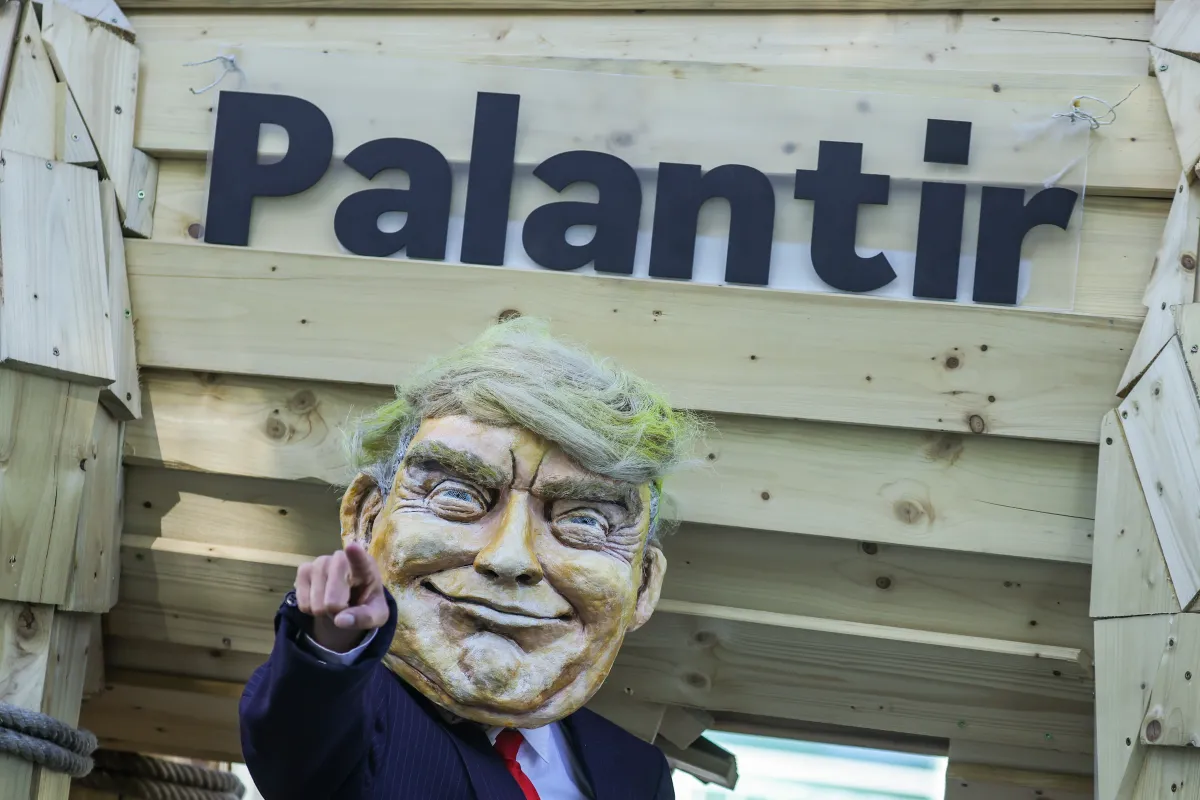
After President Trump threatened to take control of Greenland, apps for boycotting American products surged to the top of the Danish App Store — a sign that demand to cut back on U.S. tech is getting broader. Pressure on European governments to reconsider their contracts is also mounting, and Palantir’s latest mini-manifesto is unlikely to help its cause in the EU and the U.K.

Tech billionaires publicly defending views that many Europeans don’t share is also a sign that the divorce is two-sided. When Meta chose to delay the EU launch of Threads over concerns with European law, it was also a reminder that the region is only a secondary market for tech giants, and that they can afford to ignore it.

Conversely, this creates a market opportunity for solutions built for Europe, its many languages, and cultural nuances. This alone should naturally foster demand in their home markets, with an extra boost if supporters of the EuroStack initiative manage to make it mandatory for Europe’s public sector to buy local

Europe may want to buy European, but there’s also hope that “sovereign tech” will sell abroad. Mistral AI reportedly saw its revenues surge for being an alternative to OpenAI. Meanwhile, the Canadian and German governments are supporting Cohere’s merger with Aleph Alpha to create a “transatlantic AI powerhouse” serving businesses and governments around the world. In 2026, not being American — nor Chinese or Russian — is increasingly a selling point.

When you purchase through links in our articles, we may earn a small commission. This doesn’t affect our editorial independence.

Continue Reading
Click to comment

Leave a Reply

Your email address will not be published. Required fields are marked *

News

PDP Fixes Date to Screen Jonathan as Sole Presidential Aspirant for 2027 Election

info

Published

on

By

Images 2026 05 11T071039.385 1.jpeg

Former President Goodluck Jonathan is expected to face the screening committee of the Peoples Democratic Party, PDP, on Tuesday as the sole presidential aspirant under the Tanimu Turaki-led faction of the party ahead of the 2027 general elections.

The development comes amid growing political activities within the opposition party as different blocs continue moves to reposition the PDP before the next presidential election.

Reports indicated that the screening panel for Jonathan would include former Vice President Namadi Sambo, former Plateau State governor Jonah Jang, and former Minister of Foreign Affairs Tom Ikimi, alongside other senior party figures.

Jonathan’s planned screening followed confirmation last week by the party’s National Publicity Secretary, Ini Ememobong, that the former president had successfully completed his membership registration through the party’s fresh digital registration exercise introduced in line with directives from the Independent National Electoral Commission, INEC.

The PDP faction aligned with Oyo State governor, Seyi Makinde, also announced an extensive screening exercise for aspirants seeking various elective positions across the country.

According to the party, 748 aspirants contesting for seats in the House of Representatives would be screened, while 198 senatorial aspirants and 112 governorship aspirants are also expected to appear before different screening committees.

The party further disclosed that 2,122 aspirants for state Houses of Assembly positions would undergo screening in their respective states beginning from Tuesday.

In a statement published on the party’s official Facebook page on Sunday, the PDP confirmed that “one presidential aspirant” would also participate in the nationwide screening exercise scheduled to begin at 10:00 am on May 19, 2026.

Continue Reading

Business

EXCLUSIVE: Boko Haram convict bagged degree during life sentence for church bombing

info

Published

on

By

IMG 20260517 WA0022.jpg

Kabiru Umar, also known as Kabiru Sokoto, who was convicted over the 2011 Christmas Day bombing linked to Boko Haram, has earned a Biology degree while serving his prison sentence, his lawyers said in one of the documents shared with PREMIUM TIMES.

In a press statement announcing Mr Sokoto’s appeal against his 2013 conviction, his legal team said he remained committed to “personal growth and rehabilitation” during incarceration, noting that he successfully obtained a Biology degree from the National Open University of Nigeria.

The statement, dated 14 May and signed by Lagos-based law firm Don Akaegbu & Company, described the achievement as evidence of Mr Sokoto’s “continued effort toward self-improvement despite the circumstances.”

Kabiru Sokoto was convicted by the Federal High Court in Abuja on 20 December 2013.

However, his lawyers argued that the charges against him did not specifically accuse him of carrying out or masterminding the bombing of St. Theresa’s Catholic Church in Madalla, Niger State, which killed about 35 worshippers and injured several others on Christmas Day in 2011.

PT WHATSAPP CHANNEL

According to the lawyers, the relevant charge alleged that Mr Sokoto had prior information about the attack and failed to disclose it to security agencies. They said the distinction between direct participation and alleged prior knowledge forms a key issue in the appeal now before the Court of Appeal.

The appeal, filed after what the lawyers described as delays caused by circumstances beyond Mr Sokoto’s control, challenges the admissibility and credibility of the evidence used to secure his conviction. Among these challenges, they said, include deaths of his two previous lawyers, repeated custodial transfers and his family’s severe “financial constraints.”

The legal team also questioned whether the trial court properly evaluated the defence presented during the proceedings.

The lawyers urged the public to allow the judicial process to run its course, insisting that criminal responsibility should be determined strictly on the basis of evidence presented in court rather than public perception.

READ ALSO: Boko Haram convict Kabiru Sokoto appeals 2013 life sentence for Catholic church bombing near Abuja

Kabiru Sokoto was initially arrested on 14 January 2012 at the Borno State Governor’s Lodge in Asokoro, Abuja, alongside a serving military officer. He was then taken to Abaji (also in Abuja) by police officers investigating the case to search a house believed to be owned by him.

He escaped from police custody, leading to the suspension and house arrest of Zakari Biu, then-head of the Zone 7 Police Command in Abuja, overseeing Boko Haram investigations at the Criminal Investigation Department. Before the incident, Mr Biu supervised the team that lost Mr Sokoto and was detained at an undisclosed location, alongside other junior police officers involved in the case.

The escape also prompted then-President Goodluck Jonathan to issue a 24-hour ultimatum to the then-Inspector General of Police (IGP) Hafiz Ringim, to produce the Boko Haram suspect. Mr Ringim failed to do so and was later retired.

The State Security Services (SSS) said Kabiru Sokoto was re-arrested in February 2012, following what it described as a gunfight between its operatives and members of his gang in Taraba Satet.

He was subsequently sentenced by the Federal High Court in Abuja on 20 December 2013. The suspected terror kingpin was sentenced on two terrorism charges, including one punishable with life imprisonment under Section 15(2) of the Economic and Financial Crimes Commission Act 2004. The second charge attracted 10 years’ imprisonment under Section 7(1) under Terrorism Act, 2011.


Continue Reading

Trending