News
Vincent Ugwoke Makes Nigerian Athletics History with NCAA Discus Bronze

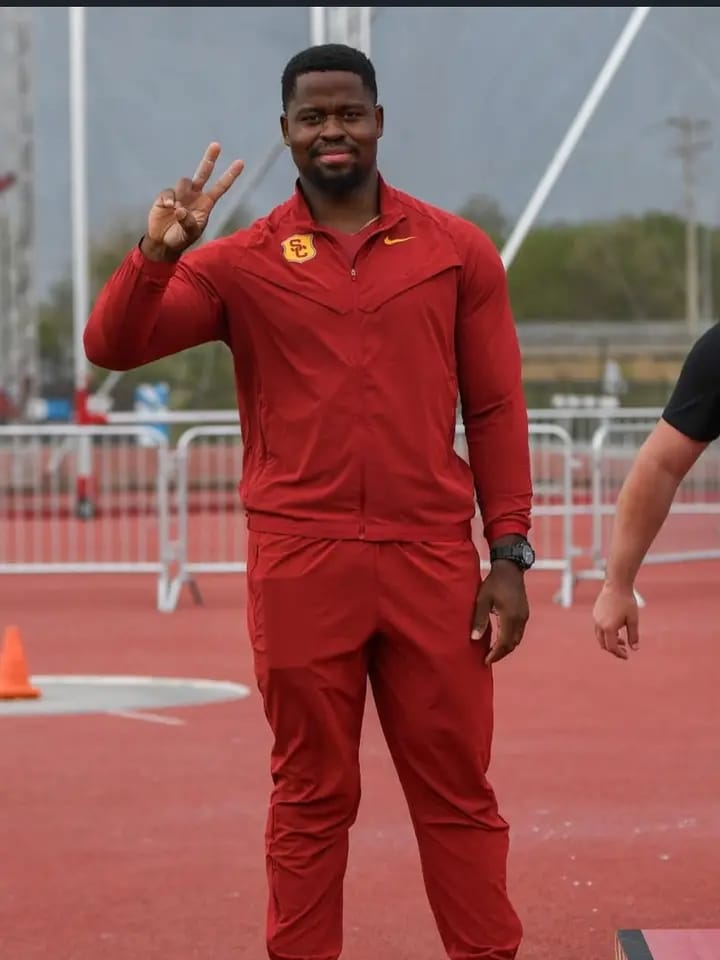
Nigerian thrower Vincent Ugwoke produced one of the most significant performances in Nigerian field event history, launching a massive personal best of 63.89 metres to claim the bronze medal in the men’s discus throw at the NCAA Outdoor Track and Field Championships.
READ ALSO: Fakorede Caps Outstanding NCAA Season with First Team All-American Honour
Sports247 reports that the outstanding effort not only secured Ugwoke a place on the podium but also elevated him into the history books, recording the furthest discus throw by a Nigerian athlete since 2004.
Competing against one of the strongest collegiate fields in the world, Ugwoke delivered when it mattered most, producing a career-best mark to earn his first NCAA medal and underline his growing status among Nigeria’s elite field athletes.
The event was won by Jamaican star Ralford Mullings, who captured gold with a throw of 65.81m, while compatriot Racquil Broderick secured silver with a personal best of 64.15m. Ugwoke’s 63.89m throw completed the podium and ensured Nigeria was represented among the medal winners.
Beyond the medal itself, the significance of the performance lies in its historical context. Nigerian athletics has traditionally been known for its success in sprinting and jumping events, making Ugwoke’s achievement particularly noteworthy.
His mark stands as the best by a Nigerian discus thrower in more than two decades, highlighting both the quality of his performance and its importance for the development of field events in the country.
The bronze medal also caps an impressive season of progress for the Nigerian, whose steady improvement culminated in a breakthrough performance on one of collegiate athletics’ biggest stages.
Delivering a personal best under championship pressure is a testament to both his preparation and competitive mindset.
For Nigerian athletics, Ugwoke’s achievement serves as a reminder of the growing depth of talent emerging across different disciplines.
His success could provide inspiration for a new generation of throwers looking to make their mark nationally and internationally.
With a personal best, an NCAA bronze medal, and a place in the record books now secured, Vincent Ugwoke leaves the championships having achieved a truly memorable milestone.
His 63.89m throw will be remembered as one of the finest Nigerian discus performances of the modern era and a significant moment in the resurgence of Nigerian field events.





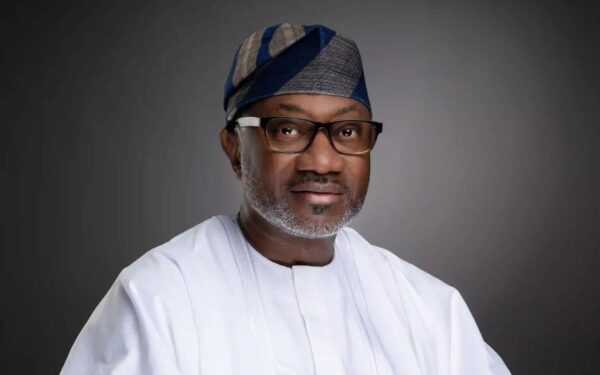
Femi Otedola, the chairman of First HoldCo Plc, has revealed that he shared a bunk bed with Lagos State Deputy Governor Obafemi Hamzat during their boarding school days 49 years ago.
Mr Otedola disclosed this in a post on X after hosting a dinner in honour of his longtime schoolmate, Mr Hamzat, attended by Aliko Dangote, the president of Dangote Group, and Abdulsamad Rabiu, the chairman of BUA Group.
The business tycoon said Mr Hamzat’s character has been defined over the years by honesty, sincerity, fairness, and strong moral principles.
“Yesterday, I hosted dinner in honour of @DrObafemiHamzat, the incoming Governor of Lagos State,” Mr Otedola said.
“A man of the highest integrity, with whom I shared a bunk bed at boarding school 49 years ago,” he added.
Mr Otedola stated that his longstanding relationship with Mr Hamzat has given him insight into the deputy governor’s character and values.


“My experience of his character over the years has been defined by his honesty, sincerity, fairness and strong moral principles,” Mr Otedola said.
READ ALSO: Tinubu’s reforms have put Nigerian economy on path of sustainable growth – Otedola
He, however, did not disclose the name of the boarding school he attended with the Lagos State deputy governor.
The billionaire investor has interests in financial services and oil & gas. He holds about 27.7 per cent of First HoldCo’s shares, following months of steadily increasing his stake in the banking group.
Mr Hamzat is seeking to contest the 2027 governorship election in Lagos State on the platform of the All Progressives Congress (APC), and has served as deputy governor under incumbent Governor Babajide Sanwo-Olu since 2019.
He emerged as the APC governorship candidate in May 2026.
Mr Hamzat served as Lagos State Commissioner for Science and Technology and later as Commissioner for Works and Infrastructure from 2005 to 2015.
Discover more from Premium Times Nigeria
Subscribe to get the latest posts sent to your email.

-
News2 days ago
NUCAP: Nigeria targets 20 million people with 3,700 telecom towers – Technology Times
-

 News3 days ago
Gunmen storm Plateau mining site, kill two persons
-
News3 days ago
Nigeria needs stronger collaboration ‘to shape internet governance’ – Technology Times
-
News1 day ago
Euromatch NPFL: Matchday 9 results