News
The renewed dystopia of President Bola Ahmed Tinubu (1)

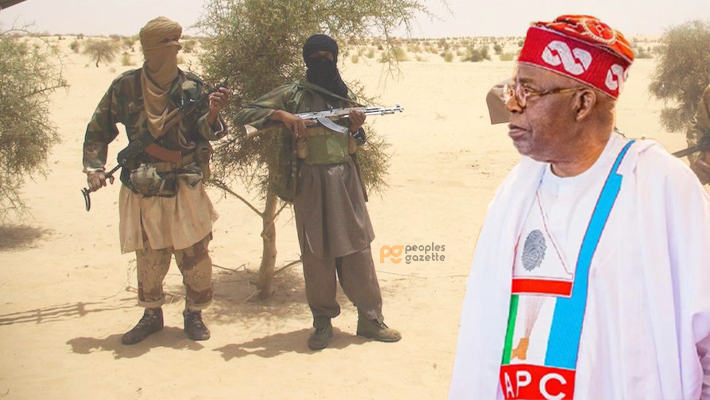
“Our administration will be committed to permanently securing the safety, freedom and prosperity of all Nigerians. We shall adopt a proactive and intelligence driven security approach to sufficiently address the nation’s security threats.”
All Progressives Congress, Renewed Hope: Action Plan for a Better Nigeria, p. 6 (2023)
Niger state in Nigeria’s North-Central zone also goes by the moniker of ‘Power State’. Nigeria’s founding head of state, Nnamdi Azikiwe, was born in the territory of the state as was Emeka Odumegwu-Ojukwu, leader of the defunct Biafra. The state has also produced two former military heads of state and a chief justice of Nigeria, but these are not the reasons for its moniker.
Niger is the ‘power state’ because it is host to several sensitive and strategic national energy assets located in Jebba, Kainji, and Shiroro, on the lower course of the River Niger. In addition, the state also hosts a collection of sensitive security installations. In the recent past, however, the state has become the place where the power of the Nigerian state goes to advertise its incapacities.
Shiroro illustrates this problem. At about 5,171 km², the Shiroro local fovernment area of Niger is approximately the size of Imo state in south-east Nigeria. In May 2025, Humangle reported that insurgents allied with Boko Haram have “formed a parallel government physically stationed on the fringes of the Allawa Forest in Shiroro”. In the past half decade, Shiroro has been the site of the most intense slaughter of uniformed assets of Nigeria’s armed and security services.
On the night of June 29-30, 2022, for instance, a motorbike gang of over 300 armed terrorists descended on Ajata-Aboki village in the Gurmana ward of Shiroro. Their destination was an artisanal mine in the village. At the site, they reportedly abducted at least four Chinese and several other workers.
While the attack was ongoing, a company of soldiers stationed in nearby Erena responded to a distress call about the attack. On their way, they encountered an ambush from the insurgents who killed scores, including at least 30 soldiers and six civilian volunteers. President Muhammadu Buhari called this tragedy “a direct assault on Nigeria, vowing that the attackers would not go unpunished”.
In fact, they did.
All this unfolded under the a federal government run by the All Progressives Congress (APC) headed by the predecessor of the incumbent. As presidential candidate of the party, Bola Tinubu promised to solve insecurity. Published under the title ‘Renewed Hope: Action Plan for a New Nigeria’, his manifesto for the 2023 presidential election began: “The fundamental responsibility of government is to protect the lives and property of its citizens. We will mobilise the totality of our national security, military and law enforcement assets to protect all Nigerians from danger and from the fear of danger.”
He did not mean it. For the people of Shiroro, as with many communities in north-central Nigeria, the only thing worse than the growing intensification of atrocity and danger is the even more intense indifference of the Tinubu administration to their plight.
In April 2024, one officer of the Nigerian Army (a captain), six soldiers under his command and a volunteer hunter were killed in separate attacks on Roro, Karaga, and Rumace communities in Bassa ward of Shiroro.
Around September 11, 2024, the casualty count in an encounter between the security services and insurgent terrorists in Bassa included at least two officers of the State Security Service (SSS).
In November 2024, insurgents in Shiroro killed four officers of the Nigeria Security and Civil Defence Corps (NSCDC), and disappeared another.
In the wake of these attacks, Shiroro, a source of power to many communities in northern Nigeria, has “become a slaughterhouse”, where terrorists operate at will and mass atrocities stalk every community.
In June 2024, “witnesses in the town of Bassa said Boko Haram fighters attacked in broad daylight on June 6, shot the victims at close range and beheaded 10 of them”.
In August 2024, the insurgents killed 13 farmers.
As the world prepared for Christmas on December 24, 2025, the terrorists picked upon Karibo community in Shiroro, killing about 15.
The latest attacks on Lanta and Bagna in Shiroro began Easter Monday. It left at least 63 killed, mostly “operatives of the State Security Services (SSS), vigilantes, and local hunters”. No abductions were reported.
Shiroro is by no means an outlier. Rather, it mirrors the experience of an increasing number of communities in northern Nigeria where the Nigerian state has become complicit in its own retrenchment under the watch of a president who promised different.
The period since the Easter weekend has witnessed intense and brutal slaughter across the landscape of northern Nigeria, including in Benue, Borno, Kaduna, Katsina, Kebbi, Kwara, Niger, Plateau and Zamfara.
Rather than worry about the protection of Nigerians exposed to this pattern of murderous insecurity, the defence minister, Chris Musa, a recently retired general of the Nigerian Army and an even more recent recruit into the ranks of the ruling party, flamboyantly busied himself with the defence and security of the party political convention of the APC.
Far from making a priority of fulfilling his campaign promise to improve the protection and security of communities across the country, President Bola Tinubu appears more invested in the creature comforts of himself and his most loyal acolytes. In response to the widening field of slaughter in northern Nigeria, the government increasingly defaults to propaganda and falsehood.
On Easter Sunday, for instance, armed terrorists attacked two places of worship in Ariko community in Awon ward in the Kachia local government area, of Kaduna state. In separate attacks on the First ECWA Church and Saint Augustine’s Catholic Church in the village, they killed at least five worshippers and abducted 38 into the surrounding foliage.
In response, the army promptly issued a statement claiming that it “rescued” 31 of the abductees. Nothing of the sort happened. The following day, the community leadership issued a public statement firmly refuting this claim.
This was not a first. On January 18, 2026, after terrorists abducted 177 worshippers from three churches in Kurmin Wali in Kajuru local government area of Kaduna, the Nigeria Police Force and the chairman of the local government publicly denied the abductions. They only reluctantly walked back their denials after public pressure. Those who called attention to this pattern of institutional mendacity have suffered persecution and intimidation.
As the insecurity has intensified, the response of the Tinubu administration has evolved from complicit indifference and now verges on criminal cynicism. North-central and north-west Nigeria, the sites of this intensification of insecurity, happen also to be the most fertile sites of votes in Nigeria.
While the communities in these parts of the country get emptied into mass graves or internal displacement camps, and the uniformed security agents sent to defend them pay with their lives in impermissible numbers, the politicians are busy recruiting political defections or fomenting political disaffection.
The only thing that counts these days is not the security and well-being of the voters but the promise of assured return for the ruling party in the invention of a contingent electoral landslide in January 2026. In the nature of these things in Nigeria, even as most of their members now inhabit mass graves or IDP camps in far-flung places, these empty communities will, nevertheless, report a fulsome turnout of ghosts in the presidential election in 2027 in favour of the ruling party.
Shiroro is a testing ground.
Hunters for happy endings are likely to create a squatter camp around this concluding paragraph, looking for recommendations or suggestions. I have none. A government that encourages lies against its own citizens in mass graves or under the thrall of atrocity abduction does not need recommendations to reverse its commitment to renewed dystopia. To the citizens and communities caught in this, however, we owe acknowledgement and solidarity. This is the beginning.
A lawyer and a teacher, Odinkalu can be reached at chidi.odinkalu@tufts.edu



A viral social media post about the use of Health Maintenance Organisations (HMOs) has sparked controversy among Nigerians and healthcare professionals over health insurance.
The post, made on X on 2 August by user @106_36_52, who identifies as a medical doctor on the platform, criticised a family who, according to him, visited a hospital after church for medical checks under their HMO plan.
“I give the federal government 24 hours to ban this thing called HMO in Nigeria. Full family, straight from church with matching Ankara. Third set only today. God abeg,” he wrote.
The post had generated more than 1.9 million views as of 12 August and was subsequently shared by blogs, attracting reactions from Nigerians and healthcare professionals.
While some Nigerians questioned why healthcare providers should be concerned about how frequently insured patients use their health plans, others argued that the reactions failed to recognise the financial and administrative pressures faced by healthcare providers and HMOs.

In this explainer, PREMIUM TIMES examines how health insurance works in Nigeria, the responsibilities of patients, healthcare providers and HMOs, and what the law says about their obligations.
How health insurance works
One of the biggest misconceptions exposed by the debate is the idea that an HMO patient is receiving free treatment.
The patient may not pay the hospital at the point of service, but that does not mean the service is free or that the provider is working for free.
Health insurance is built around pooling financial contributions to pay for healthcare when members need it. The National Health Insurance Authority (NHIA) describes social health insurance as a system in which contributions are pooled to provide a defined package of healthcare services.
Pelumi Akinboade, a senior executive officer and insurance nurse, explained that HMOs perform important administrative functions within this arrangement, including enrolment, claims management, authorisation, quality assurance and coordination between enrollees and healthcare providers.
He said providers are paid through arrangements such as capitation and fee-for-service, depending on the level and nature of care.
“Patients may not bear the bulk of their care costs out of pocket, as their respective insurance companies pay their healthcare providers directly through capitation and fee-for-service,” Mr Akinboade told PREMIUM TIMES.
A patient using an insurance plan is not asking a doctor to treat them for free. They are accessing a service that is supposed to be financed through an insurance arrangement.
Doctors’ frustration
The viral post, however, also highlights another side of the system. It is easy to dismiss a doctor’s complaint as hostility towards HMO patients.
Healthcare providers depend on HMOs to pay for services they have already provided, and problems with payments or authorisations can affect how facilities deliver care.
Mr Akinboade identified delayed payments, administrative bottlenecks, limited coverage, and disputes between providers and HMOs as factors that can contribute to delays or denials of care.
The NHIA Act 2022 specifically provides penalties for failure to remit payments to healthcare providers within the stipulated period and for failure to settle fee-for-service and other claims within the required timeframe.
The federal government has also acknowledged pressure on provider financing. In announcing revised payment rates under the national health insurance scheme, the NHIA said capitation fees had increased by more than 90 per cent, while fee-for-service payments had risen by 378 per cent.
The Coordinating Minister of Health and Social Welfare, Muhammad Pate, said the adjustment was intended to reduce the financial burden on healthcare providers and improve services for enrollees.
So while a patient’s use of their insurance should not automatically be blamed for a provider’s frustration, neither can the financial concerns of healthcare facilities be dismissed.
The law, dispute
Section 47 of the NHIA Act 2022 provides that disputes among parties under the Act should first be referred to the Authority for mediation and conciliation. The Act specifically identifies HMOs, healthcare providers, contributors, and the Authority as parties that may be involved in such disputes.
Section 48 makes it an offence to fail to remit payments to healthcare providers within the period specified in the operational guidelines, fail to settle fee-for-service or other provider claims within the stipulated period, or fail to provide care to a duly registered enrollee.
These provisions suggest that the law itself recognises the possibility of disputes over payments, claims and access to care within the health insurance system. This means the tension playing out online between patients, healthcare providers and HMOs is not simply a question of patients “overusing” their insurance.
It also raises questions about whether the obligations imposed on each party are being fulfilled.
In other words, while enrollees are expected to understand the terms of their health plans and follow the applicable procedures, healthcare providers and HMOs also have obligations under the regulatory framework governing health insurance in Nigeria.
Insured patients still have rights.
Mr Akinboade said healthcare providers must recognise this distinction. Hospitals, he said, should have trained personnel who understand health insurance and can properly guide patients through the process.
He rejected the idea that insured patients should receive a lower standard of care because they are not paying directly at the point of treatment.
“Insurance patients are not secondary patients. They own the right to quality healthcare services,” he said.
That position is consistent with the NHIA’s own statement of enrollee rights. The Authority says Nigerians covered under its programmes have the right to easy access to quality healthcare without hindrance and to be treated with respect and dignity.
The distinction is particularly important in Nigeria, where health insurance coverage remains low, and households continue to shoulder a large share of healthcare costs.
A 2025 Nigeria Health Systems and Services Profile published through the African Health Observatory Platform, with World Health Organisation (WHO) involvement, reported that out-of-pocket spending accounted for more than 75 per cent of total health expenditure and estimated that only about five per cent of Nigerians were covered by health insurance, prepayment or other risk-pooling mechanisms.
In such a system, health insurance is intended to protect households from the financial consequences of illness.
Patients also have responsibilities.
Mr Akinboade said patients also need to understand the health insurance package they have enrolled in.
Different plans have different benefits, exclusions and limitations. Enrollees therefore need to understand the services covered by their plans, the facilities available to them and the procedures for referrals and authorisations.
Patients should also know how to report problems when care is delayed or denied. Mr Akinboade advised enrollees to keep the contact details of their HMO’s customer service or quality assurance unit and escalate complaints when necessary.
Health insurance, therefore, is not simply a card presented at a hospital. It is an arrangement that creates responsibilities for patients, healthcare providers and HMOs.
What needs to change
Improving the system will require action from all sides, Mr Akinboade said.
He added that HMOs need to process claims and pay healthcare providers promptly while ensuring that referrals and authorisations do not create unnecessary barriers to care.
Healthcare providers need trained insurance desk officers who understand the terms of different plans and can communicate them clearly to patients.
Regulators also need to enforce existing rules and impose consequences where organisations fail to meet their obligations.
Meanwhile, patients need to understand their benefits, exclusions and responsibilities and use available complaint mechanisms when they encounter problems.
The NHIA Act provides a framework for resolving disputes between HMOs, healthcare providers, contributors and the Authority, including mediation and conciliation.
Discover more from Premium Times Nigeria
Subscribe to get the latest posts sent to your email.
-

 News3 days ago
Gagdi Mourns Former Plateau Speaker Peter Azi, Describes Him as a Man of Humility and Kindness
-
Business20 hours ago
Plateau Strengthens Technical Education, Prepares NITT Centre for September Take-Off
-
Business4 days ago
NDLEA arrests India-bound Businessman with cocaine, recovers N3.6b Colos, codeine in Lagos
-
News4 days ago
Osun election: Tinubu congratulates Adeleke after victory