Business
TCN pledges improved power supply

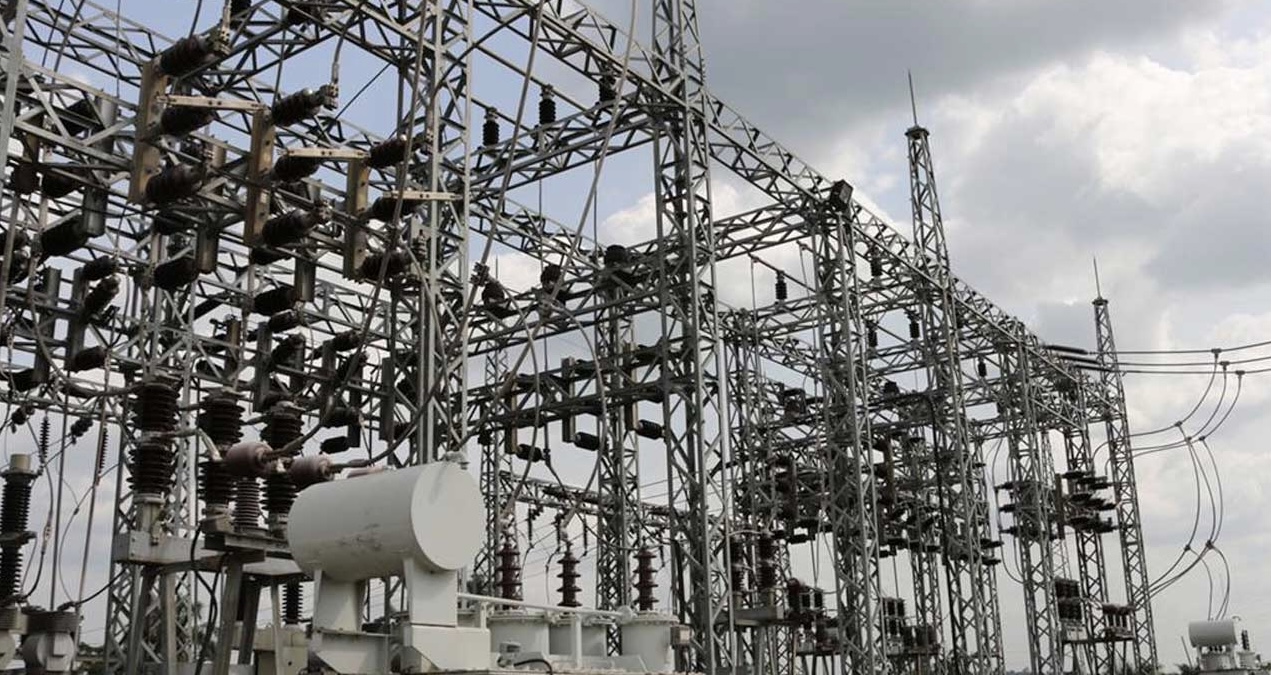
The Managing Director of the Transmission Company of Nigeria (TCN), Sule Abdulaziz, has pledged to improve bulk power delivery, making it more viable, reliable, and beneficial for Nigerians.
Mr Abdulaziz, who made the pledge in a statement by Ndidi Mbah, TCN’S general manager, public affairs, said that he would also make the transmission network more reliable.
He spoke at the first town hall meeting with TCN staff following his reappointment by President Bola Tinubu to a second five-year term.
He described his reappointment as a call to greater responsibility, as it is directly aligned with the directive and vision of Tinubu under the Renewed Hope Agenda for the power sector.
”That agenda is clear, to implement practical, measurable, and sustainable reforms that will significantly improve power delivery and ensure that the electricity sector becomes viable, reliable, and beneficial to all Nigerians,” he said.
He further said that Nigeria’s transmission network had made measurable, verifiable progress over the past decade.
Mr Abdulaziz added that grid wheeling capacity had increased from about 5,000 megawatts in 2015 to over 8,700 megawatts.
According to him, this expansion has been driven by sustained investments in transmission infrastructure, including the addition of multiple power transformers and the completion of several 330 Kilovolt (kV) and 132 kV projects across the country.
He said that, despite frequent public criticism, TCN had one of the most technically skilled workforces in the power sector, as evidenced by the results it has achieved.
The TCN boss said that, through major donor-funded programmes, including the World Bank Transmission Rehabilitation and Expansion Programme and the African Development Bank transmission projects, the company has significantly strengthened grid capacity across several regions.
He added that the feat was achieved through collaborations with the Japan International Cooperation Agency and the Agence Française de Développement,
”TCN has installed over 82 transformers in 23 months. Notably, 15 units of 300 megavolt-ampere power transformers were deployed across several transmission stations.
”These include Akangba, Lekki, Alagbon, Ikeja West, Osogbo, Ganmo, Jos, Gombe, Kumbotso, Asaba, Oke Aro, Benin, Alaoji, and Katampe, within the second half of 2025 alone.
“We have also successfully inaugurated multiple high-capacity transformers across substations such as Ajah, Egbin, Enugu, Onitsha, Gombe, Kano, Abuja, Jos, and Benin, strengthening transmission capacity and improving grid reliability,” he said.
According to him, the TCN has also improved grid stability through targeted interventions, the rehabilitation of ageing infrastructure, and enhanced maintenance practices.
Mr Abdulaziz said that the company’s protection systems had been strengthened, system disturbances had been reduced, and operational coordination across regions had improved significantly.
He also took the opportunity to commend the management team, union leadership, and staff members for their support, dedication, and collaboration in positioning TCN as a leading transmission company.
He said that the achievements recorded by TCN were not accidental but the result of hard work, dedication, and resilience among staff.
“In this new phase, we intend to go a step further. Our goal is simple: to work together as partners in driving the growth, stability, and success of this company.
”Infrastructure growth must now translate into what matters most to Nigerians: stable, reliable, and consistent bulk supply of electricity that will be delivered to distribution load centres for onward delivery to their customers,” he said.
Earlier, in her welcome address, Mrs Abiodun Fadahunsi, executive director of human resources and corporate services at TCN, said that the meeting was a platform for management to openly engage and share ideas with staff members.
Mrs Fadahunsi said that the initiative reflected management’s commitment to transparency, inclusiveness, and continuous improvement.
“In a critical sector such as power transmission, it is important for the members of staff to remain aligned, informed, and connected to enable them to work as a team to meet evolving industry demands,” she said.
According to her, every employee has a crucial role to play in the company’s success.
Also speaking, the Executive Director, Transmission Service Provider (TSP), Mr Olugbenga Ajiboye, reiterated the need for commitment of all TCN staffers to ensure the administration’s success,
The Executive Director of Finance and Accounts, Mr Chuks Ochije, assured that the management would continue to do everything within its power to ensure workers’ benefits are paid promptly.
(NAN)


The Bank of Industry (BOI) said it will expand financing for agriculture, local healthcare manufacturing and digital businesses in 2027.
The bank stated this as it seeks to consolidate the gains of its 2025–2027 corporate strategy and strengthen Nigeria’s industrial development.
The bank’s Managing Director and Chief Executive Officer, Olasupo Olusi, disclosed the plan on Thursday at a meeting in Lagos, where he outlined the bank’s priorities for the final year of the strategy.
Mr Olusi said BOI would work with the Federal Ministry of Industry, Trade and Investment on the National Industrial Finance Compact to attract more long-term capital into Nigeria’s industrial sector.
He also said the bank would deploy its new European Investment Bank facilities to agriculture and local healthcare manufacturing to increase domestic production of food and medicines.
The funding includes €85 million secured from the European Investment Bank for agriculture and another €50 million for healthcare manufacturing in 2026, as part of more than €2.2 billion in new funding the bank has secured for Nigerian industry since 2024.


READ ALSO: BOI supports 1.68m jobs as lending rises 26% to ₦644.9 billion
“We will deploy our new European Investment Bank facilities into agriculture and local healthcare manufacturing, so that Nigeria produces more of the food and medicines it consumes,” he said.
The bank also plans to expand its information and communications technology (ICT) and digital economy portfolio through the Investment in Digital and Creative Enterprises (iDICE) programme.
Mr Olusi said the initiatives formed part of the bank’s efforts to consolidate its achievements and meet the targets of its 2025–2027 corporate strategy.
“2027 is the final year of our strategy, and our task is to consolidate and meet every target we set,” the BOI boss, Mr Olusi, said.
BOI said it disbursed N644.9 billion in 2025, reaching 12,501 businesses and supporting 1.68 million jobs.
Discover more from Premium Times Nigeria
Subscribe to get the latest posts sent to your email.

First HoldCo Plc has appointed Gwen Mwaba as a non-executive director of the financial institution, effective 15 October, following an approval by the Central Bank of Nigeria (CBN).
The lender disclosed the appointment in a regulatory filing signed by Abiola Baruwa, the group company secretary, on Thursday.
First HoldCo said the appointment was made in accordance with the Nigerian Exchange Limited (NGX) Rulebook.
According to the lender, Ms Mwaba brings significant expertise in corporate governance and board oversight, credit risk and portfolio management, banking strategy, capital deployment, structured trade and commodity finance, development finance, environmental, social and governance (ESG) issues, and emerging-market risk.
Profile
Ms Mwaba brings nearly three decades of experience in global banking and development finance institutions, with particular expertise in credit risk oversight, portfolio governance, corporate and sovereign lending, structured trade and commodity finance, development finance and emerging markets.
Until recently, she served as managing director of Trade Finance and Correspondent Banking at the African Export-Import Bank (Afreximbank), based in Cairo, Egypt.
In that role, Ms Mwaba had executive leadership responsibility for trade finance and structured credit activities across Africa and the Caribbean.
The newly appointed director also oversaw a $19.5 billion portfolio of sovereign, financial institution and corporate exposures.
She contributed to the bank’s Pre-Credit and Credit Committees, providing senior credit judgement on major lending transactions. She also oversaw portfolio strategy, sector exposures and country risk limits.
Before that, Ms Mwaba served as regional head for Anglophone West Africa at Afreximbank, overseeing regional strategy and credit origination across Nigeria, Ghana, Sierra Leone, Liberia, The Gambia and Cape Verde.
Earlier, she was executive vice president of Structured Trade and Commodity Finance at Standard Bank Plc, London, where she was responsible for complex commodity finance, export credit agency-backed facilities and pre-export financing transactions across Africa.
Her earlier banking career included senior roles at Stanbic Bank Zambia and Standard Bank South Africa, including head of Vehicle and Asset Finance and head of Corporate Banking.
READ ALSO: CBN restates single-digit inflation target as FG woos investors with tax credits
Ms Mwaba’s wider industry experience includes membership of the editorial board of Trade Treasury & Payments.
Until recently, her also served on the Multilateral Institutions Board Advisory Panel of the International Trade and Forfaiting Association (ITFA) and the World Trade Organization-led Expert Group on Trade Finance.
Ms Mwaba holds a Master of Business Administration (MBA) from Heriot-Watt University, United Kingdom, and a Bachelor of Science (Honours) degree in Applied Accounting from Oxford Brookes University, United Kingdom.
She is a Fellow of the Association of Chartered Certified Accountants (FCCA) and holds a professional qualification from the Chartered Institute of Transport.
Discover more from Premium Times Nigeria
Subscribe to get the latest posts sent to your email.
-

 News1 day ago
Obi, Kwankwaso to hold Middle Belt Youth, Village Hall Meeting in Jos
-
News4 days ago
Meta’s Muse hits 10M U.S. downloads in 40 days, a milestone reached by only 11 other apps
-
Business3 days ago
How Your Side Hustle Income Ends Up in Your RSA
-
News3 days ago
Blacksmith hits unicorn valuation after Sequoia leads Series C