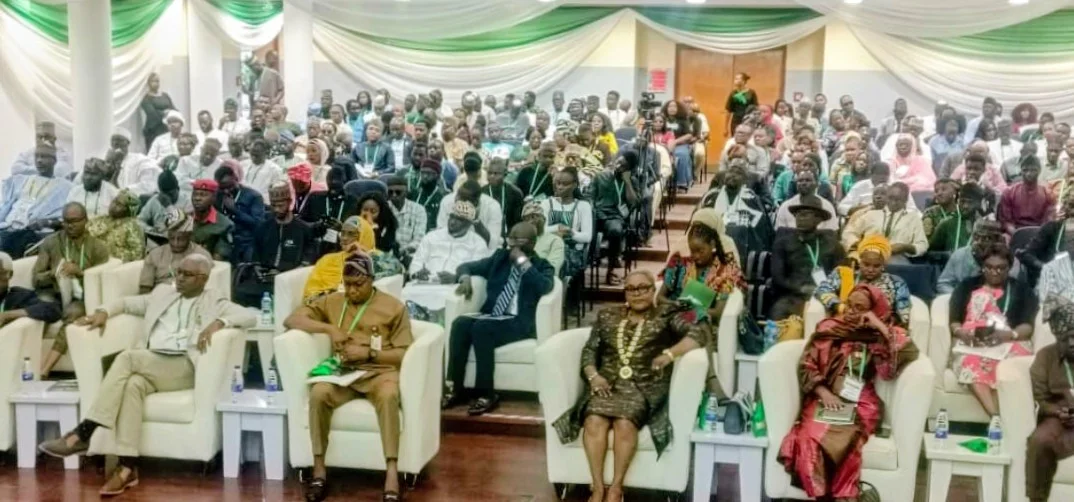
In a breakthrough development, the Joint National Public Service Negotiating Council (JNPSNC) Trade Union Side, Plateau State Council, held a press release on the 14th of July, 2023, at the Conference Hall of the NLC Secretariat in Jos. The press release outlined the agreements reached between the council and the Plateau State Government, as well as the resolution of the ongoing labour impasse affecting both state and local government employees.
During a meeting held on the 28th of January, 2023, between the JNPSNC and the state government, several key agreements were reached. The government confirmed the payment of the remaining balance of salaries for the month of February 2023 and issued a circular directing all Ministries, Departments, and Agencies (MDAs) to implement promotions with immediate effect. Furthermore, the government completed the consolidation of the salary table for state civil servants, which was subsequently signed by both parties.
The press release which was jointly signed by the Chairman JNC, Comrade Titus L. Malau, and Comrade Timothy S. Gopep, Secretary of JNC also highlighted the progress made regarding the payment of salaries. The government prepared a salary spreadsheet for the month of March 2023, which included the arrears of Annual Increment for January and February 2022. This spreadsheet has been presented to the unions for review. The salaries for March 2023 were paid with specific conditions, including the physical verification of all civil servants and the establishment of a verification committee consisting of government and labour representatives.
Regarding the local government employees, a separate meeting was held between the JNPSNC and the Chairmen of the 17 Local Government Areas in Plateau State. In this meeting, several agreements were reached, including the payment of arrears of salaries once the government receives its subvention for the month of May 2023. The government also committed to restoring the payment of Domestic Staff Allowance to officers on Grade Levels 15 and 16 along with the June 2023 salary. Additionally, the government pledged to effect payments of promotions and Annual Increments starting from July 2023.
The press release further outlined additional agreements, such as the centralization of salary payments to assist weaker local governments, the determination and payment of outstanding 25% COVID-19 allowances applicable to health workers, and the suspension of the downgrading of two Grade Levels on retirement.
As a significant development, the JNPSNC announced the suspension of the indefinite strike action declared by the unions, effective from the 14th of July 2023. All workers in both the state and local governments were directed to resume work on Monday, the 17th of July 2023. The unions assured workers that there would be no victimization of those who participated in the strike action.
While the strike has been suspended, the union leadership will continue to monitor the resolution of challenges observed with the payment of the March 2023 salary. The press release concluded by expressing appreciation to members for their cooperation and resilience during the industrial action, emphasizing the commitment to address any remaining issues to ensure a smooth resumption of work.
The Federal Government is advancing plans to integrate digital education into Nigeria’s Almajiri system, in a move to address the country’s rising population of out-of-school children through technology-driven learning and skills development.
The initiative is being driven through a collaboration between the National Information Technology Development Agency (NITDA) and the National Commission for Almajiri and Out-of-School Children’s Education (NCAOOSCE), following a recent high-level engagement at NITDA headquarters in Abuja, according to a statement by the tech agency, NITDA.
Muhammad Sani Idris, Executive Secretary of NCAOOSCE, says the Almajiri system is facing deep-rooted structural challenges affecting children’s welfare and access to education.
According to him, these challenges include parental abdication of responsibility, widespread street begging, vulnerability to exploitation, and the growing number of out-of-school children across the country.
Idris called for stronger institutional collaboration to reposition the system through digital education and structured skills acquisition.
“He requested NITDA’s collaboration to transform the system through digital education and skills acquisition,” the Commission says in a statement.
In response, Kashifu Inuwa, Director-General of NITDA, proposed the deployment of the agency’s Digital Literacy for All initiative through existing Almajiri structures.
The strategy, according to Inuwa, will leverage members of the National Youth Service Corps (NYSC) as digital literacy champions, integrate technology training into Almajiri learning centres, and establish digital hubs to deliver basic to advanced digital skills.
Both agencies say the framework is designed to bridge learning gaps and expand access to modern competencies for vulnerable children who are currently outside the formal education system.
They also reaffirmed their commitment to using technology as a tool for inclusive education and national development, announcing the establishment of a joint implementation committee to coordinate the rollout of the programme.
The collaboration reflects a broader shift in Nigeria’s education policy, where digital literacy is increasingly being positioned as a strategic instrument for tackling exclusion and youth vulnerability.
Nigeria continues to grapple with one of the largest out-of-school children populations globally, driven by poverty, insecurity in parts of Northern Nigeria, and systemic barriers to formal education. The Almajiri system, historically rooted in traditional Islamic learning, has in recent years become associated with street begging and heightened child vulnerability, particularly in urban centres.
The proposed intervention signals a transition from welfare-based responses to a more structured, skills-driven model, where technology serves as both an educational platform and an empowerment tool.
However, stakeholders acknowledge that implementation will require addressing key constraints, including funding, infrastructure readiness, training capacity, and connectivity challenges in underserved communities.
The newly constituted joint committee is expected to define operational guidelines, deployment frameworks, and scale-up pathways for the initiative.
Stay ahead with real-time reports, breaking news, and exclusive insights delivered directly to your phone. Don’t settle for outdated information. Join TECHNOLOGYTIMES NEWS on WhatsApp for 24/7 updates.
BY SUNDAY SAMUEL—Nasarawa State Police Command attached to Karshi Divisional Headquarters have arrested one Pastor Asonye Isaiah, 37, of Rock of Love and Adoration Ground, Old Karsh I, Abuja, for allegedly defiling a 16-year-old girl in Nasarawa State.
According to statement released by SP Ramhan Nansel, Police Public Relations Officer, via the commands official X account that the arrest followed a complaint lodged at the Division on 18th April, 2026, at about 2000hrs.
Preliminary investigation revealed that the suspect deceived the victim’s aunt, claiming her niece was “
possessed” and required cleansing at a river. He instead took the victim to a hotel in New Karshi, where he allegedly had unlawful carnal knowledge of her twice. He further threatened to kill her if she disclosed the incident.
The crime came to light after the victim’s guardian observed unusual changes in her behaviour and questioned her. The victim was immediately taken for medical examination, which confirmed penile penetration.
Upon interrogation, the suspect confessed to the offence and pleaded for leniency.
The Commissioner of Police, CP Shetima Jauro Mohammed, has directed that the case be transferred to the State Criminal Investigation Department, Lafia, for comprehensive investigation and prosecution.
He assured that justice will be served and urged members of the public to exercise caution regarding places of worship they attend and individuals who parade themselves as clerics.