Connect with us

News

Plateau Reviews Health Sector Reforms To Improve Service Delivery

info

Published

on

F2ce77b6 b6a8 472c 8af0 97970f506ece.jpeg

By Blessing Odega

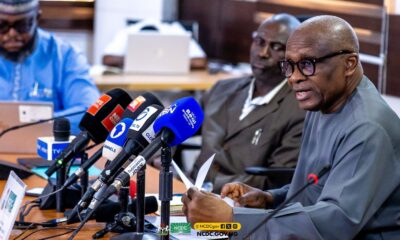
The Plateau Government has reaffirmed its commitment to strengthening the health sector and improving service delivery through the continuous implementation of the Sector-Wide Approach (SWAp) in healthcare financing, coordination and governance.

Dr Nicholas Baamlong, the state Commissioner for Health, stated this on Tuesday during the state’s SWAp first quarter performance dialogue review meeting in Jos.

Baamlong said the review meeting brought together government officials, development partners, healthcare managers, civil society organisations and other stakeholders to assess progress made in implementing the initiative across the state’s health sector.

According to him, the dialogue is also aimed at identifying gaps, addressing emerging challenges and developing strategies to improve coordination, accountability and efficiency in healthcare delivery across the state.

“The review engagement is aimed at evaluating achievements, identifying gaps, and developing strategies to improve coordination, accountability, and efficiency in healthcare delivery.

“It is also an opportunity for stakeholders to reflect on the level of implementation of agreed priorities and collectively chart a way forward for improved health outcomes in Plateau,” he said.

The commissioner explained that SWAp was a framework designed to align government priorities, donor interventions and stakeholder activities under a unified health sector plan to ensure better outcomes and optimal use of available resources.

He noted that the approach was critical to reducing duplication of programmes, strengthening transparency and ensuring that investments in the health sector directly benefited residents of the state.

Baamlong further stressed the importance of collaboration among ministries, departments and agencies, healthcare providers and development partners in achieving sustainable reforms and expanding access to quality healthcare services, particularly for vulnerable populations.

He said the state government remained committed to improving primary healthcare services, enhancing disease surveillance, strengthening healthcare infrastructure and building the capacity of health workers across the state.

According to him, effective implementation of SWAp principles will also support evidence-based planning, improved monitoring and evaluation, and efficient allocation of resources within the health sector.

Also speaking, Dr Opeyemi Fadeyibi, Monitoring and Evaluation Performance Management Lead at the National SWAp Office, commended Plateau for being among the states implementing SWAp principles effectively.

Fadeyibi described the review process as essential for measuring progress, promoting accountability and ensuring that healthcare interventions were aligned with national priorities and the needs of citizens.

She expressed optimism that sustained implementation of SWAp principles would help Plateau strengthen its health system, address existing challenges and improve healthcare access and service delivery for residents.

According to her, stronger collaboration between governments and development partners is necessary to achieve universal health coverage and build resilient healthcare systems capable of responding to emerging public health challenges.

The News Agency of Nigeria (NAN) reports that the review meeting forms part of ongoing efforts by the state government to align with national health sector reforms and deliver more effective, inclusive and people-centred healthcare services across Plateau. (NAN)

Edited by Gabriel Yough

News

Coping Strategies: How Nigerian students bet, skip classes, work side jobs to survive in school

info

Published

on

By

Nigerian students on campus 2.png

Nigerian students in tertiary institutions face intense financial pressure as their allowances no longer last through the semester, forcing them to adopt coping strategies to survive, including skipping meals and gambling.

Most students receive allowances or stipends mainly from their parents or guardians, while others fend for themselves through hustles.

However, the main challenge remains that these allowances are no longer enough to cover their expenses throughout the semester. This effect has affected students academically, healthwise, and in their daily lives.

The National Bureau of Statistics (NBS) reported that the overall inflation rate rose to 19.93 per cent in May, while food inflation increased to 16.93 per cent.

The figures show that the prices of food commodities and other consumer goods have risen, which students in schools depend heavily on.

Jasini Samuel Mamza, a 400-level Mass Communication student at Veritas University, Abuja, receives N60,000 from his parents every two weeks, which is still not enough to cover his personal expenses before the end of the semester.

Mr Mamza said, “I try my best to manage my expenses by reducing unnecessary spending, and in tough times, I place bets on a betting site for a particular team to win a game, or I just place a call for support from family or friends.

“The second semester is usually the longest and is always difficult for students to cope with because of the long school schedule of  several school activities that require money.”

Uwah Chigozie, a Statistics student at the University of Jos, said he lives off campus and works a side job, putting in longer hours to meet his weekly feeding allowance of N50,000, and added that he works more hours to cover unexpected expenses when his allowance runs out.

“I work at Terminus, so I just double my hustle, and I’m barely out of funds,” Mr Uwah said, adding that side hustles have not affected his studies.

Gwangbyen Esther Joro, a first-year student at the University of Jos, said she lives off campus on a monthly budget of N15,000 to N20,000, which often does not last because of personal expenses, including hair care and other essentials.

“As a girl, I have extra expenses like making my hair and buying personal items. When it runs out, I usually go back home or call my parents to ask for extra money,” Ms Joro said.

Bulus Nissi, a Business Administration student at Kaduna State University, lives off campus like Mr Chigozie but manages a tighter weekly feeding budget of N15,000 to N20,000 and relies on his parents for financial support whenever his allowance is exhausted.

“Most times, I call home, explain, or go into one of these betting platforms to place a bet on sports, and getting a job as a student is difficult because no one would employ someone who only comes in when free,” Mr Bulus said.

He added that it has affected his performance and daily activities, as he misses “vital classes and school activities” because he receives his allowance late.

Noel Kaslong, a Cyber Security student at the Air Force Institute of Technology, Kaduna, said his savings have become his means of survival on campus whenever he receives N13,000 weekly from his parents.

He said he misses classes just to cook meals in his hostel.

“I skip class because I don’t want to spend over 2,000 on food that won’t satisfy me. I prefer cooking in my hostel instead of buying food in school,” Mr Kaslong explained.

Continue Reading

News

‘Possibility very slim’ – Peter Obi on contesting for president in 2031

info

Published

on

By

Peter Obi.jpg

The 2027 Nigeria Democratic Congress, NDC, presidential candidate, Peter Obi has hinted on why he might not contest in 2031.

Stressing that the possibility is very slim, Obi said the zoning arrangement between the North and the South would play a major factor in deciding if he would contest in 2031.

In an interview with media personality, Rufai Oseni, Obi explained that if the presidency goes to the North in 2031, he would be 78-years-old when power will return to the South, hence can’t run again.

Asked if he would run for the presidency again if he loses in 2027, Obi said: “For me, it depends on what happens. I don’t want to say it because people might think that I’m saying it because of some people.

“You will not believe it, this morning a secondary school boy asked me a question this morning ‘if you run this time, will you run again?’ And I said no, he asked why?

“I said because if I don’t run now, by the next time it comes, believing in the zoning formula it will go to the North and if it goes North in 2031, by the time it comes again to the South, I will be 78 years old and I don’t think I would be doing this at that age.”

The former Anambra State governor, however, noted that if power remains in the South in 2027, he might contest for the presidency in 2031.

“If it’s still in the South in the next election, maybe but the probability is very slim, I don’t know until after the outcome of the 2027 election,” he added.

Continue Reading

Trending