Connect with us

News

Operation Rainbow Urges Tricycle Riders to Embrace ITTMS QR Code Initiative or Face Sanctions

editor

Published

on

Operation Rainbow Giopat Plateau ITTMS initiative tricycles

…Says initiative will enhance security, protect riders and commuters, and block revenue leakages

Operation Rainbow has issued a firm call to all tricycle riders across Plateau State to comply with the newly introduced ITTMS Digital Transformation QR Code Policy or risk facing legal and operational consequences.

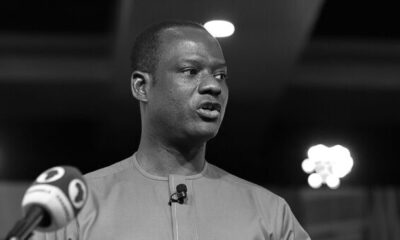
Speaking during an advocacy partnership meeting held at the Operation Rainbow Headquarters in Jos on Monday, July 14, 2025, the Acting Coordinator of Operation Rainbow and Special Adviser to the Governor on Security, Brigadier General Goshwe Shipe (rtd.), emphasized that the initiative is not intended to victimize operators but to secure them and the public.

“I call on all tricycle riders on the Plateau—please cooperate with ITTMS. We are not here to victimize anybody or stop you from earning your daily bread,” he said. “We want to ensure you’re safe, protected from extortion, and supported in your work. Come and register; we’ll give you all the support you need.”

Brig. Gen. Shipe, while addressing the press after the closed-door session with the implementation partner, GIOPAT DC Limited, reiterated the state’s commitment to security and order.

“This initiative will help us monitor operators and ensure accountability. We already have investigators, plainclothes operatives, and surveillance systems in place. But this digital transformation is a big leap forward,” he explained.

He warned that any rider who fails to comply will face penalties in accordance with the legal framework embedded in the contract signed with ITTMS.

“If you do not comply, you simply won’t be allowed to operate within the state. It’s that straightforward,” he said.

The GIOPAT delegation was led by Mr. Olisa Ogbeche (Team Lead), Mr. Salis Abdulsalam (Liaison Officer), and Mr. George Michael (Operations Manager). The meeting was also attended by senior Operation Rainbow officials including the Directors of Finance, Operations, Planning & Research, DSS liaison, and Peacebuilding.

In his remarks, Brig. Gen. Shipe commended the ITTMS innovation, saying:

“This is a commendable initiative. I personally scanned one of the QR codes—you could see all the details of the tricycle owner and rider, including pictures. That’s a huge step in ensuring security and transparency.”

“Security challenges from commercial transportation—especially motorcycles and tricycles—have plagued the urban areas. This technology is not just helpful, it is necessary,” he added.

He further pledged Operation Rainbow’s full backing, stressing the importance of compliance mapping, stakeholder engagement, and rider sensitization.

The ITTMS Project Explained

Giving an overview of the ITTMS initiative, GIOPAT’s Liaison Officer, Mr. Salis Abdulsalam, said the project is a three-pronged approach to address security, commuter safety, and revenue generation.

“There are over 33,000 registered tricycles in the state. Yet, for over a decade, these operators have not remitted any structured revenue to the government. That’s a huge leakage,” Abdulsalam stated.

He explained that the initiative involves the biometric registration of all tricycle riders—whether they own the vehicle or not—followed by assigning a unique QR code to each tricycle.

“Once the code is installed, commuters can scan and see who the rider is. If they feel unsafe, they can send that information to a loved one instantly. For security agencies, there’s a backend dashboard where full details of the owner and rider can be accessed for investigations,” he noted.

Abdulsalam emphasized that the system eliminates the need for paper tickets and physical remittances, replacing it with a POS-integrated digital payment system that routes funds directly to government accounts.

“The terminals will be spread across major routes, especially under the Greater Jos Master Plan, so riders can easily pay their levies. The receipt will be automated, digital, and government-certified.”

“We’re not trying to exclude the unions. We’ve signed MOUs with all five major tricycle unions. The government is only trying to sanitize the system and block leakages,” Abdulsalam clarified.

Resistance and the Challenge of Compliance

Addressing the challenge of non-compliance, Abdulsalam explained that many unions have become accustomed to unregulated collections over the past 13 years.

“They see the money as theirs and not public revenue. But the law is clear—public money belongs to the government. That’s why we are here today—to seek Operation Rainbow’s help to ensure compliance and reach those resisting the policy.”

He called on all riders to see the initiative as beneficial and avoid being misled by misinformation.

“There will always be people who resist change. But this project is for their safety, for government development, and for everyone’s benefit.”

Security and Emergency Response Integration

To further strengthen the initiative, Brig. Gen. Shipe announced the inclusion of Operation Rainbow’s toll-free contact number (0800-0022-3344) and the Plateau State Security Information Centre’s hotline (080-0000-5555) into the QR system.

“Tricycle operators themselves are often victims of crime or witnesses to emergency situations. Giving them direct access to security hotlines will help in response coordination,” he said.

Tribute to Former President Buhari

The meeting also observed a one-minute silence in honour of former President Muhammadu Buhari, who passed away on Sunday in a London.

Continue Reading
Click to comment

Leave a Reply

Your email address will not be published. Required fields are marked *

News

Google adds Nano Banana-powered image generation to Gemini’s Personal Intelligence

info

Published

on

By

Google gemini jagmeet singh techcrunch.jpg

Google on Thursday announced that Gemini’s Personal Intelligence feature will get Nano Banana-powered image generation to create images with personalized context.

That means its AI images can be created using Gemini’s understanding of your likes and interests, without those having to be explicitly noted in the prompt.

This works because Gemini already has context of your data through Google account connections, such as Gmail and Google Photos. So, instead of typing “Generate an image of my dream home, my interests are tennis and music,” you can now just say, “Design my dream home.” 

Image Credits:Google

What’s more, the Nano Banana-powered connection can also use the labels in your Google Photos, so that it understands names and words that describe a group, like “Family”. For instance, you can create an image by saying, “Generate an image of my family and me doing our favorite activity.”

The company said the “sources” button will show how Gemini derived the context for image generation.

Image Credits:Google

Google said that just like other connections, Gemini might get the context wrong, and you can provide feedback. Plus, you can also provide reference photos for image generation by clicking the “+” icon.

The image generation feature will be available to Plus, Pro, and Ultra subscribers in the U.S. within the coming days. Google plans to bring the feature to Gemini in Chrome desktop and to other users soon.

Google first launched Personal Intelligence earlier this year and made it available to all U.S. users in March. Earlier this week, the company expanded the feature to more users in countries like India and Japan.

Continue Reading

News

JUST IN: FG Graduates 744 Repentant Terrorists After Rehabilitation Programme

info

Published

on

By

Repentant.jpg

No fewer than 744 former terrorists and victims of violent extremism on Thursday graduated from the Federal Government’s De-radicalisation, Rehabilitation and Reintegration programme under Operation Safe Corridor.

A breakdown of the graduates shows that two are from Abia State, 10 from Adamawa State, one from Akwa Ibom State, two from Anambra State, 12 from Bauchi State, 597 from Borno State, three from Ebonyi State, one from Enugu State, 15 from Kano State, three from Katsina State, one from Kebbi State, five from Kogi State, four from Nasarawa State, two from Niger State, two from Plateau State, two from Sokoto State, and 58 from Yobe State.

The participants also include foreign nationals: one from Burkina Faso, one from Cameroon, two from Chad, and four from the Niger Republic.

In terms of religion, 733 of the graduates are Muslims, while 11 are Christians.

Speaking at the ceremony in Gombe, the Chief of Defence Staff, Gen. Olufemi Oluyede, said the initiative is not a reward for violence but a strategic tool to counter extremism.

Represented by the Director of Special Operations Forces at Defence Headquarters, Rear Admiral Kabiru Tanimu, he said the programme addresses the human dimension of insurgency and supports long-term peacebuilding.

He added that while military operations remain necessary to neutralise threats, sustainable peace depends on rehabilitation and reintegration efforts.

Oluyede stressed that Operation Safe Corridor is not an amnesty programme, but a structured intervention aimed at reducing violence, weakening extremist recruitment, and promoting stability.

He urged the graduates to embrace a new path, warning against a return to violence, and encouraged them to contribute positively to society.

According to him, successful reintegration requires support from state governments, communities, families, and institutions.

Earlier, the Coordinator of Operation Safe Corridor, Brig. Gen. Yusuf Ali, said the programme was designed as a strategic response to insurgency, combining security operations with rehabilitation efforts.

He explained that participants underwent psychosocial support, vocational training, religious reorientation, civic education, and behavioural transformation.

Ali noted that many beneficiaries were victims of coercion and forced recruitment, adding that the programme gives them an opportunity to rebuild their lives and reintegrate into society as responsible citizens.

He emphasised that reintegration is a shared responsibility requiring community acceptance and institutional support.

The Governor of Gombe State, Muhammad Yahaya, represented by his aide, urged the graduates to embrace the opportunity for a fresh start and become productive members of society.

He said the programme reflects the Federal Government’s commitment under President Bola Ahmed Tinubu to peacebuilding, de-radicalisation, and reintegration efforts.

The graduation highlights Nigeria’s continued shift towards combining military operations with non-kinetic strategies in addressing insurgency, particularly in the North-East, as part of broader efforts to reduce recidivism and promote long-term stability.

Continue Reading

Trending