Health
Cataracts drive avoidable blindness in over two million Nigerians

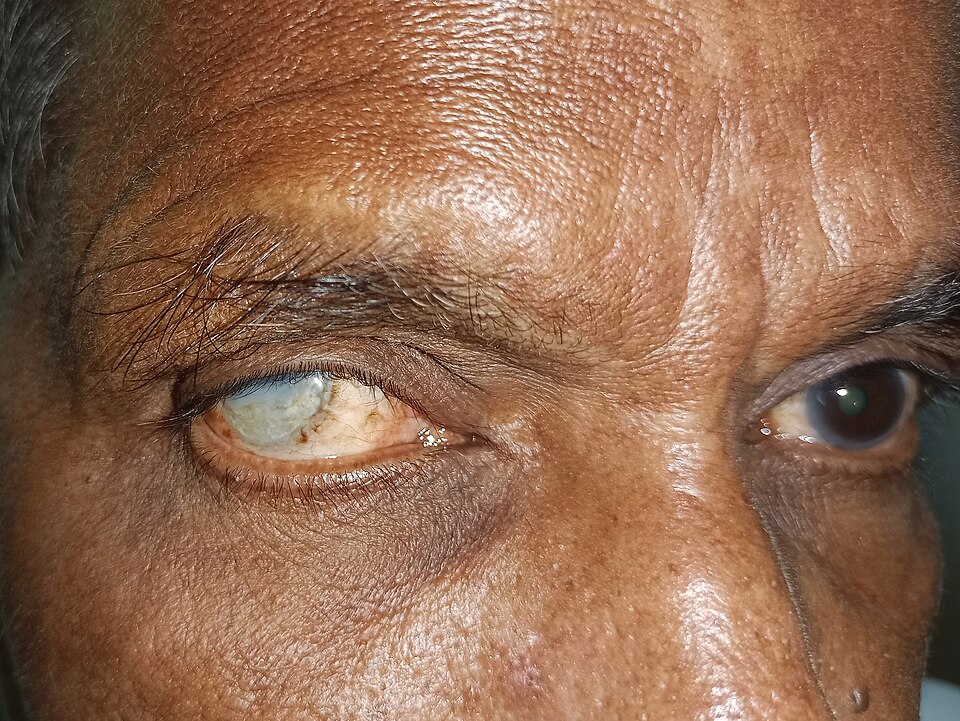

The Ophthalmological Society of Nigeria (OSN) has revealed that more than two million Nigerians are living with avoidable blindness, largely caused by cataracts.
The vice-president of the OSN, Abubakar Rafindadi, a professor, disclosed this on Wednesday at a press briefing ahead of the 51st Annual General Meeting and Annual Scientific Conference, Abuja ASO 2026, scheduled for 2 to 4 September in Abuja.
Mr Rafindadi said that despite ongoing efforts to tackle avoidable blindness, the country has not attained the cataract surgical rates required to reduce the burden significantly.
“The statistics have not changed dramatically. We are still fighting a heavy burden of avoidable blindness, with over two million people having avoidable blindness, mainly cataracts, despite the efforts we are making.
“We are not matching the required cataract surgical rates that we need,” he said.

The OSN vice-president, however, said the country had recorded significant progress in ophthalmic training, technology, and service delivery since its last annual conference.
Establishment of centres
Mr Rafindadi identified the establishment of simulation centres in Lagos and Ibadan as one of the major developments, saying the facilities would enable ophthalmologists to improve their skills in cataract and vitreoretinal surgery.
He said the society had also expanded the integration of eye care into primary healthcare, with the number of states participating in the programme increasing from 14 to 21.
According to him, more than 2,500 primary healthcare workers have been trained under the programme, including during a recent exercise in Bauchi State.
He said the society was also exploring technology, including tele-screening and artificial intelligence, to extend quality eye care to rural communities and underserved populations in urban centres.
Mr Rafindadi noted that although Nigeria had become increasingly urbanised, many people living in underserved communities within major cities still faced difficulties accessing quality eye care.
He said, “We are trying to see how we can adopt the new technological innovations to reach the rural populace and also the underserved populace within the metropolis.
“We are looking at how we can use technology to bridge these gaps through things like tele-screening, artificial intelligence technology, and so on.”
The OSN Vice-President also highlighted improvements in the availability of ophthalmic equipment and advanced surgical services, noting that posterior segment surgeries were now being offered in several parts of the country where such services were previously unavailable.
He said centres in Benin, Lagos, Ibadan, Kaduna, and Kano were among those providing advanced posterior segment surgical services.
Mr Rafindadi said the society was also concerned about the shortage and uneven distribution of ophthalmologists and other eye-care professionals across the country.
He attributed the concentration of specialists in major population centres partly to insecurity and inadequate employment opportunities in rural areas.
According to him, state and local governments must increase the employment of ophthalmologists, optometrists, opticians, and ophthalmic nurses to ensure equitable distribution of eye-care services.
He further disclosed that more than 1.5 million reading glasses had been distributed under the Jigibola 2.0 initiative, with a target of five million by 2027.
Harmful practices
On the dangers of harmful traditional eye practices, Mr Rafindadi urged Nigerians to avoid unverified substances and treatments that could lead to irreversible vision loss.
He said the society was working with the government and traditional medicine institutions to identify practices that could be safely integrated into healthcare while eliminating harmful ones.
READ ALSO: Kogi targets 4.5 million residents for river blindness prevention treatment
“We must keep talking to the public. Please don’t go to these people. They should be aware that these practices can be harmful and can cause irreversible loss of vision to them,” he said.
The OSN said it would conduct more than 500 free cataract surgeries as part of activities leading up to the 51st Annual General Meeting and Scientific Conference.
The cataract surgery outreach, which is scheduled for 27 and 28 August, with the possibility of extending to 29 August if necessary, is expected to benefit patients screened and selected from various centres in the Federal Capital Territory and neighbouring areas.
The Society said more than 500 patients had already been selected and medically assessed as fit for surgery.
The conference, themed “Re-imaging Eye Care in the Digital Era,” will focus on the application of artificial intelligence, tele-ophthalmology, digital diagnostics, and other emerging technologies to improve access to eye care in Nigeria.
Mr Rafindadi said the society would use the conference to develop evidence-based recommendations and a strategic roadmap for improving eye care delivery in the country.
Discover more from Premium Times Nigeria
Subscribe to get the latest posts sent to your email.









The Kano State House of Assembly has called on Governor Abba Yusuf to take urgent action to contain a severe diphtheria outbreak that has reportedly killed an unspecified number of children in the Rano Local Government Area (LGA).
The resolution followed a motion of urgent public importance moved on Monday by the member representing Rano Constituency, Ibrahim Muhammad, during a plenary session presided over by Speaker Ismail Falgore.
Moving the motion, Mr Muhammad reported that the outbreak has hit the Ridin and Sabuwar Kaura communities hardest, resulting in several pediatric deaths.
He said the scale of the outbreak demanded an intensified emergency response.
“Although initial emergency measures have been taken, including the procurement of medication and deployment of health workers—further intervention is critical to containing this outbreak,” Mr Muhammad said at the plenary.
He urged the governor and the Commissioner for Health to dispatch additional emergency relief and medical supplies to the area.
The lawmaker also voiced deep concern over the recurrence of the disease, noting that a similar outbreak claimed several lives in the constituency last year.
Seconding the motion, the member representing Kiru Constituency, Usman Tasiu, revealed that the infection has already crossed LGA boundaries, spreading to neighbouring Kiru communities, including Kwarin Dangora, Dangora town, and Yelwa.
Highlighting the human toll of the crisis, Mr Tasiu shared that a local youth leader in Kiru lost two children to the disease in a day.
He called for the immediate establishment of a joint emergency task force to coordinate containment efforts across Rano, Tudun Wada, Kibiya, Bunkure, Bebeji, and Kiru LGAs.
Joining the debate, Saleh Ahmad, representing Dawakin Tofa Constituency, stressed the highly contagious nature of diphtheria and urged the government to rapidly scale up vaccination drives and preventive health measures before the disease spreads further.
READ ALSO: PT Health Watch: Sex during pregnancy is usually safe, but some risks remain – Expert
Meanwhile, House Majority Leader Lawan Husseini advised the executive arm to invoke the provisions of Kano State’s Health Protection Law.
He pointed out that the legal framework authorises the government to deliver free healthcare, issue emergency relief, isolate affected communities, and restrict movement where necessary to curb infectious outbreaks.
Following deliberations, the House unanimously passed the motion. It directed its Committee on Health to engage the Ministry of Health on enforcing the Health Protection Law and delivering immediate relief to the affected communities.
Abubakar Nabulisi, the spokesperson of the state Ministry of Health, could not be reached immediately to comment on the incident. His phone call didn’t connect on Tuesday afternoon.
Discover more from Premium Times Nigeria
Subscribe to get the latest posts sent to your email.

The National Agency for Food and Drug Administration and Control (NAFDAC) has ordered manufacturers of alcoholic beverages packaged in sachets and PET bottles below 200ml to recall the products nationwide.
The agency also ordered the destruction of the recalled products under its supervision, saying manufacturers will bear the full cost of the exercise.
In a statement issued on Monday by its Director General, Mojisola Adeyeye, NAFDAC said the directive followed the signing of an Irrevocable Enforcement Undertaking by the Distillers and Blenders Association of Nigeria (DIBAN), the Association of Food, Beverage and Tobacco Employers (AFBTE), and their member companies.
Under the undertaking, affected manufacturers are required to immediately recall the prohibited alcoholic drinks from distributors, warehouses and other points within the supply chain and submit periodic compliance reports to NAFDAC.
The agency said all recalled products would undergo inventory verification before being destroyed under its supervision.
“The agency wishes to emphasise that all recalled alcoholic products shall be subjected to inventory verification and destruction under NAFDAC supervision in accordance with the terms of the enforcement undertaking,” it noted.
NAFDAC’s supervision
NAFDAC also said manufacturers whose facilities were sealed for producing the prohibited alcoholic drinks would have to “dismantle, permanently disable or reconfigure” the production lines used for the affected pack sizes before their facilities can be reopened.
It said such work must be carried out under the direct supervision and verification of NAFDAC officers.
The agency said reopening of the affected facilities would also depend on full compliance with the recall directive, payment of applicable investigative charges and regulatory fees, successful destruction of recalled products and satisfactory inspection and certification by NAFDAC.
“Companies that fail to comply with the terms of the undertaking risk severe regulatory sanctions,” the agency said.
According to NAFDAC, the sanctions include continued closure of facilities, placement on its Regulatory Watchlist, suspension or revocation of product registrations and criminal prosecution where applicable.
Why NAFDAC is enforcing the ban
NAFDAC said the ban on alcoholic beverages packaged in sachets and small-volume containers followed years of consultations between regulators, manufacturers and government agencies.
The agency said it first raised concerns in 2018 over the widespread availability of high-alcohol-content drinks in sachets and small bottles, which it described as cheap, easy to conceal and readily accessible to minors.
A five-year moratorium was subsequently agreed with manufacturers in December 2018 to allow them to gradually phase out the products and move to larger packaging.
ALSO READ: NOA, NAFDAC, FCCPC launch nationwide campaign on enforcement of ban on sachet alcohol
The moratorium was initially scheduled to end on 31 January 2024 but was later extended until 31 December 2025.
The full ban took effect on 1 January 2026 and covers alcoholic beverages packaged in sachets, PET bottles below 200ml and glass bottles below 200ml.
NAFDAC said enforcement began with manufacturers in January, while nationwide mop-up operations across markets, motor parks, retail outlets, bars and distribution centres followed in July.
The agency said some banned products were still found at distribution centres, leading to the closure of factories and arrest of staff of companies found producing sachet alcohol.
NAFDAC said the enforcement is aimed at reducing underage drinking, alcohol abuse and access to highly concentrated alcoholic beverages in small, inexpensive containers.
“Members of the public are encouraged to report the sale, distribution, or manufacture of alcoholic beverages in sachets and PET bottles below 200ml through NAFDAC’s official communication channels or nearest NAFDAC office,” it added.
Discover more from Premium Times Nigeria
Subscribe to get the latest posts sent to your email.
-
Business3 days ago
Police Arrest of Five Suspected Telecommunication Vandals, Recovery of Truckload of Suspected Stolen Iron Rods
-

 News3 days ago
SSA Adeboye: National Intermediate Games Will Give Nigeria’s Young Talents the Platform to Shine
-
Health3 days ago
FCTA trains health workers in basic life support, plans Code Blue teams in hospitals
-
News3 days ago
Who’s behind the new ‘stealth model’ Ox Alpha?