Connect with us

News

 Wike names 3 APC governors fighting his coalition [FULL LIST]

info

Published

on

Wike 1.jpg

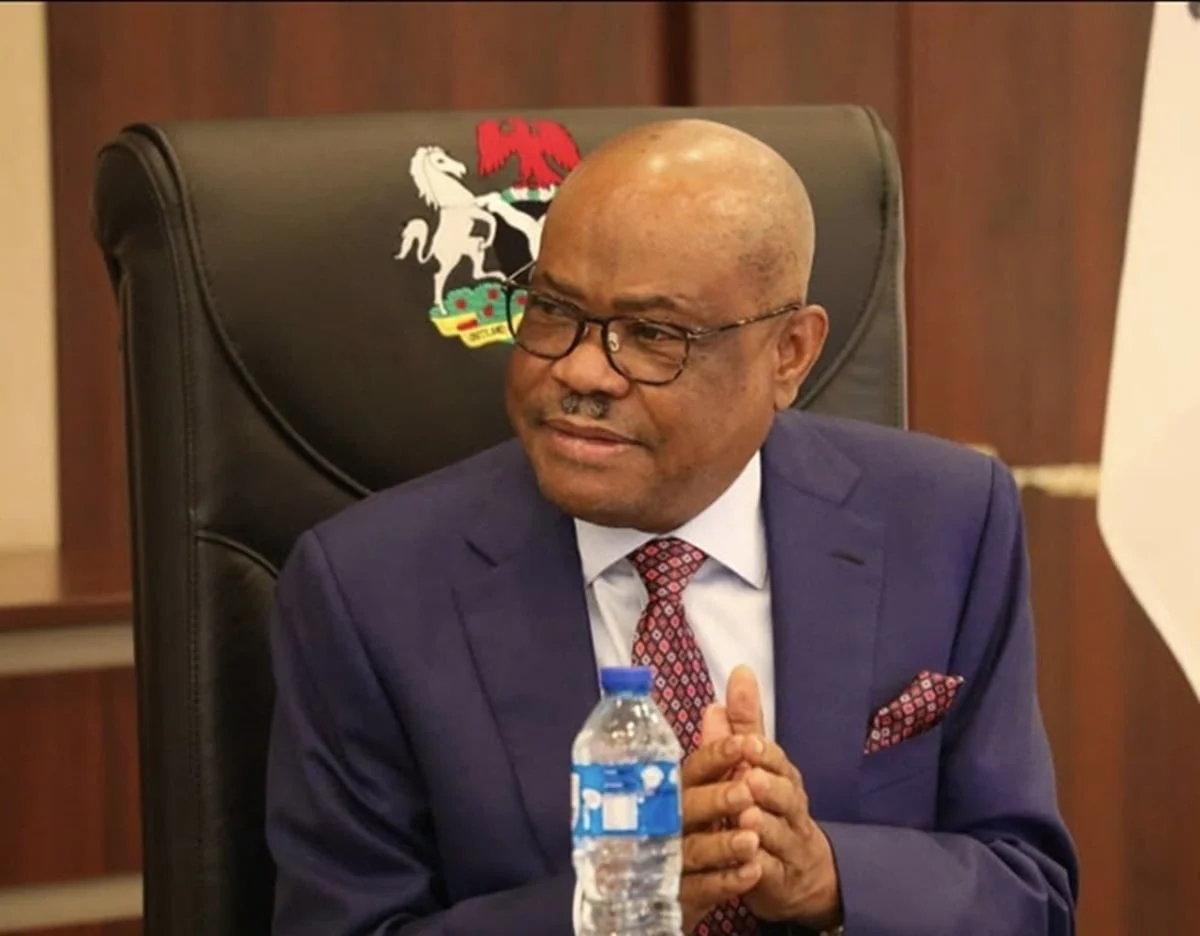
The Minister of the Federal Capital Territory, FCT, Nyesom Wike, has named three All Progressives Congress, APC, governors who he said are opposed to his Rainbow Coalition ahead of the 2027 general elections.

Speaking during an interview on Journalist Hangout, a programme on TVC, Wike listed them as Imo State Governor Hope Uzodimma, Kwara State Governor AbdulRahman AbdulRazaq and Ogun State Governor Dapo Abiodun.

According to him, several APC governors had no problem with the Rainbow Coalition, which he has presented as a platform to mobilise support for President Bola Tinubu’s re-election across political parties.

The minister specifically mentioned Adamawa, Edo, Kogi, Lagos and Akwa Ibom, as well as the governor of Ondo State, as governors who, according to him, were not opposed to the coalition.

Recommended

“How can a governor leave his state and go to Abuja to complain that Rainbow Coalition is a distraction? Is that a serious governor?

“Adamawa, Edo, Kogi, Lagos and Akwa-Ibom state governors do not have a problem with the Rainbow Coalition. I saw Ondo Governor there, and I was shocked,” Wike said.

He then identified the three governors he said were behind the opposition to his political activities.

“The governors having issues with me are Governor Hope Uzodimma, Governor Abdulrazaq and Governor Dapo Abiodun,” Wike added.

Wike’s remarks came following an escalating disagreement between him and the leadership of the APC Governors Forum over the Rainbow Coalition.

Continue Reading
Click to comment

Leave a Reply

Your email address will not be published. Required fields are marked *

News

Momentum Builds for Historic Grassroots Sports Summit as SSA Adeboye Hosts Successful Abuja Press Conference

info

Published

on

IMG 20261105 WA0083.jpg

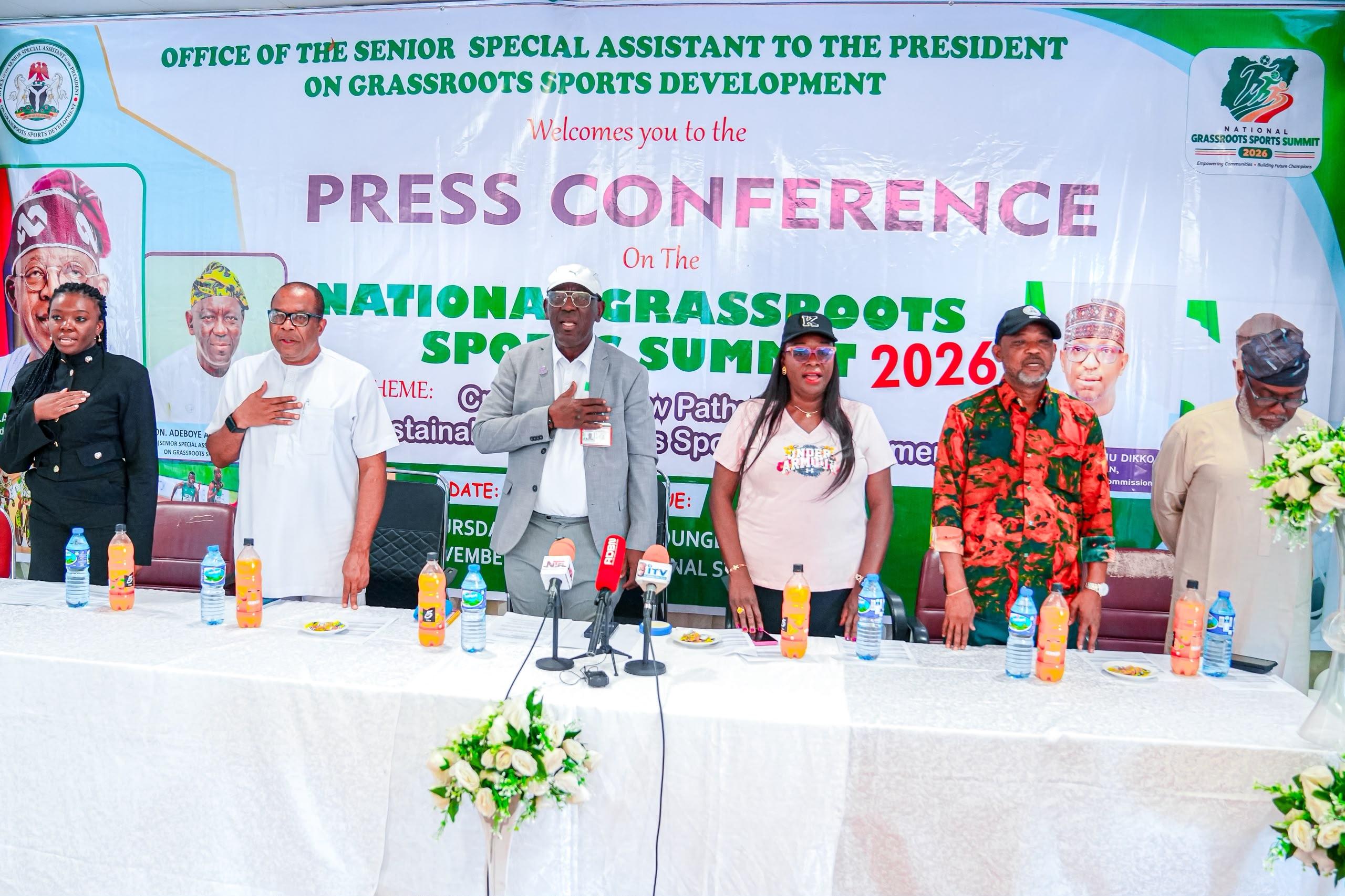
The countdown to the National Grassroots Sports Development Summit 2026 gathered fresh momentum on Thursday as the Senior Special Assistant to the President on Grassroots Sports Development, Hon. Adeyinka Anthony Adeboye, hosted a well-attended and successful press conference at the VIP Lounge, National Stadium, Abuja.

The event attracted sports administrators, government officials, representatives of key institutions, journalists and other stakeholders, demonstrating growing interest in the forthcoming national summit.

Read Also: “President Tinubu Is Restoring Confidence in Nigerian Sports” — SSA Adeboye Hails Fulfilment of Super Falcons’ Reward Promise

Among the distinguished personalities present were Comrade Philip Shaibu, Director-General, National Institute for Sports (NIS); Mr. Kumbi Titiloye, Chairman, Kwara United Football Club; and Ms. Seun Ojo, Head, Public Affairs & Public Policy, Nigerian Economic Summit Group (NESG).

Also in attendance were Barr. Musa Ahmadu, Dr. Ademola Are, Chairman, Accommodation and Logistics Sub-Committee; and Dr. (Mrs.) Kehinde Ajayi, Chairperson, Media Sub-Committee, alongside other members of the organising committee and summit sub-committees.

Addressing the gathering, Adeboye emphasised that the summit represents a major opportunity to redefine Nigeria’s approach to grassroots sports development through sustainable structures for talent discovery, participation and advancement.

He stressed that Nigeria possesses enormous sporting talent, but that many promising youngsters remain undiscovered because of inadequate facilities, limited opportunities and the absence of structured development pathways.

“Somewhere in Nigeria today, a future world champion is waiting to be discovered. Our responsibility is to ensure that such a child is not denied the opportunity to succeed simply because of where they were born or their family’s financial circumstances,” he declared.

The Presidential aide commended President Bola Ahmed Tinubu’s commitment to repositioning Nigerian sports, stressing that the recognition of sporting excellence must be complemented by deliberate investment in young talents across Nigeria’s 774 local government areas.

He explained that the summit would bring together government institutions, sports federations, private investors, development partners and other stakeholders to develop an actionable national roadmap.

The participation of Ms. Seun Ojo, representing the Nigerian Economic Summit Group, further underscored the important role of NESG as the summit’s technical partner in shaping discussions around policy, investment and sustainable sports development.

The press conference also featured contributions from members of the Main Organising Committee and an interactive session with journalists on the summit’s objectives and expected outcomes.

Scheduled for November 18–19, 2026, at the Banquet Hall, State House, Presidential Villa, Abuja, the summit, themed “Creating a New Pathway for Sustainable Grassroots Sports Development,” will focus on five strategic pillars: Participation, Talent Development, Infrastructure, Sports Economy and International Pathways.

Adeboye thanked the dignitaries, stakeholders and media representatives for their support, reaffirming his determination to ensure that the summit delivers practical outcomes capable of transforming grassroots sports development in Nigeria.

Continue Reading

Business

FG Backs Risk-Based Capital, Urges Insurance Directors to Move Beyond Passive Compliance

info

Published

on

BY NKECHI NAECHE-ESEZOBOR—The Federal Government has thrown its weight behind risk-based capital in the insurance industry and urged insurance company boards to move from passive regulatory compliance to active oversight.

The government made its position known through the Minister of Finance and Coordinating Minister of the Economy, Mr. Taiwo Oyedele, at the 2026 Insurance Directors’ Conference, themed “Recapitalisation to Resilience: Leading the Risk-Based Capital Era.” The conference was organised by the College of Insurance and Financial Management (CIFM).

The minister, who was represented by Dr. Greg Ugochukwu Ezeilo, Special Adviser on Fiscal Risk Management and Sustainability, said a resilient insurance industry is indispensable to the country’s economic transformation.

He described insurance as more than a mechanism for compensating losses, calling it an instrument for mobilising long-term capital, enabling productive investment and protecting livelihoods. He said the economy needs an insurance sector able to underwrite emerging risks, support infrastructure financing and strengthen agricultural productivity.

On the transition to risk-based capital, he said insurers must align their capital with the nature, scale and complexity of the risks they take on. He also called for a more forward-looking approach to governance, investment decisions, underwriting practices and enterprise risk management.

“Capital without governance is vulnerable,” he said. He added that governance without accountability is ineffective, and that insurance without public confidence cannot fulfil its economic value.

According to him, the transition places heightened responsibility on insurance company boards. He said directors must move beyond passive regulatory compliance to active oversight and ensure that risk appetite, capital allocation, corporate strategy and institutional capacity are consistently aligned.

He set out five priorities for the industry. The first is strong governance, with visible leadership at the top, independent oversight and transparency, noting that public confidence remains the industry’s most valuable capital. The second is wider access, with affordable, accessible and relevant products for households, small businesses, farmers and underserved communities, so that insurance becomes an everyday instrument of economic security rather than a privilege of a limited market segment.

The third is directing the industry’s long-term funds, under prudent investment frameworks, towards productive investment, infrastructure financing and sustainable economic growth. The fourth is technology and innovation, including big data analytics, machine learning, artificial intelligence and innovative underwriting models, supported by robust cyber security, consumer protection and operational safeguards. The fifth is building capacity to handle emerging risks such as climate-related disruptions, cyber threats, changing demographics and increasingly interconnected financial markets.

He said the Federal Government remains committed to a stable, competitive and inclusive financial ecosystem in which insurance contributes meaningfully to national economic development. He recognised the National Insurance Commission’s role in strengthening regulatory standards, protecting policyholders and guiding the industry through the transition.

He said sustainable reform requires collaboration among regulators, operators, investors and government, and urged stakeholders to see the transition not simply as a regulatory exercise but as an opportunity for strategic transformation.

The ultimate measure of success, he said, is how effectively the industry helps Nigerians absorb shocks, builds confidence and finds progress.

The post FG Backs Risk-Based Capital, Urges Insurance Directors to Move Beyond Passive Compliance appeared first on Business Today NG.

Continue Reading

Trending