News
“Enough of This Disregard” — NRFF President Aré Warns Rugby Clubs Over Bypassing State Associations

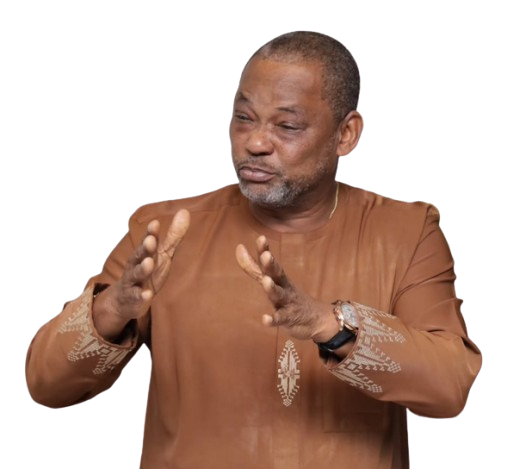
Nigeria Rugby Football Federation President Dr. Ademola Aré has warned rugby clubs and stakeholders against operating outside recognised state association structures, insisting that continued disregard for established administration could slow the development of the sport in Nigeria.
Aré issued the warning following complaints from sports directors and commissioners in some states about clubs carrying out activities without working with their respective state rugby associations.
For the NRFF president, clubs seeking national recognition must first establish a functional relationship with the structures responsible for rugby within their states.
“To get into the national federation, you need to align with state associations,” Aré said.
“Unfortunately, some club owners are not doing this, yet they want to travel abroad to represent the country.”
Aré believes such practices create unnecessary conflict between clubs, state associations, sports councils and the national federation.
“They keep forgetting the basic things, which makes them work at cross purposes with the federation, and it is rugby that suffers,” he added.
The warning comes as the NRFF pushes to expand rugby at grassroots level and strengthen its presence within Nigeria’s national sporting structures. The federation has also recently invested in training coaches, referees and medical personnel, with Aré urging those beneficiaries to work closely with their state associations and communities.
Aré said cooperation at state level could also strengthen the federation’s attempts to secure greater recognition for rugby in national competitions.
“If they did, it would be easier for the sport to gain wider acceptance, and we would not need to fight every time for recognition,” he said.
The NRFF president went further, saying clubs seeking to travel internationally should obtain clearance from their state association and the national federation.
“Enough of this disregard for constituted authority,” Aré declared. “All stakeholders must respect the structures put in place for the proper administration and development of rugby in Nigeria.”
With Nigeria targeting continued international growth and ultimately an Olympic pathway, Aré’s message is that progress on the field must be matched by stronger organisation off it.






Business
IMF warns against blanket petrol subsidies, suggests targeted support for poor, vulnerable people

The International Monetary Fund (IMF) on Wednesday warned against blanket subsidies, saying targeted support for vulnerable and poor people provides better results.
Rodrigo Valdés, Director of the IMF’s Fiscal Affairs Department, spoke during a press briefing on the fund’s fiscal monitor at the 2026 annual meetings of the IMF and World Bank in Bangkok, Thailand.
The fund said that, beyond being expensive, blanket petrol subsidies often benefit higher-income consumers disproportionately and could worsen fiscal pressures amid rising debt and borrowing costs.
“Protecting people is not the same as protecting the price of fuels,” Mr Valdés said.
“It’s first fiscally very costly, and second, if you look at the pattern of consumption, it’s easy to see that that subsidy is readily regressive in many places.”
Mr Valdes spoke in response to a question on how the IMF could recommend energy prices to reflect scarcity when higher fuel prices in Nigeria and some other countries have led to higher cost of living, increased transport costs, worsening inflation, and poverty.


The IMF official said fuel subsidies or measures preventing prices from adjusting fully to an energy shock had cost countries between 1 per cent and 1.5 per cent of gross domestic product (GDP) in 2026.
He called on governments across the world to instead use social safety nets and household data to identify people who need assistance.
“There are better tools to deal with this,” he said.
The fund’s intervention is in line with its long-standing position on subsidy, as recently canvassed in a recent report.
“Targeted and temporary transfers are the most effective and cost-efficient way to protect poorer households when prices for basics spike,” fund said in its report.
“This approach directly supports those who need it most, preserves scarce fiscal space, and allows high market prices to continue signalling scarcity, encouraging consumers to reduce consumption if they can.”
READ ALSO: Targeted support, not subsidies, can best protect people when inflation surges IMF
Local Debates
Debates over the propriety of fuel subsidy has been at the centre of discussions in Nigeria in recent weeks, ahead of a crucial election slated for January.
While the Nigerian government, led by President Bola Tinubu, has defended its economic policy of subsidy removal as critical to the nation’s fiscal survival, opposition politicians—such as Atiku Abubakar of the ADC and Peter Obi of the NDC—have canvassed for and promised a return to different subsidy arrangements if elected into power.
Discover more from Premium Times Nigeria
Subscribe to get the latest posts sent to your email.

-

 News4 days ago
Petra Power looks to modernize energy for data centers and defense vehicles
-
News4 days ago
EuroMatch NPFL: Ikorodu City Return to Winning Ways as Salami, Ikechukwu Sink Kwara United in Lagos
-
News3 days ago
Microsoft’s Satya Nadella says AI models need an ‘emergency brake’
-
 News4 days ago
Troops nab three suspects, recover rifle in Plateau