Health
NAFDAC confirms 48 deaths, 182 cases of illness linked to toxic herbal concoction in Ondo


The National Agency for Food and Drug Administration and Control (NAFDAC) has confirmed 48 deaths and 182 cases of severe illness following the reported consumption of locally prepared alcoholic and herbal concoctions in parts of Ondo State.
The agency, in a statement dated on Friday and signed by its Director-General and Chief Executive Officer, Mojisola Adeyeye, a professor, said the affected communities are mainly in Odigbo Local Government Area, including New Town, Odole, Okele, Orita Odigbo, Araromi-Obu and Oniparaga.
According to the agency, Odigbo town and Araromi-Obu recorded the highest impact, while cases have also been reported in Irele Local Government Area.
It stated that the figures, recorded as of 17 September, remain subject to verification as surveillance and investigations continue.
Given further breakdown, the agency noted that among 182 recorded cases confirmed, 90 people were admitted to hospitals and subsequently discharged while 31 were treated as outpatients and six remained hospitalised.
“As of 17th September 2026, a total of 182 cases have been recorded, with 48 deaths confirmed,” the agency stated.


Also, five affected persons had been rendered totally blind, while two others suffered partial blindness.
The agency’s preliminary findings found that those affected reportedly developed symptoms including headaches, generalised weakness and body pain, visual disturbances, difficulty breathing and altered consciousness, with some cases deteriorating rapidly.
NAFDAC’s examination on the substance
NAFDAC’s preliminary laboratory findings have raised fresh concerns over what was contained in the drinks consumed by the victims.
The agency said it subjected 15 unlabelled samples of the herbal concoction to laboratory examination which includes toxicity testing, and chemical analysis.
However, its preliminary laboratory investigation revealed that more than 73 per cent of the collected samples tested positive for cannabis indica, and gas chromatography on the samples confirmed the presence of high concentrations of methanol, a highly toxic substance capable of causing blindness, organ failure and death.
“Preliminary findings are gravely concerning: 11 of the 15 samples tested positive for cannabis indica, and gas chromatography confirmed the presence of high concentrations of methanol,” NAFDAC said.
The agency added that the result of acute oral toxicity tests conducted on the samples recorded approximately 50 per cent mortality among laboratory mice in six of the 15 samples analysed. It stated that the finding indicated “significant toxic potential” in the samples.
NAFDAC, however, cautioned that its laboratory findings remain preliminary, saying further confirmatory analyses are being conducted to establish the precise concentration of methanol and identify other potentially toxic substances in the concoctions.
The agency said the combination of the laboratory findings and the deaths and severe illnesses recorded among consumers warranted urgent regulatory and public health action.
As part of its response to the issue, the agency said 15 suspects had been arrested in connection with the suspected production, sale and distribution of the implicated alcoholic and herbal beverages.
“Surveillance, case management, and risk-control measures are actively ongoing across the affected communities, in coordination with relevant public health authorities,” the statement said.
The agency warned members of the public against consuming unlicensed, unregistered and locally prepared alcoholic or herbal concoctions whose contents are unknown.
“NAFDAC strongly warns the public against the purchase or consumption of unlicensed, unregistered, and locally prepared alcoholic or herbal concoctions of unknown composition,” the agency said.
Nigeria faces serious menace from unregulated herbal concoctions, often hawked on the streets and market places and promoted on social media. Many of these conctions have been linked to serious health risks including breathing problems, kidney and liver stress, and heavy metal poisoning.
Weak regulation, aggressive marketing, and widespread self-medication are fueling their proliferation.
In June 2023, an investigative report jointly published by PREMIUM TIMES and Dubawa, revealed through an extensive independent laboratory analysis that continuous consumption of a concoction known as “Sacra Herbs” or “Baba Aisha Herbal Medicine” posed a massive safety risk.
READ ALSO: NAFDAC orders recall, destruction of alcohol in sachets, PET bottles
It established that the concoction, popular in Abuja and some northern states, contained ttoxic components that could cause acute kidney, liver, and lung injuries, as well as cancer.
The investigation revealed that the herbal medicine was being manufactured inside a residential facility under highly unhygienic conditions, completely violating Good Manufacturing Practices (GMP).
The authorities initially clamped down on the producer, Salisu Sani, who called himself “Dr. Baba Aisha”, but no decisive enforcement action that could serve as deterence is known to have been carried out.
While the product carried NAFDAC registration numbers, the investigation proved that the numbers were either invalid or long-expired (having expired over three years prior).
The report also revealed failure of NAFDAC and health regulatory bodies to conduct proper due diligence and for allowing a toxic, unregistered product to be heavily marketed and sold to millions of citizens.
Discover more from Premium Times Nigeria
Subscribe to get the latest posts sent to your email.







Nigeria has pledged to provide five million pairs of reading spectacles and 25,000 fully subsidised cataract surgeries by 2027 as part of efforts to expand access to eye care services nationwide.
The Minister of State for Health and Social Welfare, Iziaq Salako, announced the commitments at the Global Summit for Eye Health held in St John’s, Antigua and Barbuda, on 2 November.
Mr Salako, who delivered the closing address at the summit, said the federal government would also train 15,000 primary healthcare workers and integrate primary eye care services into the Basic Health Care Provision Fund (BHCPF).
He said the commitments formed part of Nigeria’s efforts to eliminate avoidable vision loss and expand access to quality eye care, particularly among vulnerable populations.
According to him, the government is targeting more than 25 million vulnerable Nigerians, especially women, older people and residents of underserved rural communities.
Nigeria’s eye health targets
Mr Salako said Nigeria would also work to increase its active eye care workforce by 20 per cent and raise its national Effective Cataract Surgical Coverage (eCSC) by 30 percentage points by 2030.
He said the government would mobilise domestic public and private sector resources and collaborate with Commonwealth and international partners to ensure the commitments translate into measurable progress.
Mr Salako said Nigeria’s approach would build on the Effective Spectacle Coverage Initiative Nigeria, also known as JigiBola 2.0, which draws inspiration from the JigiBola programme introduced in Lagos State about 25 years ago.
He recalled volunteering as a young medical officer during the original programme, which provided free eye screening, spectacles and cataract surgeries.
Mr Salako said the initiative was now being expanded through a national programme to improve access to eye care.
Elimination of cataract blindness
Mr Salako said one of the major outcomes of the summit was a commitment to eliminate cataract-related blindness through the World Health Organisation’s (WHO) Global Cataract Surgery Initiative, known as SEE 2045.
He said Nigeria was among the beneficiary countries under the initiative, alongside Antigua and Barbuda, Bangladesh, Tanzania and China.
According to him, the initiative makes cataract elimination the second global elimination target for a non-communicable disease in WHO history.
He urged participating countries to demonstrate that expanding access to quality cataract surgery, including in rural communities, was achievable.
Mr Salako also called for proper documentation of successes and outcomes to enable countries to share implementation strategies and address the backlog of cataract surgeries.
He said avoidable vision loss had consequences beyond individual health, affecting education, household income, road safety and national productivity.
“When a child cannot see the chalkboard, or an artisan or farmer is blinded by cataracts or uncorrected refractive errors, an entire community pays the price,” he said.
Global partnerships
Mr Salako said the summit secured $60 million in philanthropic commitments to support assistive technology, alongside 15 private-sector commitments valued at more than $468 million to accelerate eye care implementation.
READ ALSO: Nigeria needs N104bn yearly for health security plan – NCDC
He added that organisations had made about 143 other commitments beyond those made by governments.
Mr Salako said the commitments demonstrated the importance of partnerships between governments, the private sector, philanthropic organisations and international development partners in improving global eye health.
He called on participating countries to sustain the momentum generated at the summit and ensure that the commitments translated into tangible improvements for people living with avoidable vision loss.
“Let us return to our respective nations as champions of sight, holding ourselves accountable to the millions who are waiting not for miracles, but for a pair of glasses, a timely referral, or a fifteen-minute surgical intervention that can restore their world,” he said.
Discover more from Premium Times Nigeria
Subscribe to get the latest posts sent to your email.
Health
Health Review: Ebola case, child malnutrition, medicine security, other developments that shaped October
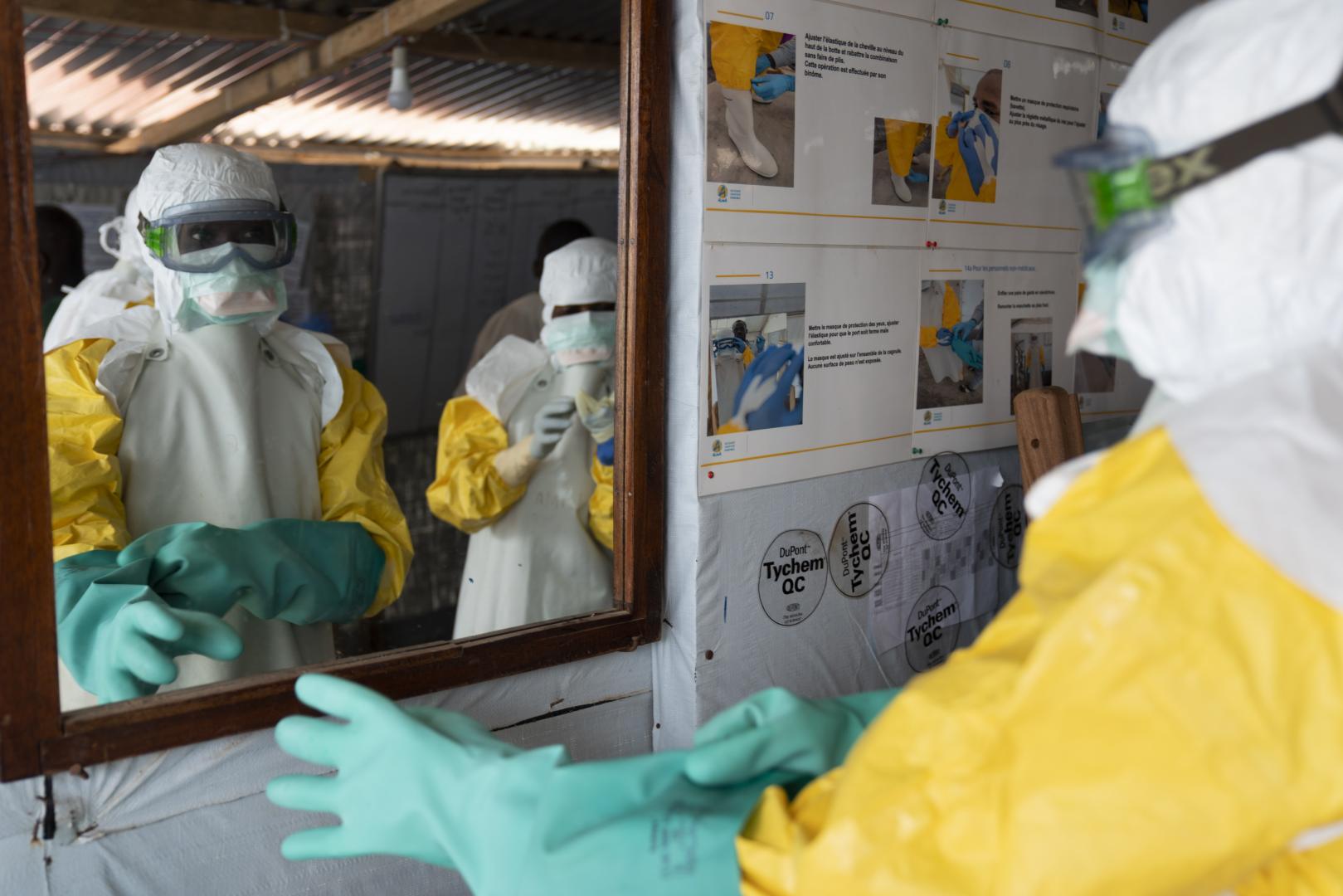
October brought major developments across Nigeria’s health sector, with the confirmation of an Ebola case in Abuja prompting renewed disease surveillance, contact tracing and emergency response measures.
The month also saw growing concerns over Nigeria’s dependence on imported pharmaceutical ingredients, child malnutrition and challenges affecting maternal and child healthcare.
Beyond Nigeria, the Ebola outbreak in the Democratic Republic of the Congo (DRC) continued to raise concerns about regional health security.
PREMIUM TIMES reviews some of the major health developments that shaped October.
Nigeria confirms first Ebola case in over a decade
Nigeria confirmed its first Ebola case since 2014 on 20 October, involving a 42-year-old Ugandan-born woman living in Abuja who recently returned from Uganda.
The confirmation prompted contact tracing, heightened surveillance and infection prevention measures across healthcare facilities.
The Nigeria Centre for Disease Control and Prevention (NCDC) initially identified 44 close contacts, with the number increasing as investigations continued.
Ebola patient evacuated to Switzerland
Nigeria’s confirmed Ebola patient and her husband were medically evacuated to Switzerland on 26 October after the patient received treatment in isolation in Abuja.
The patient was transferred to Geneva University Hospitals, while her husband was placed in isolation at University Hospital Zurich.
Following the evacuation, the World Health Organisation (WHO) said Nigeria had no active confirmed Ebola case, although surveillance and monitoring of exposed contacts continued.
NCDC expands health declarations for international travellers
The NCDC expanded the health declaration requirement to all international travellers after confirming Ebola in Abuja.
The agency said the measure was intended to strengthen screening at points of entry and support the early identification of potential infections.
It also urged healthcare facilities to isolate suspected cases promptly and strengthen infection prevention measures.
Suspected Ebola cases in Adamawa test negative
Two suspected Ebola cases identified in Adamawa State tested negative after two rounds of laboratory testing, the NCDC announced on 31 October.
The suspected cases involved a 34-year-old pilot and his wife, a medical doctor, who were admitted to an isolation facility at the Modibbo Adama University Teaching Hospital in Yola after developing symptoms suggestive of Ebola.
The agency said the Abuja case remained Nigeria’s only laboratory-confirmed Ebola infection during the outbreak.
FG clarifies N10 billion emergency disease response funding
The NCDC said the N10 billion emergency intervention fund approved by the federal government was intended to strengthen preparedness and response to Ebola, Lassa fever and other emerging infectious diseases.
The agency explained that the funding would support surveillance, laboratory diagnosis, protective equipment, emergency operations and rehabilitation of isolation facilities.
The clarification came amid questions over how the emergency allocation was being utilised following the confirmation of Ebola in Abuja.
Child malnutrition admissions rise in North-east
The International Committee of the Red Cross (ICRC) reported an 18 per cent increase in malnutrition admissions at 10 supported health facilities in North-east Nigeria.
The facilities recorded nearly 20,000 admissions between January and September 2026, compared with about 17,000 during the same period in 2025.
Children, pregnant women and breastfeeding mothers were among those most affected, highlighting the continuing impact of insecurity and food shortages on vulnerable communities.
FG partners US foundation to mobilise $1 billion against malnutrition
The federal government announced a partnership with the US-based Operation End Starvation initiative to mobilise more than $1 billion to address child malnutrition and starvation-related deaths across sub-Saharan Africa.
Nigeria was identified as a priority country under the initiative, which aims to mobilise funding over two years.
The government said the partnership would complement existing interventions addressing hunger and acute malnutrition among children, pregnant women and breastfeeding mothers.
Imported drug ingredients raise medicine security concerns
Health and pharmaceutical stakeholders warned that Nigeria’s dependence on imported active pharmaceutical ingredients (APIs) could undermine medicine security and expose the country to global supply disruptions.
At a meeting organised by Nigeria Health Watch in partnership with the World Bank Group, stakeholders called for increased domestic production of essential pharmaceutical ingredients.
They identified inadequate infrastructure, unreliable electricity, financing constraints and regulatory challenges as major barriers to local manufacturing.
WHO warns of widespread undiagnosed diabetes in Africa
The WHO raised concerns over the growing diabetes burden in Africa, warning that about 75 per cent of people living with the condition in the region remain undiagnosed.
The organisation said an estimated 24.6 million adults aged between 20 and 79 were living with diabetes in the African region.
The findings renewed concerns about limited screening, delayed diagnosis and access to treatment for non-communicable diseases.
Ebola outbreak worsens in DR Congo
The Ebola outbreak in the DRC continued to spread during October, with confirmed cases surpassing 10,000 and deaths approaching 5,000.
The WHO reported 10,274 confirmed cases and 4,992 deaths in the country as of 28 October.
The outbreak, which also affected other African countries, intensified concerns about cross-border transmission, surveillance capacity and regional preparedness.
Discover more from Premium Times Nigeria
Subscribe to get the latest posts sent to your email.
-

 News2 days ago
Plateau APC 2027 Campaign Council inaugurated today in Jos
-
Health4 days ago
Ebola: No new cases in Nigeria as two suspected cases in North-east test negative
-
News3 days ago
Plateau Igbo Community Ends Leadership Crisis, Elects Johnson Nwosu as Eze Igbo IV
-
News3 days ago
NPFL Matchday 11: Shooting Stars Run Riot, Rivers United Held by Rangers as Bendel, Kano Pillars Claim Away Wins