News
NEWSAN advocates increased WASH funding in Plateau

The Society for Water and Sanitation (NEWSAN) has called for strengthened financing mechanisms, institutional reforms, and multi-stakeholder collaboration to enhance water, sanitation and hygiene (WASH) services in Plateau.
The national coordinator of NEWSAN, Attah Benson, made the call during an advocacy visit to WASH stakeholders in Plateau State on Friday.
Mr Benson said the visit was part of the network’s ongoing efforts to deepen engagement and support reforms in the state’s WASH sector.
He noted that NEWSAN had maintained consistent advocacy in Plateau through engagements with key stakeholders at different periods, including after the #EndSARS protests, the 2023 general elections, and a follow-up visit in November 2025 to the deputy governor on its WASH scorecard.
“We are here again to see how we can move forward together in strengthening the sector,” he said.
Mr Benson highlighted the growing burden of neglected tropical diseases (NTDs) linked to poor water and sanitation, noting that about 150 million Nigerians are at risk of contracting schistosomiasis, and that the country bears the highest burden in Africa.
He added that more than 13.9 million Nigerians were at risk of blindness from advanced trachoma, stressing that both diseases were closely associated with inadequate access to potable water and sanitation, especially in rural communities and among school-age children.
He said strengthening WASH systems was critical to addressing these public health challenges.
The NEWSAN coordinator said the organisation was prioritising systems strengthening and institutional development through policy assessment, improvements to the regulatory framework, enhanced coordination, and long-term planning.
He added that these measures would also improve resource mobilisation within the sector.
Mr Benson referenced the Sanitation and Water for All (SWA) initiative, noting that it was promoting Water and Sanitation Compacts — high-level agreements by heads of state to guarantee funding for the sector.
He also pointed to outcomes from the April 2026 SWA Finance Ministers’ Meeting, which emphasised the role of fiscal policy in ensuring climate-resilient infrastructure.
He, therefore, urged the Plateau WASH sector to champion the creation of a “WASH-procurement budget line” to allocate a fixed percentage of project contracts to sanitation and water services.
According to him, such a mechanism would provide sustainable funding and reduce reliance on limited government budgets.
Mr Benson emphasised that Sustainable Development Goal 6 (clean water and sanitation) was central to achieving other SDGs, including health, education, economic growth, and social justice.
“Without progress on Goal 6, many of the other goals cannot be achieved,” he said.
He further underscored the role of water in addressing climate change and advancing development outcomes.
Mr Benson also highlighted the importance of behaviour change communication in ending open defecation and improving sanitation practices.
He expressed concern about the limited outcomes of the 2022 National Sanitation Summit, noting that it did not fully achieve its objective of attracting private-sector investment and partnerships.
He added that the WASH sector had strong potential for revenue generation if properly structured, especially through efficient tariff systems, metering, and improved service delivery.
While acknowledging that access to water is essential, he said that sustainable service delivery often requires cost-reflective systems with safeguards to protect citizens.
He also pointed to opportunities in the sanitation value chain, including faecal sludge management, which could generate economic value through biogas, fertiliser, and briquette production.
Responding, Plateau Commissioner for Water Resources and Energy, Bashir Lawandi, described the visit as timely and reaffirmed the state government’s commitment to strengthening collaboration with stakeholders.
Mr Lawandi was represented by the Sustainable Rural Water Supply and Sanitation (SURWASH) state coordinator, Jonathan Malann.
He said Plateau had developed a well-organised and coordinated water sector that had consistently ranked highly in performance assessments.
“During the last verification exercise, Plateau State came out top in terms of performance. Again, from the January Independent Verification Report, we are still leading.
“This shows that we are making progress and moving in the right direction,” he said.
The commissioner, however, acknowledged persistent challenges, especially the prevalence of water and sanitation-related diseases across the state.
According to him, 16 out of the 17 local government areas are affected, with only one recording a relatively lower impact.
“These are worrisome statistics because they are directly linked to water and sanitation conditions,” he said.
He added that trachoma cases were still present in at least one local government area.
He said the state was implementing a results-based WASH programme focused on eliminating open defecation.
He noted that while only one local government had officially attained open defecation-free (ODF) status under the programme, the state had independently achieved three ODF local governments.
“We are committed to declaring more local governments ODF before the end of the year, particularly within our programme communities,” he said.
He emphasised that achieving ODF status requires sustained community engagement, infrastructure development, and behavioural change interventions.
Mr Lawandi reaffirmed that the state would continue to work closely with the National Union of Sanitation Workers of Nigeria, describing it as a critical partner in WASH implementation.
“We have not left NEWSAN behind in the implementation. We will continue to carry them along and strengthen the relationship,” he said.
He commended sanitation workers involved in community “triggering” activities, noting their role in mobilising rural and urban communities to adopt improved hygiene practices.
He urged implementers to strengthen coordination to accelerate progress toward sanitation targets.
He also acknowledged the tight schedule under which the meeting was held.
“Our attention is required in multiple places, but we considered it important to attend to you and ensure this engagement takes place,” he said.
He reaffirmed the state government’s commitment to sustained collaboration with stakeholders and development partners to improve WASH service delivery and public health outcomes.
(NAN)

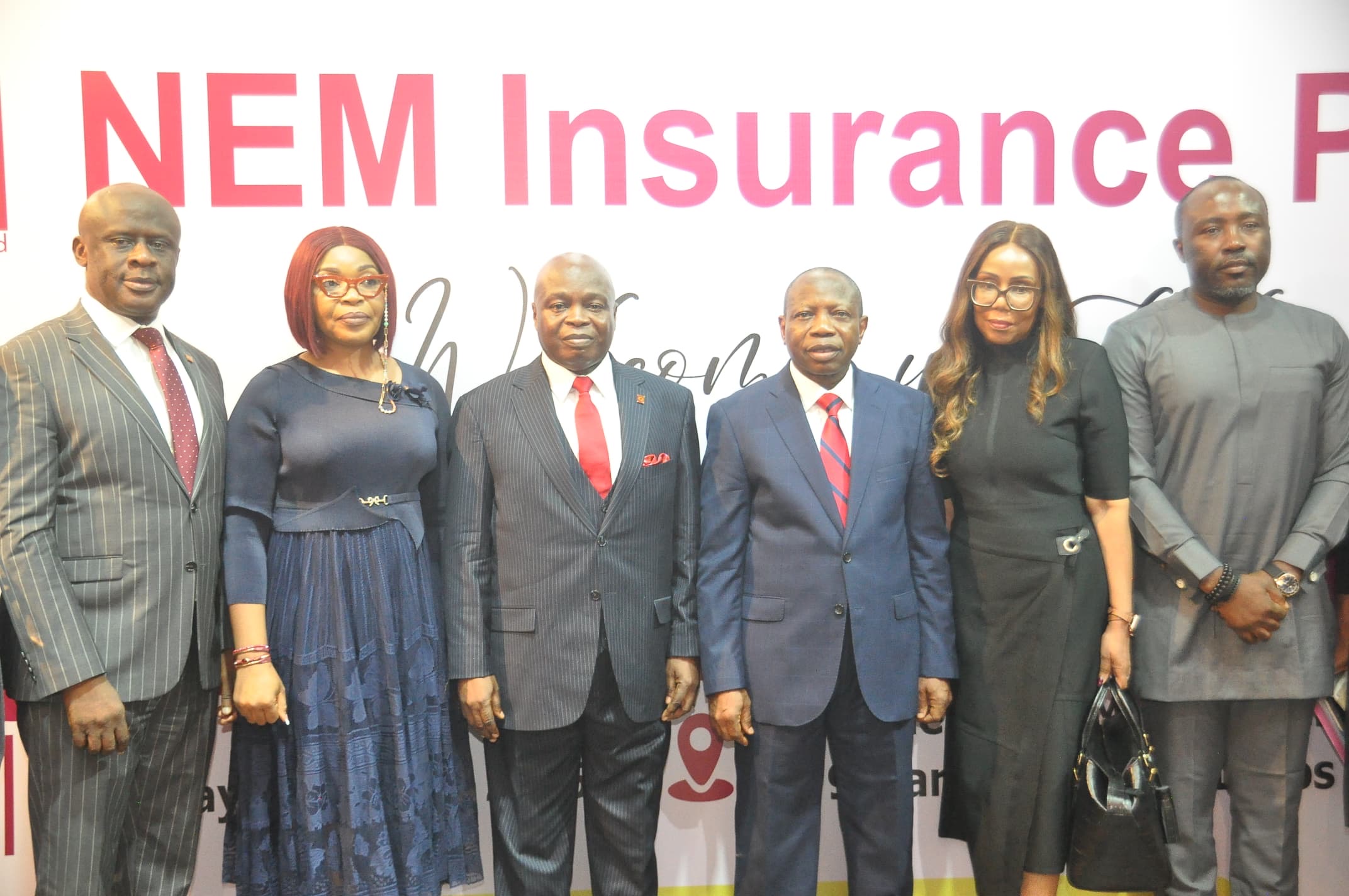

From left: Idowu Semowo, Executive Director, Finance and Investment, NEM Insurance Plc; Ifunanya Iwuagwu, Company Secretary/Legal Adviser; Andrew Ikekhua, Managing Director/CEO, NEM Insurance Plc; Tope Smart, Group Chairman; Daphne Dafinone, Director, and Kelechi Okoro, Non-Executive Director, during the 56th annual general meeting of NEM Insurance Plc held in Lagos on Thursday 14-5-2026.
The Board of Directors of NEM Insurance Plc has recommended a dividend payout of ₦7.52 billion to shareholders for the 2025 financial year, following strong growth recorded across key financial indicators.
The Board disclosed this during its 56th Annual General Meeting held in Lagos yesterday, where the Group Chairman, Tope Smart, presented the Annual Report and Financial Statements for the year ended December 31, 2025.
The dividend payout of N1.50 per ordinary share, amounting to N7.52 billion, subject to shareholders’ approval and applicable withholding tax deductions.
At the meeting, shareholders commended the board and expressed satisfaction with the company’s steady returns and strong performance, despite a tough business environment, noting that the proposed dividend reflects management’s commitment to rewarding investors.
Speaking on the company’s performance, Smart disclosed that insurance revenue grew by 56 per cent from N97.9 billion in 2024 to N152.3 billion in 2025, while Investment income also rose significantly by 70 per cent to N12.9 billion from N7.6 billion recorded in the previous year.
He added that the company’s subsidiaries, NEM Asset Management Company Limited and NEM Health Limited, did quite well and made positive contributions to the Group’s earnings during the year under review.
On claims settlement, Smart stated that claims expenses increased to N49.8 billion in 2025 from N31.3 billion in 2024, reflecting the company’s commitment to meeting obligations to policyholders promptly.
According to him, the Group recorded a profit before tax of N27.9 billion. He, added that the company maintained a strong financial position as financial assets increased by 38 per cent, while total assets and total equity rose by 49.8 per cent and 29 per cent respectively.
As part of its expansion drive, Smart revealed that plans to establish a life assurance company were at an advanced stage and would soon be unveiled.
Also speaking at the AGM, the Managing Director of NEM Insurance Plc, Andrew Ikekhua, said the company’s balance sheet remained robust, reflecting strong capitalisation and preparedness to operate effectively under the new regulatory capital regime introduced by the Nigerian Insurance Industry Reform Act 2025.
He noted that the company also received several awards and recognitions in 2025, including Best General Insurance Company of the Year; Outstanding Performance in Claims Settlement Award by Risk Analyst; and the Pearl Award in the Financial Services ( Insurance Sector) for the year 2025.
The post NEM Insurance declares N7.52bn dividend as shareholders applaud strong 2025 performance appeared first on Business Today NG.

Africa’s accelerating push to establish artificial intelligence governance frameworks risks leaving millions of citizens outside the policy processes that will define the continent’s digital future, according to Fahidat Abdullahi, Fahidat Abdullahi, Policy Advisor at the Africa Digital Inclusion Alliance.
Speaking during the online Participatory AI Research & Practice Symposium Panel, Abdullahi warns that many AI governance systems across Africa are being built on digital participation models that assume widespread connectivity, despite persistent and significant digital access gaps across the continent.
“Participatory AI governance is often framed as a democratic process, but participation requires access and in context of digital inequity that access collapses and that requires different mechanisms,” she says in her presentation titled Rethinking Participatory AI Governance Under Digital Inequity.


“The problem here is that many AI governance processes rely on digital mechanisms,” she says. “There is an assumption that citizens can participate digitally through online portals, virtual consultations and web-based feedback platforms. But what happens when millions of people cannot connect?”
Her intervention comes as African governments intensify efforts to position themselves within the global artificial intelligence economy. Abdullahi cites McKinsey projections suggesting AI could contribute billions of dollars to Africa’s economy by 2030, with more than 15 African countries already having developed national AI strategies as of 2025.
However, she argues that these ambitions are unfolding against a structural constraint: widespread digital exclusion.
According to data presented at the symposium, 64% of Africans remain offline, while high data costs continue to deepen inequality, particularly in rural and underserved communities.
Digital exclusion threatens legitimacy of AI governance
Abdullahi says many AI governance frameworks rely heavily on online consultation mechanisms that automatically exclude large segments of the population.
“The problem here is that many AI governance processes rely on digital mechanisms,” she says. “There is an assumption that citizens can participate digitally through online portals, virtual consultations and web-based feedback platforms. But what happens when millions of people cannot connect?”
She argues that this structural disconnect raises fundamental questions about the legitimacy and inclusiveness of emerging AI governance systems across Africa.
“When baseline digital access is uneven, participatory legitimacy cannot be assumed,” she says.
Governance framework analysis reveals inclusion gaps
To assess the issue, Abdullahi adapts Archon Fung’s Democracy Cube framework to evaluate AI governance models through the lens of digital inclusion. Her adapted model examines who participates, how participation occurs, and what level of influence participants have on policy outcomes, while also accounting for infrastructure access, affordability, language barriers, and digital literacy.
She applies the framework to three major policy initiatives: Nigeria’s National Artificial Intelligence Strategy, Kenya’s Artificial Intelligence Strategy 2025–2030, and the African Union Continental Artificial Intelligence Strategy.
The findings highlight varying levels of inclusivity across the three governance models.
For Nigeria, Abdullahi notes that while the strategy acknowledges digital inequality and infrastructure gaps, the consultation process remains heavily dependent on digital participation channels.
She says Nigeria’s AI strategy development engaged “over 120 internal and external experts,” but argues that this approach risks excluding a significant portion of the population, including the estimated 55% of Nigerians who remain offline.
“Nigeria utilised an in-person workshop and then followed with an online portal for public review,” she says. “There were no primary offline mechanisms for the public to participate.”
She also highlights linguistic exclusion challenges in Nigeria’s consultation process.
“For a country like Nigeria, where I’m from actually, that has over 500 languages, that is missing a key multilingual approach,” she says, noting that engagement was conducted primarily in English.
African Union, Kenya show contrasting approaches
The African Union Continental AI Strategy, she notes, follows a largely expert-driven model anchored in institutional and technical working groups.
“The AU takes a more expert-only approach, relying heavily on specialized task forces and institutional experts,” she says.
While the AU framework references community-oriented principles, Abdullahi argues that it lacks clear mechanisms to track or integrate input from digitally marginalised populations.
By contrast, Kenya emerges as the most inclusive of the three case studies.
According to her analysis, Kenya conducted offline town hall meetings across 17 counties and incorporated Swahili-first AI considerations within its policy framework.
“Kenya demonstrated a stronger commitment to linguistic and physical accessibility,” she says.
However, she notes that limitations persist, as many consultations were still concentrated in urban innovation hubs and conducted predominantly in English.
Abdullahi argues that a broader structural issue runs through all three policy frameworks: digital infrastructure is primarily treated as an economic development enabler rather than a democratic governance requirement.
“Across all three of them, digital infrastructure is identified and framed in the strategies as an AI development prerequisite, but not as an AI governance prerequisite,” she says.
She warns that this framing risks widening existing inequalities as governments expand AI deployment across critical sectors including public services, healthcare, education, finance, and security.
“When we do not have the full consideration of digitally excluded individuals, the risk here is that as we’re advancing AI development and other advanced technologies, we risk widening the digital divide,” she says.
Call for offline-first AI governance models
To address these challenges, Abdullahi calls for the deliberate integration of offline and intermediary participation mechanisms into AI governance systems, rather than treating them as supplementary measures.
“It’s a necessity to embed offline and intermediary mechanisms alongside digital platforms,” she says. “But it should not be an afterthought, but a part of the actual core design.”
She also urges policymakers to clearly demonstrate how citizen input, particularly from marginalised groups, directly influences final policy outcomes.
“So showing that they actually had influence, not just that there was input and consultation from them, but reflecting clearly how that impacted the outcome,” she says.
No one-size-fits-all approach for Africa’s AI governance
The presentation further cautions against uniform AI governance models across Africa, citing the continent’s deep linguistic, cultural, and socioeconomic diversity.
“We can’t have a one-size-fits-all approach across all countries,” she says. “Solutions cannot be identical everywhere.”
As African nations accelerate AI strategy development and compete for investment in emerging technologies, the research underscores a critical governance question: whether the citizens most affected by AI systems are meaningfully included in shaping the rules that govern them.
Stay ahead with real-time reports, breaking news, and exclusive insights delivered directly to your phone. Don’t settle for outdated information. Join TECHNOLOGYTIMES NEWS on WhatsApp for 24/7 updates.
Join Our Whatsapp Channel
-

 News3 days ago
FG donates foodstuffs to victims of bandits’ attacks in Plateau
-
News3 days ago
Riyom APC Youths Endorse Tinubu, Mutfwang, Dalyop Fom for Continuity Ahead of 2027
-
News3 days ago
Yusuf Gagdi Receives Massive Support as Ward Tour Begins Ahead of APC Primaries
-
News3 days ago
Governor Mutfwang Bans Night Mining and Grazing in Plateau After Deadly Attacks