Top Story
Matthew Tegha Emerges as PLABOMA Chairman, Promises a New Era for Plateau’s Digital Media


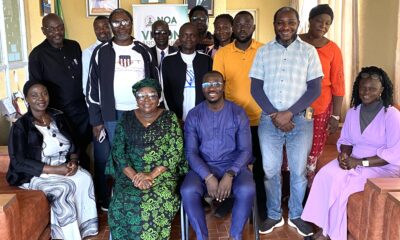
In a dynamic turn of events, Matthew Tegha has been elected as the new Chairman of the Plateau Bloggers and Online Media Association (PLABOMA). The elections, held during the association’s Annual General Congress at its Jos secretariat, mark the beginning of a three-year term for Tegha and his team of vibrant executives.
Tegha, who previously served as Deputy Chairman, takes over from the outgoing Chairman, Friday Bako, a pioneer leader celebrated for steering the association through its formative years. The transition was sealed with the administration of the oath of office by Lohkat Binde, Esq., setting the stage for a fresh chapter in PLABOMA’s history.


The newly elected executives include:
- Ibrahim Kalamu – Secretary
- Peter Akpa – Public Relations Officer
- Patience Tekura – Financial Secretary
- John Dauda – Auditor
In his acceptance speech, Tegha exuded confidence and gratitude, pledging to lead with dedication, transparency, and integrity. He painted a bold vision for PLABOMA as a force for good in society, emphasizing the transformative power of blogging and online media.
“Blogging and online media are not just platforms; they are tools for shaping society, bridging communication gaps, and driving positive change. As practitioners, we bear the responsibility to inform, inspire, and empower our communities,” Tegha stated passionately.
He urged members to embrace professionalism, collaboration, and innovation, encouraging active participation to create a lasting legacy for the association.
Friday Bako, in his farewell address, congratulated the new team and expressed confidence in their ability to propel PLABOMA to greater heights. Reflecting on his tenure, Bako highlighted the challenges overcome and milestones achieved during his leadership, pledging his continued support for the association’s progress.


The event also featured goodwill messages from notable figures in Plateau’s media landscape. Polycarp Auta, Chairman of the NUJ Correspondents’ Chapel, commended the outgoing executives for their service and urged the new team to uphold ethical standards and prioritize truth in reporting.
Similarly, Bolaji Pedro General Manager of JayFM Jos called for greater focus on members’ welfare and professional development, emphasizing the importance of the partnership between traditional and digital media in fostering progress.
Under Tegha’s leadership, PLABOMA aims to elevate its role as a credible voice for peace, professionalism, and societal development. With a strong team and a compelling vision, the association looks poised to harness the power of digital media to inspire meaningful change across Plateau State and beyond.








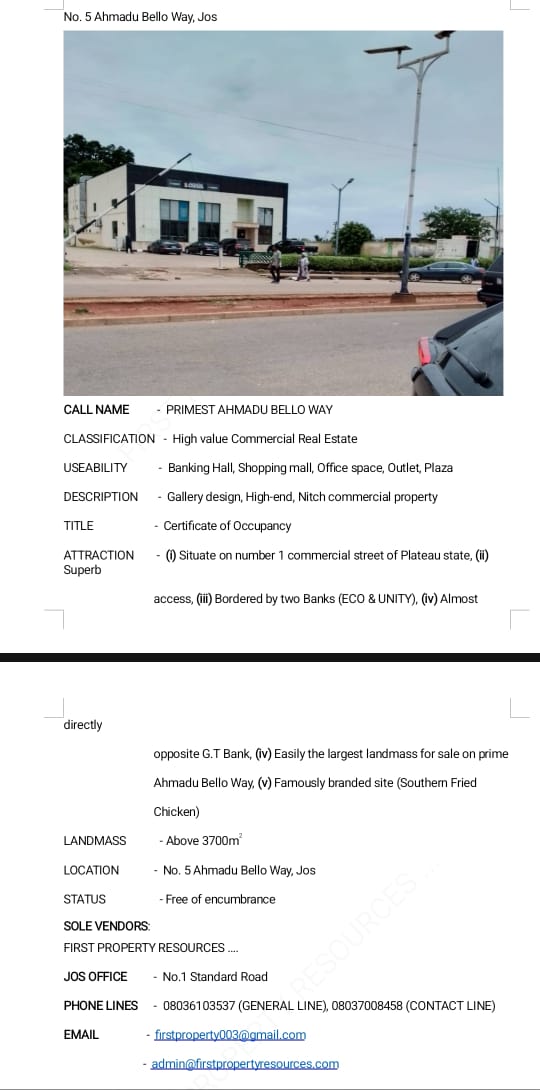
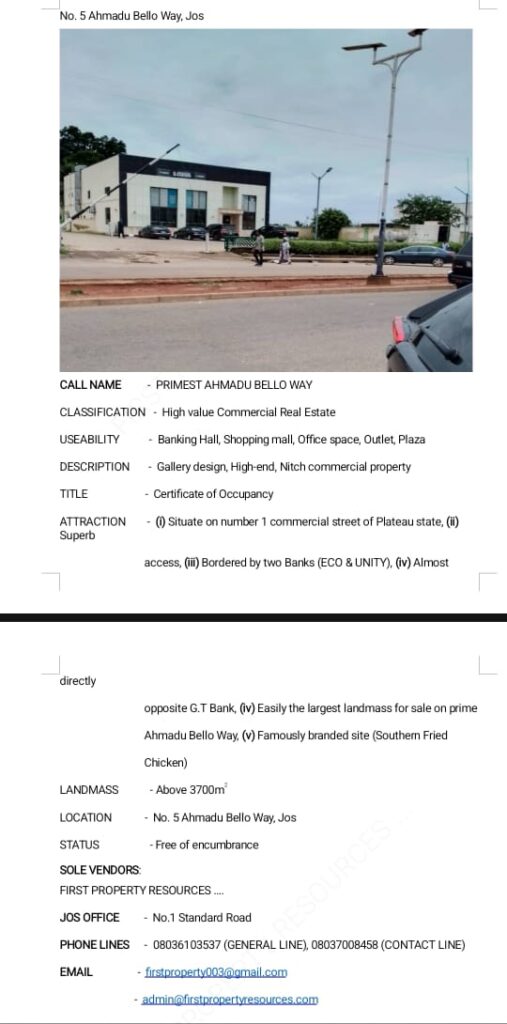
This top of the class commercial property is special for its prime location, expanse and usability advantage. It offers a rare advantage in proximity, vintage and class. Situated on the number one (No.1) commercial street of Plateau state, it is bordered on both sides by ECO and UNITY Banks. Famously housing Southern Fried Chicken (SFC), it is a unique ownership for investors, business owners or status symbol.
If you’re looking for a premium investment opportunity in the heart of Jos, this exceptional commercial property on Ahmadu Bello Way offers unmatched value, visibility, and versatility.
Property Overview
Situated at No. 5 Ahmadu Bello Way, widely regarded as the number one commercial corridor in Plateau State, this high-end property is ideal for a wide range of business uses including a banking hall, shopping mall, office complex, retail outlet, or plaza.
Key Features
- Gallery-style architectural design with a modern, high-end finish
- Spacious landmass of over 3,700m² — one of the largest available on this prime street
- Certificate of Occupancy (C of O) ensuring secure and verifiable ownership
- Free from encumbrances — ready for immediate transaction
- Previously occupied by a well-known brand (Southern Fried Chicken), adding commercial prestige

Strategic Location Advantage
This property boasts a superb location with excellent accessibility and strong commercial appeal:
- Located on Jos’ busiest and most sought-after business axis
- Bordered by major financial institutions including ECO Bank and Unity Bank
- Almost directly opposite GTBank, ensuring high traffic and visibility
- Ideal for businesses seeking prominence and easy customer access
📞 Contact Information
First Property Resources (Sole Vendors)
Jos Office: No. 1 Standard Road
📱 08036103537 | 08037008458
🌐 www.firstpropertyresources.com
📧 firstproperty003@gmail.com
📧 admin@firstpropertyresources.com
This is a rare opportunity to acquire a landmark commercial property in a prime location. Whether you’re an investor or business owner, this property offers the perfect blend of size, visibility, and strategic positioning to elevate your enterprise.

Prime Commercial Property for Sale on 5 Ahmadu Bello Way, Jos
-

 News4 days ago
2027: El-Rufai’s detention could hurt APC, generate sympathy – SEDSAC director, other analysts express views
-
News3 days ago
Lucid Motors’ EV output falls to lowest level in almost 2 years
-
Business4 days ago
NAIPE 11th Annual Conference Moves to 12 Noon as 28 Stakeholders Back Event
-
News2 days ago
Mirror Particle is building a ‘world model’ of human behavior