News
Langtang South, Mikang Residents Seek Lasting Government Intervention as Fact-Finding Committee Tours Southern Plateau


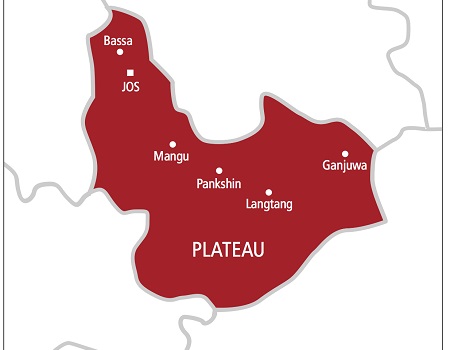
In a renewed drive to end two decades of communal unrest, the Plateau State High-Powered Fact-Finding Committee visited Langtang South and Mikang Local Government Areas on Thursday, July 24, 2025, gathering firsthand accounts of challenges and progress in the southern zone of the state.
The committee, set up by Governor Caleb Mutfwang, is tasked with investigating the underlying causes of recurring violence in Plateau communities between 2001 and 2025 and recommending viable, long-term solutions.

Local Voices Take Center Stage in Langtang South
During the visit to Langtang South, community leaders, government officials, and security personnel welcomed the delegation with hope and cautious optimism.


Chairman of the committee, Maj. Gen. Nicholas Rogas (rtd), explained the team’s mission: “We are not here to blame anyone. We want to hear directly from the people—your experiences, your efforts to maintain peace, and the issues still threatening that peace.”

Responding on behalf of the council, Deputy Chairman Julcit Musa Nanpon thanked the governor for remembering the area, noting that while Langtang South had largely escaped recent mass killings, the people were still grappling with rising petty crimes and youth unemployment.
“Our youths are idle and frustrated. Motorcycles are snatched at night, and armed robbers extort traders returning from markets. Last week, a man lost over ₦2 million on his way home. These are serious concerns,” Nanpon said.

Traditional ruler, Chief Dauda Caleb, the Acting Ponshi Byam, expressed appreciation for the government’s outreach, adding, “Peace is gradually returning, but we now face water scarcity and other basic needs. We pray the government supports us.”

In a closed-door session with the committee, stakeholders raised concerns about past attacks, lingering trauma, lack of compensation, and inadequate infrastructure, all of which they said contribute to ongoing instability.

Mikang Community Demands Action on Land, Boundary Disputes
In Mikang, the fact-finding committee was received at the council secretariat by Deputy Chairman Nungkat Eukuk Koplang and other officials representing Executive Chairman Dr. Soepding Alkali Bernard.

Council Secretary Nanhkin Dafom presented a well-documented list of grievances, including unresolved boundary disputes, communal tensions, and the fallout of a 2024 land-related conflict between the Tonglong and Fungalang communities.
“Most of our issues are internal, but they require urgent attention. The absence of clear boundary demarcations is fueling tension. Even though some disputes have been settled, pockets of resentment still remain,” Dafom said.

At the palace of His Royal Highness, Bar. Donald D. Puntel II, President of the Mikang Traditional Council, community elders echoed similar sentiments. The royal father lamented government neglect of previous inquiry reports.
“Committees come, reports are written, but no action follows. If crimes are not punished, they will continue. Our youths are watching,” he warned.
He emphasized that the crises in Mikang were “petty but persistent,” rooted in boundary confusion, local rivalries, and inadequate government follow-through. He called on the state to apply the rule of law and implement findings, warning that unaddressed grievances only fester.
Wrapping up the visit, Maj. Gen. Rogas told reporters that the situation in both LGAs showed that peace was possible with proper structures in place.
“Langtang South and Mikang have shown us that local leadership and community effort can make a difference. We’ll compile all findings and make honest recommendations to help the state move forward,” he said.

Mikang
The committee continues its tour across the state, engaging stakeholders and gathering perspectives aimed at ending the cycle of violence and restoring Plateau’s reputation as a peaceful and hospitable state.


Mikang

Mikang





Nigerian table tennis prospect Matthew Kuti has set his sights on winning two gold medals for the country at the 2026 Youth Olympic Games in Dakar, Senegal, as he intensifies preparations for the competition.
Kuti is targeting victory in both the men’s singles and mixed doubles events, expressing confidence in his preparation while acknowledging the technical demands of table tennis at the highest level.
“Thinking game is a very difficult game and it’s very scientific game. So I’m very, very happy that I participate in today’s game,” Kuti said.
The young Nigerian explained that his ambition is to represent the country successfully in Dakar, where he hopes to compete across multiple events and convert his preparations into gold medals.
“My challenge is to go there and take a gold for Nigeria, play many tournament and also there is mixed doubles in Dakar and singles. I want to win the two,” he said.
Kuti acknowledged that achieving the double target would require commitment and hard work, noting that he is currently in training as he works towards peak performance for the Games.
“So I will try my best. I will try what I can do because now I’m in training. So I will try my best,” he added.
The Youth Olympic Games will take place in Senegal from October 31 to November 13, 2026, bringing together young athletes from across the world in a multi-sport competition.
For Kuti, the tournament represents an opportunity to test himself against international opposition and contribute to Nigeria’s medal ambitions. His focus on both singles and mixed doubles reflects his determination to make the most of the opportunities available to him in Dakar.
With preparations ongoing, the Nigerian youngster will be hoping that his training, tournament experience and determination can translate into strong performances when the competition begins.

The Lagos State House of Assembly has unanimously supported the proposed establishment of state police, following its consideration of the Constitution Amendment Bill transmitted by the National Assembly.
The speaker, Mudashiru Obasa, disclosed this on Tuesday during plenary, which lawmakers reconvened for after cutting their recess short to consider the proposed amendment.
Mr Obasa said the establishment of state police had remained a recurring issue from the fifth to the 10th assembly, with successive legislatures discussing ways to strengthen security and protect lives and property.
He described the development as a step forward but expressed concern that some issues raised by state legislatures had not been adequately addressed.
“I am pleased that the issue of state police has received attention, but there are concerns that must be addressed to ensure that the arrangement works effectively,” Mr Obasa said.
The bill, titled the Constitution of the Federal Republic of Nigeria, 1999 (Sixth Alteration) Bill, 2026, seeks to provide for the establishment of the State Police Service and related matters.
The speaker said further developments in the amendment process should give states greater control over policing arrangements but stressed the need to clearly define the relationship between federal and state police, particularly regarding powers, control and responsibilities.
“The functions and responsibilities of state police should be clearly defined, with appropriate provisions made for state legislatures,” he said.
He commended President Bola Tinubu for commitment to democracy and democratic institutions, as well as the Senate and House of Representatives for advancing the proposal.
Mr Obasa further called for a clear constitutional provision for parliamentary police to protect legislative institutions and preserve their independence.
He cited past incidents in which state legislative buildings were allegedly demolished or locked up at the instance of governors, describing such developments as threats to legislative autonomy.
“There should also be provisions for parliamentary police, as we have in the United States Congress and at Westminster in the United Kingdom, to protect democracy and safeguard state legislatures.
“We must learn from past incidents in which a governor could order demolition of a legislative building or have a state legislature locked up simply to serve personal interests.
“To prevent such incidents from happening again and protect our nascent democracy, we must safeguard our existing state legislatures. Establishing parliamentary police will help protect legislative institutions and ensure that independence of the legislature is not undermined,” he said.
The speaker expressed confidence that outstanding concerns would be addressed as the constitutional amendment process progressed.
The House subsequently adjourned plenary until November 9, 2026.
The Lagos assembly‘s position comes as the push for state police has crossed its most critical constitutional hurdle.
The Presidential Working Group on the National Policing Bill, chaired by the Chief of Staff to the President, Femi Gbajabiamila, had on Friday announced that 24 State Houses of Assembly had approved the Constitution (Sixth Alteration) Bill, 2026.
According to him, the approval meets the two-thirds threshold—24 of 36 states—required under Section 9 of the 1999 Constitution for alteration.
The Working Group chairman commended the state assemblies and the National Assembly for passing the amendment in both chambers.
The 24 states are Adamawa, Delta, Edo, Kwara, Nasarawa, Ogun, Osun, Oyo, Plateau, Rivers, Taraba, Zamfara, Enugu, Anambra, Imo, Ekiti, Kebbi, Akwa Ibom, Bayelsa, Benue, Cross River, Abia, Yobe, and Kaduna.
With Lagos’ unanimous vote on Tuesday, the figure has now risen to 25, leaving 11 states yet to formally communicate their positions.
The National Assembly transmitted the bill to the states on September 16 with a 30-day administrative window.
(NAN)

-

 News3 days ago
Troops rescued 70 abductees, recovered N10 million ransom: DHQ
-
News3 days ago
Plateau Activates Ebola Preparedness Measures, Urges Residents to Observe Safety Guidelines
-
Business3 days ago
CBN grants JP Morgan approval-in-principle to set up merchant bank
-
Business3 days ago
REA Ends 16 Years of Darkness in Two Kano Communities