Connect with us

News

Family narrates abduction, release of UniJos student, Azi

info

Published

on

UniJos.jpg

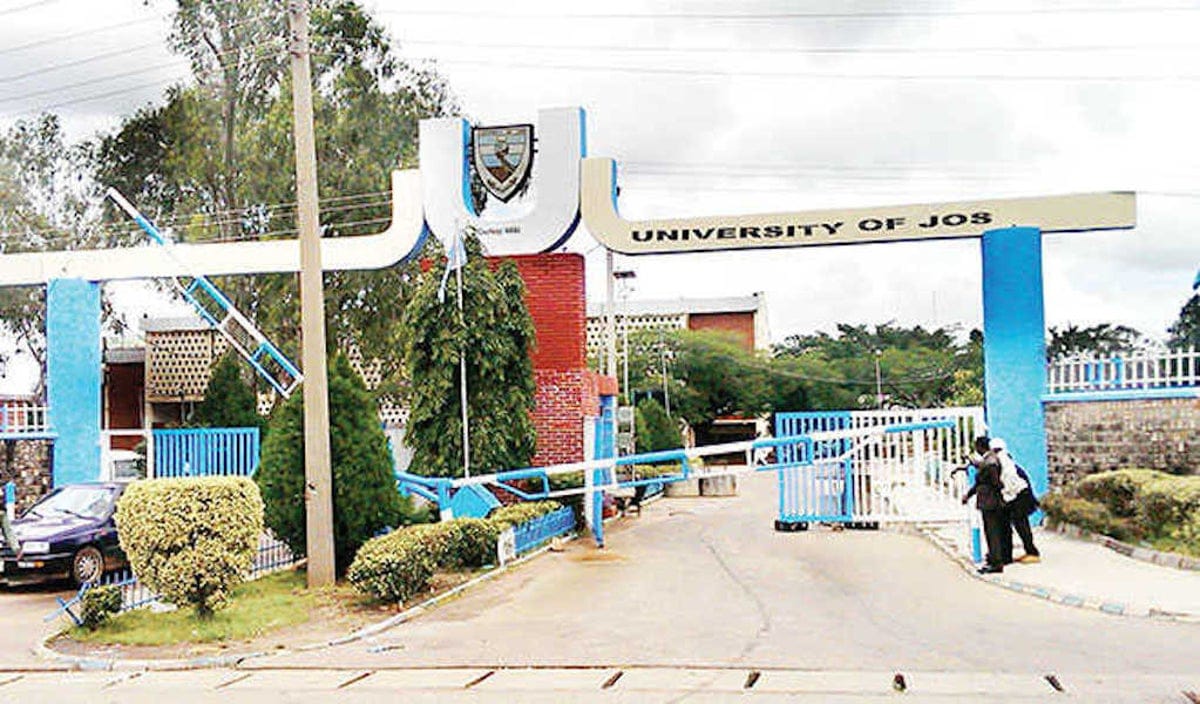
A University of Jos student, John Arum Azi, who spent about two weeks in captivity arrived Jos, the Plateau State capital, on Wednesday at about 10pm, after regaining his freedom.

The victim was abducted while travelling to Kaduna from Jos. A video of him being tortured by his captors generated reactions across the country and beyond.

His abductors later moved Azi from Kaduna to Zamfara, prompting rumours that he had been killed.

A short video on Tuesday circulated online showing that he had been released and was in the company of someone who appeared to be his relative.

His elder brother, Bulus, confirmed that he has been reunited with the family and has been admitted to the Jos University Teaching Hospital (JUTH) for treatment.

Bulus said Azi told the family upon arrival that he was not abducted on his way to Kaduna as widely reported, but in Zaria, where he had gone for a job.

According to him, “Azi had already arrived in Zaria and was on his way to meet his contact for the job he went for when he was kidnapped and taken into the bush.”

Bulus, while narrating how Azi was released, stated that their family had been in touch with the kidnappers since the victim was kidnapped, saying that they were always sendingmoney to them for recharge cards upon their request.

Sometimes, he explained that they would tell them that they are sick themselves and that they should send money for their drugs, stressing that they kept negotiating the ransom, which they had earlier agreed to be N6 million.

He noted that when the kidnappers saw the crowdfunding activities online, they increased the ransom to N15 million, pointing out that they appealed to them, and eventually settled at N10,315,000, and that was what they eventually paid the kidnappers.

Azi and another abductee, he explained were transported on motorcycles from Zamfara to Zaria, with an armed member of the abductors following behind upon payment of the ransom.

Upon arriving in Zaria, Bulus also explained the other abductee — a Muslim boy from Toro in Bauchi State — contacted a relative, who rushed them to a hospital where they were immediately given drips.

He explained that after the initial Zaria treatment, they then chartered a vehicle from Jos to Zaria to bring him back, saying that Azi arrived on Thursday night at about 10pm, and was rushed to JUTH for proper treatment.

He lamented that all Azi’s body has stripes from the flogging he received from the kidnappers.

Asked whether security agencies or government officials were in contact with them during the incident, he further explained that they reported the matter to the police when the video first surfaced, and that the DSS also contacted them at the initial stage.

However, after Azi was released, he said the police only reached out after seeing the video online and offered to assist in escorting them home, but arrived after the family had already picked him up and taken him to JUTH.

Continue Reading
Click to comment

Leave a Reply

Your email address will not be published. Required fields are marked *

Business

PenCom Targets 85% Pension Coverage for Nigerian Workers

info

Published

on

By

IMG 20241121 WA0041.jpg

BY NKECHI NAECHE-ESEZOBOR—Nigeria’s pension industry is set for a major expansion push as the National Pension Commission (PenCom) intensifies efforts to bring more workers into the contributory pension scheme.

Director-General of PenCom, Omolola Oloworaran, disclosed that the commission is aiming to achieve at least 85 percent coverage of Nigerian workers under the scheme. She spoke during a joint annual roundtable session with the leadership of the Trade Union Congress of Nigeria (TUC), part of ongoing stakeholder engagements to deepen transparency, trust, and collaboration in pension administration.

Oloworaran said the commission is deploying multiple strategies, including incentives and expanded outreach, to drive participation across both formal and informal sectors. A key focus is the newly rebranded Personal Pension Plan, previously known as micro pensions, designed to attract a broader segment of Nigerians, particularly those outside formal employment.

“We want a situation where at least 85 percent of Nigerian workers are on the scheme or have the intention to participate,” she said, noting that widening pension coverage remains central to PenCom’s reform agenda.

To boost grassroots adoption, PenCom has introduced accredited pension agents tasked with engaging Nigerians directly in markets, rural communities, and informal workplaces. Unlike Pension Fund Administrators (PFAs), which largely operate at corporate levels, these agents are expected to build trust and drive enrollment at the community level.

The initiative also creates a new business stream, particularly for fintech firms, as accredited agents can earn up to 40 percent of PFA fees on an annuity basis. According to Oloworaran, this model is expected to attract new entrants into the pension ecosystem and accelerate onboarding.

PenCom is also leveraging public sensitisation campaigns to increase awareness. During recent engagements around International Women’s Day, the commission recorded strong participation and growing interest, especially among women.

Despite these efforts, Oloworaran acknowledged that compliance within the formal sector remains a significant challenge. She stressed the need for stronger collaboration with labour unions to enforce compliance, particularly among employers who fail to remit pension contributions.

At the subnational level, pension adoption remains uneven, with only eight out of Nigeria’s 36 states demonstrating significant compliance. PenCom said it is intensifying engagements with state governments and labour organisations to improve adoption rates.

The commission also highlighted the flexibility of the Personal Pension Plan, which allows voluntary contributions for individuals, including provisions for parents to save on behalf of their children from birth.

Oloworaran expressed optimism about the future of the industry, noting that ongoing reforms, expanded participation channels, and increased stakeholder collaboration would position Nigeria’s pension system for stronger growth and sustainability.

The post PenCom Targets 85% Pension Coverage for Nigerian Workers appeared first on Business Today NG.

Continue Reading

News

TCN pledges improved power supply

info

Published

on

By

EED6B05C 48AB 4DB9 AC7D C4E4CAD2E820.jpeg

The Managing Director of the Transmission Company of Nigeria (TCN), Sule Abdulaziz, has pledged to improve bulk power delivery, making it more viable, reliable, and beneficial for Nigerians.

Mr Abdulaziz, who made the pledge in a statement by Ndidi Mbah, TCN’S general manager, public affairs, said that he would also make the transmission network more reliable.

He spoke at the first town hall meeting with TCN staff following his reappointment by President Bola Tinubu to a second five-year term.

He described his reappointment as a call to greater responsibility, as it is directly aligned with the directive and vision of Tinubu under the Renewed Hope Agenda for the power sector.

”That agenda is clear, to implement practical, measurable, and sustainable reforms that will significantly improve power delivery and ensure that the electricity sector becomes viable, reliable, and beneficial to all Nigerians,” he said.

He further said that Nigeria’s transmission network had made measurable, verifiable progress over the past decade.

Mr Abdulaziz added that grid wheeling capacity had increased from about 5,000 megawatts in 2015 to over 8,700 megawatts.

According to him, this expansion has been driven by sustained investments in transmission infrastructure, including the addition of multiple power transformers and the completion of several 330 Kilovolt (kV) and 132 kV projects across the country.

He said that, despite frequent public criticism, TCN had one of the most technically skilled workforces in the power sector, as evidenced by the results it has achieved.

The TCN boss said that, through major donor-funded programmes, including the World Bank Transmission Rehabilitation and Expansion Programme and the African Development Bank transmission projects, the company has significantly strengthened grid capacity across several regions.

He added that the feat was achieved through collaborations with the Japan International Cooperation Agency and the Agence Française de Développement,

”TCN has installed over 82 transformers in 23 months. Notably, 15 units of 300 megavolt-ampere power transformers were deployed across several transmission stations.

”These include Akangba, Lekki, Alagbon, Ikeja West, Osogbo, Ganmo, Jos, Gombe, Kumbotso, Asaba, Oke Aro, Benin, Alaoji, and Katampe, within the second half of 2025 alone.

“We have also successfully inaugurated multiple high-capacity transformers across substations such as Ajah, Egbin, Enugu, Onitsha, Gombe, Kano, Abuja, Jos, and Benin, strengthening transmission capacity and improving grid reliability,” he said.

According to him, the TCN has also improved grid stability through targeted interventions, the rehabilitation of ageing infrastructure, and enhanced maintenance practices.

Mr Abdulaziz said that the company’s protection systems had been strengthened, system disturbances had been reduced, and operational coordination across regions had improved significantly.

He also took the opportunity to commend the management team, union leadership, and staff members for their support, dedication, and collaboration in positioning TCN as a leading transmission company.

He said that the achievements recorded by TCN were not accidental but the result of hard work, dedication, and resilience among staff.

“In this new phase, we intend to go a step further. Our goal is simple: to work together as partners in driving the growth, stability, and success of this company.

”Infrastructure growth must now translate into what matters most to Nigerians: stable, reliable, and consistent bulk supply of electricity that will be delivered to distribution load centres for onward delivery to their customers,” he said.

Earlier, in her welcome address, Mrs Abiodun Fadahunsi, executive director of human resources and corporate services at TCN, said that the meeting was a platform for management to openly engage and share ideas with staff members.

Mrs Fadahunsi said that the initiative reflected management’s commitment to transparency, inclusiveness, and continuous improvement.

“In a critical sector such as power transmission, it is important for the members of staff to remain aligned, informed, and connected to enable them to work as a team to meet evolving industry demands,” she said.

According to her, every employee has a crucial role to play in the company’s success.

Also speaking, the Executive Director, Transmission Service Provider (TSP), Mr Olugbenga Ajiboye, reiterated the need for commitment of all TCN staffers to ensure the administration’s success,

The Executive Director of Finance and Accounts, Mr Chuks Ochije, assured that the management would continue to do everything within its power to ensure workers’ benefits are paid promptly.

(NAN)

Continue Reading

Trending