Connect with us

Education

Disengaged Plateau Tertiary Workers Protest Renewed Sack, Demand Court-Ordered Reinstatement

editor

Published

on

Disengaged Plateau Workers Protest

June 12, 2025
On a day commemorating Nigeria’s democratic journey, disengaged staff of the Plateau State College of Education, Gindiri, and Plateau State Polytechnic, Barkin-Ladi, have decried what they call a fresh wave of injustice following the issuance of new termination letters—despite a court ruling ordering their reinstatement.

Addressing the press on Democracy Day, the group, under the leadership of Mr. Henry Hoomen, described the Plateau State Government’s action as a deliberate violation of the National Industrial Court’s judgment and a disregard for the rule of law.

“Following our wrongful dismissal, we sought legal redress and secured a judgment in our favour. The court ordered our immediate reinstatement,” Hoomen stated. “Yet, upon resumption, we were handed fresh disengagement letters—this time signed off by governing councils appointed by the Governor himself.”

The workers, formerly employed in the state-owned tertiary institutions, emphasized that their recruitment was lawful. They said the continued refusal to reinstate them despite the court’s decision was not only contemptuous but dangerous for democracy and due process.

The group also took exception to remarks allegedly made by Governor Caleb Mutfwang, who they claimed referred to some graduates as “dumb” and used the derogatory term “Dolaye.” They described the language as deeply offensive, especially coming from a leader of the state.

“Many of us are graduates of respected institutions, including the University of Jos, Abubakar Tafawa Balewa University, and Ahmadu Bello University—the Governor’s own alma mater,” the statement read. “Such comments are not only demeaning but demoralizing to professionals who have served Plateau State with dedication.”

The workers warned that the actions of the state government are creating an atmosphere of alienation and division among citizens. They said their experience reflects a troubling pattern of exclusion.

“Our treatment suggests we are being relegated to second-class status in our own land. We are being denied the opportunity to contribute meaningfully to the development of Plateau State.”

They called on civil society organizations, religious leaders, traditional rulers, and well-meaning Nigerians to intervene and demand accountability from the state government. They urged the Governor to honour the court’s ruling and allow them return to their duties.

“We are not asking for favours. We are only demanding what is legally and morally ours—a chance to serve, to work, and to be treated with dignity.”

In closing, the group reiterated their commitment to lawful resolution and justice, saying their fight was not only for themselves but for the integrity of democratic governance in Plateau State.

“To disregard a court order is to disregard the very foundation of democracy. We call on Governor Mutfwang to uphold justice, obey the rule of law, and reinstate us without delay.”

Continue Reading
Click to comment

Leave a Reply

Your email address will not be published. Required fields are marked *

Education

PLASGEOC Raises Alarm Over Child Marriage, Calls for Greater Protection of Girls in Plateau

info

Published

on

IMG 20261105 WA0021.jpg

The Plateau State Gender and Equal Opportunities Commission (PLASGEOC) has called for stronger community action against child marriage, warning that the practice exposes girls to gender-based violence, trafficking, educational disruption and other forms of abuse.

Chairperson of the Commission, Olivia Dazel, made the call during an engagement to commemorate the 2026 International Day of the Girl Child, held on October 5 at Villa Grand Hotel, Jos, with the theme, “End Child Marriage and Invest in Girls’ Rights!”

IMG 20261105 WA0025

Dazel described child marriage as a major contributor to gender-based violence, stressing that it deprives girls of education, limits their opportunities and exposes them to physical, emotional and sexual abuse.

She noted that Plateau State already has legal provisions prohibiting child marriage, including the Child Rights Law 2005, the Violence Against Persons Prohibition Law and the Gender and Equal Opportunities Commission Law.

“Early marriage for the girl child exposes her to sexual and gender-based violence. One of the very dangerous consequences is the withdrawal of the child from education or the termination of her educational pursuit. That opportunity terminates her future,” she said.

Dazel urged parents and community leaders to ensure that girls remain in school, acquire skills and become empowered to make informed decisions about their lives. She also encouraged girls to speak out against abuse and other violations of their rights.

Earlier, the Secretary of PLASGEOC, Barrister Nalong Gumut, described the commemoration as a call to action, urging stakeholders to work collectively towards ending early marriage and creating opportunities for girls to thrive.

“Every girl deserves childhood and education and a chance to thrive,” Gumut said, adding that the engagement was designed to enlighten girls on their rights and develop practical strategies for addressing early marriage.

IMG 20261105 WA0024

A particularly moving moment at the event was the testimony of a survivor of early marriage, Cinthian, who recounted how teenage pregnancy interrupted her secondary education and led to an abusive marriage.

She further narrated how attempts to seek better opportunities through friends exposed her to human trafficking and sexual exploitation across different countries.

According to her, intervention by the Gender Commission, following contact with her parents, eventually helped facilitate efforts towards her rescue.

IMG 20261105 WA0027

Speaking on the rights of the girl child, the Plateau State Coordinator of the National Human Rights Commission, Pukuma Uko Felix, said girls are entitled to fundamental rights, including education, identity, freedom of expression, dignity and protection from harmful cultural practices.

He stressed that protecting girls is not merely a moral responsibility but a legal obligation, urging the Commission to extend similar awareness engagements to parents to help them understand their responsibilities.

IMG 20261105 WA0031

Also speaking, presenter on child marriage and its consequences, Yonpan Dariem, highlighted its effects on girls’ health, education, safety, livelihood and dignity, urging girls to understand their rights, report abuse and seek help from trusted adults.

Students who participated in the engagement also called for increased awareness, stronger enforcement of existing laws and support for girls affected by early pregnancy.

IMG 20261105 WA0032

One of the students, Favour Wetkos of Federal Government College, Jos, stressed the need for government to support affected girls rather than abandon them.

She said, “They should encourage them and make them understand that that is not the end of life. There is more even after pregnancy. They can be single mothers. We have stories of single mothers who have thrived.”

IMG 20261105 WA0019

Similarly, Adoh Ethel Joseph Izang of St. Theresa’s Girls College, Jos, called for mental health support, educational assistance and help with childcare for girls who become pregnant early, noting that they should still have opportunities to achieve their ambitions.

Community leaders and representatives of religious and cultural organisations also pledged support for efforts to address the practice.

Ambassador Nanpon Danjuma Sheni of the Plateau Initiative for Development and Advancement of the Natives (PIDAN) reaffirmed the importance of equal opportunities for girls, stressing that they deserve the same education, welfare and privileges as boys.

“I have two daughters, and I am very proud of them. Everything that I should have given to a boy child, I am giving to my girl child,” he said, calling on communities to protect the rights of girls in their homes and societies.

IMG 20261105 WA0018

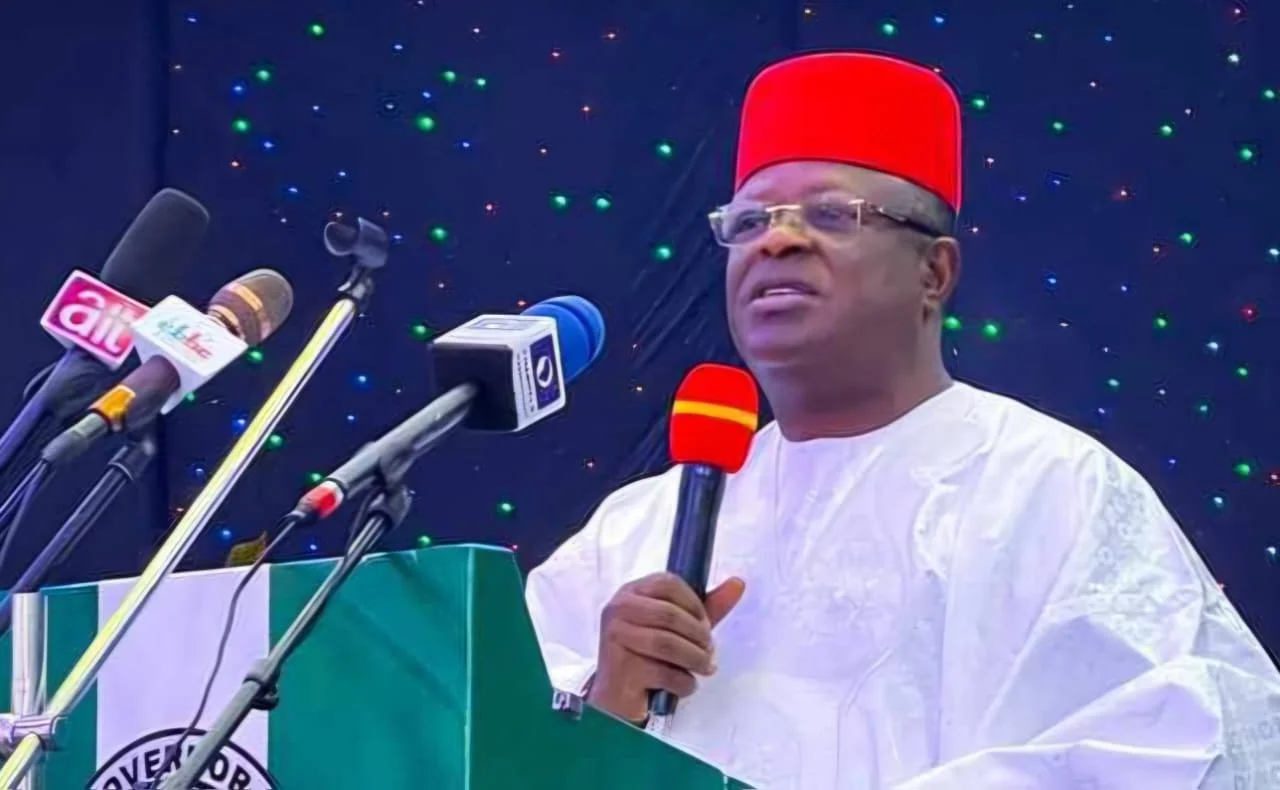
The engagement brought together stakeholders, students, community representatives and government institutions to discuss practical ways of ending child marriage and strengthening the protection of girls across Plateau State.

IMG 20261105 WA0020

Continue Reading

Education

Minister Pledges Pedestrian Bridges, Improved Road Access To Tertiary Institutions

info

Published

on

IMG 20260923 WA0001.jpg

The Minister of Works, Sen. Dave Umahi, has pledged the Federal Government’s commitment to providing pedestrian bridges and improving road access to tertiary institutions across the country.

Umahi made the commitment in Abuja on Tuesday while receiving the report of the Northwest leg of the Nationwide Federal Roads Project Tour conducted by the National Association of Nigerian Students (NANS).

The minister said the government had taken note of students’ concerns about road safety and access to their institutions, assuring that requests for pedestrian bridges would receive attention.

“The pedestrian bridge you requested is noted. We will do it,” Umahi said, stressing the government’s determination to address safety concerns affecting students.

He said the government had taken special note of the need to incorporate access routes to campuses into future road construction projects where possible.

“I have also taken special note of our future investment in our road construction to ensure that, where possible, we should put bridges leading to our campuses,” he said.

Umahi disclosed that the Federal Government was already responding to similar requests from some tertiary institutions, including the University of Abuja and Nnamdi Azikiwe University, Awka.

“The University of Abuja requested for pedestrian bridge, we are doing that. We are doing also that of Nnamdi Azikiwe University in Awka, they also requested,” he said.

He assured students that the ministry would continue to listen to requests aimed at improving their safety and access to educational institutions.

“As long as you make your request for the safety of our students, we will continue to listen to you,” Umahi said, commending the students for their knowledge and commitment to nation building.

The minister further said future road projects would, where possible, include spurs leading directly to tertiary institution campuses to enhance accessibility and reduce risks to students.

He said the Federal Government was intentional about completing ongoing road projects across the country, urging students to obtain firsthand information about infrastructure projects rather than relying solely on reports or social media narratives.

Umahi also encouraged students to visit project sites, inspect government projects and provide feedback on areas requiring improvement.

He disclosed that the main pavement of the first 105 kilometres of the Lagos-Calabar Coastal Highway was expected to be completed by November 2026.

The minister, however, expressed concern over the destruction of infrastructure along the Lagos-Calabar Coastal Highway, particularly around the Apapa axis, warning that vandalism could undermine the benefits of major government investments.

“I wept when I saw the level of destruction under the bridge in Apapa axis,” Umahi said, describing the damage to the infrastructure as unacceptable.

He said people were passing through the bridge piers, while trailers were reportedly being driven over the piers to move from one point to another, describing the situation as “mind-boggling damage.”

Umahi stressed that the destruction of public infrastructure, including the cutting of metals and damage to block works, should not be regarded as development.

He said public infrastructure represented the country’s future and urged citizens to protect government projects for the benefit of present and future generations.

Earlier, the NANS President, Afeez Akinteye, said the association embarked on the nationwide road project tour to physically assess ongoing and completed Federal Government projects and determine their impact on students.

Akinteye said the Northwest leg of the tour covered Kano, Jigawa, Kaduna and Sokoto states, where the delegation inspected several major federal road projects.

He listed the projects inspected to include the Kano-Kwanar Danja-Hadejia Road, Kano Northern Bypass, Kano-Maiduguri Road, Kano-Katsina Road, Kaduna-Kano Road, Kano-Kongolam Road, Abuja-Kaduna-Zaria-Kano Road and Zaria-Funtua-Sokoto Road.

Others, he said, included the Kaduna-Pambegua-Jos Road, Wusasa-Jos Road, Mando-Birnin Gwari Road, Sokoto-Badagry Road and Illela-Dukamaje Road.

According to him, the delegation also inspected the 122.89-kilometre Mando-Birnin Gwari Federal Highway in Kaduna State, which he described as strategically important for inter-state connectivity.

The NANS president said the association paid particular attention to the relevance of the projects to students because roads leading to tertiary institutions were essential to access to education.

“For Nigerian students, these roads are more than transportation routes. They are part of the daily infrastructure through which we access our campuses,” he said.

He said the Kano Northern Bypass was particularly significant because of its connection to 10 tertiary institutions across the region, adding that its completion would provide an alternative route for students and commuters.

Akinteye said the bypass would also help ease traffic pressure within Kano metropolis and strengthen inter-state connectivity.

The NANS president called for the construction of a pedestrian bridge at the Federal Co-operative College, Kaduna, along the Abuja-Kaduna-Zaria-Kano route, citing the safety of students who use the road.

He said the association was impressed by the scale and spread of the projects inspected, as well as the pace and quality of construction observed during the tour.

He said the delegation observed works involving pavement construction, earthworks, drainage, subgrade preparation and solar street lights on completed projects.

Akinteye added that NANS would continue the nationwide inspection in other regions and communicate its observations to students and the general public.(NAN)

Continue Reading

Trending