As part of its 2025 Children’s Day celebration, the Dachung Musa Bagos Foundation awarded ₦100,000 each to over 20 schools across Plateau State, reaffirming its commitment to education and child development.
Speaking during the event held at Sarau Event Centre in Jos, Hon. Dachung Musa Bagos emphasized the importance of education in shaping the future of children and the nation.
“We’re not just celebrating; we’re investing in your future,” Bagos told the students. “Each of you carries the seed of greatness. Stay in school, finish strong, and make your teachers proud. They are the true builders of this nation.”
He led the students in a pledge to stay in school and called on them to appreciate their teachers. “Let’s clap for our teachers. Without them, we wouldn’t be here,” he said.
In addition to the monetary donation, the Foundation also distributed school bags filled with notebooks, socks, and pens to every student in attendance.
Delivering the keynote address on behalf of the Plateau State Gender and Equal Opportunities Commission, Barr. Julia M. Gwaivangmin stressed the importance of protecting children’s rights and enforcing accountability for abuse.
“It is a crime under the VAPP Law for a parent to abandon their child. We have secured convictions and we will continue to fight for the rights of children,” she said. “Children deserve a life free of abuse, trafficking, and violence. Say no to rape. Say no to bullying. Say no to silence.”
Mrs. Lydia Dachung Bagos, the Executive Director of the Foundation, described education as the heart of the Foundation’s mission.
“We are celebrating with the children today to make them feel loved and important, and to encourage them to stay in school and keep dreaming—because every child has a dream, and we want them to realize those dreams. To do that, they need to acquire an education. Our goal is to make sure no child is left behind. Every child deserves a chance, and we will keep walking with them—school by school, child by child,” she said.
Teachers and students who spoke at the event expressed heartfelt gratitude for the cash gifts and school materials.
One of the students, Emmanuela Ayuba, a participant at the event, expressed how it encouraged her to want to finish school. “I’m really happy about the program. The way they talked about education and its benefits has made me more determined to study harder and become successful,” she said.
Another student, Gabrieal Appreciated, expressed joy and gratitude for the support of the foundation in helping them and many other children gain access to education. “I’m really happy about the bags and books we were given. I also learned the importance of avoiding distractions and focusing on my education,” he said.
A teacher, Mr. Azeez remarked “It’s a privilege to be part of this remarkable initiative by the Dachung Musa Bagos Foundation. We don’t often see people so committed to shaping the future of our children. I’ll take this message back to Bassa and do my part to help raise the next generation of leaders. Also the ₦100,000 donation would go a long way in supporting school and student. This is more than a celebration—it’s a rescue mission for education in Plateau,” he said.
Mrs. Serah Arin, a staff member of New Fobur LEA in Jos East, described the program as a unique and impactful initiative. “This program is truly unique, and we appreciate Hon. Bagos for his efforts. We’ll take what we’ve learned back to our communities to help reduce school dropouts and guide children away from violence. Education is the key, and we must all play our part.” She also called on parents and teachers to work together in ensuring the safety and success of every child.
The celebration featured cultural dances, poem recitations, musical performances, and parades.
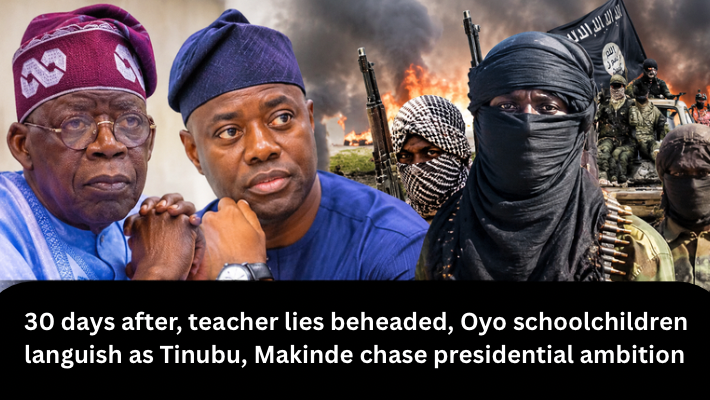
A month after the mass abduction of 46 Oyo schoolchildren and teachers by terrorists on May 15 and the decapitation of a teacher, the captives remain in the forest despite military claims and political promises from President Bola Tinubu and Governor Seyi Makinde.
The terrorists kidnapped the students and staffers after invading schools in the Esienle and Yawota communities in Orire local council in Oyo state.
Days after the abduction, one of the teachers, Michael Oyedokun, was beheaded by the terrorists, pressuring the government to meet their demands for the release of the abductees.
On May 19, four days after the abduction, the Defence Headquarters, in a statement by its spokesperson, Michael Onoja, said, “Troops are currently deployed and actively operating within the forest in pursuit of the perpetrators and in search of the abducted victims.”
“Troops made contact with the criminal elements two days ago, have since reorganised, and are continuing the search and pursuit operations with full determination.”
The military and the government cited collateral damage as a reason for not taking out the terrorists.
While the schoolchildren and their teachers languish in captivity, Messrs Tinubu and Makinde have been engaging in electioneering as they chase their presidential dreams, both emerging as their party’s candidates for the 2027 election.
On May 31, Mr Makinde visited the hostages’ communities, promising their families the safe return of those abducted.
“This is not the time to start trading blame on who should be responsible for the release of these children between the state and federal government. This is just the time to come together to rescue our children and their teachers, Mr Makinde told the families of abductees. “All I need is your cooperation. Please trust us. I cannot speak much because it has security implications. I know your hearts are bleeding. My heart is also bleeding. Please trust us. We will secure their release.”
Similarly, a delegation representing Mr Tinubu, led by his chief of staff, Femi Gbajabiamila, visited the families and made a similar promise.
In a video released by the terrorists, Rachael Alamu, one of the hostages and the principal of Community High School Esinele, begged Messrs Tinubu and Makinde to negotiate with the terrorists to secure their release.
Meanwhile, the Oyo State House of Assembly has opposed negotiating with the terrorists.
Debo Ogundoyin, the speaker of the assembly, said the state would not pay ransom, give weapons to terrorists or change laws to accommodate the kidnappers.
Several protests have followed the government’s failure to rescue the hostages.
Amid public outrage and discontent, many Nigerians protested across several states, including Oyo, Lagos, Ogun, Bayelsa, Plateau and the Federal Capital Territory, demanding the immediate rescue of the hostages.
In his Democracy Day speech on June 12, Mr Tinubu said, “Though this year’s mood is dampened by the abduction of our children in Oyo and Borno, we remain hopeful for their safe return. Democracy without security is not solid enough.”
The president urged terrorists and bandits across the country to lay down their arms or face the wrath of his administration.
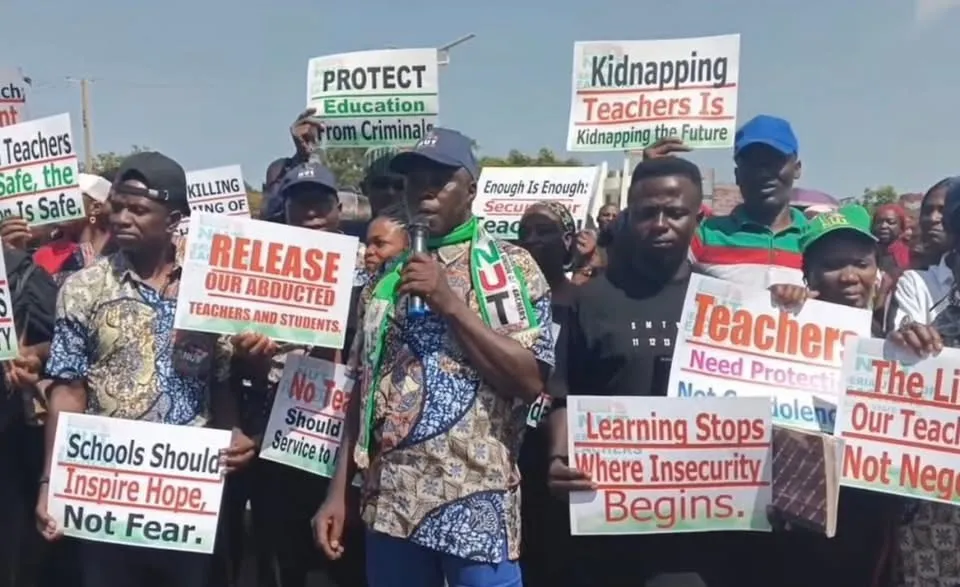
The Plateau State chapter of the Nigeria Union of Teachers (NUT) has joined its counterparts across the country in protesting the abduction of pupils and teachers from a primary school in Oyo State.
Hundreds of teachers staged a demonstration in Jos, the Plateau State capital, carrying placards and banners to express their anger over the continued captivity of the victims several weeks after the incident.
The protesters called on the Federal Government and security agencies to intensify efforts to secure the immediate and safe release of the abducted pupils and teachers, stressing that schools must remain safe spaces for learning.
They also expressed concern over the growing trend of school-related abductions in parts of the country, warning that such incidents could discourage parents from sending their children to school if not urgently addressed.
The union urged authorities to strengthen security around educational institutions and ensure the safe return of all victims still in captivity.