Connect with us

News

Changing the Narrative: Plateau Journalists Trained to Tell Climate Stories That Matter with professionalism.

info

Published

on

A345da82 630a 41e9 b99d 48f8f1c0e49e.jpeg

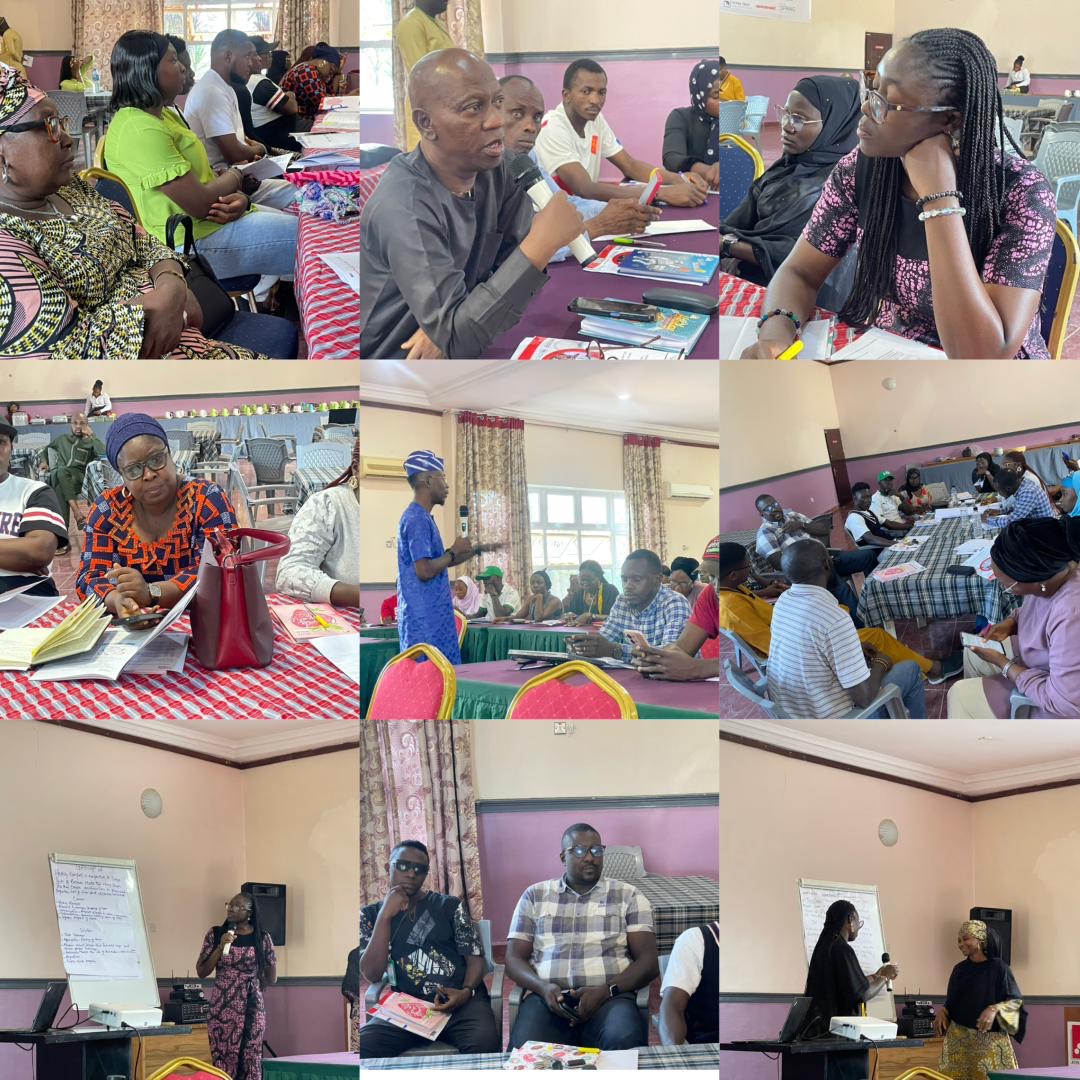
On March 24, 2026, journalists from across Plateau State gathered at the Jos Business School for a hands-on training focused on one urgent goal: improving how climate change is reported at the local level.

The event, Capacity Building for Local Media on Climate Change on the Plateau, brought together reporters, radio/TV presenters, Bloggers and media practitioners who play a key role in shaping how communities understand environmental issues. While climate change is often discussed in global terms, this training zoomed in on what it means for everyday life on the Plateau.

From the start, the tone was practical. Facilitators broke down climate concepts into clear, simple language. They explained the difference between weather and climate, and why that distinction matters when reporting stories. For many participants, this helped clear up confusion and made the topic feel more accessible.

But the training didn’t stop at theory. A major focus was storytelling. Participants were encouraged to move away from abstract reports and instead focus on real people and real experiences. For example, rather than just citing temperature increases, they explored how changing rainfall patterns are affecting farmers in nearby communities, or how water shortages are impacting households.

There was also strong emphasis on accuracy. With so much misinformation around climate change, journalists were guided on how to verify data, use credible sources, and ask better questions. Sessions on fact-checking and responsible reporting reminded participants that trust is one of their most valuable tools.

One of the most engaging parts of the day was the practical exercises. Journalists worked in groups to develop story ideas, conduct mock interviews, and draft short reports. These activities made the training interactive and gave participants a chance to apply what they had learned right away.

By the end of the event, the energy in the room had shifted. What started as a technical topic now felt personal and relevant. Many participants left with not just new knowledge, but a clearer sense of responsibility. Climate change is already affecting communities on the Plateau, and local media have a crucial role in telling those stories in a way people understand.

This training was a step in the right direction. When journalists are better equipped, the stories they tell become more meaningful, more accurate, and more likely to inspire action.

Continue Reading
Click to comment

Leave a Reply

Your email address will not be published. Required fields are marked *

News

Cross River Ikan Sports Fight Back To Beat Gateway Horns 25-19 In Showtime Bowl Series XV Flag Football

info

Published

on

WhatsApp Image 2026 09 27 at 5.22.03 PM.jpeg

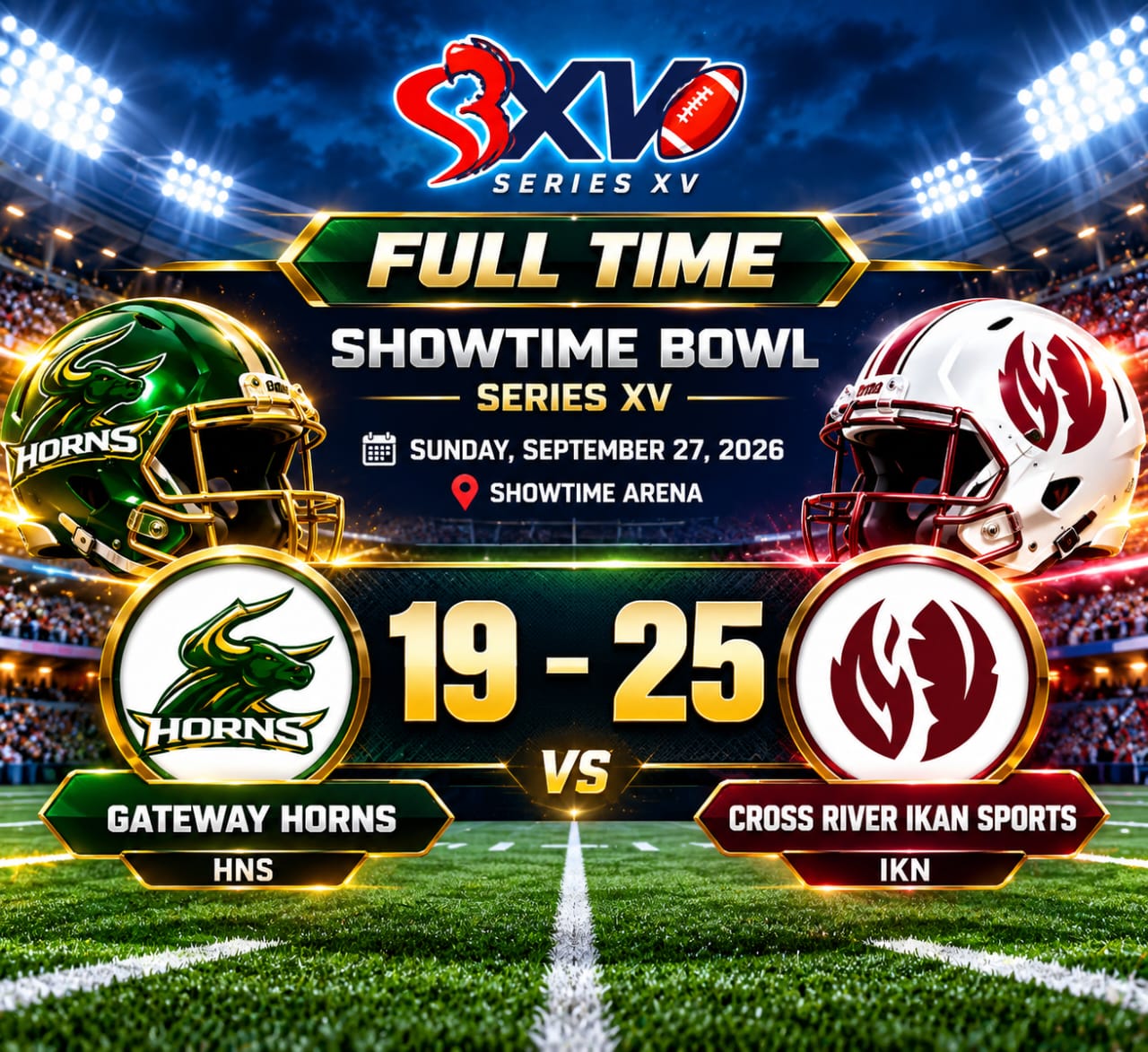
Cross River Ikan Sports bounced back from their heavy opening-week defeat with a spirited second-half performance to beat Gateway Horns 25-19 in Week 2 of the Showtime Bowl Series XV Flag Football season at Showtime Arena on Sunday.

After suffering a 56-13 defeat to Lagos Rebels in Week 1, Ikan Sports needed a response and made the perfect start when quarterback Timothy Atibile connected with Praise Miene for a 28-yard touchdown to establish a 6-0 lead.

Read Also: Rivers Alphas Bounce Back, Edge Delta Braves 31-24 In Showtime Bowl Series XV Flag Football Thriller | Sports247 Nigeria

Gateway Horns, however, gradually found their rhythm. Awosika Oluwafikunmi found Adewole Mosimiloluwa for the tying touchdown before connecting with Odimbu Awele Gift for another score. A successful extra point to Mosimiloluwa gave the Horns a 13-6 advantage.

Ikan Sports immediately hit back through one of the biggest plays of the contest as Atibile connected with Abayomi Agbayewa for a 45-yard touchdown, reducing the deficit to 13-12 before halftime.

Gateway entered the break with the narrow advantage, but Ikan Sports turned the contest around in the second half, scoring 13 points while restricting the Horns to six to complete a 25-19 comeback victory and secure their first win of the season.

Praise Miene was named Match MVP after finishing with 33 receiving yards and a touchdown, earning a 7.4 rating. Atibile also played a central role in the victory and topped the fantasy standings with 4.3 points, while Gateway quarterback Oluwafikunmi recorded 4.0.

The result represents an important recovery for Cross River Ikan Sports following their difficult Week 1 outing, while Gateway Horns will be left disappointed after surrendering a 13-12 halftime advantage.

For Ikan Sports, however, Week 2 delivered exactly what they needed — a response, a comeback and their first victory of the Showtime Bowl Series XV campaign.

Continue Reading

News

2027: Labour Party chieftain, Eze raises alarm over economic hardship in Nigeria

info

Published

on

A chieftain of the Labour Party LP Dr. Ezeh Emmanuel Ezeh.jpg

A chieftain of the Labour Party, LP, in Ebonyi State, Ezeh Emmanuel Ezeh, has raised the alarm over the rising cost of living in the country under the ruling All Progressives Congress, APC, while also criticising the economic policies of the federal government,

He expressed worry that the economy has negatively impacted the purchasing power of many households and deepened hardship across the country.

In a statement issued on Sunday, Ezeh described the situation as a progression from “broken pockets” to “broken dreams” and ultimately “broken homes and a broken society.”

He attributed the widespread economic and social distress to policy failures and inadequate accountability under the APC administration of President Bola Tinubu, noting that the consequences of economic hardship are no longer confined to household finances, but are increasingly affecting businesses, employment, family stability and Nigerians’ confidence in the future.

Recommended

“Broken pockets, broken dreams, broken homes, broken society. That is the apt description of everyday life in Nigeria today,” Ezeh said.

He argued that the removal of petrol subsidy and other economic reforms introduced by the Tinubu administration had imposed substantial short-term pressures on households and businesses.

President Tinubu announced the end of the petrol subsidy at his inauguration on May 29, 2023, while his administration has consistently defended the measure as necessary to address fiscal pressures and redirect public resources towards infrastructure and social development.

But Ezeh said the immediate burden of the reforms had been particularly severe for low-income households, small businesses and young Nigerians struggling to secure employment.

The Labour Party chieftain expressed concern over the impact of the economic environment on businesses and employment, citing the closure or downsizing of some retail outlets and enterprises.

“When pockets are broken, dreams are broken too. And when dreams are broken, the family becomes the next casualty,” he said.

He alleged that many Nigerian households were now being forced to make difficult choices between food, healthcare, education, transportation and other basic necessities.

Recall that in his third-anniversary address in May 2026, President Tinubu said the country had faced mounting fiscal pressures, unsustainable fuel subsidies, declining revenues, exchange-rate distortions, rising debt-servicing costs and energy constraints when his administration assumed office.

The President acknowledged that the reforms had imposed significant sacrifices on families, workers and businesses, but argued that they were necessary to stabilise the economy and establish the foundation for long-term recovery.

Recent data published by the National Bureau of Statistics also show that Nigeria’s economy recorded real GDP growth of 3.89 per cent year-on-year in the first quarter of 2026, while the latest inflation figures displayed by the agency put headline inflation at 15.39 per cent and food inflation at 19.57 per cent under the rebased Consumer Price Index.

Ezeh, however, maintained that macroeconomic indicators must ultimately translate into improved living conditions for ordinary Nigerians.

He challenged political leaders in the South-East, including those supporting President Tinubu’s re-election bid, to make the interest of citizens central to the political debate ahead of 2027.

“Senator Pius Anyim, Senator David Umahi, Professor Charles Soludo, Senator Orji Uzor Kalu, Governor Hope Uzodimma and every other influential South-East political leader have the democratic right to support any candidate or political alignment they consider appropriate.

“Citizens, however, possess an equal democratic right to scrutinise those choices.”

Ezeh said the 2027 political debate should go beyond zoning, ethnic calculations and political alliances to focus on policies capable of addressing unemployment, enterprise development, security, infrastructure and accountable governance.

He also urged Nigerians to examine the records and policy proposals of political parties and candidates before making their electoral choices.

“The real question is which policies, alliances and leadership decisions offer Nigerians, including Ndigbo, credible prospects for jobs, enterprise, security, infrastructure and accountable governance,” he said.

Ezeh maintained that the 2027 election should provide Nigerians with an opportunity to assess competing visions for the country’s future.

He said rebuilding public confidence would require leadership that treats governance as a responsibility rather than an entitlement.

“A nation does not die only when its economy fails. It dies when its people stop believing that tomorrow can be better than today,” Ezeh said.

He called for greater institutional accountability, economic policies that protect vulnerable citizens and a political culture centred on service, inclusion and measurable development.

Ezeh said the task before Nigerians in 2027 would therefore extend beyond changing political office holders to determining the policy direction, institutional priorities and leadership standards that would shape the country’s next phase of development.

Continue Reading

Trending