Connect with us

Business

Breaking: Plateau Revenue Chief Unveils Bold Reforms to Transform Tax Administration

info

Published

on

IMG 20241219 WA0014

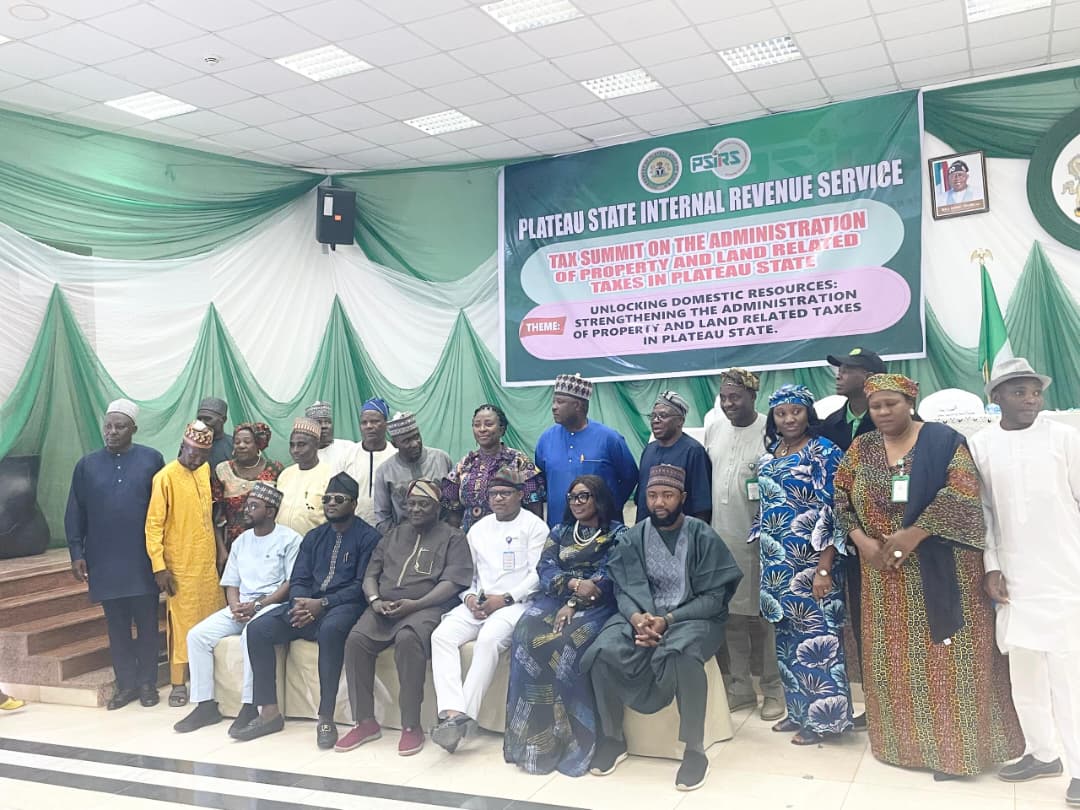
The Executive Chairman of the Plateau State Internal Revenue Service (PSIRS), Jim Pam Wayas, has announced a groundbreaking agenda to revolutionize tax administration in the state. Speaking at a high-profile meeting with members of the Plateau Bloggers and Online Media Association (PLABOMA) in Jos, Wayas unveiled innovative strategies aimed at fostering a business-friendly environment and boosting public awareness of tax obligations.

In a bold move to engage taxpayers at the grassroots, Wayas emphasized a hybrid approach of traditional outreach and digital campaigns. “Direct engagement is crucial, especially for the informal sector. People need to understand their tax obligations and how government initiatives support their businesses,” he stated.

Highlighting the critical role of small and nano enterprises, which contribute 60% of Plateau’s GDP, Wayas revealed plans to simplify tax processes and support these vital businesses. He also announced major infrastructural upgrades, including the modernization of the Jos Abattoir to meet global export standards.

In a forward-thinking strategy, Wayas outlined plans to harness emerging revenue streams in the digital economy, betting, and the creative industry, signalling a new era of innovation in the state’s revenue generation.

The PSIRS Chairman called for greater stakeholder collaboration and urged compliance from all businesses, including digital creators, to drive mutual growth. “Our goal is to stimulate economic progress, not stifle it,” Wayas concluded.

Stay tuned as Plateau charts a transformative path in tax administration!

Continue Reading
Click to comment

Leave a Reply

Your email address will not be published. Required fields are marked *

Business

Nigeria’s inflation eases to 15.91% in June amid rising food prices — NBS

info

Published

on

By

National Bureau of Statistics.jpg

MTN ADVERT

The National Bureau of Statistics (NBS) says Nigeria’s headline inflation rate eased slightly to 15.91 per cent in June, down from 15.93 per cent recorded in May, offering a modest sign of slowing price pressures even as food prices continued to rise.

The bureau disclosed this in its latest Consumer Price Index (CPI) report released on Wednesday.

According to the report, the headline inflation rate was significantly lower than the 25.29 per cent recorded in June 2025, representing a year-on-year decline. Compared with May, the inflation rate fell by 0.02 percentage points.

Similarly, on a month-on-month basis, headline inflation slowed to 1.66 per cent in June from 1.75 per cent in May, indicating that the average price level increased at a slower pace during the month.

“This means that in June 2026, the rate of increase in the average price level was lower than the rate of increase in the average price level in May 2026,” the NBS said.

PT WHATSAPP CHANNEL

The report also showed that the Consumer Price Index rose to 143.0 in June from 140.7 in May, reflecting a 2.3-point increase in the average price level.

Food prices

While overall inflation moderated slightly, food prices continued to exert pressure on household budgets.

The NBS said food inflation stood at 17.52 per cent on a year-on-year basis in June, compared with 25.41 per cent in the corresponding period of 2025.

However, on a month-on-month basis, food inflation rose to 3.75 per cent in June from 2.98 per cent recorded in May.

According to the bureau, the increase was driven by higher prices of several staple food items, including fresh pepper, tomatoes, crayfish, beef, garri, yam tubers, yam flour, cassava flour, cowpea, bananas and Irish potatoes.

Food and non-alcoholic beverages remained the largest contributor to headline inflation, accounting for 6.37 percentage points.

Other major contributors included restaurants and accommodation services (2.06 percentage points), transport (1.70 percentage points), housing, water, electricity, gas and other fuels (1.34 percentage points), education (0.99 percentage points) and health (0.96 percentage points).

Core inflation moderates

Meanwhile, core inflation, which excludes the prices of volatile agricultural produce and energy, stood at 15.92 per cent year-on-year in June, down from 25.41 per cent recorded in the corresponding period last year.

On a month-on-month basis, core inflation also moderated to 1.66 per cent, compared with 1.94 per cent in May.

The report further showed that the average headline inflation rate for the 12 months ending June 2026 stood at 17.63 per cent, lower than 29.82 per cent recorded in June 2025.

Likewise, the average annual food inflation rate declined to 16.42 per cent from 31.93 per cent in the corresponding period of the previous year.

The NBS said urban inflation stood at 16.08 per cent year-on-year, while rural inflation was 15.48 per cent.

On a month-on-month basis, urban inflation increased to 2.13 per cent from 1.99 per cent in May, whereas rural inflation slowed to 0.52 per cent from 1.17 per cent.

Inflation varies across states

The report also highlighted wide disparities in inflation across the country.

READ ALSO: Nigeria’s inflation up 15.93% amid high food prices – NBS

Niger State recorded the highest annual all-items inflation rate at 42.23 per cent, followed by Kogi (41.59 per cent) and the Federal Capital Territory (39.91 per cent).

By contrast, Imo State posted the lowest annual inflation rate at 19.47 per cent, followed by Ebonyi (20.79 per cent) and Katsina (21.87 per cent).

For food inflation, Kogi State recorded the highest year-on-year rate at 53.02 per cent, followed by Niger (43.83 per cent) and Benue (40.83 per cent).

The lowest food inflation rates were recorded in Katsina (19.15 per cent), Rivers (23.81 per cent) and Imo (24.60 per cent).

The June inflation figures come as Nigeria continues to navigate the effects of ongoing economic reforms, including exchange rate adjustments and higher energy and transportation costs, which have contributed to elevated consumer prices over the past two years.


Continue Reading

Business

FG advocates local cocoa processing to end raw bean export

info

Published

on

By

Cocoa.jpg

MTN ADVERT

President Bola Tinubu has declared that Nigeria must move away from exporting raw cocoa beans and focus on processing the commodity locally to capture more value from the global chocolate market.

The president, represented by the Minister of Agriculture and Food Security, Abubakar Kyari, stated this on Tuesday at the Cocoa Value Addition Summit 2026 in Abuja.

The summit, themed “From Bean to Brand: The Bean in My Hand, The Brand in Our Future,” brought together government officials, cocoa-producing countries, investors, development partners, and industry stakeholders to discuss strategies for expanding cocoa processing and manufacturing across Africa.

President Tinubu said Nigeria could no longer rely on exporting raw agricultural commodities while other countries generated most of the profits from processing, branding and manufacturing finished products.

“Nigeria will no longer export raw beans while importing finished value. We will grind our beans at home, we will press our butter at home, we will make our chocolate at home, brand it at home, and sell it to the world on our own terms,” he said.

PT WHATSAPP CHANNEL

He said more than 300,000 Nigerian farming households cultivate cocoa on over 1.4 million hectares, making Nigeria one of the world’s leading cocoa producers with about six to seven per cent of global output.

According to him, cocoa generated more than N3 trillion in export earnings during the recent surge in global prices, but exporting raw beans meant Nigeria captured only a fraction of the industry’s economic value.

The president cited ongoing investments in local processing, including a 70,000-metric-tonne cocoa processing facility under construction in Sagamu, Ogun State, and said Nigeria’s annual cocoa grinding capacity has exceeded 120,000 metric tonnes.

Industrial policy

The Minister of State for Industry, John Owan Enoh, said the initiative aligns with Nigeria’s industrial policy, which seeks to reduce dependence on raw commodity exports and expand domestic manufacturing.

“We are not interested in exporting anonymous sacks anymore. We are interested in exporting value. If Nigeria truly wants to build a one-trillion-dollar economy, it cannot continue exporting raw materials while other countries earn the real wealth from processing and branding them,” he said.

Mr Enoh also disclosed that Nigeria is working with Ghana, Côte d’Ivoire and Cameroon to establish an African cocoa alliance aimed at strengthening the continent’s bargaining power in the global cocoa market.

According to him, the proposed alliance would coordinate policies on cocoa processing, value addition and trade among countries that account for the bulk of global cocoa production.

BOI pledges financing

The Managing Director of the Bank of Industry (BOI), Olasupo Olusi, said the bank is prepared to provide long-term financing to support investments across the cocoa value chain.

He disclosed that the bank disbursed more than N164 billion to over 3,500 agro-processing and food businesses in 2025 and recently secured a €60 million credit facility from the European Investment Bank to support cocoa processing projects.

“Our goal is to finance everything from nurseries and cooperatives to grinding plants, ingredient factories, packaging lines and chocolate manufacturers,” Mr Olusi said.

Also speaking, the Chief Executive of the Ghana Cocoa Board, Ransford Abbey, called for closer cooperation among Africa’s leading cocoa-producing countries, noting that although the continent produces between 75 and 77 per cent of the world’s cocoa, it earns less than 10 per cent of the value generated by the global chocolate industry.

“We do not need charity. We deserve equity. The time has come for Africa to process its own wealth, protect its farmers and negotiate with one voice in the global cocoa market,” he said.

READ ALSO: FG begins work on animal identification, traceability to boost export

The renewed push for local processing comes as Nigeria seeks to diversify export earnings away from crude oil and increase the contribution of agriculture to industrial growth. Although Africa produces about 70 per cent of the world’s cocoa, most of the value from chocolate manufacturing is captured in Europe and North America, where beans are processed into butter, powder and finished confectionery products.

For years, industry stakeholders have argued that expanding domestic processing would create jobs, increase foreign exchange earnings and strengthen Nigeria’s position in global agricultural value chains. Recent investments in cocoa processing facilities and financing initiatives are part of broader efforts to shift the country from exporting raw commodities to exporting higher-value manufactured products.

The summit ended with the adoption of the Cocoa Value Addition Accord and a proposed Abuja Declaration aimed at accelerating domestic cocoa processing, attracting investment, improving farmers’ incomes and deepening collaboration among Africa’s major cocoa-producing countries.


Continue Reading

Trending