News
1xBet Nigeria’s Nnanna Chigozie Ewuzie Calls for Better Player Education at Responsible Gaming Symposium

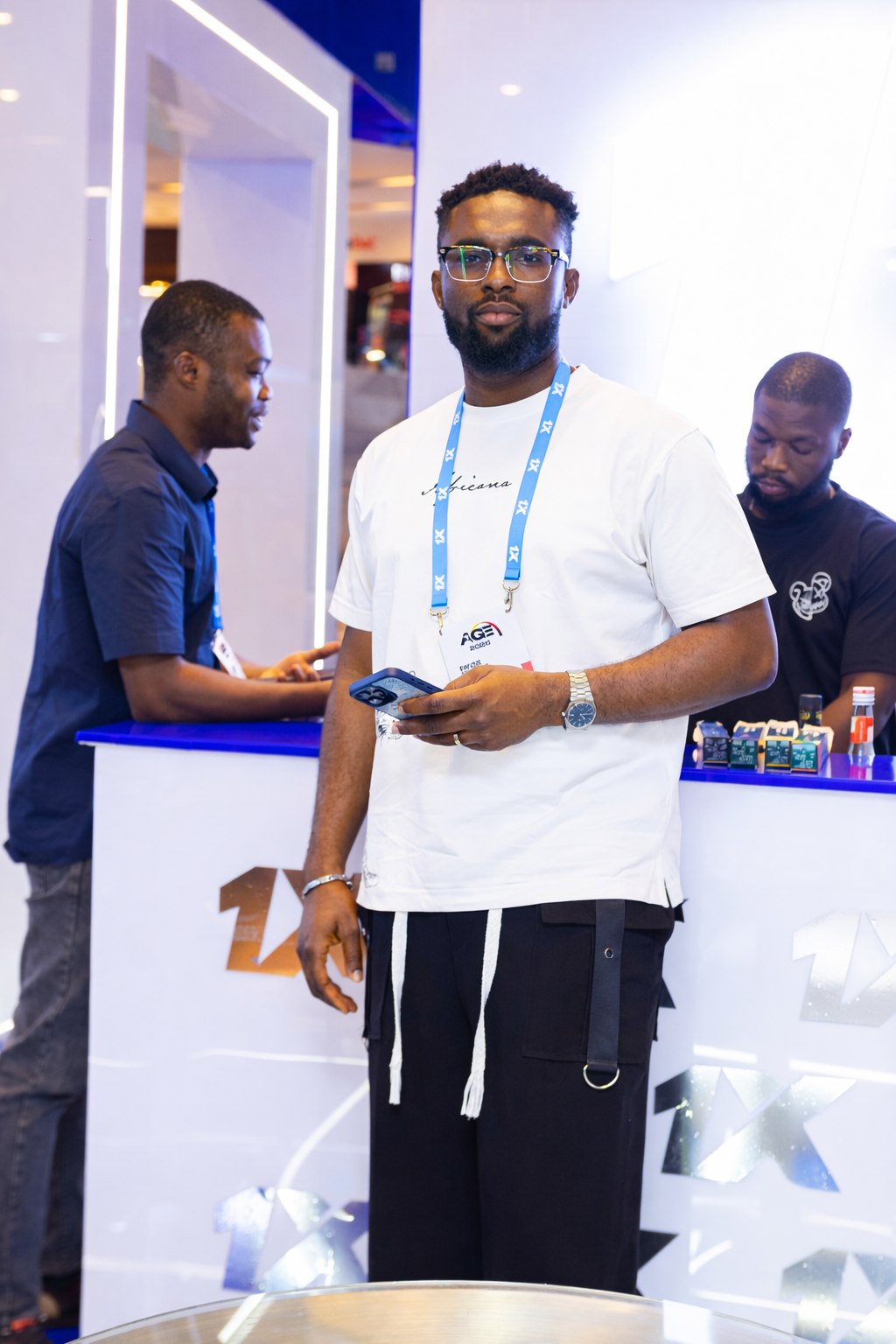
Nnanna Chigozie Ewuzie, Compliance Manager at 1xBet Nigeria, took part in the Responsible Gaming Symposium, where he focused on one of the biggest challenges for safer gambling in Africa: players need to understand protection tools before they can use them effectively.
At the Symposium, Nnanna presented 1xBet’s view on player education as a core part of responsible gambling. His remarks were built around insights from 1xBet’s research – Independently Commissioned Player Protection Index, which shows that in many African markets betting is still often seen not only as entertainment, but as a possible source of income.
Education before warnings
Nnanna stressed that responsible gambling tools remain important, but they are not enough on their own. Deposit limits, self-exclusion and time-outs can only work when players understand why these tools exist and how they can help.
“If we want safer play, we must teach, not only warn the players. A tool only works when a player understands it. A limit means nothing if a player does not know why it helps,” Nnanna said.
This was the central idea of his contribution: education turns responsible gambling from formal messaging into a practical choice. When players understand the risks, odds, limits and available protection tools, they are more likely to stay in control.
“Education turns a warning into a choice. It helps a player move from betting for hope to betting with control,” he added.
What the data shows
The Player Protection Index research by 1xBet also points to a wider shift in the industry. According to the findings referenced by 1xBet, 69% of operators now agree that a safer player is more profitable over time. This suggests that player protection is increasingly being seen not only as a regulatory requirement, but as part of long-term business sustainability.
The research also shows that 84% of respondents believe player education is the foundation of safer gambling. At the same time, Simon Westbury, Strategic Advisor to 1xBet, has highlighted that only a small share of operators strongly believe players fully understand what “Positive Play” means.
For Simon, this shows a clear gap between the tools available and the way players understand them.
“Player education was the foundation of safer gambling. Positive play is when the player is educated and informed of their decisions,” Simon said.
He also connected safer gambling with long-term trust between operators and players.
“If you can retain a player and give a player a safe, fun environment to gamble, then they are going to stay with you longer,” he said.
Africa needs local and practical solutions
The discussion also reflected the specific realities of African markets. Regulation, payment habits, languages, digital access and retail betting culture differ across countries. This means safer gambling standards cannot simply be copied from other regions.
The Player Protection Index by 1xBet points to a 56% / 44% split in views on how consistent player protection standards are across markets. For Nnanna, this reinforces the need for a common base that can be adapted locally.
That base should be simple: set limits, understand odds, take breaks and ask for help when needed. Each market can then adapt the language, examples and delivery channels to its own context.
In markets where many players rely on cash or in-person betting, education may need to come through voice, video, visual formats, local languages and shop staff, not only through long text or formal disclaimers.
“Simple words and pictures travel further than long text,” Nnanna noted.
From compliance to real understanding
Both Nnanna and Simon pointed to the same conclusion: safer gambling in Africa must move beyond small print and generic warnings.
The industry still faces real barriers. Simon has noted that 49% of respondents see commercial considerations as a blocker to player protection, while 67% of players are apathetic towards safer gambling and player protection tools. This is why education matters: many players do not use protection tools because they do not see how those tools apply to them.
For Nnanna, operators and regulators need to agree on what good player education looks like. He pointed to three practical steps: a shared standard for education, room to test what works and honest data-sharing.
“We cannot build trust if we only show the good numbers,” Nnanna said.
For Simon, collaboration is also essential. The research shows that 96% of respondents believe safe gambling is only possible through cooperation between operators and regulators. This cooperation should help turn player protection from a compliance requirement into something players can understand and use.
1xBalance and the next step
1xBet’s responsible gambling work also includes 1xBalance, a dedicated project and website focused on education, self-checking and helping players better understand their betting behaviour.
Through the 1xBalance website, players can access simple educational materials, take a self-assessment test and use a budget calculator to better understand their spending habits. The idea is to make player protection softer, clearer and less intrusive.
Instead of treating responsible gambling as a clinical or distant topic, 1xBalance presents it as something practical: a way for players to check themselves, understand their behaviour and make more informed decisions.
This reflects the main message of the Responsible Gaming Symposium: safer gambling will depend on education, cooperation and tools that players can actually understand.
For 1xBet Nigeria, Nnanna Chigozie Ewuzie’s participation showed that responsible gambling in Africa is not only a regulatory issue. It is also a communication challenge, an education challenge and a trust challenge.
The next step is clear: teach better, explain earlier and help players turn protection tools into real choices.


The Plateau State Government has intensified preparedness measures against Ebola Virus Disease (EVD), including renewed public awareness campaigns, activation of isolation centres, surveillance at border communities and infection prevention training for health workers.
The Plateau State Commissioner for Health disclosed this while responding to questions from journalists on the measures being taken to prevent the disease from spreading to the state following the confirmation of an imported Ebola case in Nigeria.

The Federal Government confirmed the case in the Federal Capital Territory (FCT) on October 20, 2026, involving a woman who had recently travelled from Uganda. The patient was isolated and receiving medical care, while public health authorities identified 44 close contacts for monitoring.
The Commissioner explained that the Nigeria Centre for Disease Control and Prevention (NCDC) had activated preparedness measures across the country, prompting states to strengthen their surveillance and response systems.
He said Plateau State had previously commenced public enlightenment campaigns through jingles and was bringing them back to educate residents about the disease. The state is also printing information, education and communication materials for distribution through relevant public health channels.
According to him, the state government had earlier provided funds for Ebola containment, which were yet to be utilised, and these resources were now being deployed through the State Epidemiology Unit to support the response.
The Commissioner further disclosed that he had directed the State Epidemiology Unit to assess preventive measures at the airport and strengthen surveillance in local government areas bordering neighbouring states. Health facilities in border communities, including areas around Naraguta, were also being alerted to report suspected cases promptly.
He added that isolation centres at Plateau Specialist Hospital and Jos University Teaching Hospital had been identified for the management of suspected cases, while the Ministry of Health was working to strengthen infection prevention and control training for health workers.
Although the Commissioner described Plateau as an intermediate-risk state because of its airport and interstate borders, he stressed the need for early action to prevent the disease from gaining a foothold in the state.
Understanding Ebola and how it spreads
Ebola is a serious viral disease that can cause severe illness and death. It spreads primarily through direct contact with the blood, vomit, stool and other bodily fluids of an infected person who has developed symptoms, or through contaminated objects such as bedding, clothing and medical equipment. It may also spread through contact with infected animals or the bodies of people who have died from the disease.
Unlike influenza, Ebola is not generally transmitted through the air during ordinary social interactions. People who have not developed symptoms do not transmit the disease.
Symptoms may include fever, fatigue, headache, muscle pain, sore throat, vomiting, diarrhoea, abdominal pain and, in some cases, unexplained bleeding. These symptoms can resemble those of malaria and other common illnesses, making medical assessment and testing important.
How residents can protect themselves
Residents are advised to observe the following precautions:
- Wash hands regularly: Use soap and running water or an appropriate alcohol-based hand sanitiser, especially after contact with potentially contaminated surfaces.
- Avoid contact with bodily fluids: Do not touch the blood, vomit, stool or other bodily fluids of anyone who is ill or suspected of having Ebola.
- Avoid handling suspected contaminated materials: Do not share or handle clothing, bedding, needles or other items contaminated with bodily fluids.
- Avoid contact with suspected cases and unsafe burials: Do not handle the body of someone suspected to have died from Ebola. Safe burial arrangements should be managed by trained personnel.
- Seek medical attention early: Anyone who develops compatible symptoms after possible exposure should contact a health facility or public health authority immediately and disclose their symptoms and travel or contact history.
- Avoid spreading rumours: Follow verified updates from the NCDC, the Federal Ministry of Health and Social Welfare, the Plateau State Ministry of Health and the World Health Organisation.
Members of the public are also advised not to panic or stigmatise individuals based on their nationality, ethnicity or travel history. Ebola requires a coordinated public health response, accurate information and cooperation between communities and health authorities.
The Commissioner urged residents to remain vigilant and take personal responsibility for preventing infection, assuring them that the state government was monitoring developments and strengthening its preparedness.
He emphasised that early reporting, effective surveillance, public cooperation and strict infection prevention practices would be essential to keeping Plateau State safe.


The Central Bank of Nigeria (CBN) has granted approval-in-principle to JP Morgan to set up a merchant in the country.
The move eases the path for the US largest bank to expand its services – payments, lending, trade finance and corporate banking – in Nigeria, where it has operated a representative office for years.
JP Morgan Merchant Bank Nigeria Limited plans to run wholesale banking, capital markets and advisory services, Michael Akuka, the CBN’s director of corporate communications and investor relations, said in a statement on Friday.
The approval-in-principle is the first phase of the licensing process, and does not translate into an ultimate banking permit.
JP Morgan needs to clear further regulatory hurdles such as incorporation with the Corporate Affairs Commission and operational approvals before it can commence operations, the regulator stated.
The push comes amidst hordes of banking sector reforms in Africa’s most populous country, aimed at bolstering the financial system, enhancing market confidence and boosting resilience.


According to the statement, the CBN also approved the nomination of Adedapo Olagunju as the managing director of the bank and Latter Kevin George, Nzelu Chinedum Izunwanne and Syed Gabriel Murtaza as non-executive directors.
“Our objective is to build a financial system that is stable, competitive and internationally connected, one that commands confidence and can effectively support investment and economic growth,” said CBN Governor Olayemi Cardoso.
READ ALSO: CBN outlines market infrastructure supporting Nigeria–China financial flows at Beijing investor forum
“We are encouraged by the growing interest of international financial institutions in Nigeria. Our focus remains on sustaining the reforms, strengthening the credibility of our markets and creating an environment in which both domestic and international institutions can participate and thrive,” he added.
On Tuesday, Bloomberg, citing sources with knowledge of the deal, reported that JP Morgan was on course to secure a banking licence in the country after depositing N50 billion ($38 million) with the CBN.
It noted that the bank hopes to receive the licence by year-end or in early 2027, provided it is able to obtain all the requisite approvals
P Morgan’s presence in Nigeria dates back to 1961, when Chase Manhattan Bank, which later evolved into JP Morgan Chase & Co., opened a branch in Lagos, providing a wide range of commercial banking services to local businesses and individuals.
A year earlier, Chase International Investment Corporation, a unit of Chase Manhattan Bank, served as the lead partner in organising Nigerian Textile Mills in Lagos, regarded as the first major private industrial project with an American interest in Nigeria.
Discover more from Premium Times Nigeria
Subscribe to get the latest posts sent to your email.
-

 News1 day ago
Obi, Kwankwaso to hold Middle Belt Youth, Village Hall Meeting in Jos
-
Business4 days ago
How Your Side Hustle Income Ends Up in Your RSA
-
News3 days ago
Blacksmith hits unicorn valuation after Sequoia leads Series C
-
Entertainment2 days ago
FOGMMON PLATEAU CONGRATULATES EJIDIKE UGOCHUKWU (𝙈𝙞𝙣𝙨𝙩𝙧𝙚𝙡 𝙅𝙞𝙙) ON HIS APPOINTMENT AS NATIONAL PRESIDENT