
Business
Seplat workers begin indefinite strike over welfare concerns

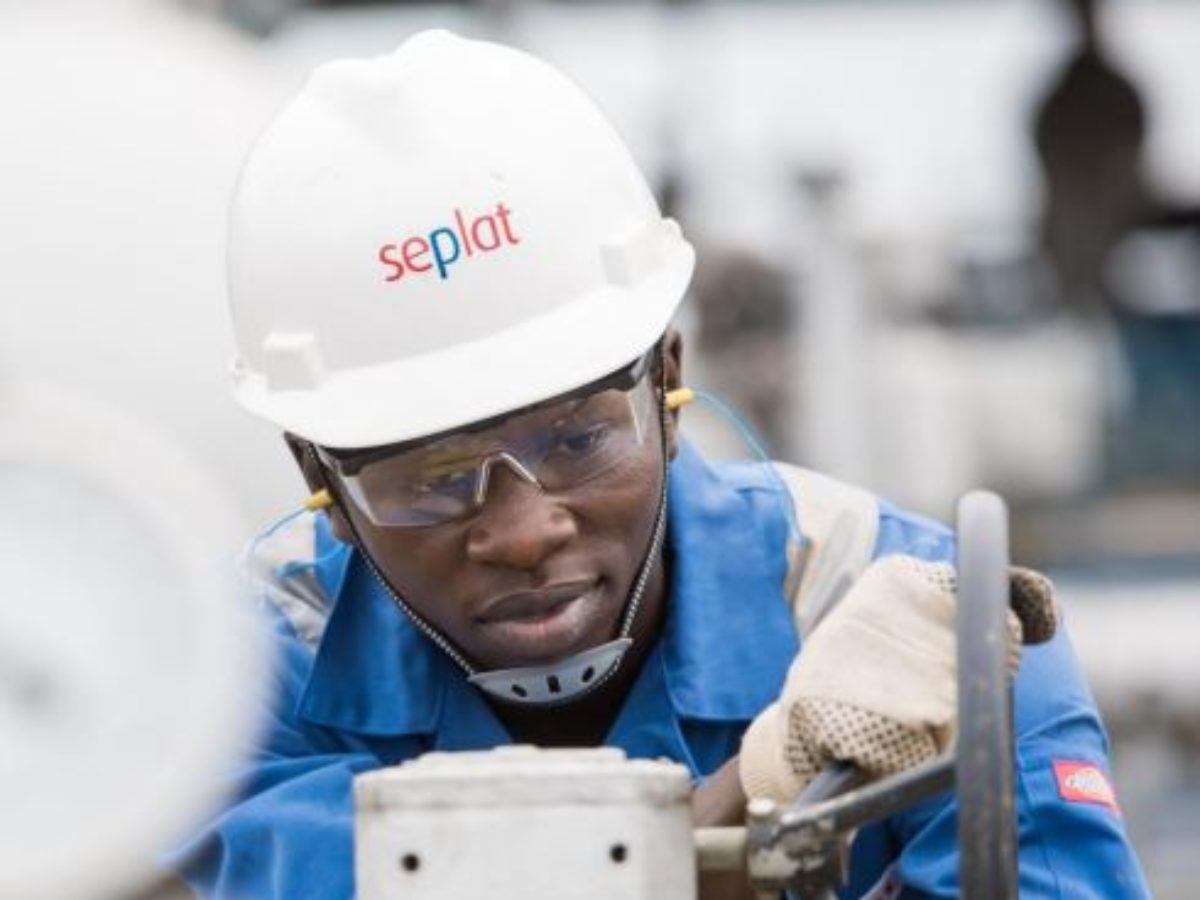
Workers at Seplat Energy began an indefinite strike on Friday, a move that could disrupt production at a time of rising global oil prices and mounting pressure on Nigeria to boost supply.
The workers, under the aegis of the Petroleum and Natural Gas Senior Staff Association of Nigeria (PENGASSAN), embarked on the industrial action following a breakdown in negotiations over the 2026 collective bargaining agreement and broader welfare concerns.
The union communicated its grievances in two letters addressed to the company’s Chief Executive Officer, Reuters reported on Friday.
The workers said the strike would continue “until further notice.”
Seplat Energy had not issued an official response as of the time of filing this report.
However, PENGASSAN indicated that its members would scale down operations, including production reporting and export activities, while maintaining only essential safety and power functions.

The strike affects the company’s onshore and offshore assets, joint venture operations, and offices nationwide. Junior workers, represented by a different union, are not part of the action.
The industrial action comes despite the company’s strong operational performance in 2025. Seplat reported a 150.4 per cent increase in revenue to N4 trillion, driven by a significant expansion in output and its first full year of offshore operations.
Average daily production rose by 148 per cent to 131,506 barrels of oil equivalent per day (boepd), representing roughly 7 to 9 per cent of Nigeria’s total liquids output.
Onshore production also grew by 14 per cent, supported by upgrades to the Sapele Gas Plant, which increased processing capacity to 90 million standard cubic feet per day.
Despite the surge in revenue, profit growth remained constrained by rising costs, including substantial tax obligations.
The company projects production to increase to 155,000 boepd, underscoring the potential impact of any prolonged disruption.
“We benefitted from successful execution of several key offshore activities that kick-started life for Seplat as an offshore operator, while at the same time delivering onshore production performance that was the strongest in recent memory,” the CEO, Roger Brown, said.
ALSO READ: Seplat Energy appoints two independent non-executive directors
He added that drilling would remain central to the company’s long-term growth strategy, with plans to deploy its first jack-up drilling rig in the third quarter of the year.
Seplat, which is dual-listed in Lagos and London, also declared a fourth-quarter dividend of 5 cents per share and a special dividend of 3.3 cents. Mr Brown said the firm is on track to deliver cumulative returns of $1 billion to shareholders by 2030.
The strike comes amid ongoing geopolitical tensions in the Middle East that have tightened global oil supply, heightening the potential impact on Nigeria if the disruption persists.
Seplat is a major supplier of gas to power generation companies across the country. Any sustained disruption to its operations could further strain the electricity supply nationwide.

The Bank of Industry (BOI) said it will expand financing for agriculture, local healthcare manufacturing and digital businesses in 2027.
The bank stated this as it seeks to consolidate the gains of its 2025–2027 corporate strategy and strengthen Nigeria’s industrial development.
The bank’s Managing Director and Chief Executive Officer, Olasupo Olusi, disclosed the plan on Thursday at a meeting in Lagos, where he outlined the bank’s priorities for the final year of the strategy.
Mr Olusi said BOI would work with the Federal Ministry of Industry, Trade and Investment on the National Industrial Finance Compact to attract more long-term capital into Nigeria’s industrial sector.
He also said the bank would deploy its new European Investment Bank facilities to agriculture and local healthcare manufacturing to increase domestic production of food and medicines.
The funding includes €85 million secured from the European Investment Bank for agriculture and another €50 million for healthcare manufacturing in 2026, as part of more than €2.2 billion in new funding the bank has secured for Nigerian industry since 2024.

READ ALSO: BOI supports 1.68m jobs as lending rises 26% to ₦644.9 billion
“We will deploy our new European Investment Bank facilities into agriculture and local healthcare manufacturing, so that Nigeria produces more of the food and medicines it consumes,” he said.
The bank also plans to expand its information and communications technology (ICT) and digital economy portfolio through the Investment in Digital and Creative Enterprises (iDICE) programme.
Mr Olusi said the initiatives formed part of the bank’s efforts to consolidate its achievements and meet the targets of its 2025–2027 corporate strategy.
“2027 is the final year of our strategy, and our task is to consolidate and meet every target we set,” the BOI boss, Mr Olusi, said.
BOI said it disbursed N644.9 billion in 2025, reaching 12,501 businesses and supporting 1.68 million jobs.
Discover more from Premium Times Nigeria
Subscribe to get the latest posts sent to your email.

First HoldCo Plc has appointed Gwen Mwaba as a non-executive director of the financial institution, effective 15 October, following an approval by the Central Bank of Nigeria (CBN).
The lender disclosed the appointment in a regulatory filing signed by Abiola Baruwa, the group company secretary, on Thursday.
First HoldCo said the appointment was made in accordance with the Nigerian Exchange Limited (NGX) Rulebook.
According to the lender, Ms Mwaba brings significant expertise in corporate governance and board oversight, credit risk and portfolio management, banking strategy, capital deployment, structured trade and commodity finance, development finance, environmental, social and governance (ESG) issues, and emerging-market risk.
Profile
Ms Mwaba brings nearly three decades of experience in global banking and development finance institutions, with particular expertise in credit risk oversight, portfolio governance, corporate and sovereign lending, structured trade and commodity finance, development finance and emerging markets.
Until recently, she served as managing director of Trade Finance and Correspondent Banking at the African Export-Import Bank (Afreximbank), based in Cairo, Egypt.
In that role, Ms Mwaba had executive leadership responsibility for trade finance and structured credit activities across Africa and the Caribbean.
The newly appointed director also oversaw a $19.5 billion portfolio of sovereign, financial institution and corporate exposures.
She contributed to the bank’s Pre-Credit and Credit Committees, providing senior credit judgement on major lending transactions. She also oversaw portfolio strategy, sector exposures and country risk limits.
Before that, Ms Mwaba served as regional head for Anglophone West Africa at Afreximbank, overseeing regional strategy and credit origination across Nigeria, Ghana, Sierra Leone, Liberia, The Gambia and Cape Verde.
Earlier, she was executive vice president of Structured Trade and Commodity Finance at Standard Bank Plc, London, where she was responsible for complex commodity finance, export credit agency-backed facilities and pre-export financing transactions across Africa.
Her earlier banking career included senior roles at Stanbic Bank Zambia and Standard Bank South Africa, including head of Vehicle and Asset Finance and head of Corporate Banking.
READ ALSO: CBN restates single-digit inflation target as FG woos investors with tax credits
Ms Mwaba’s wider industry experience includes membership of the editorial board of Trade Treasury & Payments.
Until recently, her also served on the Multilateral Institutions Board Advisory Panel of the International Trade and Forfaiting Association (ITFA) and the World Trade Organization-led Expert Group on Trade Finance.
Ms Mwaba holds a Master of Business Administration (MBA) from Heriot-Watt University, United Kingdom, and a Bachelor of Science (Honours) degree in Applied Accounting from Oxford Brookes University, United Kingdom.
She is a Fellow of the Association of Chartered Certified Accountants (FCCA) and holds a professional qualification from the Chartered Institute of Transport.
Discover more from Premium Times Nigeria
Subscribe to get the latest posts sent to your email.
-

 News1 day ago
Obi, Kwankwaso to hold Middle Belt Youth, Village Hall Meeting in Jos
-
News4 days ago
Meta’s Muse hits 10M U.S. downloads in 40 days, a milestone reached by only 11 other apps
-
Business3 days ago
How Your Side Hustle Income Ends Up in Your RSA
-
Business4 days ago
Mbah Rebuilds Technical College, Prepares Enugu Youths for Tech-Driven Future


