News
Restoring Dignity and Hope: VVF Outreach Program at Bingham University Teaching Hospital, Jos

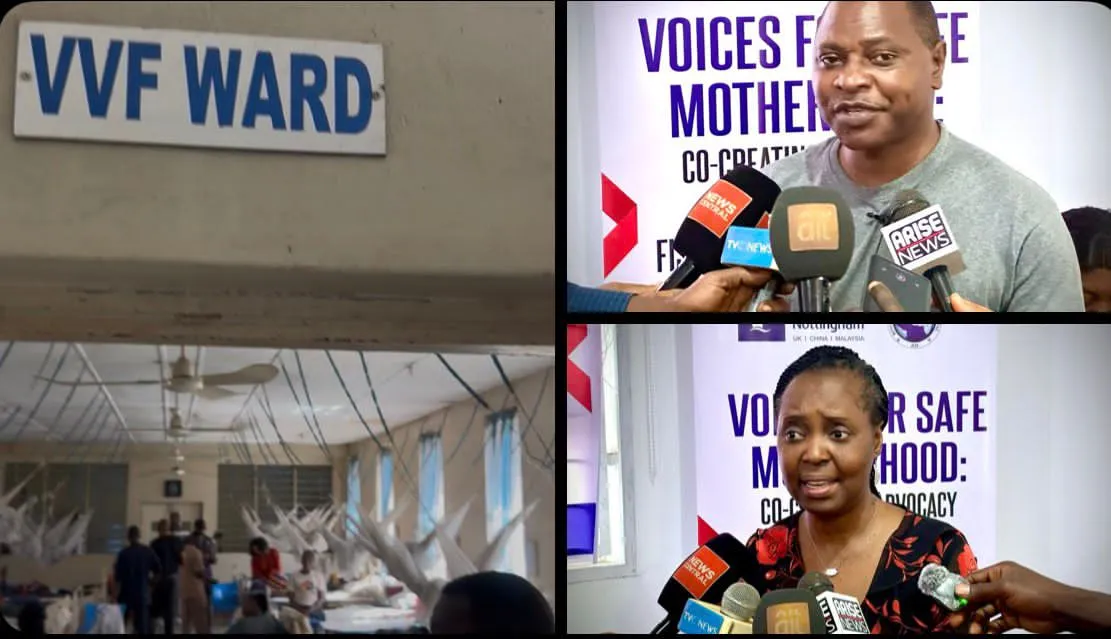
In a renewed effort to tackle the devastating impact of Vesico-Vaginal Fistula (VVF), a significant awareness and intervention program was recently held at the VVF Centre of Bingham University Teaching Hospital. The initiative brought together healthcare professionals, community members, and advocates committed to restoring hope and dignity to women affected by this condition.
VVF, a childbirth-related injury that leads to uncontrollable leakage of urine, continues to affect many women, particularly in underserved communities. Despite its physical and emotional toll, medical experts at the program emphasized that the condition is both preventable and treatable.
A Message of Hope and Support
A key highlight of the event was the strong call for compassion and community involvement. Organizers urged men, families, and society at large to stand by affected women rather than abandon them. Such abandonment, they stressed, only deepens the trauma and stigma associated with the condition, describing it as both harmful and unjust.
The outreach also served as a platform to inform the public that patients can access free medical care and comprehensive support services at the Evangel Vesico Vaginal Fistula Centre within Bingham University Teaching Hospital, Jos. This includes surgical repair, counseling, and reintegration support for survivors.
Breaking the Silence Around VVF

Dr Lengman of the VVF Centre at Bingham University Teaching Hospital delivered a strong and reassuring message focused on dispelling fear and stigma surrounding obstetric fistula. He emphasized that fistula is a treatable medical condition, not a life sentence, and encouraged affected women to seek care without shame or hesitation. According to him, many women delay coming forward because of fear of discrimination or misinformation, yet early presentation significantly improves treatment outcomes and chances of full recovery.
He further stressed the importance of community awareness and support systems in addressing the condition, noting that stigma often comes from a lack of understanding. Dr. Lengman called on families, community leaders, and healthcare providers to create an environment where women feel safe to speak up and access care. He also highlighted the role of the VVF Centre in providing not only surgical repair but also emotional and social rehabilitation, reinforcing the message that women living with fistula can regain their health, dignity, and place in society.
“Fistula is not a death sentence. With awareness, access to care, and community support, we can restore dignity to affected women and ultimately eliminate the condition.”
This statement resonated deeply with attendees, reinforcing the importance of awareness, early treatment, and collective responsibility.
Moving Forward
Hannah Degge, Assistant Professor of Health Promotion and Public Health at the University of Nottingham, emphasized during the VVF Centre engagement at Bingham University Teaching Hospital that obstetric fistula is a largely preventable condition rooted in weak maternal healthcare systems. She explained that most cases arise from prolonged obstructed labour without timely medical intervention, often due to lack of skilled birth attendants, delayed access to emergency obstetric care, and ineffective referral systems—especially in underserved and rural communities.

She further highlighted that fistula reflects deeper structural challenges, including poor healthcare infrastructure, poverty, and shortages of trained professionals, all of which increase risks during childbirth. Beyond its physical effects, she noted the severe social consequences for affected women, such as stigma, isolation, and economic hardship. Her core message was a call to action: strengthening maternal healthcare—through better antenatal services, skilled delivery care, and accessible emergency support—is essential to prevent fistula and improve women’s health outcomes.
The program underscored the urgent need for continued advocacy, education, and accessible healthcare services. By encouraging open conversations and fostering supportive environments, stakeholders hope to not only treat existing cases but also prevent new ones.
Ultimately, the VVF outreach at Bingham University Teaching Hospital serves as a reminder that healing goes beyond surgery—it involves empathy, inclusion, and sustained community effort.
One of the most captivating information is that treatment for VVF is totally Free at The Centre located at Bingham University Teaching Hospital Jos with good care for those affected by the medical condition.

So VVF can never be a death sentence because hope is waiting for those that are ready to speak Out and find it.
Mr Peter who help coordinated the Session did justice to bring the 2 day sessions to a breakout sessions where Bloggers and Invited TV journalists brainstormed, did presentations on way forward and bringing solutions in creating awareness to people having such medical conditions to step out and be treated freely.

The woman who tested positive for Ebola in Nigeria and was evacuated to Switzerland for treatment has been discharged from hospital after making a full recovery.
She was discharged from Geneva University Hospitals on Wednesday, after medical personnel confirmed her recovery, Reuters reported on Thursday, quoting a statement from the hospital.
“After the medical team confirmed her full recovery, the cantonal physician authorised the patient being treated for Ebola virus disease to leave the Geneva University Hospitals (HUG) on 11 November 2026,” the hospital said.
The Uganda-born woman and her husband, a Swiss diplomat, were evacuated from Nigeria to Switzerland on 26 October. Her evacuation was confirmed by the Minister of Health and Social Welfare, Muhammad Pate.
The patient had returned to Abuja from Uganda on 3 October. She developed symptoms days later and was admitted to a private health facility before the Nigeria Centre for Disease Control and Prevention (NCDC) was notified. Laboratory tests confirmed the infection on 20 October.
Nigeria continues Ebola surveillance
The NCDC’s latest Ebola situation dashboard, updated on 12 November with data as of 11 November, lists one confirmed case, no deaths and seven negative cases.


It also shows that 62 contacts linked to the confirmed case have been identified. Of these, 52 have completed their mandatory 21-day follow-up, while 10 remain under monitoring.
The NCDC said its response includes contact tracing, investigation of reported alerts, laboratory testing, infection prevention and control measures, and surveillance at the country’s points of entry.
On 11 November, NCDC disclosed that Nigeria recorded no additional confirmed Ebola cases since the imported infection was confirmed.
The agency has urged healthcare workers to remain vigilant, ask patients about their travel and exposure histories, and promptly report suspected cases to public health authorities.
READ ALSO: Ebola: Nigeria records no new cases 21 days after imported infection – NCDC
Regional outbreak continues
The situation in Nigeria is part of a wider outbreak of Bundibugyo virus disease affecting parts of Africa.
In its latest situation update published on 6 November, the World Health Organisation (WHO) said the DRC had recorded 10,668 confirmed cases and 5,198 deaths as of 3 November, across 67 health zones in eight provinces.
Kenya had recorded nine confirmed cases and two deaths, while Nigeria had reported one imported case. WHO said there had been no new confirmed cases in Kenya or Nigeria since its previous update.
Discover more from Premium Times Nigeria
Subscribe to get the latest posts sent to your email.
News
‘INEC must explain why ADC judgment is being ignored’ — Atiku’s aide demands answers from Amupitan
Paul Ibe, media aide to the presidential candidate of the African Democratic Congress, ADC, Atiku Abubakar, has challenged the Independent National Electoral Commission, INEC, to explain why it has yet to clarify its position on a Federal High Court judgment upholding the David Mark-led ADC leadership, despite its assurance that it would obey court orders ahead of the 2027 presidential election.
Ibe’s reaction followed INEC Chairman, Professor Joash Amupitan’s statement that the commission would comply with court decisions concerning Atiku’s participation in the 2027 presidential race.
In a statement on X, while describing obedience to court orders as a legal duty, Ibe argued that the chairman’s assurance left unanswered questions about a July 2, 2026 judgment delivered by Justice Musa Liman, which upheld the emergence of the David Mark-led ADC leadership.
He questioned whether the judgment had been set aside and demanded that INEC identify the specific orders it considers binding, particularly those affecting the ADC leadership and its candidates.
“INEC therefore owes Nigerians a clear explanation of how it intends to reconcile the two decisions—not merely a general declaration that it will obey the judiciary,” Ibe said.
He maintained that his demand was not for INEC to disregard any court ruling but for the commission to account for both judgments and leave any conflict between them to the appropriate appellate court.
Ibe warned against what he described as selective treatment of court decisions, insisting that judgments favourable to the opposition should receive the same consideration as those that do not.
“INEC must demonstrate that its guiding principle is the law—not the political convenience of the outcome,” he added.
‘INEC must explain why ADC judgment is being ignored’ — Atiku’s aide demands answers from Amupitan
-

 News3 days ago
APM holds Presidential Campaign in Plateau, Pledges Security and Economic Reset
-
News4 days ago
APC Legacy Assembly Expresses Confidence in Tinubu Ahead of 2027 Election
-
News18 hours ago
UNIJOS Appoints Patricia Lar as First Female Vice-Chancellor
-
News4 days ago
Nigeria’s ntel wins international MVNO pitch competition in Spain – Technology Times