News
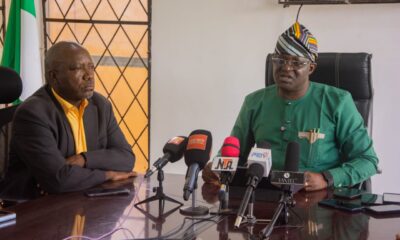
Plateau Government Holds Sensitization Seminar on Greater Jos Master Plan


As part of preparations for implementing the New Greater Jos Master Plan, the Plateau State Ministry of Housing and Urban Development organized a two-day sensitization and capacity-building seminar for stakeholders.
The seminar, held on January 30 and 31, 2025, at Centre La’Sharp, was themed “Challenges of Preparation and Implementation of Physical Master Plan in Plateau State.” It brought together dignitaries, including the Executive Governor of Plateau State, Barr. Caleb Mutfwang (represented by the Commissioner of Agriculture and Natural Resources, Samson Ishaku Bugama), the Speaker of the Plateau State House of Assembly, Hon. Gabriel Dewan (represented by Hon. Abel Nansak, Chairman, House Committee on Urban Development), members of the State Executive Council, heads of ministries, departments, and agencies (MDAs), development partners, traditional rulers, community leaders, market associations, and representatives of the tricycle (Keke) association, energy providers, and religious groups.
Governor Mutfwang, represented by Samson Ishaku Bugama, declared the seminar open and emphasized the government’s commitment to urban development.
“Looking at developed countries like China, the level at which their cities have become smart is mind-blowing. Plateau State has too many urban slums, and the governor is determined to change that. This program aims to sensitize stakeholders, build their capacity for action during the implementation process, foster collaboration, and introduce modern planning techniques and methodologies,” he said.


In his remarks, the Commissioner for Housing and Urban Development, Hon. Laven Ubandoma Joshua, reiterated the governor’s vision for a sustainable master plan that would drive lasting development across all sectors.
“This sensitization seminar ensures that various stakeholders are carried along, and the public is adequately enlightened on the need to align with these sustainable development strides right from inception,” he stated.
He further highlighted the importance of the master plan in ensuring efficient land use, improved infrastructure and services, economic growth, environmental sustainability, and the preservation of cultural heritage. He assured participants that the Ministry of Housing and Urban Development would lead the plan’s implementation through inclusivity, transparency, accountability, and technology-driven efficiency.
“We urge all participants to actively engage in the discussions, exchange ideas, learn from experts, and commit to implementing the recommendations that will emerge from this seminar,” he added.


The Speaker of the Plateau State House of Assembly, Hon. Gabriel Dewan, represented by Hon. Abel Nansak, assured stakeholders of the Assembly’s full support for the project.
“We believe that the outcomes of this engagement will bring forth solutions to the challenges facing the master plan. The House of Assembly is ready to support this initiative using its legislative powers,” he said.
He also urged participants to be fully committed to the process, adding that deliberations should be properly channeled to the appropriate authorities for implementation.
Guest speaker Barnabas Atiyaye, in his presentation on “Introduction to the Physical Master Planning Process,” emphasized that any plan lacking stakeholder involvement is ineffective.
“Direct and indirect stakeholders must be identified, considered, and involved from the beginning. Best practices from cities like Singapore, Dubai, and Abuja show that proper planning is the foundation of sustainable development,” he said.
Atiyaye outlined key components of a successful master plan, including visionary leadership, data-driven decision-making, phased implementation, and public engagement. He stressed that the plan should be sustained beyond the current administration and implemented by qualified professionals.


Similarly, Prof. Laraba Rikko, MNTTP, speaking on the key principles of physical planning, highlighted its role in economic development, infrastructure provision, and urban order.
“Planners must anticipate future needs, including population growth, schools, healthcare facilities, and commercial spaces. A good master plan must ensure resource sustainability, social and cultural sensitivity, strong policy frameworks, and proper funding,” she explained.
She identified corruption, poor data management, weak legal frameworks, and limited capacity as challenges that need to be addressed for effective implementation.


In his goodwill message, the Chairman of Bassa Local Government, Hon. Joshua Sunday Riti, commended the government’s vision and called for its extension to neighboring communities to help curb insecurity.
“The integration of security technology, including surveillance cameras and strategic security deployments, should be embedded in the master plan,” he urged.
The Commissioner for Lands, Survey, and Town Planning, Barr. Peter Nyam Gai, noted that previous master plans were not legally backed, which hindered their implementation.
“Plateau State never had a Greater Jos Master Plan because the previous one was not passed into law. We urge the State House of Assembly to drive the legal process for this plan. There must also be synergy between the Ministry of Lands and urban planners to ensure smooth execution,” he said.


Speaking on the roles of stakeholders in planning, preparation, and implementation, Prof. Dung Gwom, MNITP, outlined the responsibilities of key actors.
“The Plateau State Ministry of Housing and Urban Development is responsible for policy formulation, infrastructure development, urban planning, and the enforcement of planning laws. The state government plays a crucial role in legislation, funding, and institutional support,” he explained.
He emphasized that local communities must adhere to zoning regulations and actively participate in planning discussions, while the private sector should invest in housing and infrastructure in line with the plan. Civil society organizations were urged to monitor implementation, promote transparency, and support sustainable development initiatives.
By working together, he concluded, stakeholders can ensure that the New Greater Jos Master Plan leads to structured urban growth and improved living conditions.


Other thought-provoking presentations included:
- Leveraging Public-Private Partnerships in the Implementation of the Master Plan and Its Provisions – Prof. Mustapha Zubairu
- Stakeholder Collaboration in the Preparation and Implementation of Master Plans – Prof. Samuel Wapwera
- Challenges in the Implementation of Physical Master Plans – Istifanus Kassem George


The event also featured an interactive question-and-answer session, where stakeholders shared their concerns and identified potential challenges and gray areas.
At the close of the two-day seminar, the Commissioner for Housing and Urban Development, Hon. Laven Ubandoma Joshua, emphasized that the new Greater Jos Master Plan will span 20 years.
“With the old master plan ending this year, the new master plan—already in motion since 2024—will last for 20 years and cover Jos North, Bukuru, Riyom, Bassa, and Barkin Ladi. So far, the resource persons have done an excellent job sensitizing stakeholders on their roles and expectations regarding the Greater Jos Master Plan. Issues, challenges, and areas for improvement have been identified, which will help us avoid the lapses of the previous master plan while enhancing it.”


The Permanent Secretary of the Ministry of Housing and Urban Development, Yop Rwang, Esq., stated that the ministry is currently working on developing its own policies to ensure that proper standards are established for the implementation of the master plan.
A communiqué summarizing the key takeaways from the seminar was presented by Rwang Bot Yakubu. Some of the major points for stakeholders included:
- Visible master plans are prerequisites for sustainable urban growth and development.
- The passage of the master plan into law is crucial—without legal backing, there is no plan.
- Town planners’ roles should not be handed over to non-planners.
- All ministries and departments should establish physical planning units to ensure proper implementation.
- There is a need for synergy and cooperation among stakeholders.
- Government acquisition of land is essential for urban planning.
- Housing and urban development policies should be created for the state.
- The government must prioritize data collection to support modern technologies needed for smart cities.
- A regional plan should serve as a blueprint for all sectors of the Plateau State economy.
- Investment in data acquisition for planning purposes is necessary.
- The state must acquire digital maps to integrate them into the master plan effectively.
- The Law Reforms Committee should expedite its review of laws related to master plan preparation and implementation.
- The issue of street naming and house numbering must be deliberately addressed for proper identification.
- Green areas and organized open spaces should be protected and retained.
- The government must prioritize the recruitment of town planners and deploy them across all local government areas.
- Strict adherence to the standards set in the new Greater Jos Master Plan is essential.


Governor Seyi Makinde of Oyo State has declared that the All Progressives Congress, APC, or any of the political parties willing to use any of the public facilities in the state is free to do so.
Makinde specifically explained that the APC is free to use the ancient Mapo Hall for its proposed campaign.
Makinde made these declarations in a statement signed by his Special Adviser on Media, Dr Sulaimon Olanrewaju.
The statement was made available to DAILY POST Tuesday night.
Makinde in the statement explained that no political party should be denied access to use the facilities as long as they fulfil the conditions.
Makinde made these declarations in response to concerns surrounding the proposed use of Mapo Hall by the APC presidential campaign.
He added that public facilities belong to the people of the state.
He said that its usage must be done in transparent and equitable way.
Makinde in the statement explained that, "Any political party or organisation that fulfils the stipulated conditions should not face discrimination or unjust restrictions in accessing such facilities".
2027: APC, other political parties free to use public facilities- Makinde

The Nigeria Police Force has confirmed the arrest of a 22-year-old man, Umar Ibrahim Gandi Maradun, over a viral video allegedly showing him calling for the use of AK-47 rifles to kill Christians in Enugu and Plateau states.
Politics Nigeria reports that the suspect, a native of Maradun Local Government Area of Zamfara State, was arrested for investigation after the video circulated on social media and sparked concerns over religiously motivated violence.
In a statement issued on Tuesday, October 27, 2026, the Force Public Relations Officer, Chief Superintendent of Police (CSP) Ani Iniedu, said the Zamfara State Police Command had activated its intelligence resources to identify those involved in the incident.
The police also confirmed that the command had engaged the leadership of Jama’atu Izalatil Bidi’a Wa’ikamatus Sunnah (JIBWIS) at the national and state levels following the emergence of the video.
According to the police, the organisation disassociated itself from the alleged conduct and handed the suspect over to the authorities for investigation.
The video reportedly showed the suspect wearing JIBWIS uniform and appearing alongside pupils from two Islamic schools in Maradun: Nurul Islam Islamiya and Akidatul Sahiha Islamiya.
Preliminary findings by the Zamfara State Police Command indicated that the video was recorded on Friday, October 23, 2026, while the suspect was reportedly on his way to Aliyu Ibn Abi Thalib Mosque, where he and others allegedly provided security during Friday prayers and preaching.
The suspect was born on September 15, 2004. He reportedly attended Mualledi Model Primary School and Government Day Secondary School, both in Maradun.
He also reportedly joined JIBWIS in 2025 and recently gained admission to study Mass Communication at Zamfara State University, Talata Mafara.
The police said a comprehensive investigation had commenced and that the suspect would be charged before a competent court if sufficient evidence established an offence under applicable law.
Earlier, the Zamfara State Commissioner of Police, Bello, said the investigation would consider allegations of incitement to violence, disturbance of public peace and criminal intimidation under Sections 77, 78 and 380(b) of the Penal Code Law applicable in the state, subject to the evidence gathered and applicable law.
The police also condemned statements capable of promoting religious hatred, threatening community safety or undermining peaceful coexistence.
“The Zamfara State Police Command remains resolute in its duty to uphold the law, protect lives and property, defend the rights of all citizens without discrimination, and work with relevant stakeholders to sustain peace and security throughout Zamfara State,” the commissioner said.
The development comes as JIBWIS has publicly distanced itself from the video and condemned calls for violence against non-Muslims.
The group’s National Publicity Secretary, Sheikh Ahmad Muhammad Ashiru, stated this in a statement issued at its headquarters in Jos on Tuesday.
Ashiru said the organisation had yet to establish the authenticity of the video but maintained that its position against violence was clear.
“We are yet to confirm whether the video is authentic, but our position against violence remains clear,” he said.
He added that JIBWIS, under the leadership of Ash-Sheikh Muhammad Sani Yahaya Jingir, would not support calls to attack or kill anyone because of their religious affiliation.
Ashiru said banditry, kidnapping, armed robbery and Boko Haram attacks were already affecting communities across the country, warning that statements promoting violence could heighten tensions and threaten peaceful coexistence.
“We would not support any call capable of disturbing the peace of Nigeria, as such comments are capable of inciting violence and creating unnecessary tension among Nigerians,” he said.

The JIBWIS spokesperson stressed that anyone making such statements in the organisation’s name did not represent its position.
He urged security agencies to investigate the video, establish its authenticity and identify those responsible, adding that anyone found culpable should face the law after a proper investigation.
Meanwhile, the Nigeria Police Force has urged members of the public to remain calm, avoid circulating unverified information and refrain from sharing the video in ways that could escalate religious tensions.
The Force reiterated its commitment to protecting Nigerians irrespective of religious affiliation and taking lawful action against conduct capable of inciting hatred or threatening public peace.
-

 News3 days ago
Troops rescued 70 abductees, recovered N10 million ransom: DHQ
-
Business3 days ago
CBN grants JP Morgan approval-in-principle to set up merchant bank
-
News3 days ago
Plateau Activates Ebola Preparedness Measures, Urges Residents to Observe Safety Guidelines
-
Business3 days ago
REA Ends 16 Years of Darkness in Two Kano Communities