Connect with us

News

Osun guber: Campaign councils trade accusations over alleged killing of members

info

Published

on

APCAccord.jpg

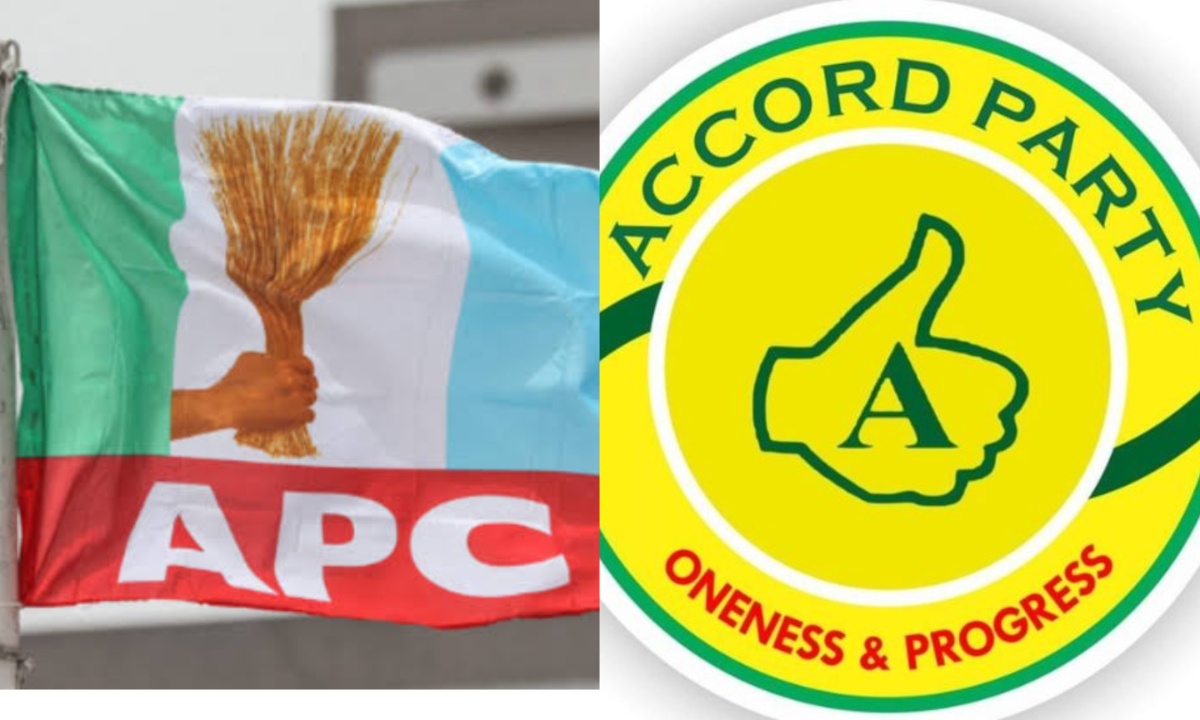
The Osun State governorship campaign atmosphere intensified on Friday as the governorship campaign councils of the two major political parties exchanged allegations over unresolved political killings, with both calling on the Inspector-General of Police, Kayode Egbetokun, to intervene ahead of the August 15 governorship election.

In separate statements issued during the visit of the Inspector-General of Police to Osun State on Friday, the Osun All Progressives Congress (APC) Governorship Campaign Council urged the police chief to ensure the arrest of suspects declared wanted in connection with the killings of its members, while the Imole Campaign Council (ICC), representing the Accord Party, called for investigations into alleged killings involving APC members and demanded the redeployment of the state Commissioner of Police, Ibrahim Gotan.

The APC Campaign Council, in a statement signed by its Head of Media and Publicity Committee, Engr. Oluremi Omowaiye, welcomed the Inspector-General of Police and expressed confidence in his commitment to professionalism, justice and the rule of law.

According to the council, “the police should intensify efforts to apprehend all persons declared wanted over alleged violent crimes and ensure they are prosecuted in accordance with the law.”

The APC campaign also requested a comprehensive review of unresolved murder cases involving its members since 2022, alleging that several party chieftains and supporters were killed in separate incidents across the state.

It appealed for a thorough investigation into the recent alleged attempted assassination of its Director-General, Hon. Oluwole Oke.

The council specifically called for “the immediate arrest of Olalekan Oyeyemi, also known as Emir Ajagungbade, Nurudeen Wakili, also known as Nurudeen Alawonle, Solomon Adefioye, also known as Solo Iwara, and Jide Joda. They had been declared wanted by the police in connection with various killings involving APC members.”

It also urged the Inspector-General to investigate allegations linking Senate Minority Leader Lere Oyewumi to the murders of APC chieftains Saheed Oyegunju and Remi Abass, as well as claims that he allegedly interfered with police investigations.

The council called on the police to “follow all credible leads and evidence without interference.”

“The Osun APC Governorship Campaign Council remains committed to peace, democracy and the rule of law. We urge all our members and supporters to remain peaceful and continue to cooperate with security agencies as they discharge their constitutional responsibilities.”

Responding in its own statement, the Imole Campaign Council expressed concern over recent developments involving policing and security management in Osun State, arguing that public confidence in law enforcement should be protected.

The council, through its spokesperson, Pelumi Olajengbesi, alleged that unresolved killings involving Accord members also deserved investigation.

It listed several people who have lost their lives in separate incidents of political violence and urged the Inspector-General to ensure that all cases were thoroughly investigated.

The Imole Campaign Council also called for the redeployment of Osun State Commissioner of Police Ibrahim Gotan, arguing that a new police commissioner whose neutrality would inspire public confidence should be appointed ahead of the governorship election.

“This call is not made out of hostility toward any individual but in the overriding interest of restoring public trust in policing within Osun State. Confidence in law enforcement is indispensable to peaceful elections, political stability and effective crime fighting,” the statement said.

The council urged the Inspector-General to investigate APC governorship candidate Bola Oyebamiji, Wole Oke and Engr. Remi Omowaiye over separate allegations relating to the killings of Accord members, while also seeking the arrest of several individuals it alleged were involved in violent attacks in parts of the state.

The council, while urging its supporters to remain law-abiding, avoid inflammatory conduct and cooperate with lawful security operations, maintained that it remained committed to peaceful political engagement before, during and after the August 15 governorship election.

Continue Reading
Click to comment

Leave a Reply

Your email address will not be published. Required fields are marked *

Business

Supreme Court overturns Appeal Court’s order confiscating General Hydrocarbon’s oil vessel

info

Published

on

By

Supreme Court e1675957930419.jpg

MTN ADVERT

The Supreme Court of Nigeria on Friday dismissed a decision of the Court of Appeal ordering the seizure of FPSO Tamara Tokoni, a vessel containing crude oil pledged by oil-servicing firm General Hydrocarbons as collateral for a loan facility obtained from First Bank.

The five-member panel of judges, according to This Day newspaper, directed the release of the content of the vessel to General Hydrocarbons because the lawsuit initiated by the lender is contractual and not an admiralty matter.

In a similar vein, the court held that the Federal High Court and the Court of Appeal lack jurisdiction to hear the suit, given that the litigation is an admiralty dispute.

In September 2025, the Court of Appeal had ordered the sale of the crude oil aboard the vessel, directing that the proceeds be deposited in an interest-bearing escrow account under the custody of the chief registrar of the Court of Appeal.

The court threw out an earlier ruling of the Federal High Court, Port Harcourt, which dismissed First Bank’s claims over the diversion of proceeds from the sale of crude oil.

PT WHATSAPP CHANNEL

The appellate court affirmed the dispute’s maritime nature and emphasised the importance of preserving the res (the crude oil cargo) as the core subject of litigation.

Background

Atlantic Energy Drilling Concepts, chaired by Jide Omokore, an associate of a former Minister of Petroleum, Diezani Alison-Madueke, obtained a credit facility from First Bank in 2011.

The $490 million loan was to finance the firm’s operating and capital expenditure requirements for drilling four oil wells with proven reserves (collectively known as the Forcados assets) and to fund its Strategic Alliance Agreement with the Nigerian Petroleum Development Company (NPDC).

Atlantic Energy’s assets and rights were pledged as collateral, with First Bank holding a charge over the company’s collection accounts. The debt went bad after payment defaults by Atlantic Energy

“In line with our commitment to address the legacy asset quality challenges, exposure to Atlantic Energy, our biggest NPL (non-performing loan), was written off in the second quarter,” Adesola Adeduntan, First Bank’s former CEO, said in 2019.

According to its financial report, First Bank reduced its non-performing loan ratio to 14.5 per cent as of June 2019, down from 25.3 per cent, after writing off the N126 billion loan.

Oba Otudeko, then chairman of FBN Holdings (now First HoldCo), later sought the help of Nduka Obaigbena, owner of General Hydrocarbons, to salvage First Bank from a potentially disastrous situation. That prompted the duo to agree to work together, according to Mr Obaigbena, who held an approved oil mining lease (OML) from former President Umaru Yar’Adua.

In a letter written to Yemi Cardoso, the governor of the Central Bank of Nigeria, dated 7 November 2024 and seen by PREMIUM TIMES, Mr Obaigbena argued that the NNPC under late Maikanti Baru failed to sign the security documents for the now bad, non-performing loan to Atlantic Energy Drilling Concept Nigeria Limited (Atlantic Energy) for OML 26, OML 42, OML30 and OML 34 under separate Strategic Alliance Agreements between Atlantic Energy and NPDC Limited, claiming it was a fraudulent scheme to defraud the Federal Government by the then minister of petroleum resources, Diezani Allison-Madueke.

He noted that it was obvious during the meeting, which he claimed to be part of, that the facilities granted to Atlantic Energy by First Bank did not follow due process.

“FBN was now faced with an unsecured and non-performing exposure of $718M and was on the verge of becoming a systemic risk to the banking sector,” he stated.

“It was discovered that FBN had given this loan recklessly without security as part of a scheme that funded Diezani Allison-Madueke and Kola Aluko (details of these are still being investigated by Nigeria’s Economic and Financial Crimes Commission, EFCC, and the United Kingdom’s National Crime Agency, NCA),” Mr Obaigbena added.

He noted that First Bank, AMCON, and General Hydrocarbons signed a tripartite deed on outstanding exposure, allowing Global Hydrocarbons to guarantee payment of a pending, now-discounted, outstanding exposure of $600 million in naira on the bank’s books.

“Once GHL signed the Outstanding Exposure Tripartite Deed effective 31st December 2021, FBN’s account, which was then classified by the Central Bank of Nigeria (CBN), was now whole agai,n having escaped a loan loss provision of 302Bn Naira against a profit of 151Bn Naira ultimately declared for the year ending 31st December 2021,” the document stated.

Last September, Justice Ambrose Lewis-Allagoa of the Federal High Court in Lagos granted an injunction restraining AMCON from appointing a receiver over General Hydrocarbons and its assets.

The court also forbade AMCON, its managing director, First Bank and the attorney general of the federation from taking any steps or continuing any moves to enforce any rights against the energy firm or its assets.

The rights, the court said, included “but not limited to freezing the accounts of the applicant, its directors or shareholders, the appointment of a receiver/receiver manager, asset manager, recovery agent, etc., over the applicant, the applicant’s assets, or the assets belonging to the applicant’s directors or shareholders.”

On 28 October 2025, General Hydrocarbons was directed by an arbitral tribunal to pay First Bank of Nigeria $112,100 and N111.25 million in legal and arbitration costs.

Justice Akaah Kumai, who gave the order, said failure by General Hydrocarbons to comply will attract a 10 per cent annual interest rate until full settlement.

The tribunal dismissed the allegation that First Bank sabotaged alternative financing arrangements on the ground that the claim lacked merit.

It also ruled that General Hydrocarbons was not entitled to any damages, expenses, or compensation for third-party contractors, unpaid salaries, or failed contracts.

Seyi Akinwunmi, the receiver/manager appointed by AMCON, disclosed in a newspaper advertisement dated 6 November 2025 announcing his appointment as receiver/manager over General Hydrocarbons, stating that the oil firm is now under receivership.

On the same day, AMCON formally requested that thirty-four financial institutions in Nigeria block access to the assets (including funds) held by them on behalf of the company.

“At the time AMCON appointed me receiver manager, there was no order against me. I was appointed under the law, and I am operating according to law,” Mr Akinwunmi told PREMIUM TIMES.

A lawyer of General Hydrocarbons informed PREMIUM TIMES at the time that AMCON had obtained the order to enforce the receivership from a court of equal jurisdiction presided over by Justice Adetayo Aluko.

The receiver/manager’s ploy to draft in a new lawyer – Oluseye Opasanya – into the legal battle to replace Abiodun Laniyonu, who had represented General Hydrocarbons right from the start of the tussle, hit a brick wall.

READ ALSO: Supreme Court upholds final forfeiture of N1.58 billion linked to former NIRSAL consultant

Justice Lewis-Allagoa said the step ran contrary to a current court order and quashed the move on that basis.

In December 2025, the Lagos Division of the Federal High Court struck out the order empowering AMCON to enforce receivership over General Hydrocarbons.

Justice Akintayo Aluko, who announced the decision, said a suit initiated by the receiver/manager appointed by AMCON is an abuse of court process in light of a subsisting order issued by the same court.

Mr Akinwunmi, the judge added, launched legal proceedings in disregard for the injunction granted by Justice Ambrose Lewis-Allagoa in September, restraining AMCON, its agents, privies, nominees, etc, from appointing a receiver over General Hydrocarbons and its assets.

Continue Reading

News

The browser wars aren’t about search anymore — here are the best alternatives to Chrome and Safari

info

Published

on

By

Search engine.jpg

The browser wars have entered a new phase this year: the fight isn’t just over search results anymore, it’s over which company’s AI gets to act on your behalf inside the browser itself. Google Chrome and Apple’s Safari still dominate the market overall, with Chrome’s edge coming largely from how aggressively it has woven generative AI into search. But 2026 has brought a wave of new entrants — from well-funded startups to Big Tech itself — all betting that the browser is about to become less like a window onto the web and more like an assistant that gets things done for you.

Users looking for alternatives to Chrome and Safari can choose from a growing variety of browsers aimed at challenging the industry giants. To help navigate the competitive landscape, we’ve compiled an overview of some of the top alternative browsers available today. This includes browsers leveraging AI, open source browsers that promote customization and privacy, and “mindful browsers” — a new term that refers to browsers designed to enhance user well-being.

AI-powered browsers

Image Credits:Perplexity

Perplexity’s Comet

Perplexity is the most recent startup in the space to launch an AI-powered web browser. Called Comet, the company’s new product acts as a chatbot-based search engine, and can perform actions like summarizing emails, browsing web pages, and performing tasks such as sending calendar invites. It’s currently only available to users with Perplexity’s $200/month Max plan, but there’s also a waitlist where people can sign up.

The Browser Company’s Dia

Dia Hero
Image Credits:The Browser Company

The Browser Company, the startup behind the Arc browser, recently introduced Dia, its AI-centric browser that looks similar to Google Chrome but with an AI chat tool. 

Currently available as an invite-only beta, Dia is designed to help users navigate the web more easily. It’s able to look at every website that a user has visited and every website they’re logged into, enabling it to help you find information and perform tasks. For instance, Dia can provide information about the page a user is currently browsing, answer questions about a product, and summarize uploaded files. 

To get early access to Dia, users have to be an Arc member. Non-members can join the waitlist.  

Opera’s Neon

Opera neon
Image Credits:Opera

Another recent entry into the AI agentic browser war is Opera’s Neon, which has contextual awareness and can do things like researching, shopping, and writing snippets of code. Notably, it can even perform tasks while the user is offline. 

Neon is currently available on macOS and Windows. The subscription costs $19.90 per month.

OpenAI’s Atlas

OpenAI logo with spiraling pastel colors (Image Credits: Bryce Durbin / TechCrunch)
Image Credits:Bryce Durbin / TechCrunch

OpenAI recently launched its AI-powered web browser, called Atlas. The browser allows users to ask ChatGPT about search results and browse websites within the chatbot instead of being directed to outside links. There’s also an “agent mode” for users to ask ChatGPT to complete tasks on their behalf.

Atlas was first rumored to launch in July; however, it only became available on macOS in October. It’s expected to arrive on Windows, iOS, and Android devices soon.

Aside

Backed by Y Combinator, Aside is an upcoming AI-first, browser-native automation platform built to autonomously complete tasks, fill out forms, and manage data on behalf of users. The company describes the experience simply: “Give it your passwords, browsing history, and browser context.” Unlike traditional automation tools that rely on integrations, Aside operates directly within the browser itself, allowing it to work across Gmail, Notion, Slack, Figma, and banking platforms.

Users can sign up for the waitlist ahead of launch.

Jatter

Jatter launched its AI-powered browser in June, giving users the ability to ask questions about any webpage, uncover relevant insights, and receive personalized recommendations based on their browsing activity. Additionally, Jatter offers an integrated Notes app, so it can learn from that content, summarize notes, and surface key details.

Jatter is currently available on Mac, Windows, iOS, and Android devices. It’s free to use, but there’s also an optional subscription for $10 per month.

Privacy-focused browsers

Image Credits:Brave

Brave

Brave is among the more well-known privacy-first browsers, popular for its built-in ad and tracker blocking capabilities. It also has a gamified approach to browsing, rewarding users with its own cryptocurrency called Basic Attention Token (BAT). When users choose to opt in to view ads, supporting their favorite websites, they get a share of the ad revenue. Additional features include a VPN service, an AI assistant, and a video calling feature

DuckDuckGo

Image Credits:DuckDuckGo

DuckDuckGo is another browser that many people are probably already familiar with, thanks to its search engine by the same name. Launched in 2008, the company recently made significant investments in its browser to stay competitive by introducing generative AI features, such as a chatbot. It also enhanced its scam blocker to detect a wider range of scams, including fake cryptocurrency exchanges, scareware tactics, and fraudulent e-commerce websites. In addition to blocking scams, DuckDuckGo prevents trackers and ads, and it doesn’t track user data, resulting in fewer pop-ups for users.

Ladybird

Image Credits:Ladybird

Ladybird, led by GitHub co-founder and former CEO Chris Wanstrath, has an ambitious mission compared to other rivals: It aims to build an entirely new open source browser from scratch. This means it will not rely on code from existing browsers, a feat that has rarely been accomplished. Most alternative web browsers depend on the Chromium open source project maintained by Google, which is the most widely used base for many browsers. 

Like other privacy-focused browsers, Ladybird will offer features to minimize data collection, such as a built-in ad blocker and the ability to block third-party cookies. The browser has yet to be launched, with an alpha version scheduled for release in 2026 for early adopters, available on Linux and macOS.

Vivaldi

Image Credits:Vivaldi

Vivaldi is a Chromium-based browser created by one of the original developers of the Opera browser. Its biggest selling point is its customizable user interface, which allows users to change the appearance and enable or disable features. One unique feature is that the browser window changes color to match the website being viewed. Other key features include ad blocking, a password manager, no user data tracking, and productivity tools such as a calendar and notes.

Niche browsers

Image Credits:Opera

Opera Air

Opera launched the Air browser in February, becoming one of the first mindfulness-themed browsers in the space. While Opera Air functions like a typical web browser, it includes unique features designed to support mental well-being. These features consist of break reminders and breathing exercises. Another feature, called “Boosts,” provides a selection of binaural beats to either help improve focus or relaxation.

SigmaOS

Image Credits:SigmaOS

SigmaOS is a Mac-only browser featuring a workspace-style interface that emphasizes productivity. It displays tabs vertically, allowing users to treat them like a to-do list that can be marked as complete or snoozed for later. Users can create workspaces — essentially groups of tabs — to better organize different activities, such as separating work from entertainment.

This Y Combinator-backed browser has been around for a few years now and has most recently begun introducing more AI features, including the ability to summarize various elements of a web page, such as ratings, reviews, and prices. It also has an AI assistant that can answer questions, translate text, and rewrite content.

SigmaOS is free to use, but users who want more than three workspaces can subscribe to a plan for $8 per month, which provides unlimited workspaces.

Zen Browser

Image Credits:Zen Browser

Zen Browser aims to create a “calmer internet” with its open source browser. Zen lets users organize tabs into Workspaces, and offers Split View to view two tabs side by side, among other productivity-focused features. Users can also enhance their browsing experience with community-made plug-ins and themes, such as a mod that makes the tab background transparent.

This story has been updated after publication to include newly launched browsers.

When you purchase through links in our articles, we may earn a small commission. This doesn’t affect our editorial independence.

Continue Reading

Trending