Business
Nigeria secures 449,000 metric tonnes of fertiliser inputs to boost food security



President Bola Tinubu has announced that Nigeria has secured more than 449,000 metric tonnes of fertiliser inputs—equivalent to about nine million bags—to support agricultural production and strengthen food security across the country.
The president disclosed this in a statement posted on his official X account on Thursday, describing the development as part of broader measures by his administration to fulfil its commitment to making Nigeria food-secure.
“As of May 2026, more than 449,000 metric tonnes of fertiliser inputs, equivalent to about nine million bags, had been secured, with 10 vessels discharged or in transit,” Mr Tinubu said.
He recalled that upon assuming office, his administration identified food security as a central pillar of its Renewed Hope Agenda.
“We promised to support our farmers, strengthen local production, reduce dependence on imports, and build an agricultural system strong enough to withstand shocks from beyond our borders.

“That promise is being kept,” he said.
Fertiliser procurement challenges
Nigeria has long struggled with fertiliser procurement due to rising raw material costs, supply chain bottlenecks, and product diversion, challenges that have limited access for smallholder farmers who account for a significant share of domestic food production.
To address these concerns, the administration of former President Muhammadu Buhari entered strategic partnerships with Morocco in 2016 and Russia in 2019 under the Presidential Fertiliser Initiative (PFI), managed by the Nigeria Sovereign Investment Authority (NSIA).
The initiative began with a Memorandum of Understanding aimed at reviving dormant fertiliser blending plants and importing discounted phosphate from Morocco. In 2021, the partnership expanded into a $1.3 billion basic chemicals platform designed to support local production of ammonia and fertilisers.
The arrangement increased the supply of raw materials to blending plants, boosted domestic production capacity and reduced fertiliser costs. However, challenges, including diversion and sabotage within parts of the value chain continued to limit access for farmers.
Experts have linked inadequate fertiliser availability to declining agricultural yields, rising food prices and worsening food insecurity.
Nigeria’s food system has come under increasing pressure in recent years due to recurrent flooding, insecurity in farming communities, rising transportation costs following fuel subsidy removal, and broader structural challenges.
According to the United Nations World Food Programme (WFP), about 35 million Nigerians are projected to experience acute food insecurity during the 2026 lean season.
Global disruptions
Mr Tinubu said disruptions in global supply chains and rising costs of key fertiliser inputs, worsened by conflict in the Middle East, posed significant risks to countries dependent on imported raw materials.
For Nigeria, he said, the potential consequences included fertiliser shortages, higher input costs, reduced productivity and increased food prices.
“I am pleased to inform you that we moved early,” the president said.
He explained that through the Presidential Fertiliser Initiative, now restructured under the Ministry of Finance Incorporated (MOFI), the government strengthened procurement systems, secured critical raw materials, signed forward contracts and improved coordination across the fertiliser value chain.
According to him, these measures helped shield Nigeria’s fertiliser blending industry from the worst effects of global market disruptions.
Mr Tinubu said the government remains on course to deliver a 1.1 million metric tonne fertiliser programme in 2026, equivalent to about 22 million bags.
He added that strategic contracting for key inputs generated savings of N61.58 billion in 2026 alone, helping to keep fertiliser prices relatively affordable for farmers.
Supporting farmers
The president noted that Nigeria currently has more than 90 operational fertiliser blending plants, giving the country the largest blending capacity in Sub-Saharan Africa.
“This capacity means jobs, local production, industrial growth and greater resilience for our food system,” he said.
Mr Tinubu stressed, however, that securing fertiliser inputs and maintaining production capacity would only be meaningful if the products reach farmers on time.
To address this, he said the government launched the Renewed Hope Farm Input Support Programme (RH-FISP) through the National Agricultural Development Fund (NADF).
READ ALSO: Tinubu speaks on power sector challenges, pledges reforms
Under the programme, 515,720 bags of locally produced fertiliser are being distributed to 128,930 smallholder farmers across 25 states and the Federal Capital Territory during the current planting season.
The NADF is also supporting modern agricultural practices through digital extension services, harmonised fertiliser application guidance and targeted interventions for priority crops such as rice, maize, cassava and soybean.
“Our administration will not relent in its efforts to protect farmers, raise productivity, strengthen the agricultural value chain, support local industry and ease pressure on food prices over time,” Mr Tinubu said.
“This is the meaning of promise made, promise kept. We will continue to take practical steps to strengthen Nigerian agriculture and protect food security for every Nigerian.”



The federal government is considering legislation to prevent successive administrations from reversing key economic reforms, as it seeks to establish a national policy framework to guide decisions on taxation, subsidies, trade and industrial development.
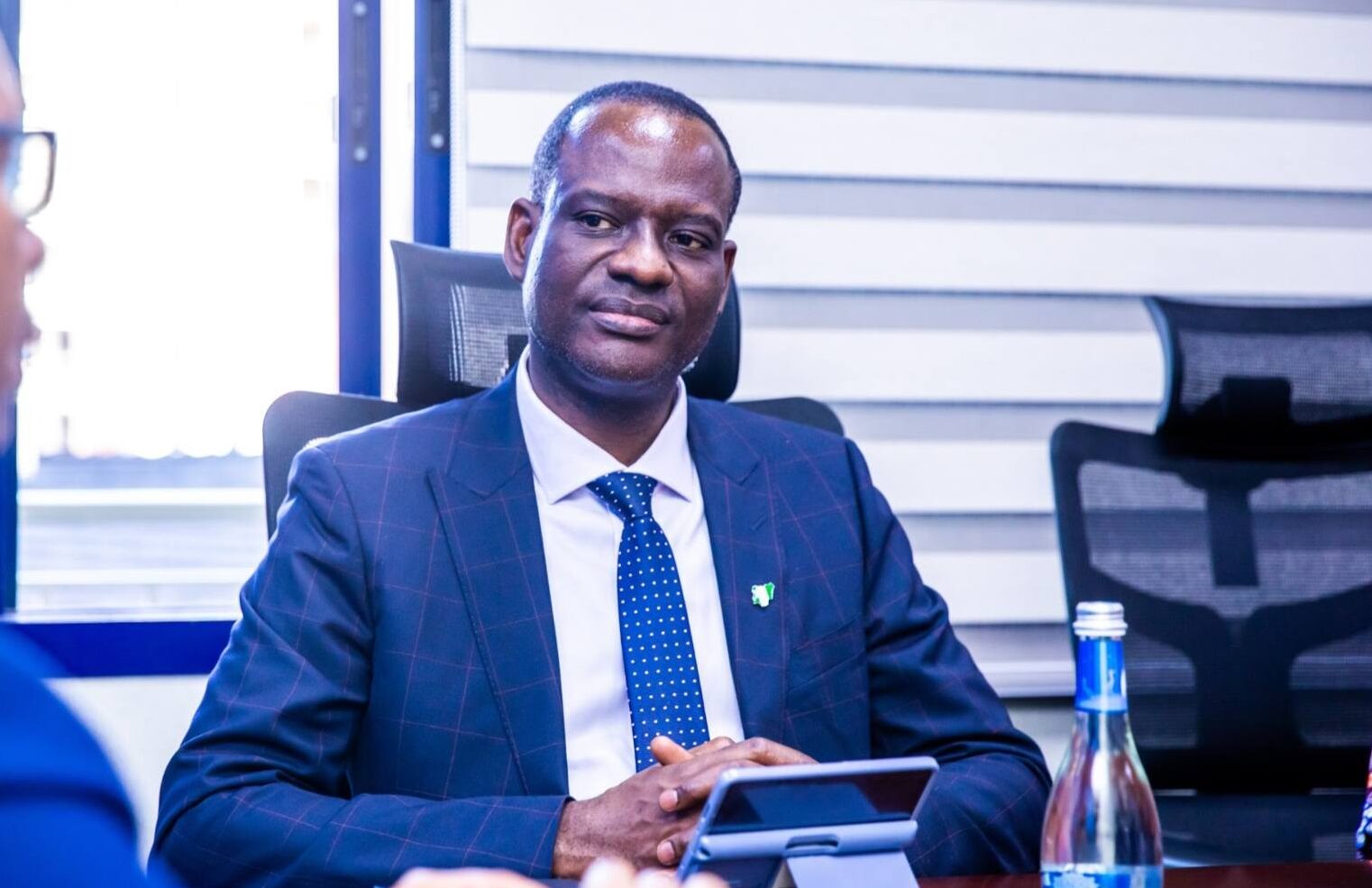
The Minister of Finance and Coordinating Minister of the Economy, Taiwo Oyedele, said the proposed framework would establish economic principles to guide successive governments, regardless of changes in political leadership.
He spoke on Monday at the 32nd Nigerian Economic Summit in Abuja, where he presented the draft of Nigeria Economic Policy Framework for public consultation.
“We now need to lock it in, in institutions, in law, as well as policy framework, so that it can be enduring,” he said during a panel session.
The proposal comes as President Bola Tinubu’s administration continues to defend its economic reforms, including the removal of petrol subsidies and changes to the foreign exchange system.
The government says the reforms are necessary to address economic distortions and improve long-term stability. However, their effects on household purchasing power and business costs have remained a subject of public debate.

Mr Oyedele said inconsistent economic policies had discouraged investment and undermined previous reforms, arguing that Nigeria needed a lasting approach to economic decision-making.
“Policy uncertainty is an invisible tax on enterprise. And unlike most taxes, it generates no revenue for government; it only destroys value and discourages investment,” he said.
He said the government was considering whether key provisions of the proposed framework should be backed by law, stressing that the document remained a draft and had not been approved as government policy.
Public consultation
According to Mr Oyedele, the consultation process will run until 27 November, after which the framework is expected to proceed to the Federal Executive Council for approval and the National Economic Council for endorsement.
The draft is built around stability, productivity, enterprise, capital, people, markets and institutions. It proposes common principles to guide economic decisions across government.
One of its key proposals is to require Policy Impact Assessments before major economic interventions. These assessments would set out the problem a proposed measure seeks to address, the evidence supporting it, its likely costs and beneficiaries, and the conditions under which it should end.
The assessments would cover interventions such as tax changes, tariff adjustments, regulatory restrictions and incentives.
The framework also proposes an annual National Economic Scorecard to measure whether economic growth is improving living conditions. Suggested indicators include real wages, productive employment and poverty levels.
The government says these measures would make economic decisions more transparent and allow Nigerians to assess policies by their outcomes rather than announcements alone.
The Ministry of Finance has published the consultation document on its website and invited businesses, professional groups, researchers and other stakeholders to submit recommendations.
No return to fuel subsidy
Mr Oyedele defended the removal of petrol subsidies, saying the artificial suppression of prices had distorted the economy and created costs that became increasingly difficult to manage.
He argued that government policy should focus on raising household incomes rather than keeping prices below levels that could be sustained by the market.
“Let’s not suppress prices. Let’s focus on raising income,” he said.
The minister also questioned Nigeria’s industrial protection policies, citing locally assembled vehicles that he said contained only about five per cent local content despite benefiting from tariffs and levies of up to 60 per cent.
He argued that protection for domestic industries should be temporary and tied to measurable performance, rather than shielding businesses indefinitely from competition. He also called for improvements in electricity supply, logistics and other infrastructure to lower production costs.
Mr Oyedele said the government was targeting inflation in the low single digits before the end of 2027, with the aim of creating conditions for single-digit interest rates. He did not provide a specific timeline for achieving lower borrowing costs.
He also cited student loans, pension payments, wage adjustments and subsidised credit for small businesses as interventions under the government’s broader economic programme.
He urged wealthy Nigerians to meet their tax obligations, warning that inadequate government revenue could worsen inflation, borrowing costs and pressure on the naira.
Tinubu administration defends reforms
The Minister of Budget and Economic Planning, Abubakar Bagudu, backed the call for policy consistency, saying President Tinubu had directed government officials to sustain the reforms despite concerns about their immediate effects on households.
“There will be no return to subsidy. There will be no return to those distortions,” Mr Bagudu said.
He said the Federal Government had reached agreements with state governments on better coordination of fiscal and monetary policies, infrastructure development, security and domestic production.
Mr Bagudu also said more than $6 billion had been mobilised from the World Bank and other development partners to support household resilience and economic opportunities.
Anambra State Governor, Charles Soludo, cautioned against abandoning macroeconomic stability, saying sustained policy discipline was necessary to achieve meaningful growth.
“The macroeconomic framework, the stability that is back, must never be taken for granted,” he said.
However, Mr Soludo argued that economic growth of about four per cent remained insufficient to deliver rapid poverty reduction and create enough jobs, calling for higher investment and faster expansion.
Calls for stronger productivity
Oxford University Professor of Economic Policy, Stefan Dercon, stressed the importance of controlling inflation and improving electricity supply, logistics and port operations to support economic growth.
He cautioned against indefinite protection for domestic industries.
“You can’t keep on protecting in the same way,” he said.
Chema Triki, co-founder and managing director of Growth Teams, said Nigeria needed to develop new productive capabilities and diversify exports rather than depend excessively on its domestic market.
She pointed to the country’s limited export diversification as a reason for strengthening industrial competitiveness.
READ ALSO: What African countries, others can learn from Nigeria’s economic reforms – Minister
Omoboyede Olusanya, group managing director of Flour Mills of Nigeria, called for lower interest rates, reliable infrastructure and improved agricultural productivity to reduce manufacturing costs.
He said expensive financing discouraged long-term investment, while poor logistics and unstable supplies of agricultural commodities weakened domestic industries.
Lagos State Governor, Babajide Sanwo-Olu, highlighted investments in ports, transport corridors, rail infrastructure and food logistics as measures to improve productivity and reduce the cost of doing business.
The Chairman of the Nigerian Economic Summit Group, Olaniyi Yusuf, urged the government to ensure that economic reforms translated into affordable living costs, productive employment and measurable improvements in household welfare.
The Minister of State for Budget and Economic Planning, Doris Uzoka-Anite, said the National Development Plan 2026–2030 would prioritise industrialisation, infrastructure, investment mobilisation, human capital development and stronger institutions.
She said the plan aimed to accelerate economic growth, create jobs and reduce poverty through better coordination of government policies, budgets and investment programmes.
The proposed Nigeria Economic Policy Framework is expected to undergo further consultation before formal consideration by the relevant government institutions.
Discover more from Premium Times Nigeria
Subscribe to get the latest posts sent to your email.
-

 News3 days ago
Plateau Activates Ebola Preparedness Measures, Urges Residents to Observe Safety Guidelines
-
News3 days ago
Troops rescued 70 abductees, recovered N10 million ransom: DHQ
-
Business3 days ago
CBN grants JP Morgan approval-in-principle to set up merchant bank
-
News4 days ago
Agent cloud startup Daytona hits $1B valuation backed by FirstMark and a who’s who of angels