Nigeria is moving to strengthen its national cyber defence architecture as the Federal Government prepares to convene a high-level stakeholder session today to establish a Ministerial Advisory Council for Cybersecurity Coordination.
Bosun Tijani, Minister of Communications, Innovation and Digital Economy, has announced that the inaugural engagement, scheduled for April 22, 2026, will bring together key public and private sector stakeholders to deepen collaboration and improve coordinated responses to cyber threats across the country’s rapidly expanding digital ecosystem.
“On Wednesday, 22 April 2026, I will convene the inaugural stakeholder session toward the establishment of a Ministerial Advisory Council for Cybersecurity Coordination for Nigeria’s digital economy,” the Minister says, signalling what officials describe as a critical step in aligning Nigeria’s fragmented cybersecurity efforts.
The planned council is emerging at a time when Nigeria’s digital economy is scaling rapidly, increasing both the attack surface and the complexity of threats targeting financial systems, telecoms networks, and digital platforms.
“As our digital ecosystem continues to expand, strengthening collaboration, preparedness, and coordinated response across sectors has become increasingly important to safeguarding trust, resilience, and national prosperity,” Tijani says.
The Minister says the initiative is a foundational layer in the government’s broader cybersecurity strategy, positioning the advisory council as a mechanism to bridge institutional gaps and improve real-time coordination among stakeholders.
“This engagement marks an important next step in our commitment to building a more secure and trusted digital Nigeria,” he adds.
The Ministry indicate that the proposed advisory council will function as a non-statutory, multi-stakeholder platform, bringing together government agencies, private sector operators, cybersecurity professionals, and civil society actors to strengthen Nigeria’s cyber resilience through shared intelligence and collective defence models.
The move follows earlier indications in April from the Ministry pointing to plans for a broader Cybersecurity Coordination Council, designed to enhance information sharing frameworks, streamline incident response protocols, and reduce fragmentation across regulatory and operational institutions.
Nigeria’s current cybersecurity landscape is supported by multiple institutions, including the National Information Technology Development Agency (NITDA), Nigerian Communications Commission (NCC), and the Nigeria Data Protection Commission (NDPC), each playing distinct roles across policy development, enforcement, and data governance.
However, recent cyber incidents affecting financial institutions and digital service providers have exposed coordination gaps, particularly in areas of threat intelligence sharing, incident response synchronisation, and cross-sector communication.
These gaps have become more pronounced as cyber threats grow in sophistication, targeting critical infrastructure, digital payment systems, and consumer data platforms.
Estimates from industry reports suggest that Nigeria loses over $500 million annually to cybercrime, underscoring the economic and national security implications of weak coordination frameworks.
Against this backdrop, the proposed advisory council is expected to serve as a unifying platform to harmonise efforts across agencies and sectors, enabling faster detection, response, and recovery from cyber incidents.
The initiative also aligns with global best practices, where governments are increasingly adopting multi-stakeholder coordination models to address the borderless and rapidly evolving nature of cyber threats.
For Nigeria, today’s stakeholder session is expected to define the structure, scope, and operational priorities of the advisory council, including mechanisms for intelligence sharing, stakeholder engagement, and policy alignment.
If effectively implemented, the council could mark a significant shift from siloed cybersecurity efforts to a more integrated, whole-of-ecosystem approach, one that strengthens trust in Nigeria’s digital infrastructure while supporting the continued growth of its digital economy.
Stay ahead with real-time reports, breaking news, and exclusive insights delivered directly to your phone. Don’t settle for outdated information. Join TECHNOLOGYTIMES NEWS on WhatsApp for 24/7 updates.
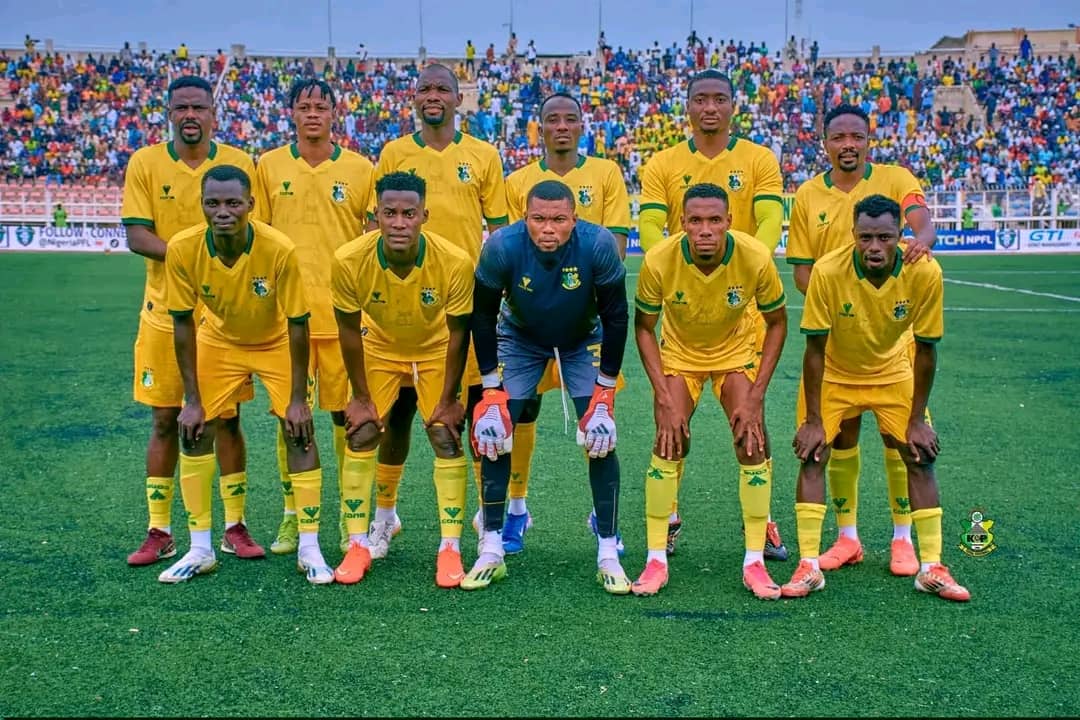
Kano Pillars and Sporting Lagos played out a 1-1 draw in an entertaining EuroMatch Nigeria Premier Football League Matchday 7 encounter in Kano, with both sides settling for a point after a closely contested battle.
Sports247 reports that the result means the Mai Su Gida have now followed up their previous goalless draw against Enyimba with another stalemate, while Sporting Lagos also recorded their second consecutive draw after being held to a barren 0-0 draw by Ikorodu City in the Lagos Derby.
Kano Pillars started the encounter with the intention of making home advantage count, but Sporting Lagos remained organised and disciplined as both teams searched for an opening.
The breakthrough finally arrived deep into first-half stoppage time when Valentine Ugwu put Sporting Lagos ahead in the 45+2nd minute, giving the visitors a valuable lead heading into the interval.
Kano Pillars responded strongly after the restart and quickly found a way back into the contest.
The hosts were rewarded in the 48th minute when Abdullahi Musa drew Kano Pillars level, finishing off a move created by veteran midfielder Rabiu Ali, whose assist once again underlined his influence in the Pillars midfield.
With the score level at 1-1, both sides pushed for a decisive second goal, but neither could find the breakthrough during the remainder of the encounter.
Kano Pillars will take encouragement from their ability to recover from going behind, while Sporting Lagos will also be satisfied with securing a point away from home after surrendering their lead.
For the Mai Su Gida, the draw represents another opportunity gained but also another two points dropped from a winning position, as they continue their campaign in search of consistency.
Sporting Lagos, meanwhile, remain unbeaten across their recent fixtures but will be looking to convert their promising performances into maximum points as the season progresses.
The 1-1 result leaves both teams with plenty to build on, particularly in attack, as they prepare for their next assignments in the EuroMatch NPFL.
With the league campaign continuing to gather momentum, Kano Pillars and Sporting Lagos will now turn their attention to their upcoming fixtures, hoping to turn future draws into victories.
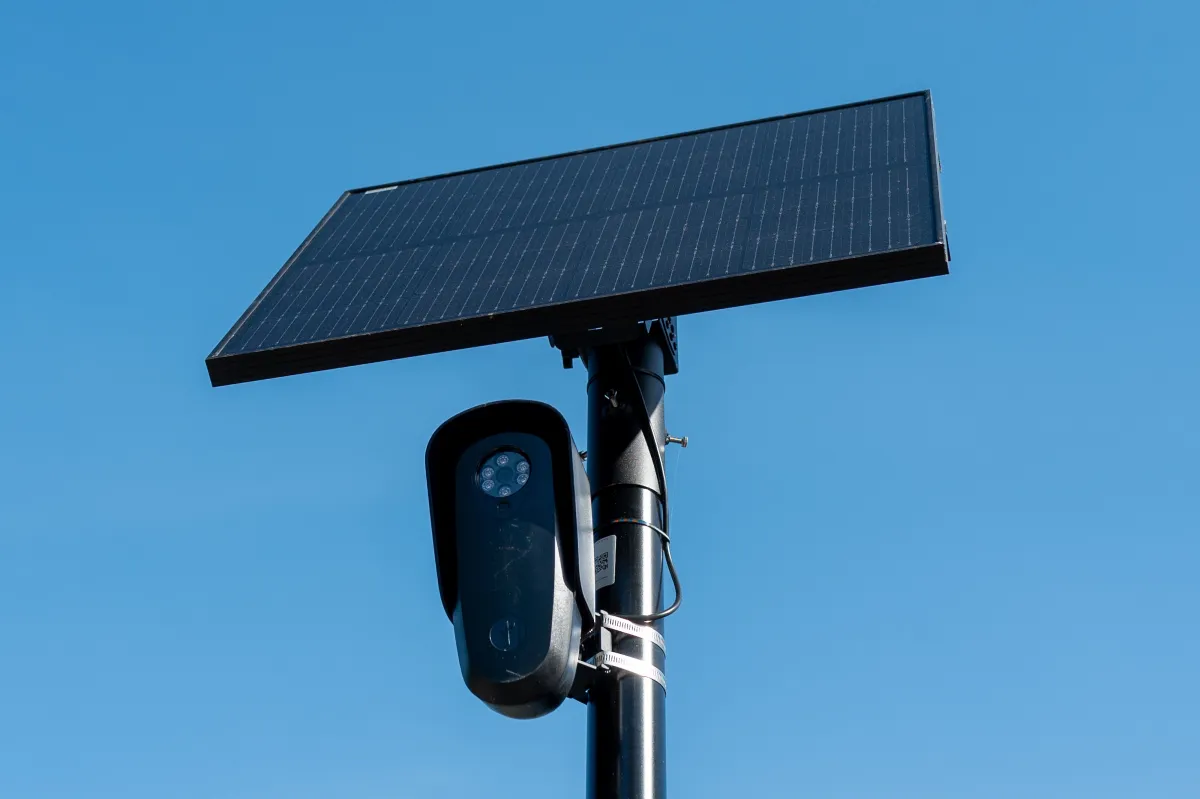
A federal judge ruled this week that a Tulsa, Oklahoma sheriff’s deputy violated a woman’s Fourth Amendment rights when using Flock Safety to search for her license plate without a warrant.
As reported by 404 Media, this ruling does not create a binding precedent, but it is one of the first times that a federal judge has ruled that a Flock search is unconstitutional.
In this case, Judge Sara Hill said the deputy should have obtained a warrant before searching the Flock database for the woman’s license plate, as he had “no apparent reason” for the search “other than the fact that [the woman’s vehicle] had a California license plate.”
The deputy then used the woman’s travel history in Flock as part of the justification for searching her car, where he allegedly discovered 91 pounds of meth. But Judge Hill wrote that all evidence obtained after the Flock search “must be suppressed as the fruit of a poisonous tree.”
Judge Hill also took broader aim at warrantless searches of the Flock database, writing that tracking people’s location — even when they’re in public places — becomes “constitutionally problematic when law enforcement can indiscriminately and passively catalog your whereabouts over an extended period of time and then use that information for any purpose whenever convenient.”
“This is a type of indiscriminate mass surveillance,” Hill wrote. “It is not targeted on a single individual, as in [Carpenter v. United States, a Supreme Court case focused on how government agencies access location data from cell phones]. It is a tool that collects information about all vehicles that pass by any network-connected camera at all times, and it serves up the information to law enforcement on demand.”
Hill joins a growing chorus of Flock critics from across the political spectrum. Numerous local and state governments, including Florida and Texas, have said they will stop using the technology. And on Friday, Senator Bernie Sanders — a Democrat from Vermont — introduced the Block Flock Act, which would bar federal agencies from using automated license plate readers such as Flock.