Connect with us

News

Investigation Report: Corruption Allegations Rock National Metallurgical Development Centre, Jos

editor

Published

on

Investigation Report, Corruption ,National Metallurgical Development Centre, Jos
The National Metallurgical Development Centre (NMDC) in Jos, once envisioned as a hub for research and innovation in Nigeria’s metallurgical sector, is now at the center of damning allegations of corruption, mismanagement, and systemic collapse.

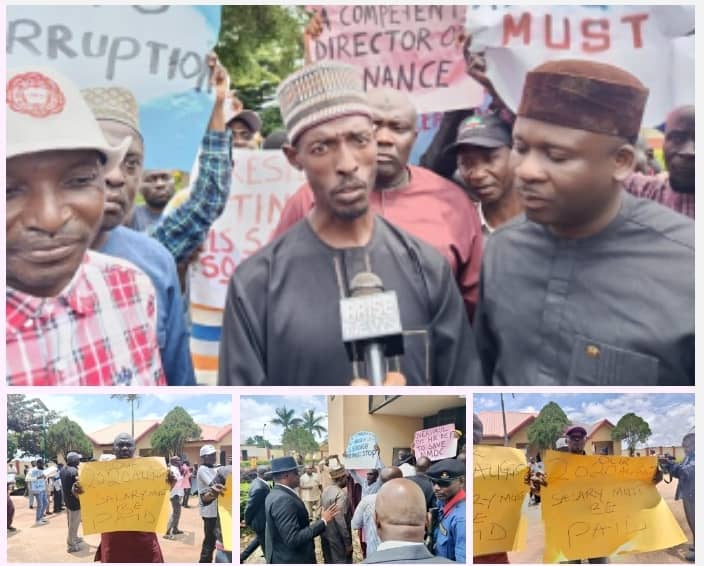
This investigation, based on staff petitions, documents, video evidence, and eyewitness accounts, reveals a troubling pattern of financial impropriety, failed projects, and institutional decay. A recent protest by staff during the visit of the Permanent Secretary of the Ministry of Mines and Steel Development further exposed the gravity of the crisis.

Allegations Against Leadership

At the heart of the accusations is the Director-General (DG), Prof. Linus Asuquo, who has been repeatedly named by staff as the chief architect of the centre’s decline. Allegations include:

  • Financial Misappropriation: Over ₦2.5 billion allegedly diverted or misused since 2018.
  • Contractual Irregularities: Awards of illegal contracts to “ghost companies,” in violation of procurement laws.
  • Failed Projects & Equipment: Purchase of obsolete or non-functional machinery, including laboratory equipment that has never been put to use.
  • Abuse of Office: Intimidation, demotions, and redeployment of staff who resist or expose corruption.
  • Systemic Breakdown: Collapse of the centre’s research, training, and maintenance functions, leaving it largely defunct.

Findings of the Investigation

Financial and Procurement Fraud

Evidence reviewed shows widespread financial irregularities. One major example is the procurement of an XRF (X-ray Fluorescence spectrometer) machine in 2019 for ₦329 million. According to staff and internal records, the machine was non-functional from the start, having been previously rejected by another institution before being transferred to NMDC.

Staff also accuse the DG of authorizing contracts far above his ₦2.5 million approval limit. In one documented case, he approved a contract worth ₦148.5 million. Audit reports further expose fake quotations, missing vouchers, and financial discrepancies estimated at over ₦1.5 billion. Funds earmarked for laboratory operations, safety, and staff training were reportedly diverted.

Institutional Collapse

The cumulative effect of corruption has been the paralysis of NMDC’s core functions. Video evidence and staff testimony confirm that laboratories are deserted and equipment is idle. One staff member bluntly described the centre as “dead,” noting that “not one machine works.”

This dysfunction has eroded staff morale. Promotions are delayed, training opportunities have disappeared, and some employees lack basic safety gear. There are reports of work-related health risks, including at least one death from cancer allegedly linked to unsafe working conditions.

Posters carried during the staff protest highlighted deep-seated grievances:

  • “Overhaul the HR Dept to Save NMDC.”
  • “We are Tired of 7 Years of No Research Activity.”
  • “ICPC and EFCC to Investigate ₦2.5B Embezzlement.”
  • “Asuquo Must Go.”

Some also accused the DG of religious bias and victimization. Protesters alleged that staff who refused to cooperate with corrupt practices were either demoted or redeployed.

Attempts to Suppress Criticism

The management has been accused of silencing dissent. A journalist, Dahiru, who reported on the centre’s rot, was publicly challenged by NMDC’s spokesperson, Sunny Eweama, who accused him of misrepresentation. Dahiru, however, stood by his report and insisted he had documentary proof of his claims, further suggesting attempts by management to control the narrative.

Conclusion

The evidence paints a bleak picture: NMDC, once envisioned as a cornerstone of Nigeria’s industrial growth, is now on the brink of collapse. Allegations of corruption, failed equipment, and suppression of staff voices have turned the institution into a shell of its purpose.

The staff protest underscores the urgency of the situation. Without decisive government intervention—through an independent investigation and leadership overhaul—the NMDC risks total collapse. As one protest placard put it, the centre is not only failing but “being buried under corruption.”

Continue Reading
Click to comment

Leave a Reply

Your email address will not be published. Required fields are marked *

News

Osun at crossroads, Adeleke, Oyebamiji others will sign peace accord – ODA

info

Published

on

By

Ademola Adeleke Bola Oyebamiji .jpg

Indigenes of Osun State in the diaspora, under the auspices of the Osun Development Association (ODA), have declared that the governorship candidates of political parties contesting in the forthcoming election in the state will sign a peace accord ahead of the poll.

ODA noted that this is necessary in view of the prevailing situation in the state and to prevent a breakdown of law and order.

The group explained that the current governor and Accord candidate, Senator Ademola Adeleke; the All Progressives Congress (APC) candidate, Mr Bola Oyebamiji; the Action Alliance candidate, Olanrewaju Farinloye; the African Democratic Congress (ADC) candidate, Najeem Salaam; the African Action Congress (AAC) candidate, Esan Olajide; and other candidates will sign the peace pact.

Chairman of ODA’s Leadership and Governance Committee, Dr Tunji Olugbodi, made the declaration in a statement heralding the planned summit where candidates of the political parties will sign the peace accord to prevent violence before, during and after the election.

Olugbodi, in the statement made available to DAILY POST on Monday evening, explained that the state is currently at a critical democratic crossroads.

He said the summit, with the theme, “Speak, Choose, Hold Accountable: Citizens at the Centre of Osun’s Democracy,” is billed to take place in Osogbo because it is necessary to commit all the major stakeholders to a peaceful electoral process.

Olugbodi added that the group believes the state can set a national benchmark for peaceful, credible elections.

The summit is expected to bring all stakeholders in the electoral process under one roof to chart a way forward in order to prevent any uncertainty before, during and after the election.

Olugbodi said, “Osun State is at a critical democratic crossroads. The Osun Development Association (ODA) has finalised arrangements to host the Osun 2026 Democratic Governance, Peace and Electoral Integrity Summit, a high-level civic intervention designed to steer the state’s political discourse toward issue-based campaigning and away from rising tension ahead of the August governorship election.”

ODA Chairman, Dr Segun Aina, in his contribution, noted that the collective participation of all stakeholders is necessary for the forthcoming election.

Continue Reading

Health

Nigeria launches food procurement guidelines to tackle unhealthy diets, improve nutrition

info

Published

on

By

WhatsApp Image 2026 07 13 at 19.24.17.jpeg

MTN ADVERT

The federal government has launched the National Guidelines for Public Procurement of Food and Related Services.

The framework introduces nutrition standards for food purchased with public funds as part of efforts to reduce unhealthy diets and curb the growing burden of non-communicable diseases in Nigeria.

The guidelines, unveiled on Monday in Abuja at an event themed “Public Procurement of Food: Promoting a Culture of National Wellness Through the Food Value Chain,” are expected to influence food served in public institutions, including schools, hospitals, correctional centres and military establishments, by setting evidence-based standards on nutrition, food safety and quality.

Delivering his keynote address at the launch, the Minister of State for Health and Social Welfare, Iziaq Salako, said the initiative marks a shift from viewing public procurement as a routine administrative process to using it as a strategic tool to improve public health and national development.

“When the government demands healthier, safer and more nutritious food, it creates incentives for the entire food system to innovate, improve quality and align with higher public health standards,” he said.

PT WHATSAPP CHANNEL

Why it matters

Mr Salako said the government remains the country’s largest institutional purchaser of food, meaning procurement decisions have the potential to influence food production, consumer behaviour and nutrition standards across the food value chain.

According to him, the guidelines establish limits on sodium, sugar and unhealthy fats in foods procured by public institutions while encouraging balanced and nutritious diets.

He said the document complements existing national policies, including the National Guideline for Sodium Reduction, the Trans Fat Regulation and the 2023 National Policy on Food Safety and Quality.

Rising burden of unhealthy diets

Mr Salako noted that unhealthy diets contribute to about 7.2 million deaths globally every year, driven largely by excessive consumption of salt, sugar and unhealthy fats as well as inadequate intake of fruits, vegetables and whole grains.

He revealed that the average Nigerian adult consumes between 3.9 grammes and 4.9 grammes of sodium daily, almost double the World Health Organisation’s (WHO) recommended limit of 2 grammes.

Mr Salako added that increasing consumption of sugar-sweetened beverages has contributed to rising rates of obesity and diabetes, prompting the introduction of the sugar-sweetened beverage tax, while industrial trans fats have also been restricted under Nigeria’s Trans Fatty Acid Regulation.

“These measures are designed to control dietary patterns that fuel the growing burden of non-communicable diseases, placing enormous pressure on health systems, national economies and household incomes,” he said.

Child malnutrition remains a concern

Mr Salako also highlighted the country’s persistent nutrition challenges, noting that malnutrition remains a direct or underlying cause of nearly half of the deaths among children under five years.

He said the Nigeria Mini Demographic and Health Survey found that about four in every 10 Nigerian children under five are stunted, while nearly two million children suffer severe acute malnutrition annually.

READ ALSO: PT Health Watch: What expectant parents should know about Rhesus incompatibility

“These are not merely health statistics. They represent profound human capital challenges with significant implications for educational attainment, labour productivity, household prosperity, national competitiveness and sustainable economic growth.”

Implementation key

Mr Salako stressed that the success of the guidelines would depend on effective implementation rather than their launch.

He urged procurement and accounting officers across government institutions to ensure compliance, noting that procurement decisions influence health outcomes, productivity and public confidence in government.

He added that the Federal Ministry of Health and Social Welfare would continue to promote disease prevention through healthier public policies as part of efforts to achieve universal health coverage.


Continue Reading

Trending