Connect with us

Events

IGSR Organizes Ninth Youth Peace Camp For 500 Youth From Plateau Central Senatorial Zone On Promoting Peaceful Co-Existence

info

Published

on

Institute of Governance and Social Research IGSR

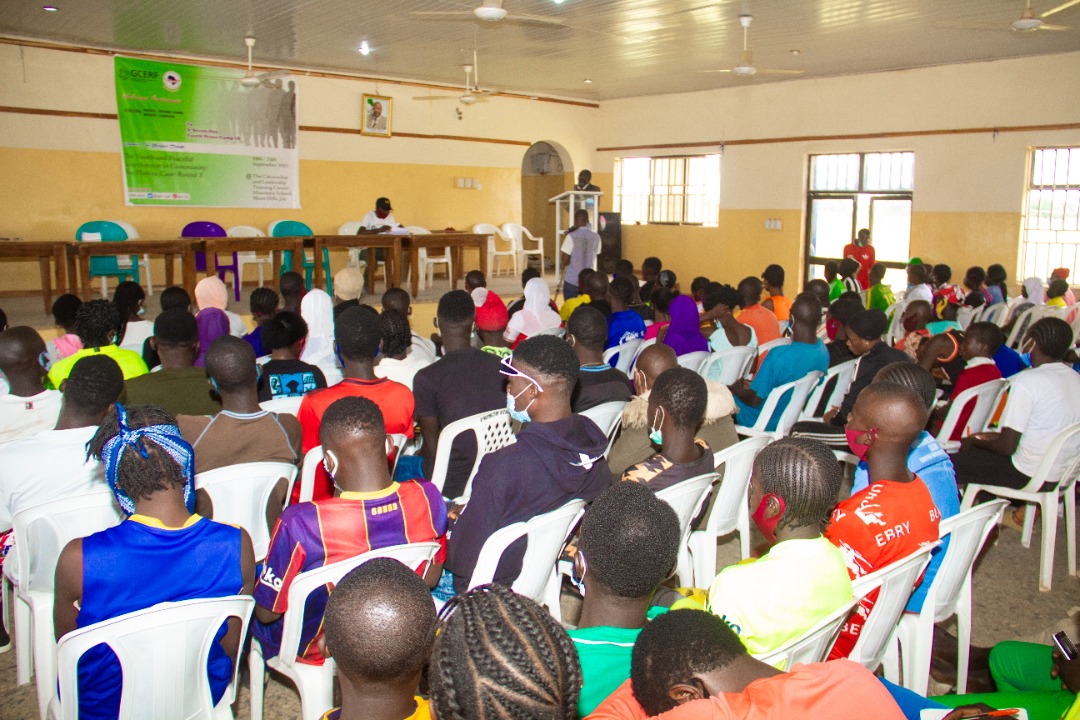
The Institute of Governance and Social Research (IGSR) in collaboration with the Global Community Engagement and Resilience Fund (GCERF) has successfully trained another set of 500 Youths from Plateau Central Senatorial Zone at a seven-day Youth Peace Camp. The camp was organized at the Citizenship and Leadership Training Center, Mountain School, Shere Hills, Jos from 19th to 25th September, bringing together youth from Bokkos, Kanam, Kanke, Mangu and Pankshin Local Government Areas. The Youth Peace Camp, which is one of several IGSR activities under a project titled “The Youth and Peaceful Coexistence in Community: The Plateau Case”, is specifically designed to re-orientate the youth on their perception of one another, encourage peaceful co-existence and tolerance for each other’s values; discourage youth radicalization and violent behaviour; and encourage peace building as well as peaceful conflict resolution in the area.

During the camp, the youth were engaged in a sequence of trainings which were both physical and mental as well as lectures from experienced resource persons in the various subject areas. The lectures included topics such as: The Role of Religious Leaders in de-radicalization of the youth; Youth as Agents of Non-violent Change in Nigeria; Role of Sports in Peace Building and National Unity; Extreme behaviour and Societal Harmony; Entrepreneurship Skills and Capacity Building for the youth, Communication as an Effective Tool for Conflict and Rumor Management among others. During these interactions, resource persons drawn from relevant professions/agencies taught participants the alternative ways to resolve conflicts without resorting to violence, the importance of understanding and tolerance and the importance of effective communication to avoid conflicts. Through the physical drills, participants learnt core values of leadership, cooperation, unity, confidence and determination; all of which increased their sense of self-esteem, significance and value to themselves and their communities. This will go a long way in positively shaping their vision for themselves and their communities as agents of peace.

Following the intensive one-week course, a Closing Ceremony was held for the Youth Peace Camp on the 25th of September, 2021. Several dignitaries were in attendance including the Former Chairman of Bassa Local Government Council, Hon. David Racha (the Chairman of the Occasion); the Representative of the Director-General, Plateau Peacebuilding Agency (the Special Guest) Mr Elkannah Izam; the IGSR President, Ms. Victoria Isawa-Elaigwu; the IGSR Senior Programme Officer, Mr Samuel Emelis; the IGSR Director of Administration, Dr Waheed Adedeji and The Unit Coordinator C&LTC, Alhaji Abdulmumuni Maimako.

The C&LTC Unit Coordinator in his introductory remarks, welcomed everybody present and particularly congratulated the participants who he said displayed exemplary character during their training. He appreciated IGSR and GCERF for enlightening and encouraging the youths to become peace agents in their communities. He urged the youths to be ambassadors of IGSR and C&LTC as they return to their respective communities.

Following the remarks by the Unit Coordinator, IGSR’s Director of Administration, Dr. Waheed Adedeji welcomed everyone to the closing ceremony and congratulated participants, accompanying officers, recruiters, stakeholders and IGSR staff for a successful camp. He observed that in the first round of the project, 1,711 youths were trained by IGSR in five Youth Peace Camps. The project is currently in its second round and will be coming to an end in December, 2021, and a total of 6,097 youths have been trained so far as Youth Peace Ambassadors.

In his opening remarks, the chairman of the occasion, Hon. David Racha hailed IGSR for its efforts over the years in the Northern and Central Senatorial Zones of Plateau State. He urged the participants to be ambassadors of peace in their respective communities and work closely with relevant authorities in order to maintain stable and peaceful communities.

The CLTC Course Officer, Mr Ezekiel Buba gave a report on the training course, observing that remarkably, all 500 participants who had attended the training qualified to graduate and should be given certificates of attendance.

The President IGSR, Ms Victoria Isawa-Elaigwu, in her remarks, congratulated all the participants for being qualified to become Youth Peace Ambassadors. She inducted them into the Youth Peace Ambassador Network and admonished them to put all negative behaviours behind themselves and embrace their new calling as agents of peace in their communities.

A dance-drama presentation by a cultural troupe consisting of youths from the five local governments followed, entertaining guests and depicting the need for unity in order to attain development in the society. Subsequently, 10 Youth Peace Ambassadors representing the 5 LGAs presented a communiqué which summarized the lessons they had learnt during the camp with observations and recommendations. In their observations, the youths saw the need for an improved curriculum for secondary school students incorporating entrepreneurial trainings and skills, poverty alleviation schemes and concerted efforts by stakeholders, including government, traditional and religious institutions, to promote peaceful co-existence, mutual respect and understanding amongst the youths. They also resolved to work as agents of peace in their communities, serving as bridges between dissenting parties and conflicting communities.

Following the presentation of the communiqué, the Special Guest of Honour and representative of the Director-General, Plateau Peace Building Agency, appreciated IGSR for its efforts in sustaining peace and preventing radicalization and violent extremism in Plateau State. He charged participants to visualize the type of state they desire and work tirelessly towards achieving it. Finally, he reiterated the Agency’s commitment to its existing partnership with IGSR, and sustaining structures which have been established.

The Senior Programme Officer IGSR, Mr Samuel Emelis gave the vote of thanks and encouraged participants to use the information they gained during the camp to improve on their communities. Finally, the Project Manager, IGSR inducted the participants into the Youth Peace Ambassadors Network and declared the camp closed. Afterwards, participants were issued certificates and recited the Peace Pledge one final time before departing to their respective communities.

Continue Reading
Click to comment

Leave a Reply

Your email address will not be published. Required fields are marked *

Events

MACDI Validates FoRB Research, Rallies Stakeholders to Strengthen Religious Freedom in Plateau

info

Published

on

By

IMG 20260624 WA0021

The Midpoint Advocacy and Community Development Initiative (MACDI) has convened a Research Validation and Stakeholders Engagement Forum aimed at advancing Freedom of Religion or Belief (FoRB) in Plateau State, bringing together government officials, religious leaders, civil society organizations, and community representatives to promote religious harmony and peaceful coexistence.

The forum, themed “Advancing Freedom of Religion or Belief in Plateau State,” served as a platform to review findings from a six-month study conducted in Jos North and Barkin Ladi Local Government Areas while identifying practical strategies for strengthening the protection of fundamental rights and fostering collaboration among stakeholders.

Speaking at the event, the Director of Faith and Community Transformation at Midpoint Nigeria, Rev. Joshua Sati, explained that the research assessed the knowledge, attitudes, and practices of residents regarding Freedom of Religion or Belief (FoRB).

According to him, the study was designed to generate reliable data that would guide future interventions and ensure that programmes addressing religious freedom reflect the realities experienced by communities.

Sati noted that the validation forum was organized to review the findings, identify policy gaps, and gather stakeholders’ recommendations on promoting religious freedom and peaceful coexistence.

“A lot of them had no idea. They don’t even know who to go to or where to go to when they feel their rights have been violated,” he said, highlighting the challenges faced by victims of rights violations at the grassroots.

He emphasized the need to strengthen reporting mechanisms and empower community and religious leaders, observing that many residents prefer reporting concerns to trusted local leaders rather than formal institutions.

Delivering the keynote address, former Director-General of the Plateau State Peacebuilding Agency (PSPBA), Dr. Joseph Lengmang, underscored the close relationship between Freedom of Religion or Belief, peace, security, and sustainable development.

He stressed that religious freedom must be anchored on the protection of human dignity and the welfare of people affected by conflict, displacement, and loss of livelihoods.

“What is happening is a reminder that more work needs to be done on the Plateau, despite the investments that have been made in peacebuilding,” Lengmang said.

He added that recent security challenges in parts of Plateau State demonstrate the need for sustained commitment and collaboration in peacebuilding efforts, while commending Midpoint Nigeria for undertaking evidence-based research that could inform policy and future interventions.

Also speaking, the Executive Director of Civitas Auxillium Foundation, Mrs. Elizabeth Duile, described Nigeria’s religious, cultural, and ethnic diversity as a potential source of strength rather than division.

She called for greater understanding and mutual respect among citizens, stressing that protecting Freedom of Religion or Belief is not only a human rights obligation but also essential for peacebuilding and national development.

Presenting the findings of the six-month research, Midpoint Nigeria’s Programme and Project Director, Ruth Ki, disclosed that the study engaged approximately 328 respondents across selected wards in Jos North and Barkin Ladi LGAs through surveys and interviews.

She explained that the research reflected diverse religious and ethnic communities and focused on lived experiences of Freedom of Religion or Belief, particularly awareness levels, public attitudes, and the reporting of violations.

According to her, the findings will support evidence-based interventions and strengthen ongoing peacebuilding initiatives across Plateau State.

In his goodwill message, the Chief Imam of Plateau Central Mosque, Sheikh Ghazali Adam, advocated respect, peace, and the protection of human dignity regardless of religious affiliation, noting that freedom from oppression is essential for building an inclusive society.

Representing the Director-General of the Plateau State Peacebuilding Agency, Khadija Sa’id described the forum as timely and significant for enhancing peacebuilding efforts, adding that it provides an important platform for collaboration, dialogue, and practical action toward strengthening social cohesion.

The Plateau State Commissioner for Education, Dr. Mrs. Kachollom Gang, represented by Mr. Sabastine John, Director of Quality Assurance, highlighted the critical role of schools in teaching tolerance, mutual respect, and peaceful coexistence.

She commended Midpoint Nigeria for organizing the engagement and urged stakeholders to translate the research findings into concrete actions that promote unity.

Similarly, the Plateau State Commissioner for Justice, Hon. Philemon Daffi, represented by Mr. Bashir Haruna, Deputy Director at the Ministry of Justice, reaffirmed that Freedom of Religion or Belief is guaranteed under Section 38 of the Nigerian Constitution, which protects freedom of thought, conscience, religion, and freedom from discrimination.

He noted that effective enforcement of these constitutional rights remains vital for sustaining peace, security, and development, describing the forum as a timely opportunity for meaningful dialogue.

In her vote of thanks, Mrs. Hauwa Kassim, a member of the Board of Trustees of Midpoint Nigeria, expressed appreciation to participants for their active contributions and acknowledged the support of government agencies, civil society organizations, traditional and religious leaders, and media practitioners in ensuring the success of the research validation forum.

Continue Reading

Events

Era of abandoned projects over – Tinubu declares

info

Published

on

By

Tinubu commisioning projects

President Bola Tinubu on Tuesday commissioned the main carriageways of the Outer Southern Expressway, OSEX, from Ring Road I Junction to Ring Road II Junction in Abuja, declaring that the era of abandoned public projects has ended.

Represented by Senate President Godswill Akpabio, the President said the completion of the strategic road project underscored his administration’s commitment to delivering critical infrastructure capable of stimulating economic growth, easing transportation and improving the quality of life of Nigerians.

“We don’t start projects to abandon them. The era of uncompleted projects in Nigeria is fading away. We finish what we start, and even finish the ones we did not start,” Tinubu said at the inauguration ceremony.

Describing infrastructure as the backbone of economic development, the President said the newly completed road would unlock new opportunities for businesses and residents across the Federal Capital Territory, FCT.

“What we are doing here today goes far beyond laying asphalt or mixing concrete. We are paving the way for a brighter future. Infrastructure is the very artery of economic growth. If you want to unlock the potential of a city, if you want to create jobs, if you want to make life easier for the market woman, the corporate worker and the industrialist, you build roads,” he stated.

Tinubu noted that his administration had steadily advanced the OSEX project, beginning with the commissioning of the first phase from the Villa Roundabout to Ring Road I Junction in 2024 and the inauguration of the 15-kilometre left-hand service carriageway in 2025.

According to him, the completion of the main carriageway from Ring Road I to Ring Road II represents another milestone in the ongoing transformation of Abuja.

The President also commended the Minister of the Federal Capital Territory, Barr. Nyesom Wike, for what he described as focused and result-oriented leadership.

“The structural transformation we are witnessing in the Federal Capital Territory is a testament to what happens when you have focus, vision and dynamic leadership. I want to commend the Honourable Minister of the FCT, Nyesom Wike, and his entire team for their commitment and dogged determination in reshaping the FCT for long-term prosperity,” he said.

Addressing Wike directly, Tinubu added: “You have shown that public service is about performance, not excuses. You have kept the contractors on their toes and you have kept our vision alive. This is the spirit of the Renewed Hope Agenda delivering quality results for the Nigerian people on time.”

He said the road would reduce traffic congestion, lower transportation costs and expand Abuja’s economic footprint by improving connectivity between Apo and Wasa districts.

Earlier, Minister of the FCT, Nyesom Wike attributed the successful completion of the project to the determination of the administration and the commitment of the contractor, CGC Nigeria Limited, to deliver within the agreed timeline.

The minister disclosed that when the contract was awarded in late 2025, he had sought assurances from the contractor that the project could be completed in time for President Tinubu’s third anniversary in office.

“I asked them a simple question: can you deliver this project? I told them I wanted it ready for Mr. President’s third anniversary. They said yes. I asked again because I was not comfortable considering the scope of the work, the dual carriageway, culverts and bridges. They assured me they would deliver, and today they have kept their promise,” Wike said.

He revealed that he personally inspected the project site more than ten times to monitor progress and ensure compliance with agreed timelines.

“This means that nothing is impossible if we are determined and committed to achieving results. With proper understanding between government and contractors, and with government fulfilling its obligations, we can achieve a lot,” he added.

Wike said the completion of the road was consistent with the Tinubu administration’s policy of ensuring continuity in governance and completing projects inherited from previous administrations.

“We did say every project we inherited, we are going to continue with it and finish it. That’s the essence of leadership. One of the criteria of good leadership is continuity of projects initiated by other administrations, not just projects initiated by you,” he said.

According to him, about 80 per cent of projects completed by the FCT Administration since 2023 were inherited from previous governments.

“Some people would have said there is no need for that, let us start our own projects. But Mr. President understands that these projects are funded with public resources and government is a continuum. We cannot abandon projects littered across the FCT,” he said.

The minister also disclosed that infrastructure had been fully provided at the relocation site for traders and artisans operating at the Apo Mechanic Village, fulfilling a longstanding government promise to move the informal sector to a more suitable environment.

Responding to critics who claimed little is being achieved, Wike pointed to ongoing and completed projects across Abuja’s satellite towns, including roads in Kwali, Karu and Kubwa, as well as water projects in rural communities.

“Sometimes it baffles me when people say nothing is happening in this country. Are we doing all these things in heaven or here on earth where people are living?” he asked.

He expressed confidence that residents of the FCT would ultimately appreciate the administration’s efforts and support President Tinubu for fulfilling promises made to them.

In her remarks, the Minister of State for the FCT, Dr. Mariya Mahmoud, described the OSEX project as a significant milestone in the ongoing transformation of the nation’s capital.

She commended President Tinubu for his unwavering commitment to infrastructure development, noting that strategic investments in roads, bridges and other critical projects were translating government policies into tangible benefits for citizens.

Mahmoud also praised Wike’s leadership and commitment to delivering infrastructure that is reshaping Abuja and improving the quality of life of residents.

The newly commissioned road is expected to enhance mobility between key districts of the capital city, support urban expansion and strengthen Abuja’s transportation network as part of the broader modernisation agenda of the FCT Administration.

Continue Reading

Trending