Connect with us

News

Governor Caleb Mutfwang Inaugurated, Pledges to Build a Peaceful and Prosperous Plateau State

editor

Published

on

Caleb Mutfwang

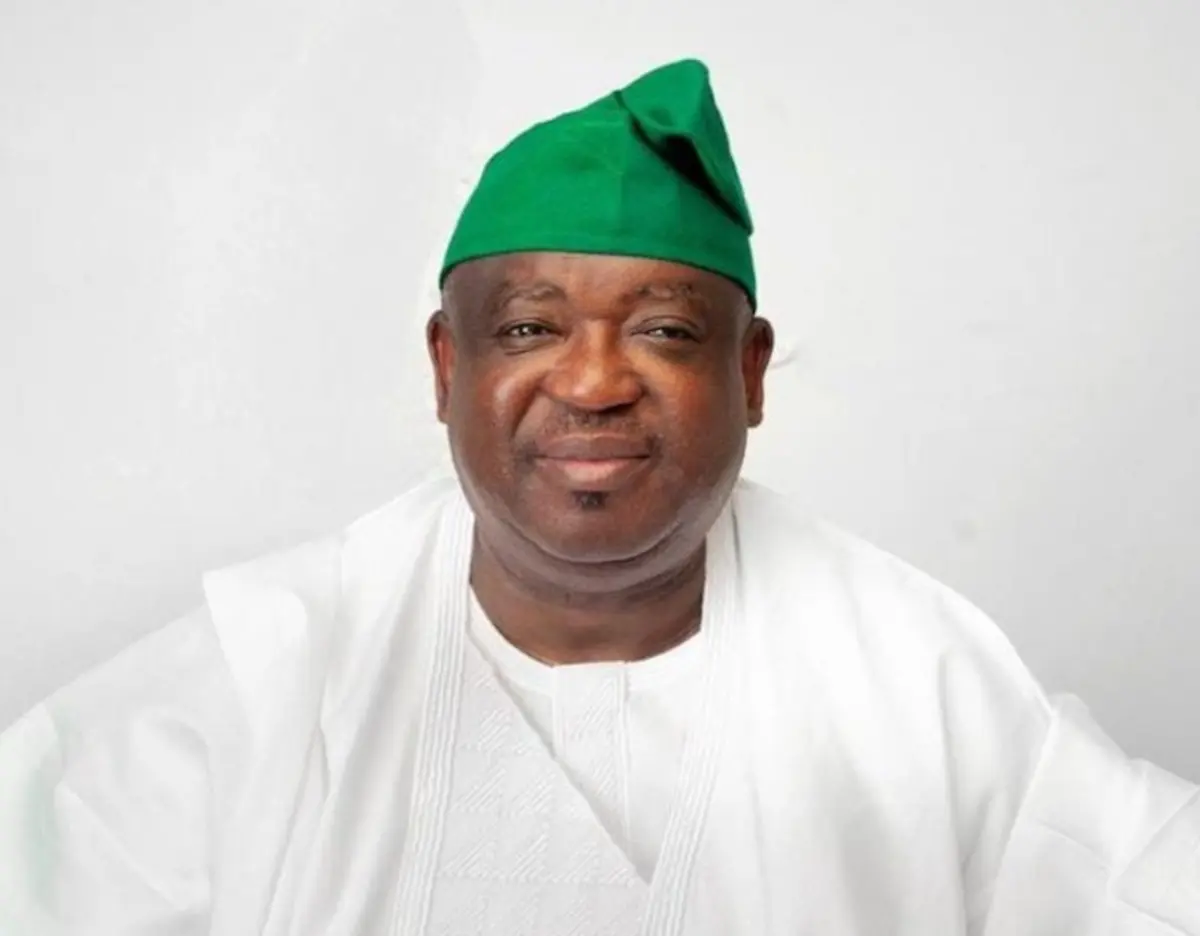
His Excellency, Barr. Caleb Manasseh Mutfwang, has been officially inaugurated as the sixth democratically elected Governor of Plateau State. In his inaugural speech delivered at the Rwang Pam Township Stadium in Jos, Governor Mutfwang expressed gratitude to the people and emphasized his commitment to building a peaceful and prosperous Plateau.

The governor began his speech by acknowledging God’s grace and the support of the people. He recognized the long journey that led to his inauguration and credited the Lord for making it possible. Expressing his appreciation for the citizens’ confidence in his leadership, he promised to work tirelessly to fulfill their expectations and provide the quality leadership and governance that the people of Plateau State deserve.

Governor Mutfwang emphasized the importance of unity and inclusivity in his administration. He stressed that tribe and faith should no longer be divisive factors but rather positive values that contribute to the common good. He called for a new orientation where everyone living in Plateau State, regardless of their background, is considered a brother or sister. The governor urged the people to embrace peace, let go of hate and distrust, and foster brotherliness, which is the essence of the Plateau community.

Acknowledging the challenges ahead, Governor Mutfwang highlighted the state’s debt burden, the need for healthcare improvements, the overhaul of the education system, and the inadequate infrastructure. He reassured the citizens that his administration was prepared to confront these challenges head-on, promising to hit the ground running to address the pressing issues.

The governor emphasized that peace is crucial for development and pledged to make security a top priority. He vowed to revive and equip the state security outfit, “Operation Rainbow,” to support existing national security efforts. Governor Mutfwang also called for the resettlement of internally displaced persons (IDPs) and the strengthening of Plateau Peace Building Agency (PPBA) to promote dialogue and mediation for conflict resolution.

Governor Mutfwang outlined his administration’s focus on economic growth, agriculture, tourism, mining, and commerce. He expressed his vision for Plateau State to become the economic and commercial hub of Northern Nigeria, leveraging its natural resources and creating a business-friendly environment. The governor emphasized the importance of agriculture and the development of the tourism sector. He also stressed the need to harness the state’s solid mineral resources and boost commercial activities through access to credit facilities and market development.

In concluding his speech, Governor Mutfwang called on all citizens to unite in the face of common challenges. He emphasized the strength that comes from unity and urged the people to let go of divisive factors and embrace their shared heritage. The governor expressed his commitment to leaving a legacy of great service for a better Plateau and called for the support and cooperation of all stakeholders in achieving this vision.

Governor Caleb Manasseh Mutfwang’s inauguration marks the beginning of a new chapter for Plateau State, with the promise of a united, secure, and prosperous future. The people of Plateau State are filled with hope as they embark on this journey with their newly elected governor.

Continue Reading
Click to comment

Leave a Reply

Your email address will not be published. Required fields are marked *

News

Anambra govt releases records of alleged unpaid debts by Peter Obi during tenure as governor

info

Published

on

By

Peter Obi 1.jpeg

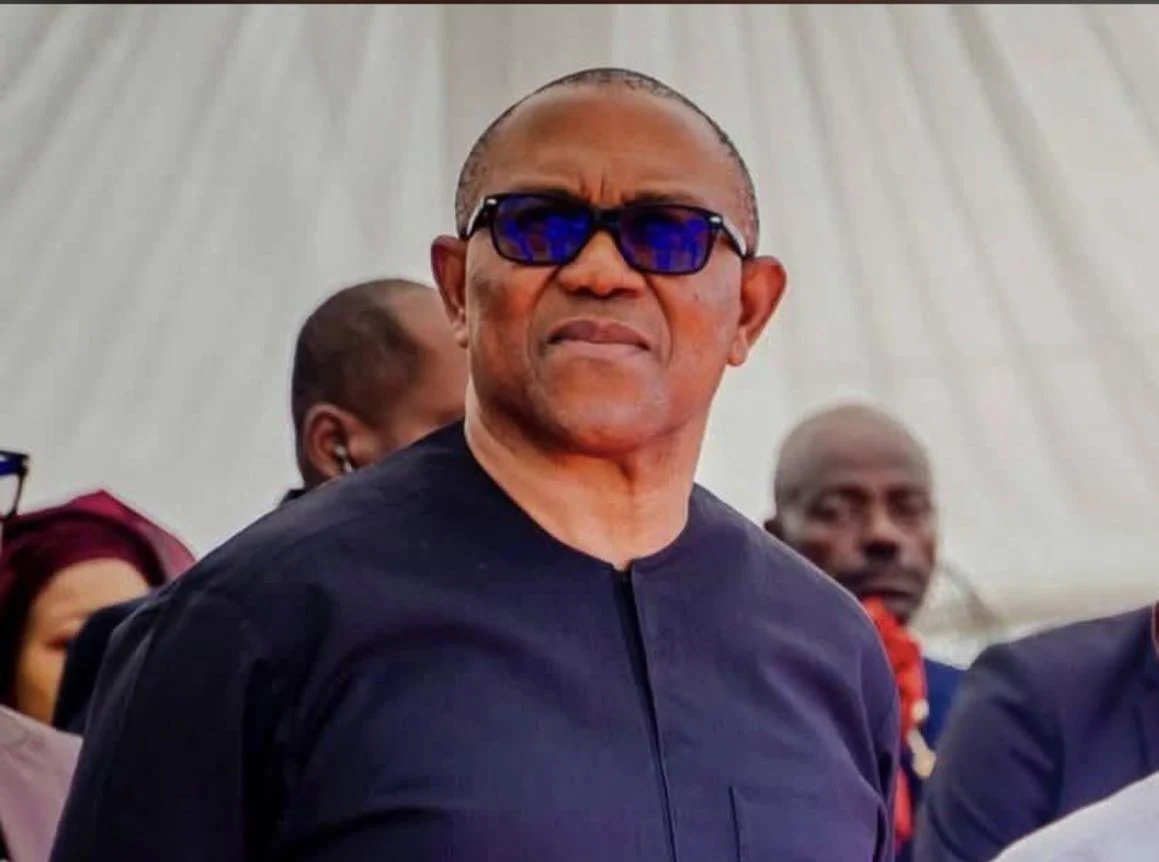
The Anambra State government has released what it termed the public debt records of the presidential candidate of Nigeria Democratic Congress NDC, Mr Peter Obi, while he was governor.

In a press statement signed by the Commissioner for Information and Value Reformation, Dr Law Mefor, and titled Gov Peter Obi and Record of Public Debt in Anambra: Facts Beyond Propaganda and Lies, the state government insisted Obi left behind debt as governor, both in domestic loans and unpaid pensions and gratuity.

The statement read: “Our attention has been drawn to a viral post by a former Governor of Anambra, HE Mr. Peter Obi, CON, on what he described as Phantom Debts and Ecological Loan Fallacy, which presumably was in response to some statements in a podcast by the Anambra State Commissioner for Finance. 

“We understand that this is a campaign season and candidates often go to extremes to impress. If not that the said post was in his personal handle, we would not have believed that he could have made such wild, and verifiably false claims. As a government, we are focused 100% on delivering dividends of democracy to millions of Ndi Anambra. However, when a former governor of the state makes some outlandish claims about the state of public debt he left behind and especially when the present government has been spending billions of Naira servicing the same debt, a responsible government owes the public a response in the interest of transparency and accountability.”

Recommended

Stating what it described as the fact, the state government clarified that: “HE Peter Obi Spent about $4.05 billion (equivalent to NS.4 trillion at current exchange rate) in 8 years and also contracted US$ 123.77million in external debt alone which our government has so far paid billions of Naira in service payments. 

“Let’s be clear: hardly any government in the world has zero debt stock. The issue is not whether or not borrowing is good: no business or government can scale significantly without some debt. Yes, we converted the audited and published expenditures using the average official exchange rates during the eight years of Peter Obi and they sum to about USS$4.05 billion. 

“At the current official exchange rate, it would sum to about N5.4 trillon and he surely governed to the best of his ability. Of course, no government will ever finish the work of development.”

“As of the date HE Peter Obi left office (17th March 2014), there were and still are 8 different external borrowings his administration left for his successors. 

“As of June 30, 2026, the total balance of such loans left by HE Peter Obi at the official exchange rate stood at N127.4Billion. Here we summarise the latest report from the Debt Management Office (DMO) on Anambra’s debt status (as of June 2026), indicating the dates the loans were signed and the balance remaining. 

“Evidently, HE Peter Obi borrowed for malaria, erosion control, education, healthcare, etc. So far, this government pays hundreds of millions of Naira every month to service these debts and we are not complaining. It is good for Anambra once we can show the impacts.”

The state government further stated that as at when Obi left office, he left behind a state without any functioning urban or rural water schemes; increasing insecurity and increased poverty, ostensibly dead public schools and dead public hospitals with grossly inadequate teachers and medical personnel (indeed 44% of all communities in Anambra, 78 out of 179) did not and still do not have any public primary schools (and this administration is only beginning to close the gap). 

They insisted he also left a decrepit infrastructure with huge urban slums, etc. 

“Only about 27% of Anambra residents patronised public health institutions because of poor quality and non-functionality, which he even admitted abandoning public health system at the recent NBA conference. We are convinced that many Ndi Anambra would not have minded if HE Peter Obi had borrowed to fix public schools and hospitals, water schemes, infrastructure, or even to reduce poverty and insecurity. Debt, especially for bankable projects and human capital development, is justifiable. So, HE Peter Obi should stop being irked as if all debt is bad.”

The statement also said Obi owed verified salaries, gratuity, and pension to retired teachers and staff of Water Corporation, saying his statement on clearing all inherited arrears of pensions, salaries and gratuities were patently false, but it would not want to get into the debate between him and his predecessors regarding which arrears were paid by them or by him.

Continue Reading

News

I’ll Make Major Roads a National Priority If Elected – Atiku

info

Published

on

By

Untitled design 17 1200x675.jpg

The presidential candidate of the African Democratic Congress, Atiku Abubakar, has pledged to make the rehabilitation and maintenance of Nigeria’s major economic road corridors a national priority if elected in the 2027 presidential election.

Atiku made the commitment in a response to a message from one Hassan Yakubu, who urged him to make the state of Nigeria’s deteriorating roads a major issue in his campaign.

Yakubu, drawing from his experience transporting goods across the country, listed several major routes, including Numan-Jalingo, Dukku-Darazo, Dikko-Minna, Pambegua-Zaria, Akwanga-Jos, Abuja-Lokoja, Bida-Lapai, Kontagora-Makera, East-West Road, Onitsha-Owerri, Abeokuta-Ibadan, Benin-Ore and Benin-Auchi.

He argued that the roads serve as critical links between farms, markets, factories and consumers, warning that their poor condition was increasing transport costs and contributing to higher prices of goods.

Responding, Atiku said he understood the impact of deteriorating infrastructure, noting that he had personally travelled on some of the affected roads and was also a farmer.

“I am a farmer myself, so this is personal to me too. I also developed an interest in mass transportation early in life, and over the decades I have watched our transport infrastructure deteriorate significantly,” he said.

According to him, the consequences of bad roads extend beyond motorists and transport operators, as the additional costs eventually affect consumers.

“The driver pays. The trader pays. The farmer pays. But ultimately, the ordinary Nigerian buying food in the market pays,” Atiku said.

He described transport infrastructure as a critical component of economic activity, arguing that its condition determines how quickly agricultural produce reaches markets, the profitability of businesses and the cost of moving people and goods.

Atiku also said poor roads could have security implications, as stranded or slow-moving vehicles on isolated routes could leave travellers more vulnerable to criminal attacks.

He pledged that, if elected, his administration would identify roads carrying significant volumes of agricultural produce, manufactured goods, raw materials and passengers and prioritise their rehabilitation.

“Let me state my commitment clearly: if elected President, the rehabilitation and maintenance of Nigeria’s critical economic corridors will be treated as a national economic priority, not as an afterthought,” he said.

The former vice president also criticised what he described as the continued abandonment of existing infrastructure while governments announce new and expensive projects.

He said his proposed approach would involve building new infrastructure where necessary, urgently rehabilitating deteriorating facilities and maintaining existing assets.

“Infrastructure under my leadership will not be about monuments to government. It will be about making life easier for Nigerians,” Atiku said.

He added that every public infrastructure expenditure should be assessed by its impact on production, transportation, earnings and the welfare of citizens.

“Every naira we spend must answer a simple question: does this investment help Nigerians produce more, move more easily, earn more and live better?” he said.

Atiku further pledged to prioritise infrastructure that reconnects farms with markets, factories with consumers and communities with economic opportunities.
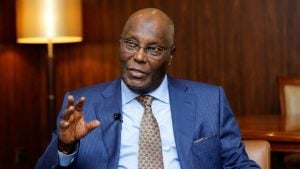
Former Vice President Atiku Abubakar

The ADC candidate also endorsed Yakubu’s appeal for his campaign to focus on national issues rather than ethnic or regional divisions.

“I do not want a Nigeria reduced to Fulani versus Yoruba, North versus South, Muslim versus Christian, or one tribe against another,” he said.

Atiku argued that economic hardship affects Nigerians regardless of their ethnic or regional backgrounds, adding that the country’s challenges require national solutions.

“Our problems are Nigerian problems. Our solutions must be Nigerian solutions,” he said.

Continue Reading

Trending