
Business
Africa’s downstream petroleum sector at defining point of transformation – NMDPRA’s ex-CEO

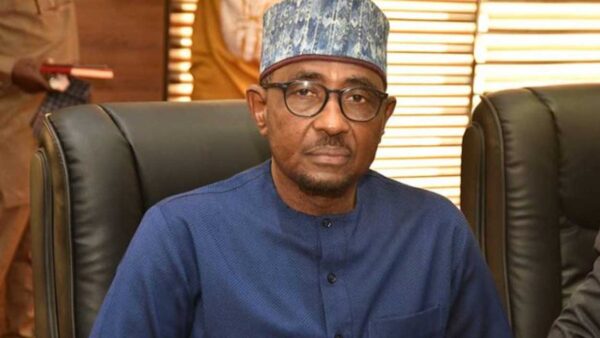
The former Chief Executive Officer of the Nigerian Midstream and Downstream Petroleum Regulatory Authority (NMDPRA), Farouk Ahmed, has called for effective and efficient regulation of Nigeria’s downstream petroleum sector amid ongoing reforms and changing global market dynamics.
Mr Ahmed, who resigned last year after corruption and abuse-of-office allegations levelled against him by Aliko Dangote, President and Chief Executive of the Dangote Group, made the call while delivering a goodwill message at the celebration of 20 years of OTL Africa Downstream Energy Week in Lagos.
“My four decades of experience have reinforced one enduring lesson: that is, effective regulation cannot operate in isolation from the industry it serves. Good regulation rests on sound policy, credible data, professional competence, meaningful stakeholder consultation, transparency and a clear-eyed understanding of market realities,” he said.
The appearance marks the first time Mr Ahmed has spoken publicly at an industry event since leaving the regulatory agency. He was also presented with an award of special recognition for his role in the growth and success of OTL Africa Energy Week at the gala.
Mr Dangote had accused the former NMDPRA chief of economic sabotage, alleging that the regulator’s policies undermined domestic refining in Nigeria.
He specifically accused the NMDPRA leadership of colluding with international traders and petroleum importers to frustrate local refining by continuing to issue import licences for petroleum products.


Mr Dangote also questioned Mr Ahmed’s sources of wealth, alleging that four of his children attended secondary schools in Switzerland at a combined cost of several million dollars. He argued that the expenditure raised questions about possible conflicts of interest and the integrity of regulatory oversight in the downstream petroleum sector.
Mr Dangote further alleged that Mr Ahmed spent more than $5 million on his children’s secondary education in Switzerland. He identified the children and their schools as Faisal Farouk of Montreux School; Farouk Jr. of Aiglon College; Ashraf Farouk of Institut Le Rosey; and Farhana Farouk of La Garenne International School. According to Mr Dangote, each child spent six years at their respective institutions.
In December last year, Mr Dangote petitioned the Independent Corrupt Practices and Other Related Offences Commission (ICPC) through his lawyer, accusing Mr Ahmed of corruption, abuse of office and economic sabotage. Mr Ahmed has denied any wrongdoing.
The petition followed a public dispute between both men over petroleum importation policies implemented under Mr Ahmed’s leadership at the NMDPRA.
Mr Dangote maintained that the policies undermined Nigeria’s domestic refining capacity, particularly the operations of his multi-billion-dollar refinery.
However, Mr Ahmed had argued that petroleum supply in Nigeria should not be monopolised and that import permits should remain accessible to other market players to promote competition.
Against the backdrop of the allegations and controversy, Mr Ahmed eventually resigned from the NMDPRA.
Regulation and industry transformation
In his remarks at the OTL Africa event, Mr Ahmed argued that responsible operators must recognise that regulation, when properly designed, consistently applied, and fairly enforced, provides the certainty, confidence, and stability required for investment, competition, and sustainable growth.
“This is why platforms such as OTL are important. They help bridge the gap between regulatory objectives and commercial realities. They encourage constructive dialogue, promote mutual understanding, and create opportunities for stakeholders to move beyond competing interests towards common solutions,” he said.
He said he attended the occasion with the perspective of a professional who has devoted more than four decades to petroleum regulation and industry development, including his experience as the NMDPRA’s pioneer Chief Executive.
From that perspective, Mr Ahmed said institutions and platforms that endure for two decades do so because they address genuine needs, deliver sustained value and remain responsive to changing demands.
“OTL Africa has demonstrated these qualities. Your Excellencies, Ladies and Gentlemen, twenty years is more than a milestone; it is a testament to vision, resilience, consistency, and the power of partnership,” he said.
Over the years, he noted, OTL has provided a platform for regulators, operators, investors, policymakers and other stakeholders to exchange ideas, examine emerging challenges, share experiences and collectively seek solutions to issues confronting the industry.
He said the importance of such a platform could not be overstated, given the strategic role of the petroleum and energy industries in economic development.
According to him, the downstream sector affects virtually every aspect of economic life, from transportation and manufacturing to power generation, agriculture, trade and household welfare. Its efficiency, stability and sustainability, he added, have direct implications for national development and people’s quality of life.
Africa’s downstream industry at a turning point
Mr Ahmed said Africa’s downstream petroleum industry was at a defining point of transformation, requiring coordinated and decisive action from governments and industry stakeholders.
He identified energy security, infrastructure deficits, financing constraints, product quality, supply-chain efficiency, market integration, environmental sustainability and the changing global energy landscape as some of the critical issues confronting the industry.
While describing these challenges as significant, he said they also presented considerable opportunities for Africa.
The continent, he argued, has the potential to develop a more integrated, competitive, efficient and resilient downstream energy market.
Realising this potential, he said, would require stronger regional cooperation, investment in storage and distribution infrastructure, modern refining capacity, appropriate technology, transparent market practices and regulatory frameworks that encourage investment while protecting consumers and the public interest.
He also emphasised the need to invest in human capital, noting that the industry’s future would depend not only on infrastructure and capital but also on the competence, integrity and innovative capacity of the professionals who operate and regulate it.
ALSO READ: Nigerian petroleum agency introduces 6 regulations for midstream, downstream sectors
Mr Ahmed urged OTL to evolve beyond a conference and exhibition platform into a stronger catalyst for practical industry solutions, strategic partnerships, investment opportunities and measurable outcomes.
He said discussions at the event should translate into action, partnerships should develop into projects, and ideas generated should contribute to tangible improvements across Africa’s energy value chain.
Institutional continuity and future of the industry
The former regulator also emphasised the importance of institutional continuity, calling for the preservation and transfer of industry knowledge and experience to younger professionals.
He said the experience accumulated over decades must be deliberately shared to prepare the next generation of regulators, entrepreneurs, engineers and energy leaders to address emerging challenges with fresh strategic thinking.
As OTL marked its 20th anniversary, Mr Ahmed urged industry stakeholders to look beyond celebrating past achievements and renew their commitment to the sector’s future.
He called on regulators to strengthen their commitment to fairness, transparency and predictable policies; operators to pursue efficiency, innovation and responsible business practices; investors to provide the capital and long-term commitment required for sustainable development; and policymakers to improve the business environment.
“Above all, let us recognise that Africa’s energy future cannot be built by regulators alone, by operators alone, or by investors alone. It must be built through partnership, trust, and a shared determination to succeed,” he said.
He expressed the hope that OTL’s next 20 years would deliver stronger partnerships, greater investment, smarter regulation, more efficient markets and broader, more reliable energy access for Africans.
“Let us not merely gather to discuss Africa’s energy future; let us unite—with purpose, discipline and urgency—to build it,” he said.
Discover more from Premium Times Nigeria
Subscribe to get the latest posts sent to your email.





The Nigeria Customs Service (NCS) has temporarily suspended ongoing training activities at its two training colleges to allow further consultations with the Federal Character Commission (FCC) over concerns surrounding its ongoing recruitment exercise.
The Service disclosed the decision in a statement issued on Friday by its National Public Relations Officer, Abdullahi Maiwada.
It said the decision followed engagements between the commission and a delegation of the NCS, during which both parties reaffirmed their commitment to resolving the issues through constructive dialogue, mutual understanding and continued institutional collaboration.
The Comptroller-General of Customs (CGC), Bashir Adeniyi, reaffirmed the NCS’s commitment to constructive engagement with relevant government institutions in the national interest.
Mr Adeniyi also acknowledged the FCC’s role in promoting national unity, fairness and equitable representation in public service appointments.
The CGC acknowledged the FCC’s critical role in promoting national unity, fairness and equitable representation in public service appointments, noting the importance of its constitutional mandate in strengthening inclusiveness and ensuring that federal character principles are upheld across the Federation.
“The NCS values its longstanding relationship with the FCC and remains confident that the ongoing dialogue will provide an opportunity to address the concerns raised in a mutually beneficial manner, while reinforcing the shared commitment of both institutions to fairness, national cohesion and effective public service delivery,” the statement read.
The Service said it remains committed to upholding the highest standards of institutional accountability and transparency in the discharge of its responsibilities.
NCS added that it will continue to engage constructively with relevant government institutions, strengthen inter-agency relationships and pursue resolutions that promote public confidence, national cohesion and the effective delivery of its mandate.
Background
The dispute stems from the NCS’s 2025 recruitment exercise, which began with an advertisement for 3,927 vacancies that later attracted more than 573,000 applications.
The Service published its final list of 3,852 successful candidates in July 2026, and training began on 9 October at the Nigeria Customs Command and Staff College, Gwagwalada, Abuja.
However, some applicants alleged that they had been excluded from training despite completing the required screening and documentation exercises and seeing their names on the published lists.
READ ALSO: Nigeria Customs Service supports Athletes Training Grant Programme
On 19 October the NCS said 397 applicants were screened out over issues relating to substance abuse, age, physical fitness, and documentation, clarifying that inclusion in the final shortlist does not automatically guarantee enlistment into the Service.
FCC subsequently raised concerns over the process, citing complaints from more than 500 applicants, and called for the suspension of training on 22 October pending an investigation into compliance with federal character principles.
The commission later sued the NCS and its Comptroller-General, Mr Adeniyi, on 13 November, accusing them of failing to provide information on the recruitment exercise.
Discover more from Premium Times Nigeria
Subscribe to get the latest posts sent to your email.
-

 Business2 days ago
Elon Musk Launches X Money, Bringing Banking and Payments to Social Media Platform
-
Health2 days ago
JUTH Student Nurse Anaesthetist Dies After Collapsing During Football Match in Jos
-
News2 days ago
OPEP troops arrest 21-year-old suspected child trafficker, rescue five minors in Plateau
-
News2 days ago
Canadian Police Arrested ‘Lagos BigBoy’ Tosin Damilola Oyebade, 11 Others Over $4.5m Stolen Vehicle Network


