Business
FG welcomes GIGM’s expansion into digital mobility, urges reliable services

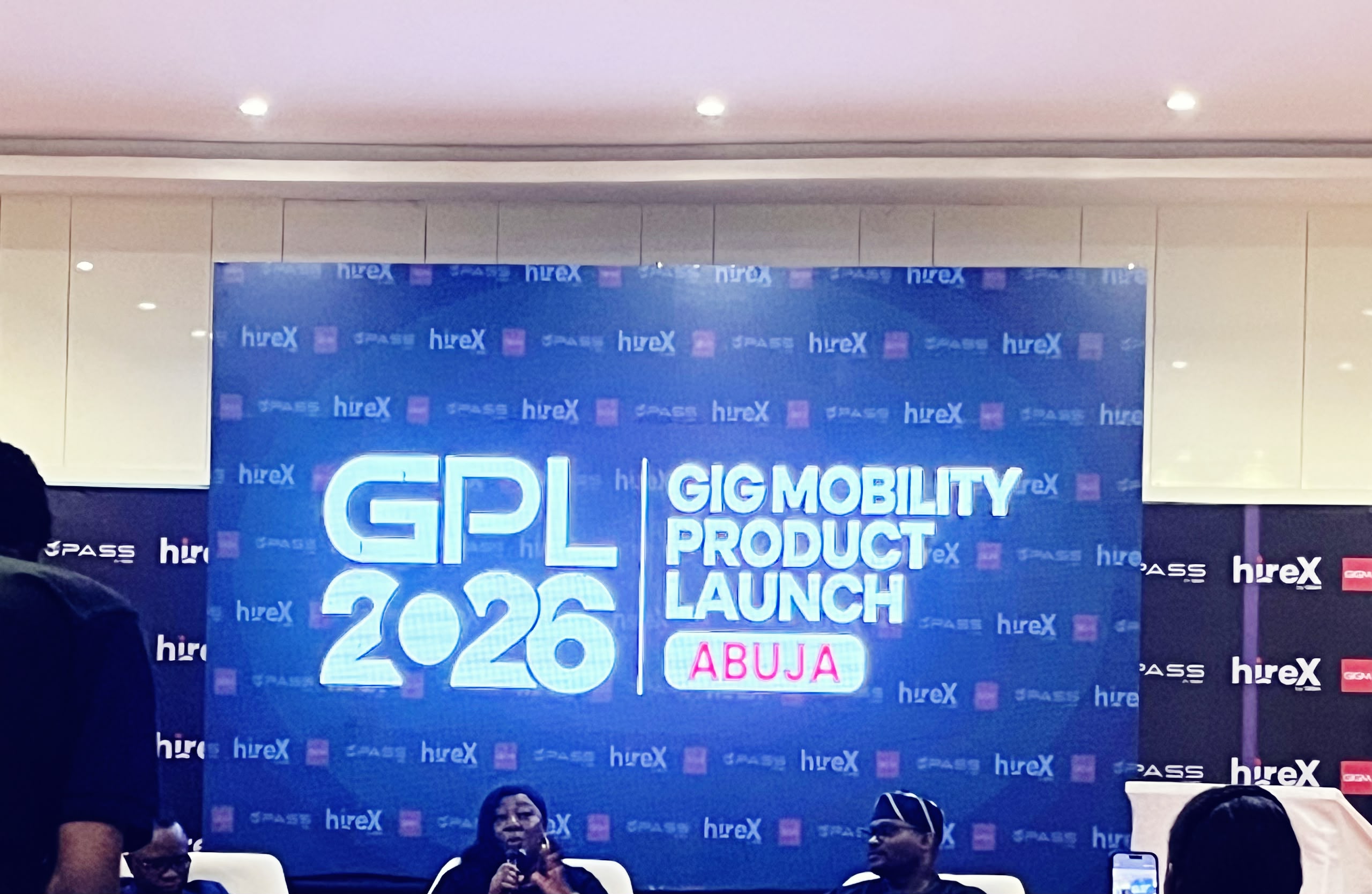
The Federal Government has welcomed GIG Mobility Group’s (GIGM) expansion into digital mobility services, urging the company to prioritise reliable service delivery as it moves beyond interstate transportation into travel booking and premium vehicle hire.
The government said digital mobility solutions must not only simplify travel arrangements but also guarantee dependable services and protect customers who rely on technology to organise their journeys.
The Permanent Secretary, Federal Ministry of Transportation, Olufunso Adebiyi, represented by Usman Abubakar, Deputy Director, Road and Mass Transit, gave the admonition on Wednesday in Abuja at the unveiling of PASS by GIGM and hireX by GIGM.
Mr Adebiyi said the ministry remained open to partnerships with the company, describing the platforms as an innovation that could improve transportation and travel services.
He also stressed that the ministry hoped the company’s new services would benefit Nigerians and wished it success in its expansion.
According to the Director-General of the National Automotive Design and Development Council (NADDC), Joseph Osanipin, the launch marked the beginning of the work required to sustain the services, warning that the company would need to meet customers’ expectations as demand grew.


“After we have launched today, the real work is going to start. Many customers will come in and demand this service. We have to be up to it,” he said.
Mr Osanipin said trust, reliability and responsive customer service were essential to the success of digital mobility platforms, particularly where customers were required to provide personal information and make payments before travelling.
He added that innovation must address practical problems and deliver solutions through technology in seamless, efficient ways.
GIGM’s background and expansion
GIG Mobility Group is a Nigerian transportation and technology company that began operations in 1998 as God Is Good Motors, providing interstate passenger transportation.
Founded by Edwin and Stella Ajaere in Benin City, the company initially operated between Benin City and Lagos before expanding its bus services to other Nigerian cities.
After Edwin Ajaere’s death, his son, Chidi Ajaere, took over management and led the company’s expansion and adoption of technology-driven transportation services.
The company rebranded from God Is Good Motors to GIG Mobility in 2019, reflecting its expansion beyond conventional passenger transportation.
It also expanded into Ghana, where it operates transportation services, including routes connecting Accra and Kumasi.
GIGM has introduced digital booking and transport management systems into its operations, allowing customers to book interstate journeys online rather than relying solely on physical terminals.
The company says it operates more than 40 terminals across Nigeria and Ghana. Its Chief Executive Officer, Enahoro Okhae, said the Gwagwalada terminal, opened on Tuesday, was its 40th terminal across West Africa.
What the new platforms offer
The two platforms are designed to extend GIGM’s services beyond its traditional interstate bus transportation business into other aspects of mobility and travel.
PASS by GIGM is a travel and tours platform that brings together flight bookings, hotel reservations, airport pickups, curated tours and interstate bus ticketing. It is intended to allow customers to organise different parts of a journey through one digital channel rather than booking each service separately.
hireX by GIGM, on the other hand, is a vehicle-hire marketplace offering chauffeur-driven vehicles for hourly, daily and one-way bookings. The service is designed for airport transfers, business trips, events and other journeys requiring hired vehicles.
According to the company, its Abuja fleet will comprise vehicles owned by GIGM and those operated by partner providers.
The platforms form part of the company’s broader plan to develop a mobility ecosystem that connects transportation with travel and related services.
GIGM says customer expectations are changing
Mr Okhae explained that the expansion was informed by changing customer expectations, particularly demands for convenience, speed, digital access and simpler travel arrangements.
He said the company had traditionally been known for moving passengers between states but was now seeking to provide services covering other parts of their journeys.
“Strong companies evolve. Strong companies listen. Strong companies learn. They adapt. They invest,” he said.
Mr Okhae added that the company was seeking to respond to the movement of people across Africa for business, education, family engagements, tourism and other opportunities.
He noted that GIGM’s expansion was based on the belief that customers increasingly needed connected services rather than separate transportation arrangements.
“The future belongs to connected solutions, not isolated services,” he said.
He said the company was building an ecosystem that would let customers access different services and organise their journeys.
Mr Okhae added that Abuja was strategic to the company’s expansion, explaining that the launch was intended to extend services already introduced in Lagos to customers in the capital.
Technology and operational capacity
Charles Oloyede, GIGM’s Head of Product, said technology had enabled the company to expand into other segments of the mobility business.
ALSO READ: CREDICORP rolls out first CNG mobility activation in Adamawa, advancing its 10,000 mobility rollout
He explained that the company’s existing technological infrastructure supported road and air travel services, helping it manage operations and provide customers with different travel options.
Mr Oloyede said the company relied on technology to manage operational complexities that would be difficult to handle manually.
He added that GIGM had about 150 daily touchpoints, although he did not clarify whether the figure referred to transactions, operational contacts or customer interactions.
He also noted that the company’s technology had been developed to support its operations and provide customers with a more coordinated travel experience.
According to Mr Oloyede, Abuja was an important market for the company, and the launch was intended to extend services already available in Lagos to customers in the capital.
NADDC highlights reliability and customer trust
Mr Osanipin said customers would need confidence in the platforms before entrusting them with personal information, payments and travel arrangements.
He noted that reliability and responsive customer service were equally important, particularly when customers encountered difficulties or needed urgent assistance.
The NADDC director-general said the company’s experience in transportation could help it respond to customers’ needs but cautioned against assuming that the launch alone would guarantee success.
He urged the management to continue improving its services and avoid complacency.
“When you are number one, think as number two,” he said.
The platforms come at a time when customers increasingly use digital channels to arrange transportation and other services.
Discover more from Premium Times Nigeria
Subscribe to get the latest posts sent to your email.






Business
COP31: How Nigeria can turn household solar systems into investment opportunities – Lagos Carbon CEO

In this interview with PREMIUM TIMES on the sidelines of the ongoing United Nations Climate Change Conference (COP31) in Türkiye, Ibukun Adebayo, Chief Executive Officer of Lagos Carbon, discusses opportunities in Nigeria’s growing solar energy market and how the country can leverage renewable energy certificates to mobilise investment, expand solar generation and strengthen its clean energy industry.
Excerpt:
PT: Could you share your thoughts on the ongoing conversations about the opportunities and challenges surrounding Nigeria’s solar boom?
Mr Adebayo: I’m the CEO of Lagos Carbon. I spent 30 years in the City of London, working on solutions that we can bring back to Nigeria. Our main challenge right now is the slow pace of energy decarbonisation. However, the opportunity before us is to monetise existing solar installations through carbon credits and Environmental Attribute Certificates (EACs) to fund greater solar generation. Today, an amazing opportunity exists through a certificate called an International Renewable Energy Certificate (I-REC), which measures one megawatt-hour of power generated from a renewable energy source, primarily solar.
If you put solar on your roof today, you can generate carbon credits and EACs from your installation, which can be sold. Unlike carbon credits, which have requirements around permanence and additionality, EACs are relatively straightforward. The Nigerian national renewable energy market offers a higher redemption value. This means that when you achieve a reduction in greenhouse gas emissions, the value you can realise from selling the certificate can be higher than what you might get from carbon credits.
PT: What do you think we need to do to implement this in Nigeria and make it work across households? How can Nigerians, particularly those who have already installed solar systems, benefit?
Mr Adebayo: Aggregating solar installations within a particular vicinity or locality creates the economies of scale needed to generate one megawatt-hour of renewable energy, which can then be sold. The benefits can be shared among participating communities. Revenue from selling EACs or International Renewable Energy Certificates can be distributed among community members. Therefore, even if households have individual solar installations, they need to aggregate them. That is the solution.
PT: In terms of policy, there have also been discussions about Nigeria’s abundant mineral resources, which could be used to manufacture solar systems, batteries and other components. What is your view on the direction Nigeria is taking, particularly regarding its existing policies?
Mr Adebayo: Nigeria has made progress in establishing a national carbon market framework. In October last year, Nigeria made a significant development in positioning itself within the global carbon market, particularly in relation to Articles 6.2 and 6.4 of the Paris Agreement. However, the challenge remains the same: we do not have enough electricity. We need to mobilise funding to add solar capacity. Monetising energy certificates is one of the fastest ways to achieve this. We need to let the market work within the appropriate policy framework.
PT: There are also concerns about affordability and people’s ability to access some of the materials and technologies needed to develop these systems. Do you have anything to share on that?
Mr Adebayo: Yes. There are discussions around developing local manufacturing capacity for solar panels, inverters and all the components that make up the solar industry. Of course, that will cost money and require significant investment. However, what should concern us most is the end user. The problem we are trying to solve is not simply how to build a manufacturing industry. It is how to provide electricity that supports economic growth, job security and individual development.
That is the key. What we are saying is that by selling energy certificates collectively as communities, we can create an opportunity that has never existed before. It will help create a bottom-up approach to mobilising investment in the industry you just mentioned. We should take advantage of this opportunity because, for the first time, we have a mechanism that can help make it possible.
PT: Some people have raised concerns about false climate solutions. They argue that carbon markets and similar mechanisms could distract from addressing the climate crisis. There are also concerns about potential land grabbing and the impact on local communities. On the other hand, some stakeholders believe carbon markets and trading are the way forward. Nigeria has also introduced a carbon market framework. What is your position on this?
Mr Adebayo: We have to decide on our priorities. Our priorities should include how we use our land, economic growth and the economic opportunities available to us. For me, we must start with economic opportunity. Everything else should fall into place around that. Markets and climate finance can help achieve those goals.
There are international organisations and European corporations with an annual demand of about $32 million for emissions reductions, which they can purchase from Nigeria, Lagos, any other state or even internationally. That presents an opportunity for Nigeria to access carbon and climate finance. Why do they do it? If I am a European corporation looking to offset my emissions, I could buy carbon credits through the European trading system at $18 per credit. Alternatively, I could buy a Nigerian environmental certificate or carbon credit for $10. In either case, I am supporting the same reduction in atmospheric carbon emissions. It does not matter whether I purchase the credit in London or Lagos; the environmental benefit is the same, and the people providing the opportunity to offset emissions receive the investment. Why not bring that finance into Nigeria? Why not allow that money to support solar development and strengthen our economy?
PT: We also see Nigeria importing more solar panels and other equipment. What do you think we need to do differently in this regard?
Mr Adebayo: I am agnostic on that issue. What matters to me is ensuring that solar supply meets solar demand. As you know, the Middle Belt states have significant potential for solar generation. We are talking about thousands of megawatt-hours of electricity, yet Nigeria’s requirement runs into several gigawatts. We need this electricity to support the industry. Industry is often described as the engine room of Nigeria’s economy, but we do not have enough power to keep the lights on. We need to decide whether we want to become resource nationalists, worrying about foreign participation, or ensure we have sufficient, good-quality, and affordable electricity to support economic growth. That is not a question for me to answer. I would rather put that question to the authorities.
READ ALSO: Experts urge more local content to unlock Nigeria’s $8.5 billion solar potential
PT: Finally, what is your message regarding solar adoption and the sustainable use of solar energy systems in Nigeria?
Mr Adebayo: Because of our geographical location, we are blessed with approximately 8,700 hours of solar potential annually. That is an astonishing resource. If we learn to harness it properly, it could be more valuable to us than our oil and gas combined. We should make solar energy accessible to the masses and find ways to develop Nigeria’s solar industry. This will help reduce our reliance on fossil fuels, making the planet and our country much cleaner and greener.
PT: Thank you for your time and for sharing your thoughts on this important issue with us.
Discover more from Premium Times Nigeria
Subscribe to get the latest posts sent to your email.
-

 News4 days ago
Every ₦1 spent on advertising generates ₦16.50 in Nigeria’s GDP, ARCON says – Technology Times
-
News3 days ago
Tinubu (APC) in Jos: Promises to restore peace in the State and Nigeria
-
News3 days ago
Heavy Security as Tinubu Takes Campaign to Jos
-
News3 days ago
Yari Defends Tinubu on Insecurity, Says Opposition Failed to Tackle Crisis for Over 20 Years