News
Amalau Accelerates Rural Road Projects in Kulere Axis, Boosting Access and Economic Growth

By MAPIS ISAAC JONATHAN MAWARES
BOKKOS LOCAL GOVERNMENT COUNCIL EXECUTIVE CHAIRMAN, HON. AMALAU SAMUEL AMALAU, ACCELERATES RURAL INFRASTRUCTURAL DEVELOPMENT IN KULERE AXIS, EXPANDS ROAD GRADING PROJECTS TO STIMULATE ECONOMIC GROWTH, ENHANCE ACCESSIBILITY, AND IMPROVE COMMUNITY WELL-BEING
Hon. Amalau Samuel Amalau, the Executive Chairman of Bokkos Local Government Council, has reaffirmed his administration’s dedication to providing significant benefits to the grassroots by continuing the grading of rural roads and developing other essential infrastructure throughout the Bokkos Local Government Area. This initiative seeks to improve accessibility, drive economic growth, and boost the overall well-being of residents, particularly those in rural areas.
Aligned with Hon. Amalau’s vision for fostering sustainable development and enhancing the living conditions of local communities, the dedicated Chairman has made the rehabilitation and grading of key roads within the KULERE AXIS a top priority. These roads are essential arteries for farmers, traders, students, healthcare providers, security personnel, and other road users who rely heavily on dependable transportation networks for their daily activities.
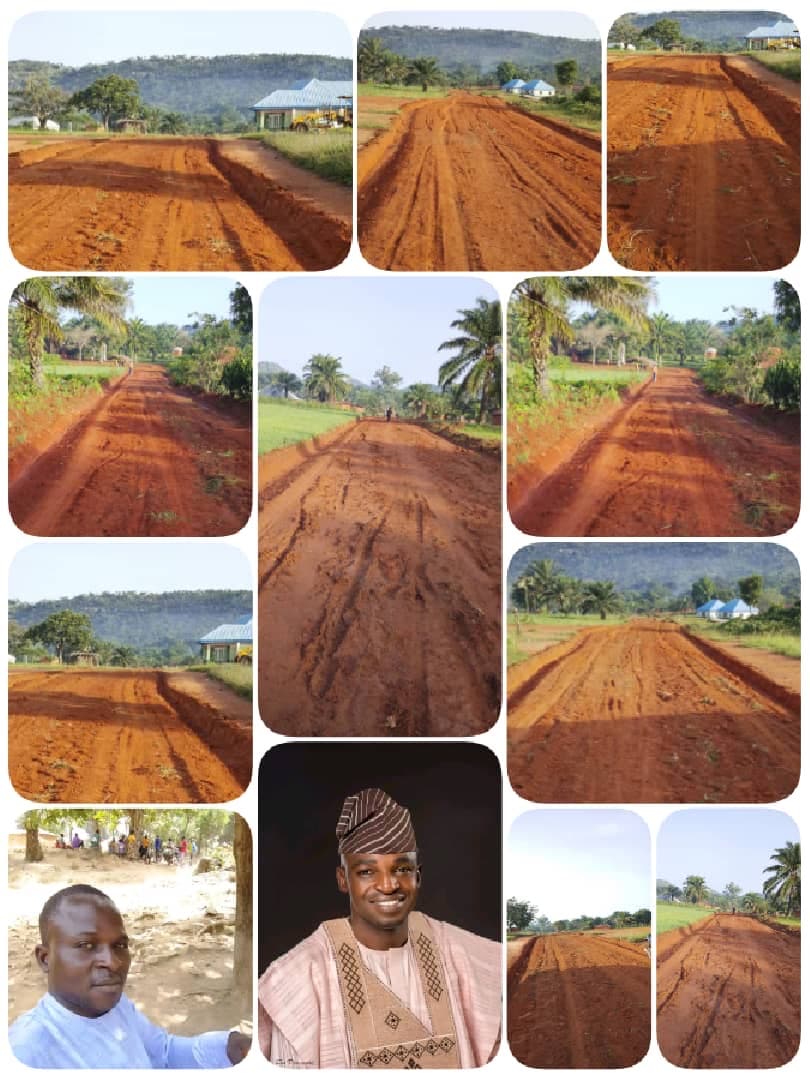
As part of these ongoing initiatives, the DAFFO-TO-AMBUL/BARGESH Road has been effectively graded and is now in excellent condition for travel. This improved road infrastructure has greatly facilitated movement in the region, allowing residents safer and more convenient access to nearby communities and economic hubs.
In the same vein, the AMBUL/BARGESH-TO-TOFF Road has undergone thorough grading and is currently in top-notch motorable condition. The successful completion of this section is anticipated to enhance the transportation of agricultural goods.
‘Other critical roads within the axis will receive the desired attention. These include the KULERE MARKET KUKUT-TO-RICHA TOWN Road, KULERE MARKET KUKUT-TO-AMBANG Road, AMBANG-TO-KAMWAI Road, and the KAMWAI-TO-TUKEH/KANGIL Road. The planned interventions underscore the administration’s determination to ensure that no community is left behind in the ongoing infrastructural transformation of Bokkos Local Government Area.
During an impromptu inspection tour conducted on Saturday, June 20, 2026, Hon. Amos Sunday Akiri, Principal Assistant to the Executive Chairman, visited the project sites to assess the quality and pace of work. Following the inspection, he expressed satisfaction with the progress recorded thus far and commended the commitment of those involved in executing the projects.
While acknowledging the remarkable progress made, Hon. Akiri appealed for the speedy completion of the remaining road segments before the onset of heavy and frequent rainfall. According to him, timely, Completion of the projects will ensure that residents derive maximum benefit from the intervention and prevent weather-related disruptions that could affect construction activities and distort vehicular mobility.
The ongoing grading of rural roads across the Kulere Axis is a clear reflection of Hon. Amalau’s dedication to responsive governance and people-centered leadership. By providing accessible roads and other relevant infrastructure, the administration continues to create an enabling environment for economic growth, agricultural productivity, social development, and improved living standards for the people of Bokkos Local Government Area. The Council remains committed to sustaining these efforts in pursuit of a more prosperous, connected, and resilient Bokkos for all.
Signed:
MAPIS ISAAC JONATHAN MARAWES,
Director of Media and Publicity,
Office of the Executive Chairman,
Bokkos Local Government Council.








Kenya has confirmed its first imported case of Ebola caused by the Bundibugyo virus, as the outbreak in the Democratic Republic of the Congo continues to spread across the region.
According to a statement published Tuesday by the World Health Organisation (WHO) Regional Office for Africa, the patient was a Kenyan citizen who had been living in the DRC and fell ill there.
The patient travelled by road to Kampala, Uganda, before flying to Nairobi, where the patient was isolated after developing symptoms. Samples tested positive for Bundibugyo virus at Kenya’s National Virology Reference Laboratory and the Kenya Medical Research Institute.
Despite supportive care, the patient died on the night of 5 October and was buried on Tuesday in line with Kenya’s Ebola safe and dignified burial protocol, according to WHO.
“The government of Kenya notified WHO of the case in line with the International Health Regulations (2005) on 6 October 2026,” it noted.
Kenya becomes fourth country affected
According to WHO, Kenya is the fourth country to confirm a case of Bundibugyo virus disease in the current outbreak.


The DRC continues to battle the largest outbreak, while Uganda, where the virus was first detected in 2007, ended its latest outbreak in August. France also reported a travel-related case in June.
WHO noted that most of the cases reported in Uganda were imported from the DRC, while a smaller number were locally acquired among contacts and health workers linked to imported cases.
In the DRC, the outbreak has continued to expand. As of 23 September, the country had recorded 7,890 confirmed cases and 3,799 deaths, giving a case fatality ratio of 48.1 per cent.
The outbreak had affected 63 health zones across seven provinces, with two of the latest affected areas bordering other countries. WHO said the expansion had increased the risk of cross-border transmission.
Kenya traces contacts
Following confirmation of the case, Kenyan health authorities have listed 28 contacts, including family members and health workers who cared for the patient.
They are also tracing 23 passengers and four crew members who were on the same flight as the patient.
WHO said Kenya had been on high alert since May, when Ebola outbreaks were declared in the DRC and Uganda.
As of Tuesday, Kenya had screened more than 652,000 travellers entering the country, tested 267 suspected samples and trained about 5,000 health workers on Ebola prevention and management.
WHO said it has also supplied about 1,000 Ebola tests and 1,000 personal protective equipment kits to high-risk counties in Kenya.
READ ALSO: DRC Ebola outbreak remains active as death toll reaches 3,779 – Africa CDC
Nigeria on high alert
Nigeria has also strengthened surveillance in response to the regional outbreak.
The Nigeria Centre for Disease Control and Prevention (NCDC) said in a public health advisory issued in September that the country was on high alert and had activated enhanced surveillance measures.
It introduced a health declaration system under which travellers from countries with active or relevant Ebola transmission may be required to complete a form before boarding.
The form requires travellers to provide information about their recent travel history, transit countries, destination in Nigeria and health status.
The NCDC said the measures are intended to strengthen surveillance and prevent the importation of Ebola into Nigeria.
Discover more from Premium Times Nigeria
Subscribe to get the latest posts sent to your email.

-

 News4 days ago
MTN, Gates Foundation drive $25m AI digital health plan in Nigeria – Technology Times
-
 News3 days ago
Troops rescue 15 kidnap victims, nab two suspects in nationwide operations
-
Business3 days ago
Nigeria’s business activity expands as household confidence weakens
-
News2 days ago
Nigerians warned as AI creates new sextortion threat – Technology Times