Connect with us

Business

NCC Reveals 7,000 Network Interventions as Compensation Reaches 75m Subscribers

info

Published

on

The Nigerian Communications Commission (NCC) says it has carried out about 7,000 targeted interventions across the country to fix service disruptions and strengthen telecom infrastructure, while over 75 million subscribers have received airtime and service compensation in 2026 for poor network quality.

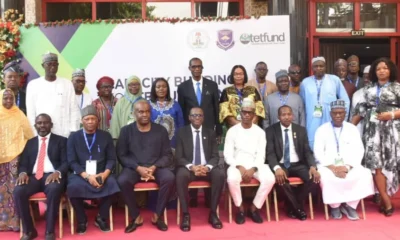
NCC’s Executive Vice Chairman and CEO, Dr Aminu Maida, made the disclosure at the 95th Telecom Consumers’ Parliament in Lagos. He acknowledged that compensation offers only partial relief and cannot make up for the inconvenience and financial losses subscribers suffer when services fail.

Maida said the commission’s real aim is to end recurring infrastructure faults so that Nigerians enjoy dependable connectivity. He noted that compensation cannot bring back business opportunities lost to outages, or the important calls and communications that never went through.

He also announced that public coverage maps, built from crowdsourced performance data, are now live on the NCC portal. The maps are meant to help consumers compare the reliability of operators in their own locations.

Civil society groups at the forum, however, urged more openness in how performance statistics are reported. They warned that official coverage figures may not reflect the real experiences of subscribers, especially those in rural areas and on older network technologies.

In her keynote on consumer rights, Professor Chiso Ndukwu-Okafor, Executive Director of the Consumer Advocacy and Empowerment Foundation (CADEF), cautioned against reading coverage numbers in isolation. She pointed out that many subscriptions still run on 2G and that several rural communities remain in network blackspots.

She also raised concern that some consumers are shut out of app-based complaint channels, and called for better complaint management and accountability. In her view, consumer trust should be treated as a core part of infrastructure development.

MTN Nigeria, for its part, reaffirmed its commitment to investing in network improvements and addressed complaints about fast data depletion. Winifred Umerah, the company’s General Manager of Customer Strategy Management and Insights, explained that apps can keep consuming data in the background, unlike traditional voice and SMS services.

She said MTN has introduced real-time monitoring tools that show subscribers which apps use the most data and let them compare app usage records with network data logs. Operators can now also run deeper technical checks to establish whether a problem lies with a customer’s device or the network.

The discussions underscored the need for closer collaboration among regulators, operators and consumer groups. With millions compensated and thousands of interventions completed, the NCC says it wants to shift focus to lasting improvements that cut disruptions, build consumer confidence and raise the overall quality of telecom services in Nigeria.

The post NCC Reveals 7,000 Network Interventions as Compensation Reaches 75m Subscribers appeared first on Business Today NG.
Continue Reading
Click to comment

Leave a Reply

Your email address will not be published. Required fields are marked *

Business

LIVE UPDATE: TenTrade brings financial market experts together to nurture next generation of traders

info

Published

on

WhatsApp Image 2026 11 07 at 08.27.51 1.jpeg

TenTrade has brought financial market experts and industry stakeholders together in Lagos to discuss ways of developing the next generation of traders and strengthening participation in the financial markets.

TenTrade is a financial services company that operates as an online, multi-asset trading broker, providing a platform through which clients can access financial markets.

The event themed, “One Community, One Future: Building the Next Generation of Traders,” holds in Ikeja, Lagos on Saturday.

Stakeholders at the TenTrade's event on building future generations of trade, "One Community, One Future," in Ikeja, Lagos, on Saturday.

The event, featuring former football star Luis Figo as TenTrade’s global brand ambassador, is expected to provide a platform for discussions on financial market education, trading opportunities and the future of the trading industry in Africa.

Speakers scheduled to address participants include Wilfred Obasi, Regional Director, Africa, TenTrade; Andreas Andreou, Chief Revenue Officer, TenTrade Africa; Ademola Adeagbo, Head of Education, Africa; and other members of the company’s leadership team.

PT WHATSAPP CHANNEL

READ ALSO: US seeks stronger trade ties with Nigeria

The gathering comes as interest in online financial trading continues to attract participants across African markets, particularly young people seeking to understand and participate in global financial markets.

Dangote Refinery AD

Through the event, TenTrade is bringing together industry professionals and traders under the theme of building a stronger trading community and preparing the next generation of market participants.

Follow PREMIUM TIMES for LIVE UPDATES from the gathering:


Discover more from Premium Times Nigeria

Subscribe to get the latest posts sent to your email.

Continue Reading

Business

CBN issues regulations for non-security virtual assets, effective November 5,

info

Published

on

BY NKECHI NAECHE-ESEZOBOR—The apex regulator, the Central Bank of Nigeria (CBN) on Friday  issued regulations for the Operations of Non-Security Virtual Assets in Nigeria, setting out a framework for licensing, regulating and supervising stablecoins, virtual asset service providers and related activities.

According to a circular to virtual asset service providers and stakeholders in the financial services industry, the apex bank said the regulations are meant to promote responsible innovation, strengthen the integrity of the Nigerian financial system and provide an appropriate framework for emerging digital payment instruments.

The CBN said the regulations are issued under the CBN Act, 2007, the Banks and Other Financial Institutions Act, 2020, and other applicable laws. It described them as a comprehensive, risk-based framework covering the licensing, authorisation, regulation, supervision and oversight of non-security virtual assets in Nigeria.

The framework covers stablecoins, Deposit Money Tokens, virtual asset service providers, virtual asset payment services, platform-facilitated peer-to-peer services, and custody, transfer, remittance, clearing and settlement activities.

The regulations also set requirements on the classification and designation of regulated tokens and activities, and on the licensing of issuers and providers of non-security virtual asset services. Other areas covered include capital, reserve-backing, liquidity and redemption; corporate governance, risk management and internal controls; and technology risk, cybersecurity and operational resilience.

They further address the safeguarding of reserve and customer assets; customer protection, disclosures and complaints management; and anti-money laundering, counter-terrorist financing and counter-proliferation financing obligations. Sanctions screening, transaction monitoring, blockchain analytics, Travel Rule compliance, counterparty due diligence, regulatory reporting, supervisory access, information sharing, enforcement, administrative sanctions and orderly wind-down arrangements are also included.

The CBN said the regulations apply to persons carrying out regulated activities in or from Nigeria, those directing such activities at persons in Nigeria, and those whose activities may materially affect the country’s payments system, financial system, foreign exchange market or financial stability. They may apply whether or not the person has a physical presence in Nigeria.

The apex bank said the regulations do not displace the statutory mandate of the Securities and Exchange Commission or any other competent authority. Activities involving security virtual assets, securities, investment contracts or other capital-market products remain subject to the capital-market regulatory framework. Where an activity involves both non-security virtual assets and matters under another authority’s mandate, approvals must be obtained from each competent authority.

All affected institutions, issuers, service providers, operators, promoters and other stakeholders are required to familiarise themselves with the regulations and comply fully with the applicable requirements.

The regulations take effect from November 5, 2026. The circular was issued by the CBN’s Payments System Policy Department.

The post CBN issues regulations for non-security virtual assets, effective November 5, appeared first on Business Today NG.

Continue Reading

Trending