Business
TotalEnergies deploys deepwater rig to Akpo for fresh drilling in Nigeria


French energy giant TotalEnergies has deployed an ultra-deepwater drillship to Nigeria’s Akpo oil and gas field, preparing to commence a new drilling campaign that could expand activity in one of the country’s major offshore petroleum assets.
The company announced on Thursday that the drillship, Noble Black Rhino, had arrived at the Akpo field ahead of the campaign, with drilling of a well designated AFE-1X scheduled to begin on 13 November.
According to a statement published on its Facebook page, the vessel crossed into Nigerian waters on 2 November after completing a 738-nautical-mile journey from Côte d’Ivoire. It arrived at the field at 6 a.m. on 3 November.
TotalEnergies said preparations were underway to achieve operational readiness for the scheduled commencement of drilling, describing the vessel’s arrival as a significant milestone for its deep offshore operations.
The development signals continued investment in Nigeria’s deepwater petroleum sector, where new drilling and field developments could strengthen production, generate additional government revenue and create opportunities for Nigerian businesses.
However, the company has not disclosed the expected production from the planned well, the estimated investment, the volume of additional reserves being targeted or the number of Nigerian workers and contractors expected to benefit from the campaign.


What the drilling means for Nigeria
The Akpo field is located in Petroleum Mining Lease 2 (PML 2), formerly Oil Mining Lease 130 (OML 130), approximately 150 kilometres offshore Nigeria.
The field, which began production in March 2009, is operated by TotalEnergies Upstream Nigeria Limited, which holds a 24 per cent participating interest in the licence.
Other partners include China’s CNOOC, with 45 per cent; South Atlantic Petroleum Limited, with 15 per cent; and Prime 130, with 16 per cent. The Nigerian National Petroleum Company Limited is the concessionaire of the production-sharing contract.
The former OML 130 was converted into separate petroleum mining leases under the Petroleum Industry Act. Akpo became PML 2, while Egina and Preowei became PML 3 and PML 4, respectively.
The Nigerian Upstream Petroleum Regulatory Commission’s (NUPRC) concession records identify Akpo as the field associated with PML 2.
The Akpo field is a major producer of condensate and natural gas. Its development has contributed to Nigeria’s hydrocarbon production and gas supply, including supplies to the Nigeria Liquefied Natural Gas facilities.
In February 2024, TotalEnergies announced the commencement of production from Akpo West, a development connected to the existing Akpo floating production, storage and offloading facility through subsea infrastructure.
The development was expected to add 14,000 barrels of condensate daily, with gas production of up to four million cubic metres daily projected by 2028.
NNPC said the Akpo main field produced 124,000 barrels of oil equivalent daily in 2023.
A successful outcome from the new drilling campaign could support further development of the asset and strengthen Nigeria’s ability to sustain or increase offshore hydrocarbon production.
It could also generate additional royalties, taxes and other government receipts if the drilling results in commercially viable production.
However, the economic benefits will depend on the nature of the well, its results, development costs and whether any additional hydrocarbons can be commercially produced since a commencement of drilling alone does not guarantee new production.
Questions over offshore communities’ benefits
Beyond the potential contribution to national production, the campaign raises questions about how much economic value communities affected by the operations will derive from another phase of deepwater investment.
Although TotalEnergies says it has established five Host Communities Development Trusts for its Nigerian operations, publicly available records reviewed by PREMIUM TIMES do not show that the trusts cover the littoral communities assigned to its deepwater operations.
The company has identified five trusts covering its Nigerian petroleum operations: Obagi, Olo, BOPANE, NOPL and Port Harcourt. However, a review of the HostComply platform, which tracks the implementation of the Petroleum Industry Act’s host communities framework, and TotalEnergies’ publicly available corporate records and website did not reveal a separately identifiable trust or beneficiary-community list for its Akpo and Egina offshore operations.
This raises questions about whether the communities assigned to these deepwater assets have been formally recognised as beneficiaries of the statutory development arrangements and whether the company has fulfilled its funding obligations to them.
The Petroleum Industry Act, which came into force in August 2021, requires petroleum operators to establish Host Communities Development Trusts within 12 months of the Act’s commencement. It also requires each settlor, where applicable through the operator, to contribute three per cent of its actual annual operating expenditure in the preceding financial year to the applicable trust.
Although Akpo had commenced production in 2009, more than a decade before the Act was enacted, its existing production status did not exempt the operator from the new statutory host-community framework.
The regulator, NUPRC, had specifically identified communities along Nigeria’s coastline as beneficiaries of deepwater petroleum operations.
In a presentation delivered on 29 July 2022, the then Chief Executive of NUPRC, Gbenga Komolafe, outlined the regulator’s proposed allocation of littoral communities to deepwater operators for the implementation of the host communities regulations.
The presentation identified Rivers and Bayelsa states as the littoral states allocated to the Akpo/Egina deepwater operations.
The allocation suggests that communities in the two states were expected to be considered in determining the host-community development arrangements for the fields.
However, PREMIUM TIMES could not independently establish from publicly accessible records whether TotalEnergies has subsequently incorporated a trust specifically covering these communities, whether they have been integrated into any of its five existing trusts or how much has been contributed for their benefit.
A media enquiry to the company via mail seeking verification was not responded to as of the time this report was filed. The company needs to clarify which trusts cover the Akpo/Egina littoral communities, identify the beneficiary communities and disclose the contributions made from the operating expenditure of the deepwater assets.
The Petroleum Industry Act was designed to ensure that communities affected by petroleum operations receive direct and measurable social and economic benefits, rather than being excluded from development opportunities generated by the industry.
Environmental accountability remains important
The new drilling campaign is also taking place in a time of questions about TotalEnergies’ environmental performance in Nigeria, particularly its claims about ending routine gas flaring.
In a 12 October investigation, PREMIUM TIMES examined the company’s declaration that it had eliminated routine gas flaring in Nigeria.
The investigation documented continuing flare activity around its OML 58 and OML 130 assets, using satellite observations, regulatory data and accounts from residents of communities hosting its facilities.
Data from the Nigerian Oil Spill Detection and Response Agency’s Gas Flare Tracker showed that estimated flare volumes around OML 130 where the company is now undertaking fresh drilling rose to 7.9 million standard cubic feet in 2025, from levels below 6.2 million standard cubic feet in 2022 and 2023.
The investigation also found gaps in publicly accessible asset-level methane emissions information, raising questions about whether the company’s environmental claims could be verified.
Although the existence of flare activity does not by itself imply continued routine flaring, the findings highlighted the need for transparent emissions records and effective regulatory oversight.
The arrival of another drilling vessel places renewed importance on environmental monitoring, particularly the prevention of methane emissions, oil spills and other pollution associated with offshore exploration and production.
NUPRC is responsible for regulating upstream petroleum operations, while the National Oil Spill Detection and Response Agency oversees oil spill preparedness, detection and response.
For host communities and environmental advocates, the central issue is whether increased investment in offshore petroleum operations will be matched by stronger environmental safeguards and transparent disclosure of operational impacts, especially at a deep-water location where reach may be difficult for the regulator and communities.
Major investment in deepwater operations
The Noble Black Rhino is an ultra-deepwater drillship owned by Noble Corporation, an international offshore drilling contractor.
The vessel is designed to operate in water depths of up to 12,000 feet and drill wells to depths of approximately 40,000 feet.
In its third-quarter 2026 financial results published on 26 October, Noble disclosed that it had secured a four-well contract with TotalEnergies in Nigeria.
The contract was expected to commence in the fourth quarter of 2026 and run for approximately 150 days, with six additional priced option wells.
However, Noble’s disclosure did not identify the specific fields where all the wells would be drilled or provide a breakdown of the contract’s value.
TotalEnergies’ announcement about the arrival of the vessel identifies Akpo as the location of its immediate drilling campaign.
The company said the development reinforces its commitment to responsible energy development, operational safety, technological innovation and increased Nigerian participation in the oil and gas industry.
TotalEnergies has operated in Nigeria for more than six decades and remains one of the country’s major international oil and gas producers.
Discover more from Premium Times Nigeria
Subscribe to get the latest posts sent to your email.
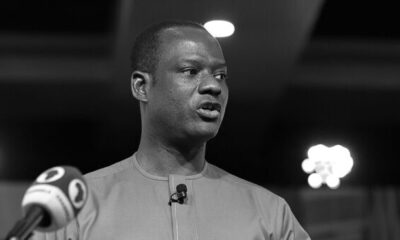




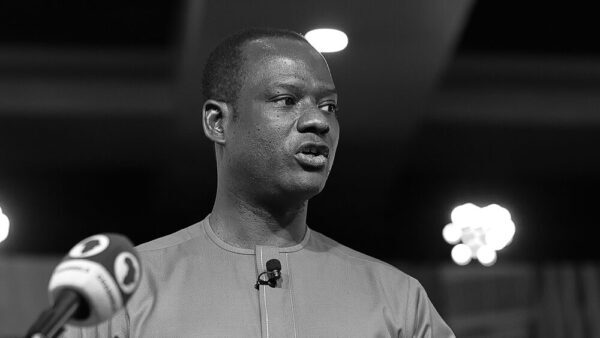
The Minister of Finance and Coordinating Minister of the Economy, Taiwo Oyedele, said Nigeria must improve its production capacity and competitiveness to take advantage of opportunities under the African Continental Free Trade Area (AfCFTA).
Mr Oyedele stressed that access to the continental market alone would not guarantee economic gains without the capacity to produce quality goods, fulfil orders and retain customers.
“Market access creates an opportunity. Our competitiveness will determine how much of it we convert into prosperity,” he said.
He made the remarks at a stakeholder forum organised by the Nigerian Export-Import Bank (NEXIM) in Abuja, themed “Leveraging the African Continental Free Trade Area (AfCFTA) for Enhanced Nigerian Export Competitiveness and Economic Diversification”.
The minister explained that the government’s economic reforms, including the removal of the petrol subsidy, foreign exchange reforms, and changes to the tax and fiscal system, aim to move Nigeria away from dependence on a narrow range of commodities toward a diversified, production-driven economy.
According to him, expanding exports would generate foreign exchange and create jobs across sectors, including agriculture, manufacturing, transportation, and professional services.
He illustrated this with the example of an agricultural processor supplying products to a new market, which could create additional demand for farmers, while Nigerian technology and service businesses expanding abroad could open opportunities for young people.
Mr Oyedele described AfCFTA as an important platform for Nigerian businesses to expand into markets across Africa, particularly in technology, manufacturing, agricultural processing, solid minerals, creative industries and services.
However, he emphasised that businesses needed more than market access to succeed, noting that their ability to meet buyers’ specifications, deliver products consistently and secure repeat orders would determine their competitiveness.
“The promise becomes real only when a Nigerian business secures a customer, fulfils an order, gets paid and wins a repeat order,” he said.
He argued that processing agricultural products into finished goods, rather than exporting raw commodities, could generate greater economic value and create more opportunities across the production chain.
The minister identified inadequate financing, infrastructure gaps, high transaction costs, delays in certification and transportation, and other trade barriers as challenges confronting Nigerian exporters.
He said the government was working to improve trade facilitation, streamline documentation and customs procedures, harmonise standards, and expand access to financing for viable export businesses.
Mr Oyedele urged financial institutions to structure export financing around businesses’ transaction cycles and expected foreign exchange earnings to prevent repayment obligations from creating unnecessary pressure on exporters.
He also called for stronger collaboration between NEXIM Bank and commercial financial institutions through guarantees, insurance, and other financing arrangements. At the same time, businesses should receive support to meet export standards, maintain proper records, and access market information.
The minister maintained that AfCFTA should also benefit smaller businesses that supply goods and services to larger exporters, noting that producers within export supply chains contribute to the country’s export economy even when they do not sell directly to foreign buyers.
He urged participants at the forum to identify specific challenges facing exporters, the institutions responsible for addressing them and practical solutions that could be implemented.
READ ALSO: Senate confirms Taiwo Oyedele as minister
Mr Oyedele called for collaboration among the government, financial institutions, businesses and development partners to improve production, remove trade barriers and strengthen Nigeria’s competitiveness in African markets.
The AfCFTA, which commenced trading on 1 January 2021, seeks to create a single continental market for goods and services across African Union member states, expand intra-African trade, and strengthen the continent’s position in global markets.
Nigeria signed the AfCFTA Agreement on 7 July 2019 and ratified it in 2020, formally joining the continental trade framework.
Nigeria’s participation in the agreement is expected to give businesses opportunities to expand beyond the domestic market, increase intra-African trade, and support economic diversification.
Discover more from Premium Times Nigeria
Subscribe to get the latest posts sent to your email.
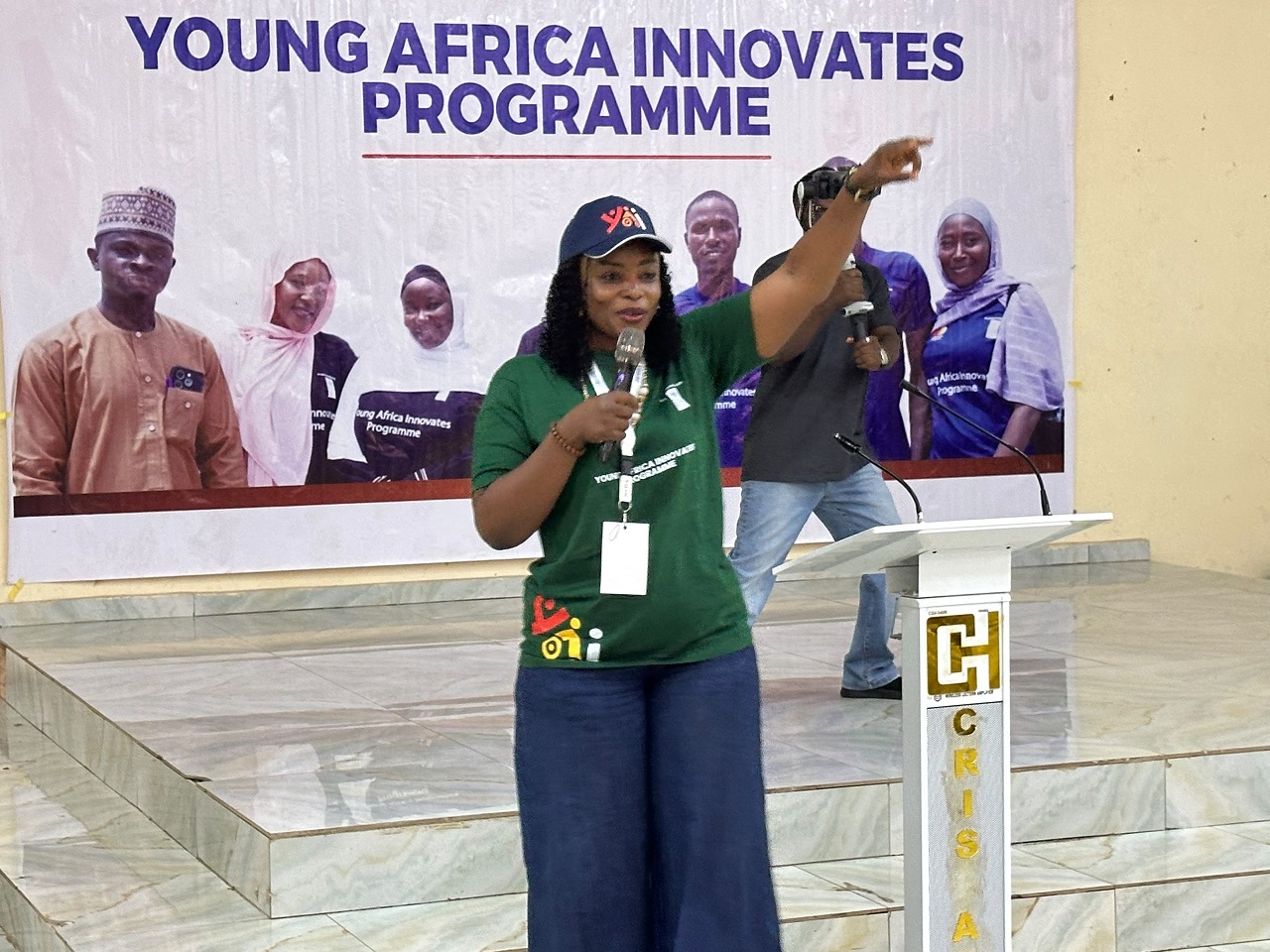
250 innovators selected from 2,797 applications as participants showcase solutions in technology, agriculture, fashion, health and other sectors
The Young Africa Innovates (YAI) Programme is currently underway in Jos, Plateau State, with the Plateau State Government, Bank of Industry (BOI) and Plateau State Microfinance and Development Agency (PLASMIDA) supporting efforts to empower young innovators, promote entrepreneurship and stimulate job creation.
Implemented in partnership with the United Nations Development Programme (UNDP) and Mastercard Foundation, the programme is designed to equip young people with the skills, mentorship, and support needed to turn innovative ideas into viable businesses and solutions to societal challenges.


Speaking on how the initiative aligns with the Plateau State Government’s agenda on youth empowerment, job creation and development, the Commissioner for Science, Technology and Innovation, Hon. Moses Nyalun, represented by the Permanent Secretary, Mr Peter Lamab Bot, said the programme reflects the government’s commitment to identifying and harnessing local talents.
He said Plateau State is blessed with talents in science, technology and innovation, adding that the initiative provides an opportunity to mobilise the state’s human resources towards solving societal problems and advancing development.
According to him, the programme attracted 2,797 applications from innovators in Plateau State within approximately three weeks of its announcement, out of which 250 participants were selected for the ongoing bootcamp.
He described the response as evidence of the enormous innovation potential among young people in the state.
“This is greatly part of the responsibility of government in terms of harnessing resources within the state, and in terms of this programme, it is human resources that are being harnessed,” he said.
The Permanent Secretary noted that the participants are presenting innovations across several sectors, including medicine, energy, agriculture, fintech and other areas, with solutions targeted at addressing societal challenges.
He said the initiative aligns with the government’s ambition to harness the creativity and abilities of young people, strengthen local innovation and create opportunities for economic advancement.
On the prospects of financial and further support for the innovators, Bot explained that the programme is structured to progress beyond training, with participants expected to develop prototypes of their innovations, benefit from mentorship and undergo incubation.
He said the mentorship component would draw from the experience of the UNDP, Mastercard Foundation and government, helping participants to improve their skills, refine their ideas and position their innovations for greater opportunities.
According to him, the incubation stage would also provide an opportunity to identify promising innovations for further support, including starter packs to help participants advance their ventures.


A major highlight of the ongoing bootcamp is the exhibition and display of products, services and business ideas by participants, showcasing the diversity of innovation and entrepreneurial talent among Plateau youths.
The exhibition features mobile applications, beverages, clothing designs, handmade bags, shoes and other products and services, offering a glimpse into the creativity and practical ideas emerging from the programme.
The participation of the Bank of Industry and PLASMIDA, alongside the Plateau State Government, is expected to strengthen the support ecosystem for the innovators through enterprise development, business opportunities and pathways towards commercialising their ideas.
The initiative is expected to contribute to youth empowerment, job creation, entrepreneurship development and the promotion of homegrown solutions to challenges facing communities across Plateau State.


-

 Events3 days ago
PENIEL 2026: AGNN Calls for Deeper Encounter with God, Unity and National Transformation
-
Events3 days ago
Plateau Govt Backs AGNN’s PENIEL 2026, Says Unity Among Christians Critical to Peace
-
News1 day ago
‘The Righteous Are Not on the Throne, That Is Why Nigerians Are Suffering’ — SDP’s Adewole Adebayo Fires the APC While Speaking to Press at Jos Conference
-
Events1 day ago
Encountering God, Advancing His Kingdom: AGNN PENIEL 2026 Ends with Calls for Responsible Leadership