Health
Ebola outbreak in DR Congo becomes largest in country’s history – WHO

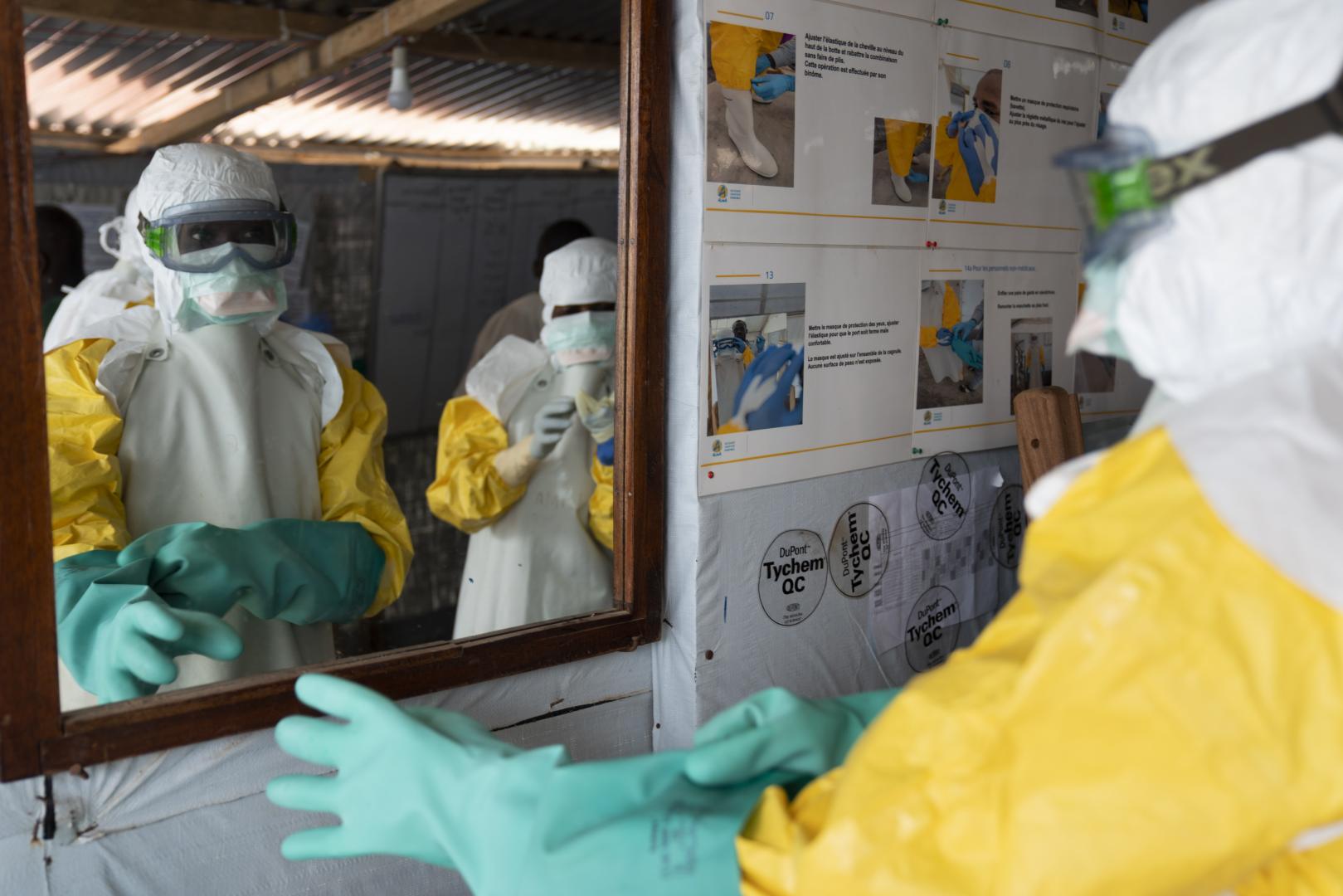
The Democratic Republic of the Congo (DRC) is experiencing the largest Ebola outbreak in its history, according to the World Health Organisation (WHO).
The country has recorded 10,668 confirmed cases and 5,198 deaths as of 3 November 2026.
The outbreak has spread across 67 health zones in eight provinces, with active transmission continuing in 51 health zones as of 3 November 2026.
The WHO disclosed this in its Disease Outbreak News report published on 6 November, adding that the country has also recorded 2,881 recoveries.
According to the report, 964 additional confirmed cases, including 511 deaths, had been reported since WHO’s previous outbreak update of 23 October.
Five countries affected
Since the outbreak, caused by the Bundibugyo virus, was declared on 15 May 2026, five countries have reported cases: DRC, France, Kenya, Nigeria and Uganda.


However, the outbreaks in France and Uganda have been brought under control since August, while Kenya and Nigeria continue their response efforts.
The latest WHO report said no new cases had been reported in Kenya or Nigeria since its previous update of 23 October.
Describing the scale of the outbreak in the DRC, WHO said it had become “the largest Ebola disease outbreak ever recorded in the Democratic Republic of the Congo irrespective of virus species.”
Community deaths raise concern
The WHO expressed concern over the high number of deaths occurring outside treatment centres, particularly among young children, highlighting the difficulties in identifying cases early and ensuring patients receive timely medical care.
Of the 512 deaths reported in the DRC since 21 October, 335 occurred in communities, while 177 were recorded in treatment centres.
“The high proportion of deaths occurring in communities, especially among young children, continues to highlight challenges in early case detection and timely access to appropriate care,” WHO said.
WHO noted that the outbreak remains concentrated in Ituri and North Kivu provinces, which account for most confirmed cases and deaths.
Ituri has recorded 7,485 cases and 3,532 deaths, while North Kivu has reported 2,593 cases and 1,422 deaths.
The WHO said 1,463 new confirmed cases were recorded across the DRC in the 21 days leading up to 3 November, with Ituri and North Kivu accounting for most of the infections.
Nigeria’s Ebola response
In Nigeria, the WHO reported one laboratory-confirmed imported case of Bundibugyo virus disease in the Federal Capital Territory (FCT) on 20 October.
The patient was medically evacuated to Switzerland on 26 October and remains in isolation while receiving medical care in Geneva.
As of 3 November, WHO noted that 62 contacts had been identified in Nigeria, with six completing the mandatory 21-day follow-up period.
The Nigeria Centre for Disease Control and Prevention (NCDC), in its situation report published on 4 November, also confirmed that six contacts had completed their follow-up, while 56 remained under monitoring.
The agency reported no newly identified contacts or symptomatic contacts during the preceding 24 hours.
The WHO said Nigerian authorities, with support from the organisation and other partners, had intensified contact tracing, case investigations and infection prevention measures.
ALSO READ: WHO recommends two new Ebola vaccines for clinical trials as DRC battles Bundibugyo outbreak
Investigations are also ongoing to establish the likely source of the infection and reconstruct the patient’s travel and exposure history.
What is Bundibugyo virus disease?
Bundibugyo virus disease is a severe form of Ebola disease caused by the Bundibugyo virus, one of the viruses in the Orthoebolavirus genus.
According to the WHO, it is a zoonotic disease, meaning it can spread from animals to humans. Fruit bats are suspected to be its natural reservoir.
Initial human infections are thought to occur through contact with the blood or secretions of infected wildlife, including bats and non-human primates.
The virus subsequently spreads between people through direct contact with the blood, secretions, organs and other bodily fluids of infected individuals. It can also spread through contaminated surfaces and materials.
The incubation period ranges from two to 21 days, and infected people are not infectious before symptoms appear. Early symptoms include fever, fatigue, muscle pain, headache and sore throat. These may progress to vomiting, diarrhoea, organ dysfunction and, in some cases, bleeding.
The WHO noted that early symptoms can resemble other illnesses, including malaria, so laboratory testing is important to confirm the diagnosis.
No vaccines or specific treatments are currently approved for Bundibugyo virus disease. The WHO said controlling the outbreak depends on early identification and isolation of cases, medical care, contact tracing, safe burial practices and community engagement.
Discover more from Premium Times Nigeria
Subscribe to get the latest posts sent to your email.




The AIDS Healthcare Foundation (AHF-Nigeria) has raised concerns over persistent HIV infections and gaps in access to treatment in Nigeria, urging the government and other stakeholders to strengthen prevention programmes and expand access to healthcare services.
The organisation said inadequate access to HIV testing, preventive medication and antiretroviral treatment, particularly among vulnerable populations, could undermine efforts to end the epidemic.
AHF-Nigeria made the call ahead of the 2026 World AIDS Day, observed annually on 1 December, while announcing a series of awareness campaigns across its programme states to promote HIV testing, prevention and treatment.
In a statement issued on Friday and signed by its Senior Advocacy and Marketing Manager, Steve Aborisade, the organisation called on governments and corporate leaders to renew their commitment to the global HIV response.
It urged stakeholders to expand access to prevention, testing, and treatment; strengthen patients’ retention in care; and prioritise Treatment as Prevention (TasP).
According to the organisation, an estimated 1.2 million people acquired HIV globally, while 570,000 died from AIDS-related causes in 2025.
It added that approximately five million of the estimated 41 million people living with HIV worldwide remained unaware of their status, while more than nine million were not receiving treatment.
AHF further estimated that 10.6 million people living with HIV globally had not achieved viral suppression, stressing the importance of consistent treatment and adherence to medication.
In Nigeria, approximately 1.9 million people are estimated to be living with HIV, according to national HIV estimates published by the National Agency for the Control of AIDS (NACA).
Mother-to-child transmission
In Nigeria, AHF expressed concern over gaps in the prevention of mother-to-child transmission of HIV, saying only 61 per cent of HIV-positive pregnant women in the country were receiving antiretroviral drugs.
It also put the mother-to-child transmission rate at 20 per cent, describing the situation as an indication of the need to strengthen interventions targeting pregnant women and their babies.
The organisation called for improved access to antenatal care, early HIV diagnosis and timely treatment to prevent new infections among children.
The WHO recommends that pregnant women living with HIV receive antiretroviral treatment to protect their health and significantly reduce the risk of transmitting the virus to their babies.
AHF demands stronger government commitment
AHF-Nigeria Country Programme Director, Echey Ijezie, said governments must move beyond commitments and ensure that HIV services are accessible, affordable, confidential and free from discrimination.
“The global call to action for World AIDS Day 2026 is clear: ‘Ending AIDS Starts with Access, ” he said.
“Despite decades of progress, globally, 1.2 million people acquired HIV and 570,000 died from AIDS-related causes in 2025, with over nine million people still not on treatment worldwide.”
Mr Ijezie urged governments and other leaders to expand prevention, testing and treatment services, strengthen retention in care and make Treatment as Prevention a priority.
“Because AIDS is not over, and access is what will end it, ” he added.
READ ALSO: Nigeria recorded 64,000 new HIV infections in 2025 – WHO
Planned awareness campaigns
As part of activities commemorating World AIDS Day, AHF-Nigeria said it would organise public awareness campaigns in Abuja and Makurdi, Benue State.
The Makurdi event, which will serve as the organisation’s main public ceremony, is being organised in collaboration with the Benue State Agency for the Control of AIDS (BENSACA) and other partners.
The event will feature a road walk beginning at AHF-Nigeria’s regional office at No. 10 Jonah Jang Crescent, Hudqo Quarters, Makurdi, passing through Police B Division junction and ending at the Aminu Isa Konduola Theatre Complex.
In Abuja, the organisation said it would conduct a community enlightenment campaign in Karimajiji to sensitise residents on the importance of HIV testing and encourage pregnant women to enrol for antenatal care.
AHF-Nigeria also said its personnel would participate in live radio programmes across Akwa Ibom, Anambra, Cross River, Kogi and Nasarawa states to engage the public on HIV prevention, testing and treatment.
The organisation said the activities were aimed at increasing public awareness, addressing misconceptions about HIV/AIDS and encouraging people to access available healthcare services.
Discover more from Premium Times Nigeria
Subscribe to get the latest posts sent to your email.

The Federal Capital Territory Administration (FCTA) has activated a multisectoral Cholera Emergency Operations Centre (EOC) to coordinate efforts to contain the ongoing outbreak and prevent further infections and deaths.
In a statement from its Health Services and Environment Secretariat, the administration said the centre was activated on 25 November to strengthen the response across relevant government agencies and development partners, particularly as the Christmas season approaches.
The Director of the Public Health Department, Teresa Nwanchukwu, formally activated the centre on behalf of the Health Services and Environment Secretariat.
The activation meeting was attended by the Director of the Rural Water Supply and Sanitation Directorate (RUWASSA), Joyce Echoke; a representative of the FCT Water Board; and representatives of the World Health Organisation (WHO), UNICEF, Jhpiego, Pro-Health International and the Nigerian Red Cross Society.
The administration said the partners reaffirmed their commitment to supporting the territory’s response to the outbreak.
Other interventions
The FCTA also announced the appointment of the FCT State Epidemiologist, Lawal Ademola, as Incident Manager to coordinate the implementation of the approved Cholera Incident Action Plan through a multisectoral Incident Management System.
 The planned interventions include enhanced disease surveillance and active case searches, laboratory diagnosis, case management, infection prevention and control, water, sanitation and hygiene (WASH), risk communication, community engagement, logistics and vaccination, where appropriate.
It said response activities would be intensified in affected communities, while surveillance and preventive measures would be strengthened in other areas considered at risk across the territory.
According to the World Health Organisation (WHO), cholera is an acute diarrhoeal infection caused by the ingestion of food or water contaminated with the bacterium Vibrio cholerae. It can cause severe dehydration and become fatal within hours if left untreated.
The global health agency estimates that between 1.3 million and four million cholera cases occur annually worldwide, resulting in between 21,000 and 143,000 deaths.
The WHO also identifies inadequate access to safe drinking water, sanitation and hygiene as major factors contributing to the spread of the disease.
Preventive measures
The FCTA urged residents to drink only safe water from reliable sources, advising them to boil or appropriately chlorinate water before consumption where its safety is uncertain.
It also advised residents to wash their hands regularly with soap and safe water, particularly after using the toilet and before preparing or eating food.
READ ALSO: Nigeria recorded 64,000 new HIV infections in 2025 – WHO
Other recommended measures include eating thoroughly cooked food, maintaining proper food hygiene, using sanitary toilet facilities, avoiding open defecation, keeping surroundings clean and ensuring proper waste disposal.
Residents experiencing sudden watery diarrhoea, with or without vomiting, were advised to begin taking oral rehydration solution (ORS), where available, and proceed immediately to the nearest health facility for medical attention.
The FCTA reaffirmed its commitment to working with relevant stakeholders and development partners to contain the outbreak and urged residents to observe preventive measures and cooperate with public health officials.
“For cholera reporting, emergency response and enquiries, please contact: Lawal Lukman Ademola FCT State Epidemiologist and Cholera Incident Manager, Telephone: 09084000085,” it added.
Discover more from Premium Times Nigeria
Subscribe to get the latest posts sent to your email.
-

 News3 days ago
‘The Righteous Are Not on the Throne, That Is Why Nigerians Are Suffering’ — SDP’s Adewole Adebayo Fires the APC While Speaking to Press at Jos Conference
-
Business2 days ago
Plateau Government, BOI, PLASMIDA Back Young Innovators at YAI Bootcamp in Jos
-
Events3 days ago
Encountering God, Advancing His Kingdom: AGNN PENIEL 2026 Ends with Calls for Responsible Leadership
-
News3 days ago
Wike is only way to Rivers politics, where he is, I am – King Ateke Tom