News
What Every Athlete Must Know About Spine Pain, CPR, HMO And Blood Pressure


Being physically fit is an important part of being an athlete, but looking fit does not always mean that everything is fine with your health. Athletes, coaches, sports administrators, and everyone involved in sporting activities need to pay close attention to health and safety both on and off the field.
From protecting the spine and learning life-saving CPR, to having adequate HMO or health insurance coverage and regularly checking your blood pressure, proper health awareness should be considered an important part of sports preparation.
Read Also: In Good Shape: Cholera And Sports, Staying Safe – By Dr Kolade Kolapo | Sports247 Nigeria
Spine Pain: Don’t Ignore The Warning Signs
Back and spine pain can affect athletes in almost every sport. Running, jumping, tackling, lifting weights, sudden twisting movements and repeated physical stress can place significant strain on the back.
Poor posture, incorrect training techniques, overtraining and injuries can also contribute to neck, middle-back and lower-back pain.
Athletes should pay attention to persistent pain, stiffness, weakness, numbness or pain that travels into an arm or leg. These symptoms should not simply be ignored or repeatedly covered up with pain medication.
Proper warm-ups, good technique, adequate recovery, appropriate strength and conditioning, and early assessment of injuries can help athletes protect their backs and continue participating safely.
CPR: A Skill That Can Save A Life
Cardiopulmonary resuscitation (CPR) is an emergency procedure that can help keep blood circulating when someone is unresponsive and not breathing normally.
A medical emergency can happen anywhere — during training, in a stadium, at the gym or even away from sport. Athletes, coaches and other team personnel should therefore be encouraged to receive recognised CPR and first-aid training.
When someone suddenly collapses and is unresponsive and not breathing normally, emergency medical assistance should be called immediately. CPR should be started when appropriate, and an Automated External Defibrillator (AED) should be used as soon as one is available.
Every sports facility should have a clear emergency action plan. Team members should know where the AED and first-aid equipment are located and who is responsible for responding during an emergency.
Knowing CPR is not just a useful sporting skill — it is a life skill.
Every Sports Team Needs HMO And Health Coverage
Injuries and medical emergencies can happen unexpectedly. Treatment may involve hospital care, diagnostic tests, medication, physiotherapy, specialist consultation or rehabilitation.
This makes HMO and health insurance coverage an important consideration for athletes and sports organisations.
Athletes should know whether they are covered, what their health plan provides, which hospitals and healthcare facilities they can use, and what procedure to follow when they require emergency or routine medical treatment.
Teams should also ensure that athletes understand their health benefits instead of waiting until an injury occurs before asking questions about medical coverage.
Having access to healthcare can help athletes receive appropriate assessment and treatment when it is needed.
Know Your Numbers: Check Your Blood Pressure Regularly
You may be strong. You may be fast. You may train every day. But do you know your blood pressure numbers?
Blood pressure is an important health measurement, including for physically active people.
It is recorded using two numbers: the systolic pressure, which is the upper number, and the diastolic pressure, which is the lower number.
Athletes should consider blood-pressure checks as part of appropriate routine health monitoring. A single unusual reading does not necessarily mean that someone has hypertension because exercise, stress, caffeine and other factors can temporarily affect blood pressure.
For a more useful measurement, blood pressure should be checked correctly while rested, and unusual readings should be repeated and discussed with a qualified healthcare professional.
Don’t wait until you feel sick before paying attention to your health.
Know your body. Know your blood pressure. Know your numbers.
Health Is Part Of Performance
Sports should not only be about trophies, medals and winning competitions. Protecting the health and lives of athletes must remain a priority.
Athletes need to understand their bodies and recognise when something is wrong. Coaches and sports organisations also have an important responsibility to promote safe training environments, emergency preparedness and access to appropriate healthcare.
The message is simple: Protect your spine. Learn CPR. Know where the AED is. Understand your HMO and health coverage. Check your blood pressure regularly. Know your numbers.
Because before an athlete can perform at their best, they must first take care of their health.
For enquires/Consultation
Call: Dr Kolade Kolapo
+234-7032088130






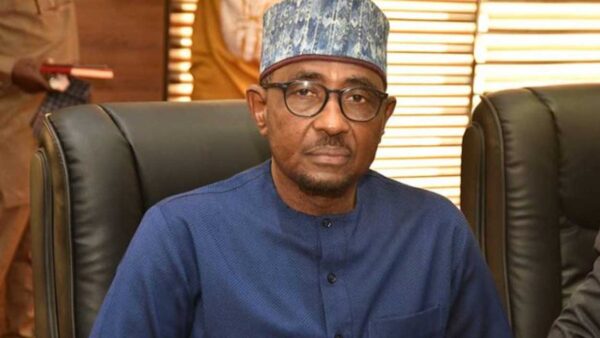
The former Chief Executive Officer of the Nigerian Midstream and Downstream Petroleum Regulatory Authority (NMDPRA), Farouk Ahmed, has called for effective and efficient regulation of Nigeria’s downstream petroleum sector amid ongoing reforms and changing global market dynamics.
Mr Ahmed, who resigned last year after corruption and abuse-of-office allegations levelled against him by Aliko Dangote, President and Chief Executive of the Dangote Group, made the call while delivering a goodwill message at the celebration of 20 years of OTL Africa Downstream Energy Week in Lagos.
“My four decades of experience have reinforced one enduring lesson: that is, effective regulation cannot operate in isolation from the industry it serves. Good regulation rests on sound policy, credible data, professional competence, meaningful stakeholder consultation, transparency and a clear-eyed understanding of market realities,” he said.
The appearance marks the first time Mr Ahmed has spoken publicly at an industry event since leaving the regulatory agency. He was also presented with an award of special recognition for his role in the growth and success of OTL Africa Energy Week at the gala.
Mr Dangote had accused the former NMDPRA chief of economic sabotage, alleging that the regulator’s policies undermined domestic refining in Nigeria.
He specifically accused the NMDPRA leadership of colluding with international traders and petroleum importers to frustrate local refining by continuing to issue import licences for petroleum products.


Mr Dangote also questioned Mr Ahmed’s sources of wealth, alleging that four of his children attended secondary schools in Switzerland at a combined cost of several million dollars. He argued that the expenditure raised questions about possible conflicts of interest and the integrity of regulatory oversight in the downstream petroleum sector.
Mr Dangote further alleged that Mr Ahmed spent more than $5 million on his children’s secondary education in Switzerland. He identified the children and their schools as Faisal Farouk of Montreux School; Farouk Jr. of Aiglon College; Ashraf Farouk of Institut Le Rosey; and Farhana Farouk of La Garenne International School. According to Mr Dangote, each child spent six years at their respective institutions.
In December last year, Mr Dangote petitioned the Independent Corrupt Practices and Other Related Offences Commission (ICPC) through his lawyer, accusing Mr Ahmed of corruption, abuse of office and economic sabotage. Mr Ahmed has denied any wrongdoing.
The petition followed a public dispute between both men over petroleum importation policies implemented under Mr Ahmed’s leadership at the NMDPRA.
Mr Dangote maintained that the policies undermined Nigeria’s domestic refining capacity, particularly the operations of his multi-billion-dollar refinery.
However, Mr Ahmed had argued that petroleum supply in Nigeria should not be monopolised and that import permits should remain accessible to other market players to promote competition.
Against the backdrop of the allegations and controversy, Mr Ahmed eventually resigned from the NMDPRA.
Regulation and industry transformation
In his remarks at the OTL Africa event, Mr Ahmed argued that responsible operators must recognise that regulation, when properly designed, consistently applied, and fairly enforced, provides the certainty, confidence, and stability required for investment, competition, and sustainable growth.
“This is why platforms such as OTL are important. They help bridge the gap between regulatory objectives and commercial realities. They encourage constructive dialogue, promote mutual understanding, and create opportunities for stakeholders to move beyond competing interests towards common solutions,” he said.
He said he attended the occasion with the perspective of a professional who has devoted more than four decades to petroleum regulation and industry development, including his experience as the NMDPRA’s pioneer Chief Executive.
From that perspective, Mr Ahmed said institutions and platforms that endure for two decades do so because they address genuine needs, deliver sustained value and remain responsive to changing demands.
“OTL Africa has demonstrated these qualities. Your Excellencies, Ladies and Gentlemen, twenty years is more than a milestone; it is a testament to vision, resilience, consistency, and the power of partnership,” he said.
Over the years, he noted, OTL has provided a platform for regulators, operators, investors, policymakers and other stakeholders to exchange ideas, examine emerging challenges, share experiences and collectively seek solutions to issues confronting the industry.
He said the importance of such a platform could not be overstated, given the strategic role of the petroleum and energy industries in economic development.
According to him, the downstream sector affects virtually every aspect of economic life, from transportation and manufacturing to power generation, agriculture, trade and household welfare. Its efficiency, stability and sustainability, he added, have direct implications for national development and people’s quality of life.
Africa’s downstream industry at a turning point
Mr Ahmed said Africa’s downstream petroleum industry was at a defining point of transformation, requiring coordinated and decisive action from governments and industry stakeholders.
He identified energy security, infrastructure deficits, financing constraints, product quality, supply-chain efficiency, market integration, environmental sustainability and the changing global energy landscape as some of the critical issues confronting the industry.
While describing these challenges as significant, he said they also presented considerable opportunities for Africa.
The continent, he argued, has the potential to develop a more integrated, competitive, efficient and resilient downstream energy market.
Realising this potential, he said, would require stronger regional cooperation, investment in storage and distribution infrastructure, modern refining capacity, appropriate technology, transparent market practices and regulatory frameworks that encourage investment while protecting consumers and the public interest.
He also emphasised the need to invest in human capital, noting that the industry’s future would depend not only on infrastructure and capital but also on the competence, integrity and innovative capacity of the professionals who operate and regulate it.
ALSO READ: Nigerian petroleum agency introduces 6 regulations for midstream, downstream sectors
Mr Ahmed urged OTL to evolve beyond a conference and exhibition platform into a stronger catalyst for practical industry solutions, strategic partnerships, investment opportunities and measurable outcomes.
He said discussions at the event should translate into action, partnerships should develop into projects, and ideas generated should contribute to tangible improvements across Africa’s energy value chain.
Institutional continuity and future of the industry
The former regulator also emphasised the importance of institutional continuity, calling for the preservation and transfer of industry knowledge and experience to younger professionals.
He said the experience accumulated over decades must be deliberately shared to prepare the next generation of regulators, entrepreneurs, engineers and energy leaders to address emerging challenges with fresh strategic thinking.
As OTL marked its 20th anniversary, Mr Ahmed urged industry stakeholders to look beyond celebrating past achievements and renew their commitment to the sector’s future.
He called on regulators to strengthen their commitment to fairness, transparency and predictable policies; operators to pursue efficiency, innovation and responsible business practices; investors to provide the capital and long-term commitment required for sustainable development; and policymakers to improve the business environment.
“Above all, let us recognise that Africa’s energy future cannot be built by regulators alone, by operators alone, or by investors alone. It must be built through partnership, trust, and a shared determination to succeed,” he said.
He expressed the hope that OTL’s next 20 years would deliver stronger partnerships, greater investment, smarter regulation, more efficient markets and broader, more reliable energy access for Africans.
“Let us not merely gather to discuss Africa’s energy future; let us unite—with purpose, discipline and urgency—to build it,” he said.
Discover more from Premium Times Nigeria
Subscribe to get the latest posts sent to your email.

Welcome back to TechCrunch Mobility, your hub for the future of transportation and now, more than ever, the role AI is playing in it. To get this in your inbox, sign up here for free — just click TechCrunch Mobility!
I’ve joked here and on the Equity and Autonocast podcasts that the autonomous vehicle industry feels a lot like 2016, at least in terms of the buzziness surrounding the sector.
But a recent conversation with Trucks VC partner Puneeth Meruva has me rethinking that comparison. There’s evidence that 2026 is even hotter — at least by certain measures — than those frothy dealmaking days of 2016 and 2017.
Trucks VC, which specializes in early-stage investing, has fielded pitches from 81 new autonomous vehicle startups so far in 2026 — two-thirds more than last year and enough to surpass the boom years of a decade ago. The VC firm argues in a new blog post that we’re in the midst of a second, even bigger AV wave fueled by technological breakthroughs. Yes, I’m talking about AI.

“For a long time AV companies were trying to go from what was AV 1.0 to AV 2.0, which is kind of this holy grail end-to-end architecture for AVs,” Meruva told me. “And I think the foundation models now provide a technical architecture that makes those end-to-end systems possible.”
These foundational models are particularly good at generalizing across different environments and scenarios, potentially making AVs cheaper and faster to deploy. The arrival of powerful open source models like Nvidia’s Alpamayo and Qwen’s general-purpose vision-language-action models has made it even easier for startups to get off the ground.
The barrier to entry is lower than ever before. Meruva said Trucks is consistently seeing startups deploy within a few months and with less than $1 million raised. (And while Meruva wouldn’t name names, the firm has invested in some of them.)
Of these 81 startups that pitched Trucks VC, I mistakenly assumed most would be applying their AV tech to construction, warehouse, agriculture, and mining. And yes, those were in the mix. But what surprised me was the growing number of startups pitching pure-play robotaxi businesses. And many are positioning themselves as direct competitors to Waymo.
As wild and galaxy brain-thinking as that may sound, Meruva thinks there is room for smaller players.
“In this world, smaller, more niche autonomy companies can compete — maybe they’re not competing with Waymo on a global scale, but maybe they’re competing in specific regions or specific types of routes,” he said.
And Meruva doesn’t see the pace flattening. He expects even more AV startups to pitch the firm next year.
Deals!

Regular readers of this newsletter know we’ve been closely following Slate Auto — breaking the original story on Jeff Bezos’ investment way back in April 2025. But the company it spun out of is what got our attention this week.
Re:Build, a Massachusetts-based manufacturing accelerator, raised $2.1 billion to “expand Re:Build’s capacity to manufacture hard tech products and launch new industrial startups.” The investment was led by General Catalyst and JPMorganChase’s Strategic Investment Group. Other investors weren’t disclosed.
The company, which was co-founded by Amazon’s former commercial CEO Jeff Wilke, has billed itself as “America’s answer to Shenzhen.”
Other deals …
Bedrock Robotics raised $600 million in a funding round that values the autonomous vehicle technology startup at $4.1 billion. CapitalG and Emergence Capital co-led the Series C round. New investors US Innovative Technology Fund (USIT), Bessemer Venture Partners, and Temasek participated in the round, alongside existing investors 8VC, Georgian, Valor Equity Partners, Xora, Eclipse, Perry Creek Capital, and Nvidia.
DoorDash has agreed to acquire Instacart for $17 billion. Meanwhile, DoorDash noted in its third-quarter earnings that it has, so far, only received a few hundred orders from AI agents.
PreScalar, a San Francisco-based startup developing software and testing infrastructure for factories, raised $7 million in seed funding co-led by Dynamo Ventures and BMW i Ventures, with participation from Blue Wire Capital, Uplift Ventures, and Antler. The startup was founded last year by a trio who had stints at Cruise, Google, Rivian, and Waymo.
Notable reads and other tidbits

Elroy Air, a startup developing autonomous heavy-cargo drones for defense, rapid response, and commercial logistics, hired Jeremy Hux as its CFO in preparation for going public.
Ford announced two new EV chargers that will allow its forthcoming Fathom pickup truck to serve as a battery capable of delivering power to the home or grid.
GM is embracing hybrids now. Times sure have changed! The U.S. automaker is also trying to move past the driver data-selling controversy from several years ago. GM agreed to a $220 million settlement with 36 states (its settlement with California and the Federal Trade Commission happened earlier) to settle allegations that it illegally sold private driving behavior and location information to data brokers.
Kodiak AI will deliver 75 self-driving trucks to freight company DTL Transport starting in 2028. It’s the company’s first binding commercial deal for driverless big rigs that will run on public highways.
Rivian reported its third-quarter earnings, and a few items stood out to us. For one, the new R2 has been successful enough for the company to raise its 2026 delivery guidance by a couple thousands vehicles. Rivian, which had previously expected to deliver between 65,000 and 70,000 EVs this year, bumped up that floor to 67,000. But here is another potentially lucrative development: The $5.8 billion joint venture between Rivian and Volkswagen Group is expanding to include AI assistants. No word yet on whether that means VW will invest even more money into Rivian.
Tesla turns to Turo to boost adoption of Full Self-Driving (Supervised).
Waymo and Toyota have locked in a manufacturing partnership, officially moving them past the “we’re just talking” phase. Toyota will manufacture AV-ready bZ4X vehicles — and integrate Waymo’s self-driving system — at its factory in Japan. The vehicles will be used for robotaxi services in Japan, the U.K., and other international markets. Importantly, the companies hinted that this could eventually lead to a licensing deal in which Waymo AV tech is in personally owned vehicles.
One more thing …
Last call for founders, investors, and builders based in and around the Boston area. The Founder Summit — a one-day event in Boston — will be held on November 4. And I will be there! This event is really geared toward startup founders, aspiring founders, and investors. Attendees can expect advice-driven talks from VCs and serial founders, plus lots of chances to network.
For my TechCrunch Mobility readers, here is a 30% discount on tickets. Click this link and use the code mobility30.
When you purchase through links in our articles, we may earn a small commission. This doesn’t affect our editorial independence.
-

 News4 days ago
Upwind raises $400M after walking away from Datadog acquisition offer
-
News3 days ago
GOVERNOR MUTFWANG OPENS 11TH JOS NATIONAL TRADE FAIR, TARGETS INDUSTRIAL GROWTH FOR PLATEAU
-
Business4 days ago
NCC seek stronger cyber resilience as AI intensifies cyber threats
-
News3 days ago
Granola crunches up a dictation feature to compete with Wispr