
Business
FCMB Group’s profit jumps 86% on strong top-line growth

FCMB Group anchored its 85.7 per cent leap in net profit for the nine months to September, compared to a year ago, on growth in gross earnings and cost efficiency in some of its key expenditure categories, the latest corporate results of the financial institution showed on Friday.
Revenue jumped by 21 per cent to ₦1 trillion. At the same time, net interest income rose to ₦534.2 billion from ₦350.8 billion, boosted by lower costs on interest-bearing liabilities such as deposits, borrowings and debt securities.
Net fee and commission income rose to ₦81.9 billion from ₦56.2 billion, jointly boosted by increased fee and commission income and reduced fee and commission expense.
The group’s digital business, comprising payments, lending and wealth, reported a 25.4 per cent surge in digital revenue and accounted for 14.2 per cent of gross earnings.
“We expect continued earnings momentum in the fourth quarter, supported by lower operating expenses following the full recognition of the 2026 AMCON levy within the nine months, alongside a seasonal uplift in digital lending and payments activity,” CEO Ladi Balogun said in a separate document on Friday.
“With nine-month ROE at 30 per cent, we expect full-year ROE to be materially above an earlier guidance of 25 per cent, providing a strong foundation for further profitable growth and sustained shareholder value creation,” he added.


Net trading income plunged by 83.4 per cent to ₦6.2 billion, taking a hit from a loss on bond trading income and a sharp decline in treasury bills trading income as well as in Eurobonds trading income.
Earnings performance was further boosted by other income, which swelled more than tenfold to ₦9.7 billion, thanks to a gain on the sale of property and equipment.
FCMB Group provisioned ₦76.8 billion to cover impaired assets whose recovery is doubtful, up from ₦57.1 billion a year earlier.
Profit before tax more than doubled to ₦272.6 billion, while profit after tax climbed to ₦232.9 billion from ₦125.5 billion.
READ ALSO: FCMB Group sustains performance, reports 99% growth in profit before tax to N157.3bn
On the balance sheet side, total assets rose 9.7 per cent to ₦8.4 trillion, driven by higher cash and cash equivalents and, in part, by increased investment securities.
FCMB Group is the top shareholder of Olatunde International Limited, an Akure-based cocoa exporter, holding 8 per cent of its share capital.
Discover more from Premium Times Nigeria
Subscribe to get the latest posts sent to your email.
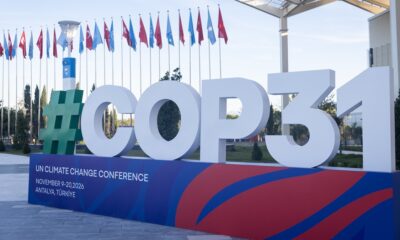


Nigeria is among more than 50 countries planning to develop nuclear power or expressing interest in building new reactors, as global nuclear electricity generation reached a record high in 2025, according to a new report by the International Energy Agency (IEA).
The report, World Energy Outlook 2026, published on Thursday amid contentious negotiations over fossil fuel phase-out and electrification at the 31st session of the United Nations Climate Change Conference (COP31) in Türkiye, provides an assessment of global energy trends and prospects across regions.
The 564-page report said global nuclear power generation reached a record high in 2025 and is expected to continue rising, with more than 420 gigawatts (GW) of nuclear capacity currently operational across over 30 countries.
As of July 2026, the report said nearly 90 GW of additional nuclear capacity was under construction worldwide, the highest level in more than 35 years. The projects are spread across 17 countries, largely China, India, South Korea, Russia, Egypt and Türkiye.
The report said the ongoing construction includes small modular reactors (SMRs) in Argentina, Canada, China and Russia. Construction began on eight nuclear reactors in the first half of 2026, marking one of the highest levels recorded in four decades.
According to the IEA, more than 50 countries now have plans or targets for nuclear power or have expressed interest in developing new reactors.
These countries include African countries such as Egypt, Kenya and Nigeria; European countries including Italy, Poland and Türkiye; Middle Eastern countries such as Jordan and Saudi Arabia; and Southeast Asian nations, including Indonesia, the Philippines, Thailand and Vietnam.
Many of these countries are particularly interested in small modular reactors (SMRs), the report noted.
It said China continues to operate one of the world’s largest nuclear construction programmes, while the United States has approved lifetime extensions for several reactors, allowing them to operate for up to 80 years.
In the European Union, the IEA said nuclear power is increasingly viewed as critical to achieving energy security and climate goals, while Japan is gradually restarting reactors.
Nuclear development is also advancing in countries entering the sector for the first time. Bangladesh, Egypt and Türkiye have projects at advanced stages of construction, Uzbekistan is beginning work on its first nuclear power plant, and Vietnam is progressing with plans for its first reactor.
International support for nuclear energy has also strengthened, with multilateral development banks increasingly involved in financing the sector. As of August 2026, 38 countries had endorsed a pledge to triple global nuclear capacity by 2050.
The IEA said the prevailing geopolitical and energy security landscape could further accelerate nuclear development, as countries seek to diversify their energy mix, reduce exposure to market volatility and ensure reliable electricity supply amid growing electrification.
The agency said the 2026 energy crisis had prompted several countries to reinforce or confirm nuclear power plans, extend the operating lifetimes of existing reactors and reconsider restrictions on nuclear development.
READ ALSO: IEA says Nigeria’s energy investment could double in five years
Emerging electricity demand from electrification, artificial intelligence (AI) and data centres is also strengthening the case for reliable, dispatchable energy sources such as nuclear power.
However, the report noted that electricity generation trends vary across regions, reflecting differences in energy resources, security priorities and existing infrastructure.
While renewable energy is expanding across most regions and nuclear power is gaining ground in an increasing number of markets, the pace and composition of the transition differ considerably.
China, India and Southeast Asia are expected to retain coal-heavy electricity systems through 2035, although their energy mixes are projected to diversify as electricity demand grows faster than in most other regions.
Coal is expected to remain the dominant source of electricity in these regions, but wind, solar, nuclear and natural gas are also projected to expand, gradually creating more diversified energy sources.
Discover more from Premium Times Nigeria
Subscribe to get the latest posts sent to your email.
-

 Business1 day ago
Elon Musk Launches X Money, Bringing Banking and Payments to Social Media Platform
-
Health1 day ago
JUTH Student Nurse Anaesthetist Dies After Collapsing During Football Match in Jos
-
News1 day ago
OPEP troops arrest 21-year-old suspected child trafficker, rescue five minors in Plateau
-
News1 day ago
Canadian Police Arrested ‘Lagos BigBoy’ Tosin Damilola Oyebade, 11 Others Over $4.5m Stolen Vehicle Network


