
News
Oyinlomo Quadre Makes History as First Women’s Singles Finalist at Destiny Da-Silva National Open


Oyinlomo Barakat Quadre has become the first Women’s Singles finalist at the inaugural Destiny Da-Silva National Open Tennis Championship in Lagos after delivering a commanding straight-set victory over Bright Emmanuel.
Sports247 reports that the former Oklahoma University student-athlete produced a dominant performance in the semi-finals, sweeping aside the 2025 Rainoil Open Women’s Singles runner-up 6-0, 6-0 to secure her place in Saturday’s championship match.
Quadre was in impressive form throughout the encounter, displaying her quality, consistency and control to leave Emmanuel with little opportunity to establish herself in the contest.
The emphatic scoreline underlines Quadre’s determination to make a strong statement at the maiden edition of the national championship as she moves within one victory of lifting the Women’s Singles title.
For Emmanuel, the defeat brings her campaign to an end after an impressive run to the semi-finals, but Quadre’s performance proved decisive in their meeting.
The Nigerian international’s progression also marks a significant moment in the history of the tournament, as she becomes the first player to book a place in the Women’s Singles final of the inaugural edition.
The championship final is scheduled for Saturday, 21 November 2026, at the tennis section of the National Stadium, Surulere, Lagos.
With a place in the history books already secured, Quadre will now turn her attention to the final, where she will have the opportunity to crown her impressive campaign with the inaugural Destiny Da-Silva National Open Women’s Singles title.






The Joint Health Sector Union (JOHESU), Federal Capital Territory Administration (FCTA) chapter, has issued a seven-day notice of industrial action to the FCT Administration over the failure to implement and pay arrears under the approved Professional Allowance Table (PAT).
The union comprises the Medical and Health Workers Union of Nigeria (MHWUN) and the Nigerian Union of Allied Health Professionals (NUAHP).
The notice, jointly signed by the union chairman in FCT, Ene Nwachinerem, and the Secretary, Henry Oshowo, was made available to reporters in Abuja on Thursday.
The union said the notice was necessitated by the administration’s failure to pay the allowance to healthcare workers under the Consolidated Health Salary Structure (CONHESS).
According to the union, the notice will expire at midnight on 23 November, after which the union may embark on a full-scale strike if its demands remain unmet.
JOHESU recalled that it had earlier written to the FCTA on 7 August, through the office of the Head of Service, protesting what it described as a “discriminatory disparity in the implementation of the PAT”.


It said that while healthcare workers under the Consolidated Medical Salary Structure (CONMESS) benefited from the implementation, their counterparts under CONHESS were neglected.
“Regrettably, three months after the union formally submitted its complaint, drawing the attention of the FCT Administration to this unjustified dichotomy and demanding immediate implementation, no meaningful action has been taken,” it said.
“The union considers this continued delay unacceptable, discriminatory, and contrary to the principles of fairness, equity, and industrial harmony in the health sector.”
The union said the ultimatum followed repeated engagements with the administration and aligned with its national body’s directive.
It appealed to the Minister of the FCT, Nyesom Wike, to urgently intervene by directing the immediate implementation of the PAT for all eligible CONHESS staff and the settlement of all accruing arrears.
While reiterating its commitment to constructive engagement, JOHESU warned that industrial peace could not be sustained under prolonged neglect and unequal treatment.
READ ALSO: JOHESU threatens fresh strike if implementation fails by April
“We wish to make it unequivocally clear that JOHESU FCTA cannot guarantee continued industrial harmony beyond the expiration of this seven-day notice if the outstanding issues are not satisfactorily addressed.
“Our members are therefore being prepared for the next line of action in accordance with the directives of the union,” it added.
(NAN)
Discover more from Premium Times Nigeria
Subscribe to get the latest posts sent to your email.
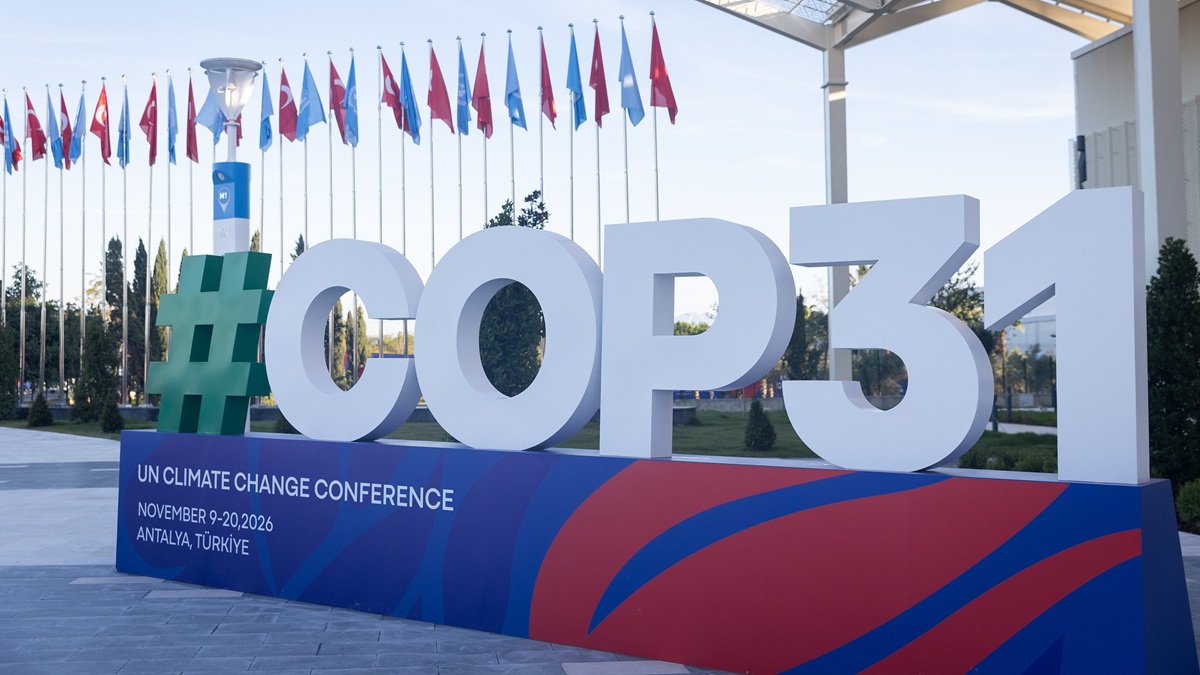
Civil society groups have expressed outrage over the omission of language on transitioning away from fossil fuels in the latest COP31 negotiation draft, published less than 48 hours before the climate talks conclude.
Environmental campaign group 350.org criticised the latest COP31 cover decision for removing all references to transitioning away from fossil fuels, despite calls from countries across negotiating blocs for a political outcome that advances roadmaps to move away from oil, coal and gas—the primary drivers of the climate crisis.
As negotiations enter their final hours, the group warned that efforts to phase out fossil fuels are being sidelined by the COP31 presidencies, climate finance commitments remain inadequate, and clean electrification risks being undermined by carbon capture and fossil fuel loopholes.
Key concerns
According to 350.org, the latest draft text raises several concerns, including Fossil fuel transition, Electrification target, Carbon capture, Adaptation finance baseline, Adaptation finance roadmap, and Climate finance accountability.
In the new draft text, PREMIUM TIMES observed that all references to transitioning away from fossil fuels, or roadmaps for the transition, have been removed.
Paragraph 36(d) places the 35 per cent electrification goal within the context of countries’ commitments to triple renewable energy capacity but does not explicitly require electricity to come from renewables.
While the goal references the need for financial support and enabling energy access, it lacks concrete measures to address these needs, the group noted.
Goals relating to carbon capture and storage, as well as other costly and unproven carbon removal technologies, appear in several paragraphs and could undermine the energy transition.
Paragraph 43 proposes a process for establishing a baseline for the goal of tripling adaptation finance—a step forward, but insufficient, as COP31 should already establish a clear baseline and milestones.
Paragraph 45 proposes launching an “Antalya-to-Addis Ababa Roadmap on Adaptation and Resilience Finance” to scale up adaptation funding. However, it no longer includes the $120 billion needed by 2035, which 350.org says developed countries should have committed to in Antalya.
Other finance-related paragraphs remain inadequate, with developed countries failing to demonstrate sufficient accountability for their commitments.
At COP28 in Dubai, one landmark decision was the adoption of the UAE Consensus, under which countries agreed to transition away from fossil fuels in energy systems in a just, orderly and equitable manner to achieve net zero by 2050.
The removal of references to the transition away from fossil fuels in the latest COP31 draft has sparked fresh concerns among observers, who argue that addressing the climate crisis requires a decisive shift away from fossil fuel dependence.
Reactions
Reacting to the draft text, Andreas Sieber, 350.org’s head of political strategy, described the situation as an “outrageous and utterly embarrassing” lack of leadership by the COP31 presidencies.
He said the presidencies had reduced one of the world’s defining challenges to an inconvenient paragraph they would rather delete, while leaving the door open for fossil fuels to masquerade as clean electrification.
Mr Sieber said Brazil, a country deeply dependent on oil, had the political courage to begin confronting the difficult question of how to move beyond fossil fuels last year.
He, however, criticised this year’s leadership, saying that with Minister Chris Bowen, observers had got a “spineless fossil fuel bro” while the Türkiye presidency stood by.
“If the COP31 presidencies want to keep some level of credibility, they should announce to take forward the global and national roadmaps in a presidency initiative similar to what the COP30 presidency did,” Mr Sieber said.
“Rich countries’ failure on finance is a historic disgrace. They expect developing countries to shoulder the costs of a global transition while refusing to provide the means to deliver it. This is not a failure of technical negotiations. It is a shameless abdication of political responsibility. If this is where COP31 lands, history will remember it as a summit where those entrusted with leadership chose the comfort of inaction over the courage to confront reality.”
Rukiya Khamis, 350.org East Africa lead, said more than 600 million people in Africa still lack access to electricity and need reliable, affordable renewable energy.
“But electrification that masquerades as green yet opens the door to more fossil fuel use is not what we came here for. Africa needs to electrify with renewables to keep people safe, lower bills, and create green jobs and industries,” she said.
Ms Khamis criticised wealthy countries for failing to provide sufficient climate finance, arguing that developing countries cannot build a sustainable future on inadequate funding.
READ ALSO: COP31: New Draft text calls for tripling adaptation finance by 2035
“We cannot build this future on crumbs thrown by rich polluting nations. Governments are spending around $1 trillion on fossil fuel subsidies. But at COP31 they have only pledged $50 million for adaptation, and the draft text delays agreeing on a baseline for tripling adaptation finance with yet another process. If that isn’t fixed, Ethiopia will be left to clean up the mess that rich nations, particularly European nations, made in Antalya by blocking climate finance.
“Developing countries and frontline communities don’t need another process; they need the money. COP31 must set the baseline now and deliver it. Anything less is a cruel injustice and an insult we will not accept.”
Fenton Lutunatabua, 350.org’s Pacific and Caribbean lead, said the direction of the negotiations amounted to a betrayal of Pacific nations, warning that the outcome must preserve the 1.5°C target and momentum towards transitioning away from fossil fuels.
“Australia calls itself part of the Pacific family, but the direction of the talks is already pointing to a betrayal of the Pacific. COP31 must keep 1.5°C and momentum on the transition away from fossil fuels alive.
“While overshooting 1.5°C is now inevitable, we absolutely can’t accept it as the norm. Every year above 1.5°C puts more pressure on Pacific ecosystems, infrastructure and lives. Yet world leaders are ignoring our reality and showing an outrageous lack of political will on phasing out fossil fuels.”
Mr Lutunatabua said the region cannot rely on costly, unproven technologies such as carbon capture to address the climate crisis.
“The science is clear: ending coal, oil and gas now is the only way to limit overshoot.”
Discover more from Premium Times Nigeria
Subscribe to get the latest posts sent to your email.
-
News3 days ago
2027: Tinubu a failure, shouldn't seek second term – Atiku
-

 Business11 hours ago
Elon Musk Launches X Money, Bringing Banking and Payments to Social Media Platform
-
News3 days ago
2027: 'You abandoned Plateau when they were dying’ – Atiku blasts Tinubu over forgiveness plea in Jos
-
News3 days ago
79% of local providers ready for Nigeria’s sovereign cloud, NITDA finds – Technology Times


