Business
FCMB Group’s pretax profit rises 103% to N272.8bn in nine months


FCMB Group Plc reported pretax profit of N272.8 billion for the nine months ended 30 September, up 103 per cent from N134.5 billion a year earlier, driven by improved interest margins and a lower cost-to-income ratio.
Annualised return on average equity rose to 30.1 per cent from 22.4 per cent a year earlier, while annualised return on average assets rose to 3.9 per cent from 2.3 per cent.
Gross earnings for the same nine-month period rose 21 per cent from a year earlier to N1 trillion, while after-tax profit increased 85.7 per cent to N232.9 billion from N125.5 billion. Annualised earnings per share rose to N4.59, up 15 per cent from N3.99 for full-year 2025, despite the expanded share base post-recapitalisation.
The group’s unaudited results include the audited results of its Nigerian banking subsidiary – First City Monument Bank Limited.
Ladi Balogun, FCMB Group’s chief executive officer, said he expects fourth-quarter earnings to benefit from a seasonal increase in digital lending and payments and lower operating expenses after the group recognised the full 2026 Asset Management Corporation of Nigeria levy in the first nine months.
“With nine-month RoE at 30%, we expect full-year RoE to be materially above an earlier guidance of 25%, providing a strong foundation for further profitable growth and sustained shareholder value creation,” Mr Balogun said.


FCMB Group’s interest income rose 23.4 per cent, while interest expense fell 3 per cent as low-cost deposits made up a larger share of customer deposits. Net interest income rose 52.3 per cent to N534.2 billion from N350.8 billion a year earlier, and net interest margin rose to 12.3 per cent from 10.1 per cent. Operating expenses rose 12.5 per cent to N268.9 billion from N239 billion a year earlier, while the cost-to-income ratio fell to 43.5 per cent from 55.5 per cent.
The banking group’s pretax profit rose 94 per cent to N216.9 billion, accounting for 80 per cent of group pretax profit. Pretax profit from the non-banking businesses and holding company rose 147 per cent to N55.9 billion, accounting for the remaining 20 per cent. Revenue from digital payments, lending and wealth services rose to ₦142.5 billion from ₦113.6 billion a year earlier and accounted for 14.2 per cent of gross earnings.
The Group’s total assets rose 9.7 per cent from December 2025 to ₦8.37 trillion at the end of September 2026. Over the same period, loans and advances to customers fell 8.3 per cent from ₦2.37 trillion to ₦2.17 trillion. Corporate clients repaid loans as cash flows improved, and they accessed lower-cost funding by issuing commercial paper and bonds. Those repayments more than offset growth in the Group’s higher-yielding retail and SME loan portfolio originated through digital channels, which grew by more than 20 per cent to ₦315 billion.
Total customer deposits increased by 7.1 per cent as of September 30, 2026, from December 2025. Current and savings account balances grew 24.4 per cent to ₦3.60 trillion, while the share of low-cost deposits rose to 76 per cent from 65.4 per cent in December 2025.
READ ALSO: FG grants drug manufacturers N24bn tax waivers to boost local production
Group net impairment losses rose to ₦76.8 billion from ₦57.1 billion a year earlier, reflecting the Stage 2 clean-up undertaken in Q2. The group recorded a net impairment reversal of ₦9 billion in the third quarter. The Nigerian bank’s IFRS non-performing loan ratio rose to 6.4 per cent from 4.7 per cent in June 2026, reflecting a 13 per cent reduction in the Nigerian bank’s loan book in the third quarter and new Stage 3 classifications.
Total equity grew 47.8 per cent to ₦1.24 trillion at the end of September 2026 from ₦836.4 billion at the end of December 2025. Retained earnings and a first-quarter capital injection of about ₦227 billion supported the increase. The capital adequacy ratio stood at 24.6 per cent at the end of September, providing resources to support growth.
Assets under management increased by 23 per cent to₦2.1 trillion at the end of September 2026 from ₦1.7 trillion at the end of December 2025, supported by market share gains at FCMB Pensions and FCMB Asset Management.
Discover more from Premium Times Nigeria
Subscribe to get the latest posts sent to your email.


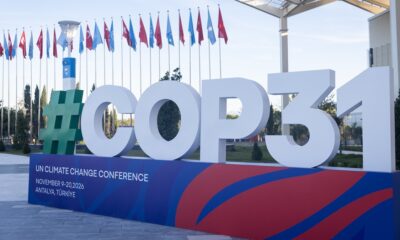





The Nigerian government delegation was conspicuously absent at the closing plenary of the controversial United Nations climate summit (COP31) in Türkiye, where countries expressed frustration over the failure to reach consensus on key climate issues.
PREMIUM TIMES earlier reported that parties at the United Nations climate change talks in Türkiye failed to reach consensus amid deep divisions over fossil fuel phase-out, just transition, climate finance and other contentious issues.
COP31 President Murat Kurum confirmed during the closing plenary on Sunday that the final draft agreement, the Antalya Pact, would not be approved, despite negotiations being extended by nearly 48 hours beyond the officially scheduled closing date of 20 November.
The development made COP31 the longest climate summit in the convention’s history and arguably one of the most criticised in recent years.
Amid the disappointment, parties and negotiating blocs took turns expressing their positions to the COP president. The frustration and dissatisfaction with the outcome of more than two weeks of negotiations were evident in the tone of representatives who addressed the plenary.
However, despite the controversy surrounding the COP31 outcome, Nigeria’s head of delegation, ministers, and other representatives were absent, even as a few African countries spoke, despite Nigeria having one of the largest delegations at this year’s COP.
PREMIUM TIMES reported that Nigeria ranked third among countries with the highest number of registered participants at this year’s COP, with 1,506 delegates, according to provisional figures released for the summit.
Of this number, 573 participants were registered under the “Party” badge category, while 933 received “Party Overflow” badges.
Nigeria’s delegation to UNFCCC COP31 is usually led by the Director-General of the Nigeria Climate Change Council (NCCC), Teniola Majekodunmi. This year, however, it remains unclear how many of the registered participants were sponsored by the Nigerian government. The council has yet to provide a comprehensive breakdown of participants whose trips were funded with public resources.
At the conference venue, PREMIUM TIMES gathered from some associates of the NCCC director-general that she had left the COP venue midweek.
The lack of disclosure raises concerns about transparency and accountability in the management of Nigeria’s participation in international climate negotiations.
It also limits public understanding of who represents the country in various negotiating groups and technical sessions, as well as who is responsible for advancing Nigeria’s positions on critical climate issues.
Some observers have also expressed concerns that Nigeria’s participation in these conferences sometimes goes beyond diplomatic engagement, with some registered participants allegedly treating the meetings as opportunities for international travel rather than meaningful negotiations.
They argue that inadequate technical knowledge, negotiating experience and understanding of diplomatic processes among some participants could undermine Nigeria’s ability to secure favourable outcomes from the annual climate negotiations.
One of Nigeria’s notable appearances at the summit was the delivery of its national statement by Environment Minister Balarabe Lawal. PREMIUM TIMES reported that the government reaffirmed its commitment to advancing climate action, calling for stronger international cooperation and increased climate financing to accelerate the global response to climate change.
Nigeria reacts after deadlock
In a brief statement issued after the COP plenary ended on Sunday, Ms Majekodunmi said COP31’s failure to reach consensus on an overarching political outcome was disappointing and underscored the continuing challenges facing international climate cooperation.
She noted that the absence of a new political agreement did not diminish the urgency of climate action or invalidate the commitments already undertaken under the Paris Agreement.
“For Nigeria, our focus remains firmly on implementation. We will continue advancing our NDC 3.0, strengthening climate governance, mobilising investment and pursuing an orderly, just and nationally determined energy transition,” she said.
Ms Majekodunmi said the discussions in Antalya reinforced an important lesson: climate ambition must be matched by credible financing, practical implementation pathways and recognition of different national circumstances.
She added that Nigeria remained firmly committed to multilateralism and would continue working constructively with African partners and the wider international community to advance consensus and accelerate climate action.
“Ultimately, Nigeria’s climate progress will be measured not only by emissions reduced, but by jobs created, businesses developed, energy access expanded and livelihoods improved,” she said.
PREMIUM TIMES contacted the DG on Sunday to inquire why she was absent from the closing plenary, why Nigeria had no representative who spoke at the session, and why she left the conference midweek. In what has become her usual practice, she asked a third party to contact our reporter with a response.
A representative of the council, who identified herself as Jummai Vandu, said she had been directed to clarify Nigeria’s position regarding the COP31 closing plenary in Antalya.
She said Nigeria’s national position was fully presented through the African Group of Negotiators (AGN), which serves as Africa’s unified negotiating voice.
According to her, under UNFCCC plenary procedures, countries are welcome to speak in their national capacity, but doing so is entirely optional and not mandatory. In practice, she said, member states routinely align themselves with the AGN.
“Chair’s statement during overtime closing sessions to manage tight time constraints, avoid repetition, and project a unified continental front that maximises collective leverage on key issues. Those African nations that took the floor individually simply chose to add specific national emphasis to the shared regional position already delivered by the AGN,” she said.
She explained that the DG actively championed Nigeria’s core priorities across high-level sessions and bilateral engagements, ensuring the country’s interests were firmly embedded in the final African position.
However, she did not explain why the DG left the conference venue midweek.
READ ALSO: UN chief blames fossil fuel interests for climate inaction as COP31 ends without consensus
COP31 priorities
COP31 was expected to offer countries an important opportunity to advance negotiations on practical measures to address gaps in climate action implementation.
Alongside formal negotiations, the Global Climate Action Agenda was expected to provide opportunities to boost electrification, improve access to climate finance, and cut waste and emissions of super-pollutants such as methane.
PREMIUM TIMES reported that the African Group of Negotiators (AGN), which includes Nigeria, said it would push for increased climate finance, including an ambitious replenishment of the Green Climate Fund (GCF), among other priorities.
The group said securing adequate and predictable climate finance, particularly grant-based and concessional funding, would be central to Africa’s negotiating priorities at the conference.
But the group was not satisfied with the COP outcome. It made its position clear at the closing plenary.
Discover more from Premium Times Nigeria
Subscribe to get the latest posts sent to your email.
-

 Events21 hours ago
Plateau Govt, CAN Strengthen Unity Through 2026 Christmas Carols and Praise Festival
-
Business3 days ago
FCMB Group’s profit jumps 86% on strong top-line growth
-
Health3 days ago
AMR: Pharmacist urges Nigeria to implement policies to curb drug resistance
-
Health3 days ago
AMR Week: Artists, health experts use arts to raise awareness about drug resistance