News
No agenda, no rush, no leaving San Francisco: Benchmark’s partners on investing in a frenzied market
Published
3 weeks agoon
The players sometimes change. I sat down with four of Benchmark’s partners three years ago, and three of those individuals are no longer with the firm. The capital commitments have changed, too. This summer, Benchmark announced $2 billion across two funds, marking only the second time in its 31-year history that it has veered from raising a far smaller vehicle.
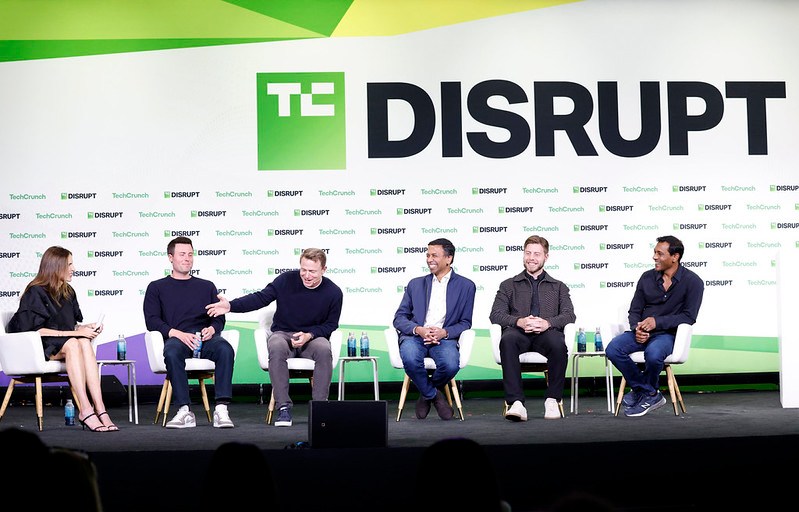
But at this week’s TechCrunch Disrupt, the venture firm’s five partners convincingly portrayed a close-knit team that’s not about to put the pedal to the metal, even as many of their rivals do exactly that. The world may be speeding up, but they’re investing at the pace Benchmark always has: just two or three new bets per year per partner. The world is drowning in information, yet their Monday partner meetings still have no agenda. And while economic indicators point to trouble ahead, they don’t seem too bothered, seeing many of the warning signs as products of X-fueled hysteria.
Here’s what Benchmark’s five general partners — gathered together on our stage — had to say at the show. Some of the comments below have been edited for length and clarity; you can watch the full interview at the end of the article.
Benchmark has evolved in some ways, including a bigger core fund and a new growth fund. How do you think about adapting without losing what makes you Benchmark?
Peter Fenton: The craft that hasn’t changed is the core fund: working closely with founders at the beginning. It’s usually a 10-to-15-year commitment, [working] shoulder to shoulder, and that doesn’t scale. There’s also been inflation. We held the core fund at $500 million for 20 years, and it has just inflated to be consistent with the existing economy, which we hadn’t done and that was probably a tactical error on our part.
[As for the growth fund] it’s an expansion of our mandate. In some ways, we get permission from the ecosystem to do more than just the core early-stage business. [Not having this previously] was a fork in our eye. A number of opportunities that came to Benchmark would have returned somewhere between 10 and 1,000x to Benchmark, and we were constricted by our early-stage focus.
Are you thinking to make handful of bets with that $1.25 billion growth fund?
Fenton: We all have different answers, which is the beauty of a partnership. I’d love for us to have, as that great J.P. Morgan paper puts it, the agony and ecstasy of a concentrated portfolio. If the fund is successful, one or two investments will generate 90% of the returns. So I think it’s four to six, maybe seven to eight.
Ev, you joined Benchmark late last year. You’ve worked at Founders Fund, Bond, and Kleiner Perkins. How does Benchmark differ?
Ev Randall: Every firm is ultimately a collection of the people within the firm and how they work together. Some are very hierarchical, with a 50- or 60-person investment team and investment processes that are federated into product groups. And then you have small partnerships. Very early in my career, I was drawn to small partnerships because they allow a higher level of throughput and fidelity in your conversations, where you don’t feel like you’re making decisions through some Byzantine corporate structure. You’re going out on the field together, like a sports team.
And then the other piece is: You have to find your people, You have to find people who you not only like but admire. With Benchmark, with the current crop of GPs, it was obvious that everyone liked each other and got along, but it went deeper than that. It’s a group that admires each other and learns from each other. That mix of attributes is very rare, and when I saw it, I immediately wanted to join, and I think Jack felt the same way also as a newcomer.
Jack, you joined in February, but it was just a year ago that you raised a second, $275 million fund for your own firm in what you told the Wall Street Journal took one week. You have a hugely popular podcast. Why join Benchmark?
Jack Altman: It’s funny. I did the podcast with these guys at the start of this year, and during that podcast, obviously we talked about the commitment to being a small fund, but more than that, what I heard was that they want to be the first people who founders call, they want to be concentrated, and they just care. So much in this industry gets tied up in money and status, and what I felt from the Benchmark team then, and ten times more as I’ve gotten to know them so well, is it’s a group that really cares about founders and helping companies. And I did enjoy being an individual investor. . .but in a market this crazy, I don’t know how I’d feel, figuring it out on my own. Having a group of people who are so smart and focused and driven to learn it with and from has been awesome. There’s no better place to learn.
I’m told you meet on Mondays with no agenda.
Chethan Puttagunta: Jack tried to make an agenda. [Laughs.]
Altman: I’ve got an agenda for next Monday.
Eric Vishria: It’s weirdly arbitrary, honestly. It’s an ongoing conversation. In a time of rapid change, you’re trying to figure out what’s becoming possible that wasn’t possible six months ago, and who’s bending light. We talk about what companies we’re meeting, what piqued our interest and why, what we’re seeing in board meetings. You can try to systematize it, but one of the beauties of five people is you don’t have to. It’s a decades-long conversation that only works if you’re small and actually enjoy spending time together. After this session, we’re having dinner with one of the very few entrepreneurs who has built a multi-hundred-billion-dollar company, someone we’re not invested in, just to stretch our thinking.
Puttagunta: Part of not having an agenda is you need space to be reactive. If a founder needs help landing an executive or a strategic partnership, the five of us can be at their disposal.
You’re an equal partnership. Can one person put the kibosh on a deal?
Puttagunta: Nobody knows. We don’t have rules around it.
Altman: I actually don’t know. I was waiting to see what someone else [said].
It’s never happened?
Altman: Because the firm is structured around a low volume of deals, you don’t actually want to have all of this rigor. If we invested in 100 or 200 companies a year, you’d want a CRM and a formal voting process. Because it’s so rare, the lack of structure is a huge asset.
Fenton: One of the differentiating aspects of our brand is we’re not so cocksure to come in and say ‘winner’ or ‘loser.’ It’s not Shark Tank. We sort of feel awe, for lack of a better term, at all the possibilities . . . The occasional case where someone comes in who’s polarizing — the entrepreneurs feel that. If someone in the room doesn’t like you, we’re not a great partner.
Companies are growing faster than ever. I’d think it’s easier to feel you’re missing out on opportunities if you don’t invest with greater frequency. Have you picked up the pace?
Puttagunta: I think the pace is consistent. I think part of the reality of venture capital in our business is that we are not going to be part of every successful company, and that’s okay. There are companies that we identify, we find that the entrepreneur has some great strength, and we want to amplify that strength. And it’s our job to find a way to work with that person. It kind of doesn’t matter how much capital they want to raise, or what structure, or where they are. You just have to work through all that stuff.
One thing that founders are interested in as a trend is VCs backing competing companies. Has that VC-founder pact changed because companies are growing so quickly and expanding into one another’s territory?
Vishria: One of the things we have an ethos around is, we are making a commitment to an entrepreneur, and through that commitment, we’re saying we’re going to work with you in this thing, and whatever that thing is, and we are working closely enough where it matters, and it should matter to them, and as it matters to us. The harsh reality of this world is every company is evolving very quickly, and so you do have companies that will naturally evolve from one thing to another, or pivot or change, and you are going to get conflicts. That’s just the reality of the of the kind of current dynamic. . .
Of course, we’re maintaining confidentiality and doing those things and fortunate to not end up in in that type of insane direct conflict [as happened recently with rival companies Factory and Cognition]. . . that commitment of exclusivity in that area is really important. But things are evolving. There’s no doubt about that.
Puttagunta: And I think people are ultra ambitious in this AI era. As the cost of coding new products effectively goes to zero, founders see a surface area and they want to attack the surface area, and so I think it’s probably going to happen more, where you start to run into each other. But there’s a way to be there’s a way to maintain that relationship and be respectful.
Jack, have you made an investment for Benchmark yet, and if so, did you feel a lot of pressure with that first deal?
Altman: I have, a few, and some are recent, so not all are disclosed. My background was software, but since joining, I’ve done chips, robotics and infra. Someone asked me when I joined, ‘How was the onboarding?’ And I was like, ‘It was perfect. There was no onboarding.’ Either Chethan or Eric told me early on, ‘Hey, you’re going to feel tight on your first one. Don’t. You’re going to make many investments while you’re here. This whole game includes crazy power laws. The odds of it being your first are low.’ . . . I trusted they understood what my shape was as a person, as an investor, and I was going to just try to stay as consistent to that as I could.
It really is a group dynamic on a lot of these. The investments I’ve made, I don’t think we would have won them if I didn’t have my partners. I don’t know that I would have been able to know how to get to a yes without them.
Eric, the AI chip company Cerebras was an unusual bet for Benchmark at the time it was made. What persuaded you to move forward with it?
Vishria: We invested in the spring of 2016, in the first round. We hadn’t made a hardware investment in 10 years. The founders seemed good, they had a very simple thesis, and I didn’t understand most of the rest. On the Sunday night before they came back to pitch the partnership, Peter told me it went against everything he’d learned in venture. Then, after the Monday pitch, he had flipped. A big part of it is understanding each other’s instincts. That began a journey of lots of ups and downs and many potential deaths of the company along the way, and it’s far from over. The romanticism of falling in love with a founder and an idea is why we do this.
Fenton: Andrew and his co-founders are heretics. What they were saying was unorthodox, and you see it today, with people dumping on the stock because it’s polarizing. That’s exactly where we have to be as investors. If it’s consensus, why is there a startup?
On that point, Cerebras priced at $185 when it went public earlier this year, jumped to $350, and is back near $185. Why?
Vishria: About six weeks before the IPO, I showed the company stock chart after stock chart: CoreWeave, Datadog, DoorDash, Amazon. Peak to trough, it’s insane how many of them move 500% in a year, up and down. So who knows? You control what you can control, and you update the public markets every 12 weeks. Being a public company takes a stomach of titanium, and the employees have to understand that.
Your former colleague, Bill Gurley, long argued that the traditional IPO process is broken, that that IPO ‘pop’ benefits bankers and their clients — not the company. He’s a proponent of direct listings. Does anyone here agree with that thinking?
Vishria: I think maybe of this group, I’m the only one who’s worked on a direct listing. It can for sure make sense. I think the reality is for this crop of AI companies, it’s going to be unlikely because they need capital, and they need a lot of capital. At the end of the day, IPOs raise money. Cerebras raised $6 billion. That matters, so I think it’s probably unlikely for this crop just because most of them need capital.
Could a severe correction be coming? A lot of AI companies have exhausted their free cash flow. It’s very expensive for companies to borrow. We also just saw the first AI bankruptcy with Character AI.
Randall: Macro is always a fool’s errand to predict with precision. What has changed most since I started investing is the information environment. Character.AI was the leftover corpse of a company whose founder and team were acqui-hired into Google a year and a half ago, and it was already sold for $2.3 billion; its Chapter 11 being read as an AI chill effect shows that the info environment for public equities in tech has been drawn so much into this, like, hyperactive X echo chamber.
If you look at the market today and you see where CoreWeave and Nebius and all these things are trading, those numbers are are due to the ARR figures of two private companies that will probably be public in the next 12 months . . .There’s so much capex and there’s so much investment that runs through the estimated and projected health of OpenAI and Anthropic.
Our companies see so much demand that they can’t get enough compute to serve customers who are willing to pay them at good gross margins. There’s nothing inherently unhealthy about the AI ecosystem. What’s unhealthy is the volatility from data points that are often untrue or exaggerated for clicks. I do think OpenAI and Anthropic going public would be healthy, so the market stops swinging 5% to 10% every time an anonymous account updates an estimate.
Those two companies have also really pulled the center of gravity back to San Francisco. Do you have to be in San Francisco to be a founder now? Are you interested in companies outside of California?
Altman: I don’t know that you have to be here as a founder, but I think it is right now by far the easiest place to get talent, capital, and customers. Probably everyone [on the team] works with companies that are not in San Francisco, but we’re also here in San Francisco every day, so I wouldn’t say you have to, but I’d say: strong bias for our particular setup.
Fenton: Historically, 90%-plus percent of the capital returns have come from companies founded here. There are beautiful stories outside that dense probability distribution — Shopify is a great example, Ramp — but the ecosystem effect that occurs when you have a successful company and that leads to a background of great executives [and] ambitious people, the bar of success gets raised. I don’t think it has systemically happened anywhere quite like here.
Randall: I’m trying to think of a non-SF based company that I’ve met with in the last 18 months that wasn’t actively saying that they were spending time in San Francisco. They’ve either opening an office in San Francisco, they’re spending half of their time in San Francisco, or they’re planning to move out to San Francisco. Iron sharpens iron. If you want to be around peers who are going to make you the best version of yourself, and it’s hard to think of a city that does that better than San Francisco in the current era that we’re in now with AI here.
When you purchase through links in our articles, we may earn a small commission. This doesn’t affect our editorial independence.
You may like
-
LIVE UPDATE: TenTrade brings financial market experts together to nurture next generation of traders
-
CrowdStrike to shell out nearly $500M for 2 AI security startups as the market for securing agents takes off
-
NCC flags significant market power in Nigeria mobile voice market – Technology Times
-
Jio shares surge 21% in market debut after blockbuster India IPO
News
“I SAW CHAMPIONS IN MOROCCO, TONIGHT THE WORLD HAS SEEN THEM!” — SSA Adeboye Celebrates Flamingos’ Historic World Cup Victory
Published
1 hour agoon
November 8, 2026
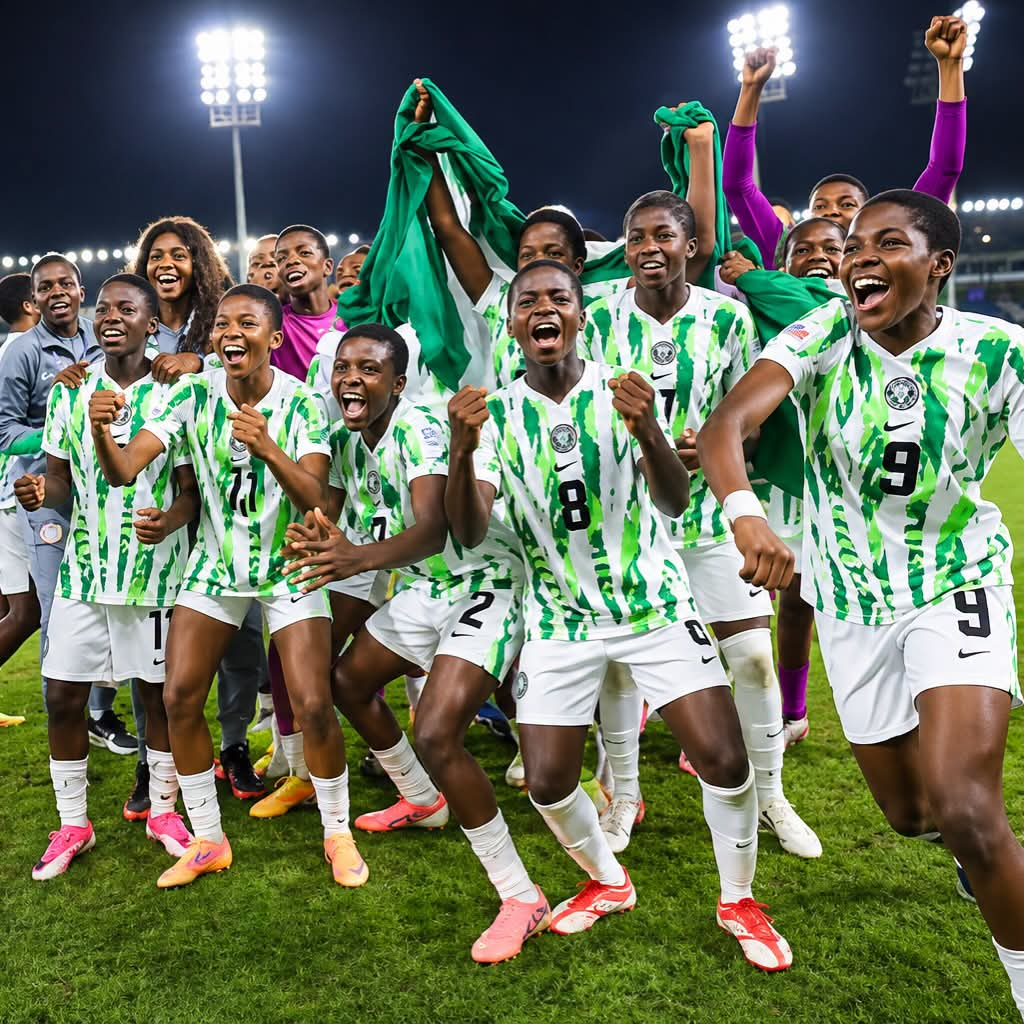
There are victories that bring celebrations, and there are victories that change the story of a nation. For Nigeria’s Flamingos, Saturday night’s triumph over Japan in Morocco belongs firmly to the latter.
And for the Senior Special Assistant to the President on Grassroots Sports Development, Hon. Adeyinka Anthony Adeboye, who travelled to Morocco to support the girls, the historic achievement carries a particularly personal meaning.
The Presidential aide was full of emotion following Nigeria’s 2-1 victory over Japan in the final of the 2026 FIFA U-17 Women’s World Cup in Rabat, a result that crowned the Flamingos Africa’s first champions in the history of the competition.
But rather than dwell solely on the trophy, Adeboye reflected on a moment away from the cameras and the cheering crowds: his encounter with the players in their dressing room during the tournament.
“I remember looking at those girls in Morocco and seeing young Nigerians who were not afraid of anybody. I spoke to them as a father would speak to his daughters. I encouraged them, and I could feel how badly they wanted to make this country proud. Tonight, I am not just celebrating a trophy. I am celebrating those girls and the courage they carried onto that pitch.”
The Flamingos’ journey to the title was anything but straightforward.
Beaten by Poland in their opening match, Hakeem Busari’s side could easily have allowed disappointment to define their campaign. Instead, they turned adversity into motivation, recording six consecutive victories and defeating Japan in a final decided by goals from Awawu Bashiru and Oluebube Umejiaku.
For Adeboye, the manner of the triumph was just as significant as the result.
“What impresses me most is not that they won every match after losing to Poland. It is that they refused to allow one bad day to destroy their dream. That is a lesson many adults can learn from these children. They fell, they stood up, and they kept going until the world had no choice but to recognise them.”
The SSA reserved special praise for Busari, whose handling of the squad he described as an important example of what can happen when young athletes receive the right guidance.
He also celebrated captain Azeezat Oduntan and her teammates, insisting that every member of the squad, whether on the pitch or on the bench, had contributed to a victory that would be remembered for generations.
Adeboye thanked President Bola Ahmed Tinubu for his commitment to sports development and acknowledged the efforts of the National Sports Commission, led by Mallam Shehu Dikko and Hon. Bukola Olopade, as well as the Nigeria Football Federation.
However, the Presidential aide said the greatest tribute Nigeria could pay its new world champions would be to ensure that thousands of other talented children are given similar opportunities.
“The question we must ask ourselves now is simple: how many girls like these are still playing on rough fields in our villages, without boots, without coaches and without anybody to notice them? Imagine what Nigeria could achieve if we deliberately searched for those children and gave them the same chance.”
He said the Flamingos’ success had given added significance to the National Grassroots Sports Development Summit scheduled for November 18–19, 2026, at the Banquet Hall, State House, Presidential Villa, Abuja.
According to him, the summit must help move Nigerian sports away from depending on occasional discoveries towards a system in which talent identification and development become continuous processes.
“We cannot keep waiting for exceptional children to find their own way to the top. We must create the roads that will take them there. That is the responsibility before us, and these girls have reminded us why it matters.”
Then came a final message that captured the personal satisfaction of a man who had watched the young Nigerians pursue their dream on Moroccan soil.
“To my daughters, the Flamingos, I say thank you. Thank you for the joy you have brought to our country. Thank you for proving that a Nigerian girl can stand before the world and refuse to be intimidated. When I saw you in Morocco, I saw champions in the making. Tonight, the whole world has seen what I saw.”
For Adeboye, the trophy will eventually find its place in Nigerian football history.
What must not be allowed to fade, he believes, is the lesson behind it: somewhere in Nigeria, another generation of champions is waiting for its opportunity.
Business
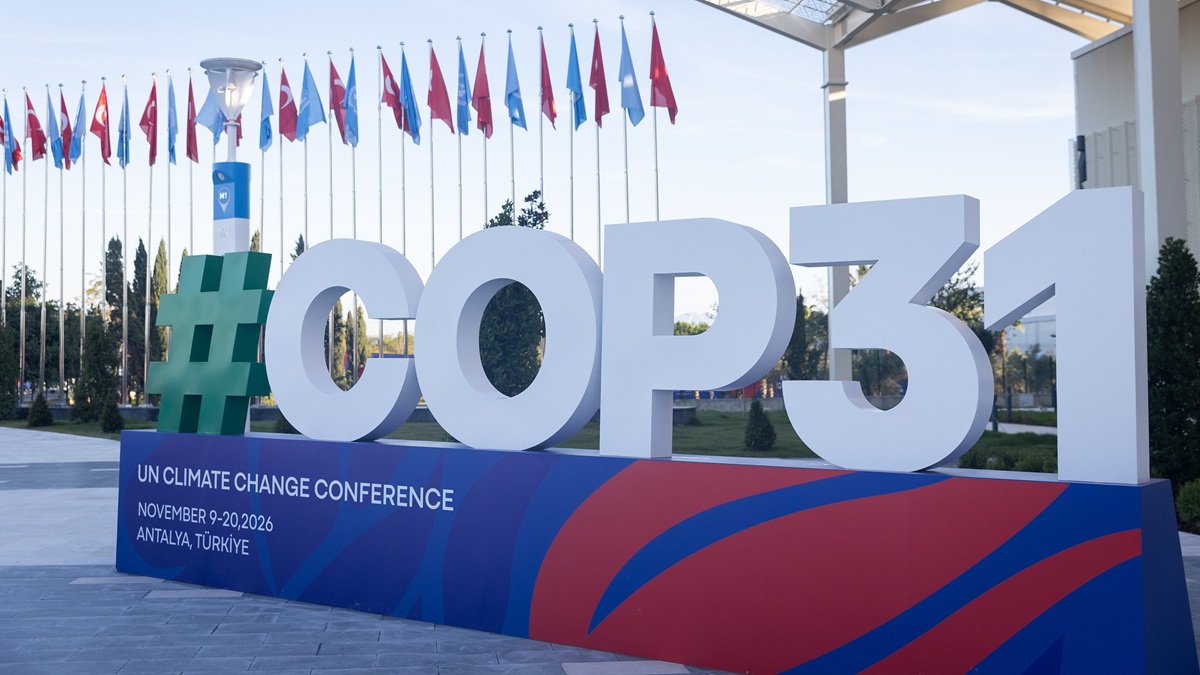
COP31: What Nigeria, other African countries will push for at UN climate summit
Published
2 hours agoon
November 8, 2026
As world leaders prepare to convene in Antalya, Türkiye, for the 31st session of the Conference of the Parties (COP31) to the United Nations Framework Convention on Climate Change (UNFCCC), the African Group of Negotiators (AGN) says it will push for increased climate finance, including an ambitious replenishment of the Green Climate Fund (GCF), among other priorities.
The group said securing adequate and predictable climate finance, particularly grant-based and concessional funding, would be central to Africa’s negotiating priorities at the conference.
This was disclosed by the AGN Chair, Nana Antwi-Boasiako, on the sidelines of the pre-COP31 meetings on Friday.
The AGN is a coalition of climate change negotiators representing all 54 African countries at the UNFCCC and other international environmental negotiations. Nigeria is a member of the group and will negotiate under its umbrella at COP31.
Nigeria’s delegation and technical support is expected to be led by the Nigeria Council on Climate Change Director General, Omotenioye Majekodunmi.
In a speech recorded and published on the AGN’s social media platforms ahead of the formal commencement of COP31, scheduled to hold from 9 to 20 November, Mr Antwi-Boasiako said African countries would seek stronger financial commitments to support the implementation of their climate targets and adaptation plans.
According to him, the continent has made considerable progress in establishing the structures needed to implement the Paris Agreement, but inadequate financing remains a major obstacle.
He cited progress in developing Nationally Determined Contributions (NDCs), carbon market mechanisms under Article 6 of the Paris Agreement, National Adaptation Plans and the Enhanced Transparency Framework.
However, he said many developing countries were struggling to implement their climate commitments because of financial constraints.
“All these issues are structures that are going to support implementation. The key question now is: Where is the money? Where is the financial ambition to help us implement those commitments that we are making as developing countries?” the AGN chair said.
He noted that the group had submitted proposals for agenda items on tripling adaptation finance and replenishing the Green Climate Fund, describing both as critical to advancing climate action across African countries.
He explained that the proposed agenda item on adaptation finance was intended to provide an opportunity to clarify and establish operational arrangements for implementing the decision reached at COP30 in Belém, Brazil, to triple adaptation finance.
The group also wants COP31 to support an ambitious replenishment of the Green Climate Fund next year, describing the facility as particularly important for financing climate action in African countries.
COP31: From consensus to action
COP31 is expected to focus on translating climate commitments into concrete action, with an emphasis on implementation.
The summit will operate under an unusual shared leadership arrangement, with Türkiye hosting the conference while Australia leads the negotiations. Its overarching slogan, “Where Dialogue Becomes Global Action”, reflects the ambition to move beyond climate pledges towards practical implementation.
Beyond the proposed agenda items, the African negotiating bloc is seeking to defend the existing financial obligations of developed countries under the Paris Agreement.
Mr Antwi-Boasiako said Africa was not opposed to expanding the contributor base for climate finance but insisted that such an arrangement must not be used to weaken the obligations of developed countries.
Citing Article 9 of the Paris Agreement, he explained that Article 9.1 establishes the obligation of developed-country parties to provide financial resources to support developing countries, while Article 9.2 provides for contributions from other countries that are in a position to do so.
He argued that developed countries must demonstrate leadership by fulfilling their existing commitments before seeking additional contributions from other countries.
“You cannot abandon your obligations and use something that is not an obligation to replace your obligation,” he said.
The AGN chair disclosed that two policies had recently been adopted at a Green Climate Fund Board meeting ahead of the fund’s next replenishment. One concerns grant-based contributions, while the other addresses the expansion of the contributor base.
The group hopes the replenishment process will demonstrate leadership from developed countries before other countries are encouraged to contribute.
He also identified disagreements between developed and developing countries over climate finance as a major political divide in the negotiations.
While developing countries are demanding credible, predictable and scaled-up grant-based financing, developed countries have cited geopolitical tensions and domestic economic difficulties as constraints on their ability to increase financial contributions.
Mr Antwi-Boasiako, however, questioned the justification for these funding constraints, arguing that developed countries had demonstrated their ability to mobilise substantial resources when other priorities, including energy security, were at stake.
Africa seeks equitable energy transition
The African Group is also seeking progress on the Just Transition Mechanism, insisting that its implementation must reflect the continent’s development realities.
Mr Antwi-Boasiako said the mechanism should go beyond an energy-focused approach to address workers’ welfare, natural resource management, energy poverty and the broader economic implications of the transition.
He warned against an approach that could leave African economies worse off by forcing them to abandon resources they still need for development.
“For the African continent, we think that the transition away from fossil fuels must happen in a more equitable manner. We have a continent that has other challenges. And so we cannot allow our natural resources to be stranded when we need those resources to develop,” he said.
He acknowledged that discussions on the transition away from fossil fuels were continuing but noted that there was no formal negotiated agenda item specifically addressing the issue.
Rather, the discussions were being pursued through a roadmap developed by the COP Presidency outside the formal negotiation process.
The AGN’s position, however, is that countries with higher emissions and greater levels of pollution should lead the transition before other countries follow.
Mr Antwi-Boasiako stressed that the process must be designed to prevent economic hardship in developing countries.
“It is not just energy transition, but transitioning where we are able to make sure that our economies don’t suffer within the transition,” he said.
Climate and trade, other priorities
The African negotiating bloc is also seeking discussions on climate and trade, particularly the implications of unilateral trade measures that could undermine the progress of developing countries.
Mr Antwi-Boasiako said the group was working to secure the adoption of its proposed agenda item to create room for negotiations on the relationship between climate policies and international trade.
He also expressed concern about initiatives introduced under the COP Presidency’s action agenda without adequate consultation with parties.
While the AGN does not oppose initiatives led by the presidency, he said such programmes should not be introduced into formal negotiation texts without proper consultation and party-driven processes.
The group also wants to strengthen the participation of young Africans in climate negotiations through capacity-building programmes that would prepare a new generation of negotiators.
READ ALSO: CBD COP17: Why African countries struggle to mobilise biodiversity funding – AfDB official
COP31 as foundation for COP32
The AGN described COP31 as an important opportunity to strengthen Africa’s negotiating position ahead of COP32, which will be hosted by Ethiopia next year.
Mr Antwi-Boasiako said the group had commenced pre-sessional coordination meetings in Antalya on 1 November, followed by engagements with national focal points and other African delegates.
The group is also engaging other negotiating blocs within the Group of 77 and China to secure broader support for its proposed agenda items ahead of the formal adoption of the COP31 agenda, scheduled for 9 November.
He said Africa’s negotiating strength depended not only on internal coordination but also on building consensus with other developing countries.
The AGN chair cited the continent’s contributions to the establishment of the Green Climate Fund, the Loss and Damage Fund, and the inclusion of adaptation provisions in the Paris Agreement as examples of the group’s influence in international climate negotiations.
The group also called on civil society organisations and the media to help amplify Africa’s priorities throughout the conference.
Mr Antwi-Boasiako said the outcome of COP31 should provide a strong foundation for the continent as it prepares to host the next climate conference.
Discover more from Premium Times Nigeria
Subscribe to get the latest posts sent to your email.
Trending
-
News4 days ago
Zenith Tech Fair 2026 puts agentic AI, digital payments and Nigeria’s tech future in spotlight – Technology Times
-
News4 days ago
Bandits kill 18-year-old vigilante in Plateau
-
News2 days ago
Plateau Govt Hails Council Chairmen as Inspection Tour Reveals Projects Across 17 LGAs
-
Business3 days ago
FG welcomes GIGM’s expansion into digital mobility, urges reliable services