News
Revenge Or Ruin? Showtime Flag Football League Returns To Lagos As Champions Face Fierce Rivals In Explosive Gameweek 4 Showdown



Lagos is bracing for another spectacular Sunday of touchdowns, rivalries and championship drama as the Showtime Flag Football League returns to Showtime Arena, Meadow Hall, Lekki, on October 18, 2026, with five mouthwatering Gameweek 4 encounters in Showtime Bowl Series XV.
After last weekend’s explosive 5v5 Cup, which produced an astonishing 277 points across five matches, the spotlight shifts back to the regular league. This time, wounded pride, championship ambitions and the opportunity for revenge will fuel the action.
The opening battle at 1:20pm pits Lagos Rebels against Rivers Alphas. Rebels quarterback Sulaimon Alhameen arrives with enormous momentum after throwing four touchdown passes in a devastating 56–0 Cup victory over the Alphas. Can Rivers produce the response nobody saw coming?
At 2:40pm, defending champions Lagos Knights confront Gateway Horns. Knights superstar Kayode Mafe, who delivered six touchdown passes and 201 passing yards in last Sunday’s 51–18 Cup triumph, will be looking to inspire another commanding performance.
Lagos Greenbacks meet Delta Braves at 4:00pm, with receiver Obiekezie Chiamaka among the names attracting attention after scoring twice in the Greenbacks’ 37–7 Cup victory.
The fourth contest, at 5:20pm, sees former champions Abia Warriors renew hostilities with Cross River Ikan Sports. Warriors receiver Jordan Nathaniel, the MVP of their recent 21–6 Cup victory, provides another compelling storyline.
At 6:40pm, Ibom Raptors and Delta Panthers close the programme, with quarterback Taiwo Oluwalanu and receiver Titilayo Happiness Abanikanda among the Raptors’ standout performers from their 59–22 Cup encounter.
With defending champions, former titleholders and ambitious challengers fighting for supremacy, every touchdown could shape the road to Showtime Bowl XV in May 2027.
Beyond the rivalries, Showtime continues to strengthen Nigeria’s position in a sport heading for its Olympic debut at Los Angeles 2028.
Lagos, don’t just watch the highlights. Come and witness the action! Five matches, one arena and a Sunday packed with sporting drama await.
The Game Is The Show!






By Mariam Hassan, Esther Nwabueze and Olaitan Idris
Traders and consumers on Sunday in Lagos, expressed concern over losses caused by spoilt fruits and vegetables, blaming the problem on heat, poor transportation and inadequate storage facilities.
They spoke in separate interviews with the News Agency of Nigeria (NAN) at Iddo Terminus, Mile 12, Balogun and Agboju markets.
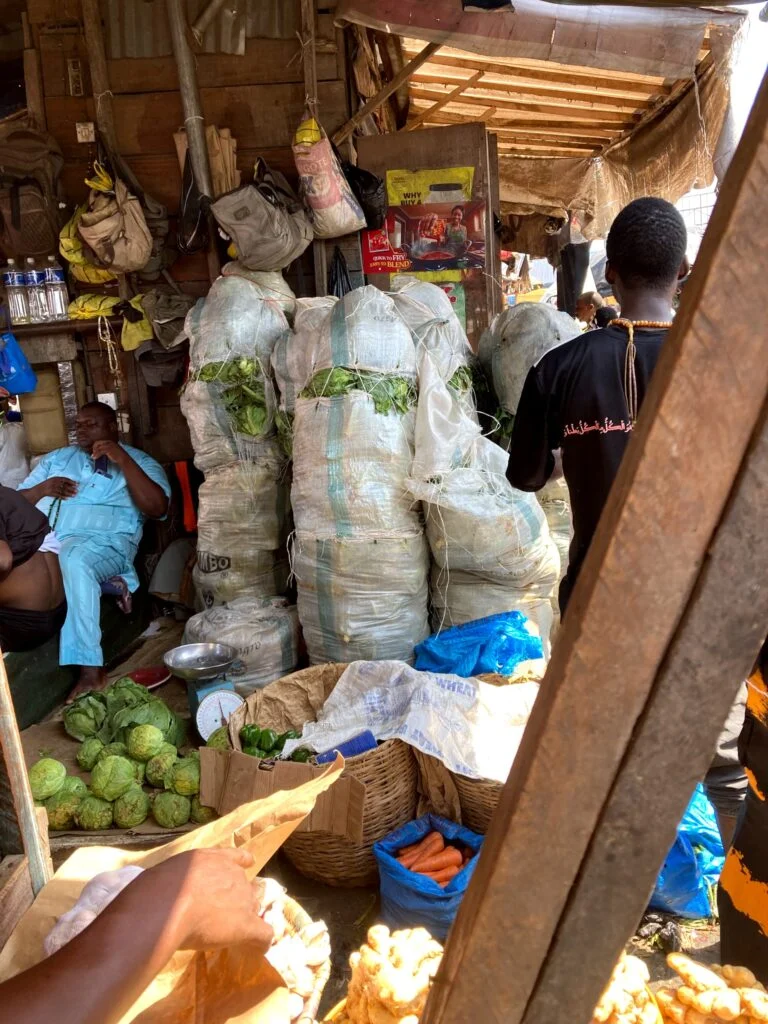
A visit to the markets showed traders displaying fresh produce, including carrots, cucumbers, watermelons, cabbage, bananas and leafy vegetables, while some kept their goods under tables to shield them from sunlight.
Mr Taiwo Abdulhamid, a trader at Iddo Terminus Market, said he sometimes lost two to three kilogrammes of carrots from every 10 kilogrammes purchased.
Abdulhamid said the losses could cost him between N20,000 and N30,000, forcing him to discard spoilt produce or increase prices to recover part of his money.
Similarly, Mrs Mistura Olawale, a banana and pawpaw seller, said she lost about 10 per cent of her goods to spoilage before they reached the market.
Olawale attributed the losses to bad roads, poor transportation and overripe produce, calling for improved feeder roads and refrigerated transit vans.
At Mile 12 Market, Mr Rafiu Olamide, a seller of ugu and waterleaf, said more than 15 per cent of his vegetables sometimes spoilt within one or two days.
Olamide said vegetables worth about N80,000 could result in losses exceeding N10,000, adding that she sometimes sold slightly damaged produce at reduced prices.
Mrs Blessing Sunday, a banana seller at Balogun Market, Eko Idumota, said she sometimes lost bananas worth about N100,000 from a batch.
Sunday, who spends N300,000 or more purchasing bananas in batches, said intense sunlight contributed to spoilage and could take one to two weeks to sell her stock.
She said selling groundnuts alongside bananas helped cushion the losses, adding that she hesitated to complain to suppliers about damaged fruits for fear of losing their patronage.
Mr Shuaibu Tukur, a carrot seller at Carrot Site, Mile 12, said transportation challenges affected the quality of supplies sourced from Ivory Coast, Cameroon, Bauchi, Jos and Sokoto.
He said journeys from Sokoto to Lagos could take about 20 hours under favourable conditions but extend to two days, depending on road conditions.
Mr Aminu Usman, a tomato seller at Mile 12 Market, said overcrowding during transportation caused tomatoes to press against one another and break.
Usman said carefully selected tomatoes sold for about N45,000, while damaged or less visually appealing ones, locally called “Eesha”, sold for about N19,000.
He called for improved transportation and handling practices to reduce breakages and financial losses.
Beyond traders’ losses, consumers said spoilage often forced them to discard food purchased with money they could ill afford to waste.
Mrs Yusuf Halima said she could lose between N15,000 and N25,000 worth of fruits and vegetables monthly, particularly tomatoes and leafy vegetables.
“Sometimes, I buy N5,000 tomatoes hoping they will last me for two weeks if I blend and store them, but if there is no light for two days, my freezer defrosts and everything spoils,” she said.
Halima said she now bought produce in smaller quantities, adding that traders sometimes raised prices to recover losses from damaged goods.
Another consumer, Mr Joshua Edward, said he discarded between 20 and 30 per cent of the fruits and vegetables he purchased weekly.
“If I buy vegetables or fruits for N10,000 weekly, at least N2,000 to N3,000 worth goes to the bin because it wilted, grew mould or started smelling,” he said.
Edward said the experience had reduced his bulk purchases, in spite of additional transportation costs from visiting markets more frequently.
Ms Precious Taiwo, a consumer at Gate 3, Mile 12, said she had lost about N6,000 to spoilt mangoes and bananas, discouraging her from buying fruits as frequently.
Ms Eunice Tosin, a student interviewed at Agboju Market, Festac, said tomatoes and bananas sometimes spoilt shortly after purchase, forcing her to cut off affected portions.
Mrs Onoseme Paulina, a consumer at Iyana Oba, said carrots sometimes deteriorated by the following day, causing losses of about N500 on some occasions.
Paulina expressed concern that some sellers concealed deteriorating carrots beneath fresh ones, adding that she discarded affected produce because of safety concerns.
Mr Eddy Oloye, an engineer and farmer with a personal farm in Lusada, Agbara, said inadequate storage, poor transportation and ineffective preservation methods contributed to post-harvest losses.
Oloye said discarded produce also created environmental nuisance but could be reused as animal feed or processed into other products through effective recycling systems.
He called for government and private-sector support for improved transportation, preservation facilities and training in proper produce handling.
Ms Ebube Agbim, a vegetable seller on Joseph Lambo Street, Costain, said poor packaging and storage contributed to the deterioration of scent leaf, ugu and waterleaf.
Agbim estimated that affected vegetables could be worth about N3,000 daily, although her actual loss was approximately N1,500.
Mr Jubril Useni, a trader at Small Garage, Mile 12, said heat, overcrowded vehicles and prolonged journeys sometimes damaged pepper, green pepper, ground beans and spring onions before they reached the market.
The traders and consumers called for improved transportation, better storage and affordable preservation facilities to reduce waste, protect earnings and make fresh produce last longer. (NAN)(www.nannews.ng)
===========
Edited by Chinyere Joel-Nwokeoma

Health workers in Katsina State have suspended their seven-day warning strike following talks with Governor Dikko Radda over outstanding salary adjustments and welfare demands.
The suspension took effect on Sunday, 18 October, according to a circular reportedly issued by the Assembly of Healthcare Professionals (AHCP).
The development was announced in a newsflash attributed to the governor’s Chief Press Secretary, Ibrahim Mohammed, and also reported by Katsina Times.
The circular, dated 17 October and attributed to the assembly’s chairman, Ibrahim Balange, directed members to resume clinical and administrative duties across public health facilities following a meeting with the governor on 16 October.
The assembly comprises the Medical and Health Workers Union of Nigeria (MHWUN), the National Association of Nigerian Nurses and Midwives (NANNM), and the National Union of Allied Health Professionals (NUAHP).
According to the statement, the governor committed to reopening negotiations over the workers’ outstanding demands, including salary adjustments, allowances and career progression.


However, the announcement did not establish whether the government had agreed to the workers’ proposed salary adjustments or when outstanding payments would be made.
Government’s commitments
The statement attributed to Mr Kaula said the government agreed to reopen negotiations through a technical roundtable.
The commitments include a review and implementation of the Consolidated Health Salary Structure (CONHESS) in accordance with applicable government circulars, alongside a comprehensive review of hazard, call duty and shift duty allowances.
The government also reportedly agreed to address the skipping of CONHESS grade level 10 for eligible officers, in line with the applicable scheme of service.
A joint technical committee is expected to be established with defined terms of reference and a timeline for addressing the outstanding issues.
However, neither the statement nor the reported circular specified when the committee would begin work or when the proposed adjustments would be implemented.
The assembly reportedly commended Mr Radda for intervening in the dispute and thanked its members for their cooperation during the industrial action.
How the dispute began
The suspension follows months of disagreement between health workers and the Katsina State Government over salary disparities and allowances.
As PREMIUM TIMES reported on 15 October, the assembly declared the warning strike after a seven-day notice issued on 7 October expired without a satisfactory resolution.
Mr Balange said the dispute dated back to 2024, when the government indicated plans to review health workers’ remuneration in line with what their counterparts receive in federal health institutions.
A committee established to examine the complaints subsequently submitted recommendations in March 2025, but the union said the government failed to implement them.
According to the union, the state’s Office of Public Service Reform initially offered workers 10 per cent of the salary difference between state and federal health professionals.
The government later increased the offer to 15 per cent, but the workers rejected it as inadequate.
Mr Balange said the assembly had sought full implementation of the applicable federal salary structure and allowances but was willing to accept 75 per cent as a compromise.
The disagreement eventually led to the warning strike, which began on 14 October.
Patients affected by strike
The industrial action disrupted services at public hospitals, leaving patients and caregivers uncertain about access to treatment.
A PREMIUM TIMES report published on Sunday documented disruptions at Turai Yar’Adua Maternal and Child Hospital in Katsina.
During a visit to the hospital on Saturday, only a few patients were seen around the surgical ward.
Caregivers expressed concern over the disruption, including difficulties accessing treatment for patients requiring medical attention.
The state Head of Service, Masa’ud Banye, had confirmed that government officials were engaging the unions to resolve the disagreement.
Although the assembly has now directed its members to return to work, the extent to which normal services have resumed across affected hospitals has not been independently established.
What remains unresolved
The suspension ends the immediate industrial action but leaves questions about the implementation of the government’s commitments.
The reported agreement does not clarify whether the government has withdrawn its earlier 15 per cent offer, accepted the union’s proposed 75 per cent compromise or agreed to another salary adjustment.
It also provides no specific date for settling outstanding allowances or completing negotiations.
The workers are seeking improved remuneration and allowances comparable to those available to their counterparts in federal health institutions.
For now, the reported agreement provides a basis for renewed negotiations, while the resolution of the underlying dispute depends on whether the government and unions reach an implementable settlement.
Discover more from Premium Times Nigeria
Subscribe to get the latest posts sent to your email.
-
News2 days ago
NUCAP: Nigeria targets 20 million people with 3,700 telecom towers – Technology Times
-

 News2 days ago
Gunmen storm Plateau mining site, kill two persons
-
Business2 days ago
NCC Launches Internet Governance Working Group to Sustain Stakeholder Dialogue
-
News3 days ago
2027: Adebayo’s camp faults Tinubu’s reported campaign absence