Health
Inside Tinubu’s Cross-party Campaign Council: Roles for politicians outside APC

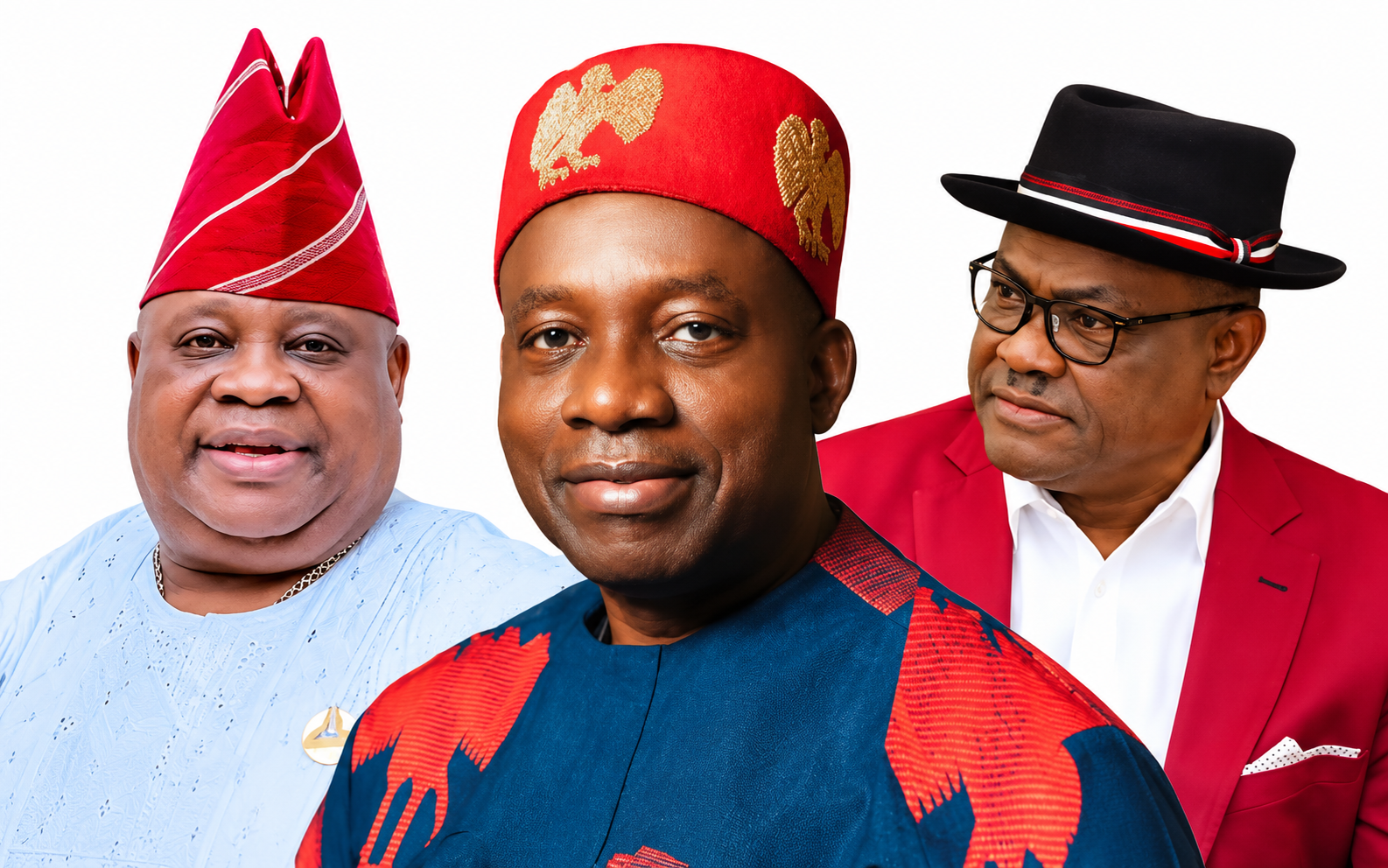
Three prominent opposition politicians have been handed responsibility for coordinating President Bola Tinubu’s re-election campaign in their respective states. This arrangement has drawn criticism over party loyalty ahead of the 2027 general elections.
Federal Capital Territory (FCT) Minister Nyesom Wike of the Peoples Democratic Party (PDP), Anambra State Governor Chukwuma Soludo of the All Progressives Grand Alliance (APGA), and Osun State Governor Ademola Adeleke of Accord are among the politicians appointed to the ruling All Progressives Congress (APC) Presidential Campaign Council.
Under the revised council list announced on 13 October, Mr Wike will coordinate the campaign in Rivers State and the FCT, Mr Soludo in Anambra and Mr Adeleke in Osun.
Opposition figures and some APC members have criticised their appointments, questioning the political implications of assigning campaign leadership roles to politicians outside the ruling party.
The controversy is particularly pronounced in Accord, whose Board of Trustees has endorsed Mr Adeleke’s support for Mr Tinubu despite an unresolved legal dispute over the party’s own presidential nomination.
The appointments come as the APC prepares for nationwide campaign activities, with the president expected to attend rallies in 12 states under a proposed itinerary running from October to January 2027.


Wike: Rivers and FCT
Mr Wike’s appointment formalises his role in Mr Tinubu’s re-election campaign, while he remains affiliated with the PDP. The former Rivers State governor supported Mr Tinubu during the political disagreements that preceded the 2023 presidential election and later joined his administration as FCT minister. His campaign responsibilities cover Rivers, where he served as governor between 2015 and 2023, and the FCT, where he currently holds a ministerial appointment.
Mr Wike has defended the cross-party coalition supporting the president and described himself as a field commander for the campaign in the FCT. The appointment extends his support for Mr Tinubu beyond public endorsements to an organisational role in two politically significant territories.
However, it remains unclear how his responsibilities will be coordinated with existing APC campaign structures in Rivers and the FCT.
Soludo: Anambra
Anambra State Governor Chukwuma Soludo has been appointed coordinator of Mr Tinubu’s presidential campaign in the state.
Mr Soludo won a second term in November 2025 on the platform of APGA.
His inclusion places a sitting governor from another party in charge of coordinating support for the president’s re-election in Anambra.
Although the appointment shows political cooperation, it does not mean Mr Soludo has defected to the APC or that APGA has merged with the ruling party.
The arrangement also raises questions about how the governor’s campaign responsibilities will relate to existing APC officials and structures in Anambra.
Adeleke: Osun
Osun State Governor Ademola Adeleke has been appointed coordinator of Mr Tinubu’s re-election campaign in Osun State.
Mr Adeleke won re-election in August on the Accord platform, having previously belonged to the PDP.
His appointment has attracted particular attention because of an unresolved legal dispute over Accord’s presidential nomination.
On 5 October, the Federal High Court in Abuja ordered Accord and the Independent National Electoral Commission (INEC) to recognise Gbenga Olawepo-Hashim as the party’s presidential candidate for the 2027 election.
Justice Mohammed Garba Umar, ruling in suit FHC/ABJ/CS/1268/2026, held that the party had failed to submit Mr Olawepo-Hashim’s name despite evidence that he emerged from its presidential primary on 30 May.
Accord’s national chairman, Maxwell Mgbudem, subsequently challenged the judgement at the Court of Appeal.
Available reports indicate the judgement is under appeal, but PREMIUM TIMES has not independently obtained the appellate court filing or established whether any subsequent order has affected the judgement.
Meanwhile, Mr Adeleke’s decision to support Mr Tinubu has received backing from some officials of his party.
On 14 October, Accord’s National Assembly and State House of Assembly candidates in Osun pledged to mobilise support for the president.
Two days later, Accord’s Board of Trustees endorsed Mr Adeleke’s decision to support Mr Tinubu’s re-election.
In a statement signed by Samson Isibor on behalf of the board’s chairman, Isaac Adeniyi, the BoT defended the governor’s appointment as the president’s campaign coordinator and pledged support for Mr Tinubu.
The endorsement followed criticism from some individuals identifying themselves as Accord leaders in Lagos, who questioned Mr Adeleke’s political allegiance.
The BoT rejected their claims and challenged their authority to speak for the party.
However, the board’s endorsement does not, by itself, establish that Accord has formally withdrawn Mr Olawepo-Hashim’s candidacy or adopted Mr Tinubu as its presidential candidate.
The development leaves two separate questions: the outcome of the legal dispute over Accord’s presidential nomination and whether the party’s national organs have formally adopted the president’s re-election bid.
Other appointments and the wider structure
Mr Tinubu heads the expanded campaign council, with Vice-President Kashim Shettima and APC National Chairman Nentawe Yilwatda among its senior officials.
Former Zamfara State Governor Abdulaziz Yari serves as director-general.
Senate President Godswill Akpabio, House of Representatives Speaker Tajudeen Abbas and Kwara State Governor AbdulRahman AbdulRazaq are among the senior officials assigned leadership responsibilities.
Imo State Governor Hope Uzodimma serves as secretary, while other senior APC figures have been assigned regional and mobilisation roles.
The council also includes former governors and other political figures serving in advisory capacities.
Former Gombe State Governor Ibrahim Dankwambo is among those named in published accounts of the council’s advisory structure.
The distinction between state coordinators and advisers is significant. State coordinators lead campaign mobilisation in specific territories, while advisory appointments do not necessarily carry direct operational responsibility for a state.
The precise responsibilities of all appointees should be read alongside the APC’s final official council list.
Criticism from opposition and APC members
The inclusion of politicians outside the APC has drawn criticism from opposition figures and some ruling-party members, who have questioned the appointments on grounds ranging from party loyalty to political accountability.
Former Vice-President Atiku Abubakar, the African Democratic Congress (ADC) presidential candidate, criticised the expanded campaign council in a statement issued on 14 October through his campaign’s director of strategic communication, Phrank Shaibu.
Atiku questioned the size of the council and accused Mr Tinubu of attempting to divert public attention from economic hardship and insecurity.
He also criticised the use of the Presidential Villa for the council’s inauguration, arguing that the president’s official residence should not be used for partisan political activities.
As PREMIUM TIMES previously reported, Atiku argued that the president should be judged by his administraqtion’s performance rather than the number of politicians he recruited into his campaign.
Another ADC chieftain, Dele Momodu, criticised the inclusion of Messrs Wike and Soludo and Mr Adeleke during an appearance on Arise Television’s Prime Time programme on 14 October.
Mr Momodu, deputy director-general of the ADC Presidential Campaign Council, compared the president’s growing political influence with the concentration of power under the late military ruler Sani Abacha.
The appointments have also attracted objections from within the APC.
Polycarp Alegu, a media aide to the Ebonyi State APC chairman, questioned why politicians from other parties were given campaign leadership positions ahead of longstanding APC members.
According to The Trumpet, Mr Alegu argued that the arrangement could undermine loyal party members’ morale and expose internal campaign arrangements to politicians who had not joined the APC.
Questions about the political implications of the appointments were also raised by Paul Ibe, media adviser to Atiku.
In a 16 October opinion article published by TheCable, Mr Ibe questioned whether politicians could coordinate a rival party’s presidential re-election campaign while remaining members of parties with their own constitutions and electoral interests.
He specifically questioned Mr Adeleke’s role because Accord had its own presidential nomination.
The criticisms raise questions about the authority under which the appointments were accepted and whether the affected parties’ internal rules permit such arrangements.
However, the appointments alone do not establish that any party constitution has been breached.
Support for cross-party arrangement
Despite the criticism, politicians within the affected parties have supported the appointments.
Mr Wike has defended the arrangement as part of a broader political coalition supporting Mr Tinubu’s re-election.
Representatives of the PDP and APGA have also publicly supported the inclusion of their members in the campaign structure, according to The PUNCH.
In Accord, the endorsement has gone beyond individual expressions of support.
The party’s Board of Trustees announced its backing for Mr Adeleke’s campaign role on 16 October, following an earlier declaration of support for Mr Tinubu by Accord’s legislative candidates in Osun State.
However, the endorsement has not resolved the competing positions within the party.
Mr Olawepo-Hashim has questioned the governor’s decision to support Mr Tinubu, while Accord’s national leadership has appealed the Federal High Court judgement concerning his nomination.
The developments illustrate the distinction between political endorsements by party officials and formal decisions affecting a party’s presidential nomination.
Former House of Representatives member Sam Onuigbo has also welcomed the inclusion of politicians from outside the APC, describing the arrangement as an example of cooperation across party lines.
Tinubu to attend rallies in 12 states
The expanded council is expected to play a significant role in implementing the APC’s proposed nationwide campaign programme.
Although the party plans campaign activities across the 36 states and the FCT, Mr Tinubu is scheduled to attend rallies in only 12 states between October 2026 and January 2027.
As PREMIUM TIMES reported on 16 October, the proposed presidential appearances are expected to begin in Kaduna on 24 October.
The itinerary also lists Rivers for 7 November, Plateau for 14 November, Oyo for 21 November, Borno for 25 November, Enugu for 28 November and Bauchi for 29 November.
Other proposed stops are Sokoto on 4 December, Delta on 12 December and Kano on 17 December.
Adamawa is scheduled for 4 January 2027, with the concluding rally proposed for Lagos on 9 January.
The APC has said the itinerary remains subject to adjustment.
Of the three prominent non-APC state coordinators, Mr Wike’s assignment in Rivers coincides with a state where the president is scheduled to campaign personally.
Anambra and Osun are not among the 12 states listed for presidential appearances.
Under the proposed programme, Messrs Soludo and Adeleke would therefore coordinate campaign activities in their states without a scheduled presidential rally, unless the itinerary changes.
The arrangement places greater responsibility on state coordinators and other campaign officials to mobilise support in areas the president is not expected to visit.
Criticism of the limited campaign tour
The proposed itinerary has also attracted criticism from the ADC Presidential Campaign Council.
Its director of media and publicity, Kola Ologbondiyan, accused Mr Tinubu of avoiding direct engagement with voters across much of the country.
Mr Ologbondiyan argued that a president seeking re-election should be prepared to defend his administration’s record on the economy, insecurity and the cost of living before voters across the federation.
The APC has rejected the suggestion that the limited itinerary reflects an unwillingness to campaign.
During an appearance on Arise Television’s Prime Time programme on 15 October, Obafemi George, a member of the campaign council’s media and strategic communications committee, said the president had assessed the country’s electoral map and decided to balance campaigning with governance.
As PREMIUM TIMES previously reported, Atiku argued that the president should be judged by his administration’s performance rather than the number of politicians he recruited into his campaign.
He said Mr Tinubu would continue promoting his administration’s policies while ensuring that government responsibilities were not neglected.
Cross-party politics ahead of 2027
The appointments reflect the political alliances developing ahead of the 2027 election.
For the APC, bringing politicians from other parties into the campaign could expand its mobilisation network in states where support for Mr Tinubu extends beyond the ruling party’s membership.
For the appointees, the arrangement creates a distinction between their existing party affiliations and the presidential candidate they have been assigned to support.
The development also comes as six opposition parties participating in the G100 initiative consult presidential candidates on possible electoral cooperation, including a proposed framework for selecting a common candidate.
While the APC is incorporating politicians from other parties into its campaign structure, G100 participants are discussing arrangements for cooperation among opposition parties.
The two processes illustrate different forms of political alignment ahead of the election.
However, the expanded council does not establish how the non-APC coordinators will work with existing state party executives, what authority they will exercise or how their campaign activities will be financed.
Those questions are particularly relevant in states where the appointed coordinator belongs to a party other than the APC.
As the APC prepares for its proposed campaign opening in Kaduna on 24 October, the expanded council provides a picture of the alliances supporting Mr Tinubu’s re-election bid.
How those appointments will operate alongside existing party structures, and whether the cross-party arrangements will translate into coordinated campaigns, remains to be seen.
Discover more from Premium Times Nigeria
Subscribe to get the latest posts sent to your email.





An ongoing strike by health professionals in Katsina State has disrupted services at public hospitals, leaving patients and pltheir caregivers uncertain about access to medical treatment.
The health workers embarked on a one-week warning strike following disagreements with the state government over their welfare and remuneration.
A visit to Turai Yar’Adua Maternal and Child Hospital in Katsina on Saturday revealed the impact of the industrial action, with only a few patients seen around the surgical ward.
For many families, the dispute over workers’ remuneration has heightened concerns over the health and safety of loved ones requiring urgent medical attention.
One of the affected caregivers, Aina’u Abdulmajid, said her patient was suffering from complications arising from surgery and appealed to the state government to restore normal hospital services.
“For the sake of God, we call on the government to intervene. Our patient is suffering from complications arising from surgery. Please help us and restore services,” she pleaded.
Ms Abdulmajid’s appeal reflected the predicament of families who depend on public hospitals for treatment but have found themselves caught between an unresolved labour dispute and the urgent need for medical attention.
Another caregiver, Sulaiman Mansir, said he had brought his sick child to the hospital for treatment but was confronted with the disruptions caused by the strike.
Mr Mansir expressed concern over the uncertainty surrounding his child’s treatment and urged the government to engage the striking health workers to resolve the dispute without further delay.
The industrial action has compounded the difficulties faced by families already grappling with transportation costs, medicines and other medical expenses.
Why health workers are on strike
The News Agency of Nigeria (NAN) reports that the strike was declared by the Assembly of Health Professionals following unresolved disagreements with the Katsina State government over workers’ remuneration and welfare.
The assembly comprises the Medical and Health Workers Union of Nigeria (MHWUN), the National Association of Nigerian Nurses and Midwives (NANNM), and the National Union of Allied Health Professionals (NUAHP).
The assembly’s chairperson, Ibrahim Balange, said the unions issued a seven-day strike notice to the government on 7 October, but the notice expired without a satisfactory resolution of their demands.
Mr Balange explained that the dispute began in 2024, when the state government indicated plans to review the allowances of health professionals to align them with those of their counterparts in federal government service.
He said the workers subsequently raised concerns about the implementation of the minimum wage, alleging that the salary structure approved for them differed from what they were receiving.
According to him, a committee established to investigate the complaints submitted recommendations in March 2025, but the government had yet to implement them.
He said the Office of Public Service Reform later offered the workers 10 per cent of the salary difference between them and their counterparts in federal institutions.
However, the offer did not resolve the disagreement.
READ ALSO: Assault on doctor triggers fresh strike at teaching hospital, months after EFCC controversy
Government responds
Following the commencement of the strike, the state government increased its offer to 15 per cent, but the unions rejected it, maintaining that it fell short of their demands.
The Head of the State Civil Service, Masa’ud Banye, confirmed that government officials had met with representatives of the striking workers to discuss the dispute.
Mr Banye expressed optimism that the disagreement would soon be resolved and acknowledged the difficulties patients were experiencing because of the industrial action.
He said Governor Dikko Radda’s administration remained committed to effective healthcare delivery in the state.
(NAN)
Discover more from Premium Times Nigeria
Subscribe to get the latest posts sent to your email.

A mental health advocacy group, Nigerian Mental Health (NMH), has welcomed the Senate’s passage of the Suicide Prevention Bill, 2024 (SB 730), seeking to decriminalise attempted suicide in Nigeria.
The bill, sponsored by the senator representing Cross River South Senatorial District, Asuquo Ekpenyong, passed second reading on 13 October 2026 and was referred to the Senate Committees on Health (Secondary and Tertiary) and Judiciary, Human Rights and Legal Matters for further consideration.
NMH and the Nigeria Suicide Prevention Advocacy Working Group (NSPAWG) made their position known in a joint statement shared with PREMIUM TIMES on Friday, calling for inclusive public hearings as the bill progresses.
The organisations urged the Senate committees to allow mental health professionals, civil society organisations, healthcare professionals and people with lived experience to contribute to the legislative process.
Why the bill matters
Under Section 327 of the Criminal Code and Section 231 of the Penal Code, attempted suicide remains a criminal offence, with survivors exposed to the risk of prosecution and imprisonment.
NMH and NSPAWG said criminalisation can discourage people experiencing suicidal distress and their families from seeking timely support.
“A person who survives a suicide attempt should be able to access care without fear of criminal punishment,” the organisations said.
The groups cited World Health Organisation (WHO) estimates that Nigeria records more than 15,000 deaths by suicide and roughly 300,000 suicide attempts annually.
The bill’s sponsor, Mr Ekpenyong, said during deliberations, that attempted suicide should be treated as a mental health emergency requiring medical intervention rather than criminal punishment.
What the bill proposes
The proposed legislation seeks to establish a coordinated national framework for suicide prevention, going beyond the removal of criminal penalties for attempted suicide.
It proposes medical assessment, referral, treatment and follow-up support for people who survive suicide attempts, as well as crisis-response services.
The bill also provides for training of relevant professionals and first responders, public education and stronger national data collection.
NMH and NSPAWG said effective implementation would require clear responsibilities, sustainable funding and accountability.
The organisations said the bill’s progress builds on advocacy efforts following the passage of the National Mental Health Act, 2021.
NMH said it launched the #SuicideNotCrimeNG campaign, bringing together more than 40 mental health organisations, professional associations and civil society partners calling for an end to the criminalisation of attempted suicide.
Akpabio’s position
The Senate’s consideration of the bill also featured opposition from Senate President Godswill Akpabio to removing imprisonment as a punishment for attempted suicide.
During the debate, Mr Akpabio argued that removing the penalty could encourage suicide attempts.
“If you attempt suicide, make sure you die. Anyone who attempts and fails will go to jail,” he said.
He also called for adequate input from state Houses of Assembly during the public hearing to avoid conflicts between the proposed legislation and existing laws.
Call for public hearings.
NMH and NSPAWG urged the two Senate committees handling the bill to ensure that the next stage of consideration is informed by evidence, the experiences of affected people and the practical realities of delivering mental health services across Nigeria.
“The Senate has moved the process forward; now it is our turn. This next stage, which opens the door to public hearings, is a meaningful opportunity for people with lived experience, mental health professionals, and civil society to engage and help shape a framework that protects lives and upholds human dignity,” said Chime Asonye, founder of NMH.
ALSO READ: World Mental Health Day: NHRC seeks inclusion of human rights focus in strategic plan
The organisations urged Nigerians, health advocates and community leaders to participate by submitting memoranda and supporting the national petition for decriminalisation.
They also renewed their call on the Federal Ministry of Health and Social Welfare to “operationalise and adequately fund the Department of Mental Health Services established under the National Mental Health Act, 2021.”
“The bill’s passage through second reading is progress, but the legislative process is not over. Nigeria needs a legal and service-delivery framework that prioritises prevention, treatment, recovery and the dignity of people experiencing suicidal distress,” NMH noted.
Discover more from Premium Times Nigeria
Subscribe to get the latest posts sent to your email.
-
News3 days ago
Miners Association Seeks Support To Unlock $3bn Gemstone Export Potential
-

 Health3 days ago
Katsina health professionals declare 7-day warning strike
-
Health4 days ago
Kenya confirms second Ebola case as contact develops symptoms in quarantine
-
News4 days ago
Ricursive Intelligence is betting on AI-designed chips to help solve the compute crisis