Connect with us

News

The Youths are the Leaders of Today, not Tomorrow – PDP Guber Candidate Mutfwang

editor

Published

on

FotoGrid 20230306

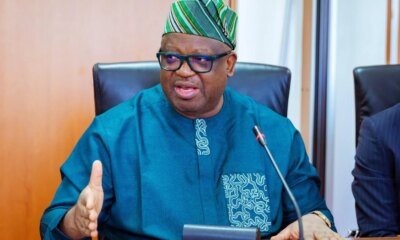
The gubernatorial candidate of the Peoples Democratic Party (PDP) Barrister Caleb Mutfwang has said that youths are the Leaders of Today and not tomorrow. He added that the youths have displayed leadership qualities in Nigeria today, especially in the #EndSARS Protest and the Obidients Movement.

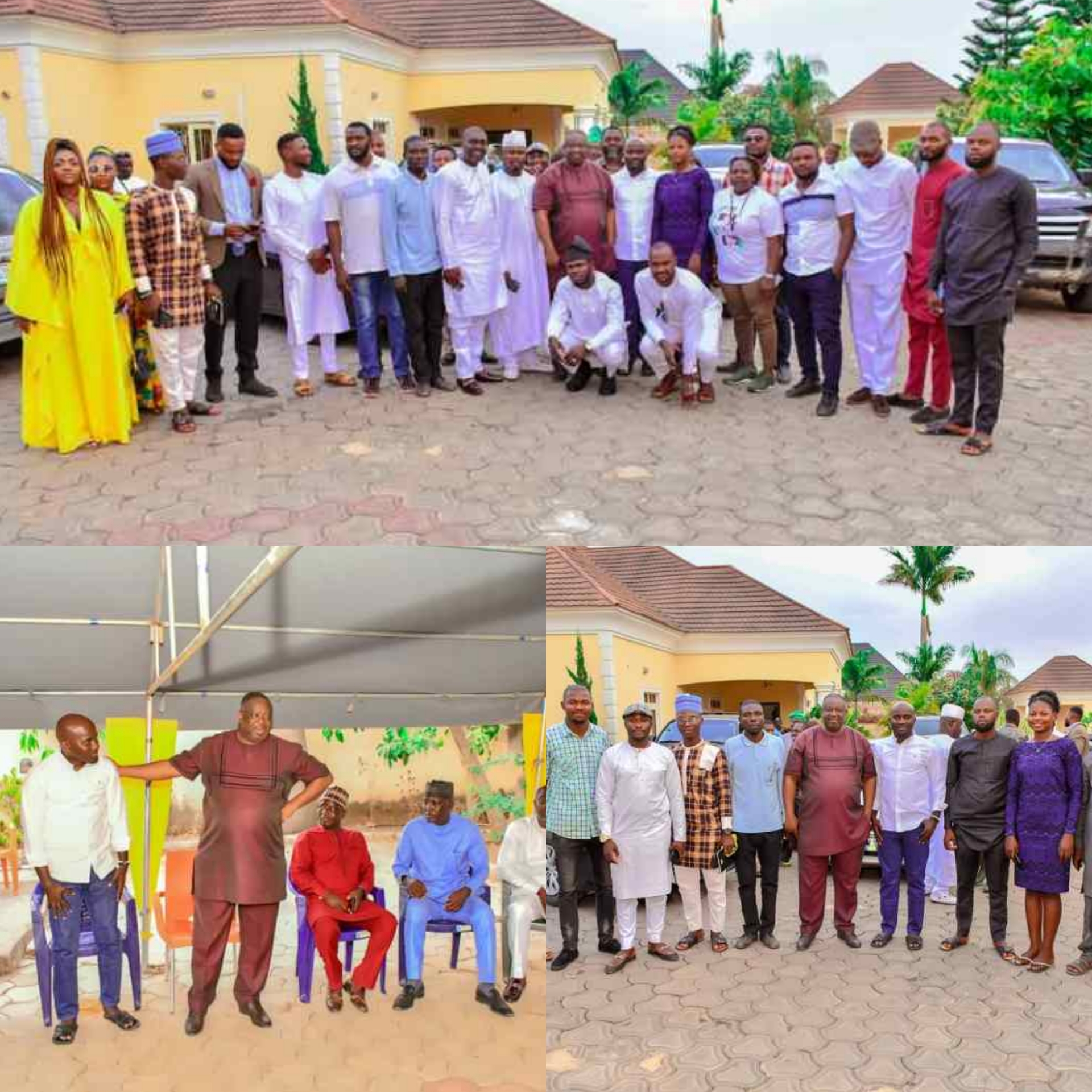
Mutfwang made this disclosure when he received Comrade Prince Miaphen at his residence in Rayfield Jos on Sunday 5th March 2023. Mutfwang expressed appreciation and delight that Miaphen and his team are joining his team days to the gubernatorial polls on March 11th 2023.

He pointed out the critical nature of the March 11th 2023, stressing that the polls will be a battle for the soul of Plateau State, to progress, stagnate or retrogress. He added that the burden of rescuing Plateau from the current sorry state to place Plateau in the committee of States in Nigeria is on his shoulders.

Comrade Prince Miaphen was accompanied by distinguished youths in Plateau State and beyond who came to join him the deliver Barrister Caleb Mutfwang as Governor of Plateau State. Those on his entourage include PDP aspirant for Pankshin/Kanke/Kanam Federal Constituency Arch Hart Bankat, Jos North Coordinator Atiku/Mutfwang Campaign Council J. K Chris, Fwangshak Yabal, Former NANS Senate President Thomas Royce Chai, former Deputy Coordinator NANS Zone C Collins Ozelle, another Former Deputy Coordinator NANS Zone C Na’ankin Matthew Dafuom, Wetson Retshak.

Others include a Member of the Obi/Dati Presidential Campaign Council Comrade Sam Odey, NAPSS National President Comrade Jerry Mantim, Chairman Joint Campus Council, Comrade Nanswa Sargwak and his EXCO, SUG Presidents represented by SUG President University of Jos, Comrade Troy Dakon among many others.

While making his remarks, Comrade Prince Miaphen pointed out that all politics is local and for that reason he had returned to support his home state to produce the best Governor that the people of Plateau State deserve. He added that Barrister Caleb Mutfwang is the best person to deliver on the mandate for Plateau people.

While adding to the position made by Comrade Miaphen, Member of the Obi/Dati Presidential Campaign Council Comrade Sam Odey said that he and his structures had come to join Comrade Prince Miaphen to support and vote for Barrister Caleb Mutfwang, he stressed that come Saturday 11th March 2023, he and his section of the Obidients Movement in Jos were going to galvanize votes and deliver Barrister Caleb Mutfwang.

Recall that Comrade Prince Miaphen defected to the Peoples Democratic Party (PDP) to support Barrister Caleb Mutfwang, he was received by the Plateau State Chairman of the PDP in his office in Jos. He was joined by many youths and students leaders in Plateau State who were excited that he had kept to his words of returning to support the gubernatorial candidate of the PDP in Plateau State.

Continue Reading
Click to comment

Leave a Reply

Your email address will not be published. Required fields are marked *

News

Joke Silva urges Nigerian creatives to embrace AI as a tool, not a replacement at QED summit – Technology Times

info

Published

on

By

1786629344 admin ajax.png

Veteran Nigerian actress, director and businesswoman Joke Silva is urging creatives to embrace artificial intelligence (AI) as a tool for enhancing their work rather than viewing the technology as a replacement for human creativity.

Silva made the call on Tuesday at the QED Creative Powerhouse Summit 2.0, themed “Creativity, Culture and Nigeria’s Next Chapter,” where industry stakeholders examined the changing dynamics of Nigeria’s creative economy and the growing influence of technology on creative production.

Speaking on how Nigerian creatives can adapt to the rapid development of AI while preserving originality, Silva says creatives should focus on using the technology to expand their ideas, improve their output and strengthen their creative processes.

“I think one of the ways to do that, a very simple answer without doing a deep dive, is as long as Nigerian creatives see AI as a tool, as a tool, not as something that is there to replace them,” she says.

joke-silva-says-nigerian-creatives-embrace-aijoke-silva-says-nigerian-creatives-embrace-ai
Joke Silva, veteran Nigerian actress, director and businesswoman. Image credit: Technology Times/Rilwan Oladapo.

“I think one of the ways to do that, a very simple answer without doing a deep dive, is as long as Nigerian creatives see AI as a tool, as a tool, not as something that is there to replace them,” she says.

AI and the question of creative jobs

The growing adoption of generative AI is raising concerns across the global creative industry, particularly over whether machines could eventually replace writers, filmmakers, designers, musicians, actors and other creative professionals.

Silva, however, says AI should primarily be regarded as an additional resource that creatives can use to strengthen their work, rather than as a substitute for human imagination and experience.

“Whenever you see AI work, you always know that this is AI work,” she says, underscoring what she sees as the continuing importance of the human element in creative production.

Her comments are coming amid a wider debate over the role of AI in an industry where originality, personal experience, cultural context and human interpretation remain important components of creative expression.

Rather than allowing concerns over job displacement to discourage adoption, Silva says creatives should learn how to incorporate AI into their existing workflows.

“I think what is very important is that if we see it as a tool that we can use to enhance whatever it is that we have thought about, the idea that we have, to expand the idea that we have,” she says.

Technology is changing creative production

The discussion comes as AI tools are increasingly capable of generating text, images, video, audio and other forms of creative content.

For Nigerian creatives, the technology is creating new possibilities for developing concepts, producing content and accelerating workflows. At the same time, its growing use is raising questions around originality, intellectual property, skills development and the preservation of local culture.

Silva’s position is that the starting point should remain the creative person’s own idea, with AI serving as an enabler rather than the source of creativity.

The approach reflects an emerging distinction in the creative economy: access to AI tools may become increasingly widespread, but the ability to develop distinctive ideas and translate them into culturally relevant work could remain a key competitive advantage.


joke-silva-says-nigerian-creatives-embrace-aijoke-silva-says-nigerian-creatives-embrace-ai
Fisayo Fosudo, visual storyteller and technology and finance video producer. Image credit: Technology Times/Rilwan Oladapo.

Fosudo acknowledges that concerns over AI’s potential impact on employment are legitimate, but says creatives should also examine how the technology can save time and improve their production processes. “There are scenarios where that is absolutely true. Then the other thing is the other scenario of how can I leverage this new technology that is saving so much time,” he says.

AI can save time, improve creative workflows

The argument was echoed by Fisayo Fosudo, visual storyteller and technology and finance video producer, who also spoke at the summit.

Fosudo acknowledges that concerns over AI’s potential impact on employment are legitimate, but says creatives should also examine how the technology can save time and improve their production processes.

“There are scenarios where that is absolutely true. Then the other thing is the other scenario of how can I leverage this new technology that is saving so much time,” he says.

According to Fosudo, creatives who learn to integrate AI into their workflows could gain an advantage as technology becomes more deeply embedded in the creative ecosystem.

He compares AI with other tools that creative professionals have adopted over time, including video-editing software and Microsoft Word.

“How can I use this tool to improve my creativity?” he asks, placing AI within the broader evolution of technologies that have changed how creative professionals work.

Human creativity remains the differentiator

Fosudo says AI’s ability to generate content does not eliminate the need for human creativity. Instead, he says the critical question is how individuals use the technology to develop their own ideas and improve their work.

Large language models and AI-powered video systems can help creatives generate and refine ideas, create content and streamline production processes. But the quality and distinctiveness of the final output can still depend heavily on the creative thinking guiding the tools.

This distinction is becoming increasingly important as AI-generated content becomes more common and audiences are exposed to synthetic images, videos, voices and written material.

For Nigeria, the challenge is therefore extending beyond AI adoption. Creatives also need the skills, infrastructure, connectivity, training and business environment required to use the technology productively.


joke-silva-says-nigerian-creatives-embrace-aijoke-silva-says-nigerian-creatives-embrace-ai
Olumide Iyanda, Founder and CEO of Mighty Media Plus Network and publisher of QED-NG. Image credit: Technoloft Times/Riliwan Oladapo.


“We want creatives to learn how to run businesses, how to sign contracts, how to raise funds, and how to run their business in a way that it will stand whatever challenges people have to face,” Iyanda says.

Nigeria needs stronger creative infrastructure

Fosudo is also calling for stronger infrastructure to support Nigeria’s creative talent, arguing that the country has significant creative potential but lacks sufficient pathways for talent development.

“One thing I would like to see is maybe significantly better infrastructure for creativity, for creatives as well,” he says.

He argues that Nigeria needs systems capable of helping talented people develop their skills and transition into sustainable careers.

“We have so much talent, and our talent is very good,” Fosudo says. “How can we get it to be that we’re not just churning out this talent? There’s actually a pathway for talent to develop their craft, have that talent, and then go into something that is very profitable or very viable.”

The infrastructure gap therefore extends beyond physical facilities. It includes access to technology, training, professional networks, funding and market opportunities that can help transform creative skills into sustainable businesses.

As AI lowers some barriers to content production, the ability to access reliable digital infrastructure and acquire relevant technology skills could become even more important for Nigerian creatives seeking to compete locally and globally.

Creative industry needs stronger business structures

Olumide Iyanda, Founder and CEO of Mighty Media Plus Network and publisher of QED-NG, says the development of Nigeria’s creative industry also requires creatives to approach their work as businesses.

Iyanda says the QED Creative Powerhouse Summit was created to bring participants from different parts of the creative ecosystem together to discuss growth, solutions and collaboration.

According to him, one of the industry’s persistent challenges is that many creatives do not treat their work as a business.

He says creatives need to understand how to sign contracts, raise funds and build businesses capable of surviving the challenges associated with the industry.

“We want creatives to learn how to run businesses, how to sign contracts, how to raise funds, and how to run their business in a way that it will stand whatever challenges people have to face,” Iyanda says.

His comments broaden the AI debate beyond technology itself, highlighting the need for creatives to build commercial structures around their skills and intellectual property.

Nigeria’s creative economy faces a new technology test

The discussions at the summit are pointing to a Nigerian creative industry entering a new phase in which AI is increasingly becoming part of the production process.

For Silva, the priority is ensuring that AI strengthens rather than replaces the human element of creativity.

For Fosudo, the opportunity is in learning how to use the technology effectively to save time, improve workflows and enhance creative output.

For Iyanda, technology adoption needs to be accompanied by stronger business capabilities that can help creatives convert talent into sustainable careers and enterprises.

Taken together, the perspectives are suggesting that Nigeria’s next phase of creative growth will depend not simply on access to AI, but on how effectively creatives combine technology with original ideas, human skills, cultural context and viable business models.

The emerging challenge for Nigeria’s creative economy is therefore not whether AI will become part of creative production. Rather, it is how creatives, businesses and policymakers can ensure that the technology expands opportunities while preserving originality, protecting intellectual property and creating sustainable livelihoods for the people behind the work.

Stay ahead with real-time reports, breaking news, and exclusive insights delivered directly to your phone. Don’t settle for outdated information. Join TECHNOLOGYTIMES NEWS on WhatsApp for 24/7 updates.

Join Our Whatsapp Channel

Continue Reading

News

Osun Election: Civic group raises alarm over violence, BVAS glitches

info

Published

on

By

The Centre for Credible Leadership and Citizens Awareness has raised concern over alleged pre-election violence, inflammatory political rhetoric and technical challenges involving the Bimodal Voter Accreditation System, BVAS, ahead of the Osun State governorship election.

The civic organisation made its position known in a pre-election observation report dated August 12, 2026, signed by its Director-General and Head of Mission, Dr Nwambu Gabriel.

It said it deployed observers across the 30 local government areas of the state to monitor developments ahead of the poll.

“The organisation observed an increase in registered voters following the Continuous Voter Registration exercise, describing the development as an indication of growing civic interest and participation.

“Registered voters in Osun increased from 1,954,800 to 2,339,233, representing an addition of about 384,000 registered voters,” parts of the report read.

However, the Centre said the improved mobilisation of voters is being threatened by political tension, hate speech, electoral violence and concerns over the reliability of election technology.

It said its observers monitored INEC’s mock accreditation exercise across 12 local government areas covering the three senatorial districts.

The organisation alleged that some BVAS devices experienced technical difficulties, including failures to recognise voters’ fingerprints, facial features and Permanent Voter Card details.

“These challenges, if not urgently addressed, could undermine confidence in the electoral process,” the Centre said.

The group urged the Independent National Electoral Commission, INEC, to urgently resolve the reported technical problems and ensure that BVAS devices function effectively during Saturday’s poll.

It also called on the electoral commission to “maintain and demonstrate strict neutrality throughout the electoral process”.

The organisation claimed that about 40 people had been killed in pre-election-related violence across Osun State.

It expressed concern over what it described as increasingly inflammatory political campaigns, saying political engagements had shifted from issue-based discussions to personal attacks and insults.

The Centre also made allegations against Senator Francis Adenigba Fadahunsi, accusing him of making inflammatory statements and allegedly mobilising thugs and individuals purportedly posing as security personnel ahead of the election.

It alleged that Fadahunsi was captured in a video “inciting members of his party against Accord members and supporters in Ijeshaland”

“Thugs and individuals impersonating police officers had been brought into communities across Obokun, Oriade, Ilesa East, Ilesa West, Atakumosa East and Atakumosa West Local Government Areas and Senator Fadahunsi boasted about using federal might to intimidate opposition voters,” it added.

The Centre claimed that security personnel attached to the Police Intelligence Response Team had been used to harass opposition political actors.

It alleged that an Accord House of Representatives candidate, Alaba Popoola, had been unlawfully detained.

The organisation called on the Inspector-General of Police and the Director-General of the Department of State Services to investigate the allegations and prosecute anyone found to have committed criminal offences.

It also demanded increased security deployment across the six local government areas in Ijeshaland and urged security agencies to investigate the alleged activities of the IRT in Osun.

The Centre urged political leaders to moderate their rhetoric and avoid statements capable of escalating tensions ahead of Saturday’s election, stressing that the poll should be determined by voters through the ballot.

“The August 15, 2026, governorship election must be a contest of ballots, not bullets. The protection of lives and property before, during and after the election remained non-negotiable,” it concluded.

Continue Reading

Trending