Health
UNGA: World leaders call for sustained investment to prepare for future pandemics

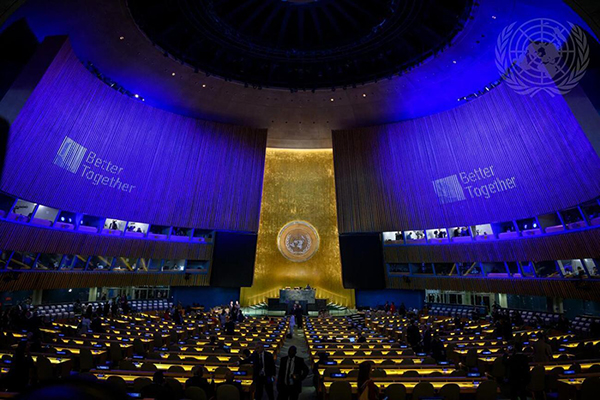
World leaders have called for sustained, more equitable investment in pandemic prevention and preparedness, warning that progress made since COVID-19 will need continued action to protect countries from future outbreaks.
The call was made on Friday at the second United Nations General Assembly High-level Meeting on Pandemic Prevention, Preparedness and Response (PPPR) in New York.
The meeting reviewed progress since the first high-level meeting in 2023, which was convened in response to the COVID-19 pandemic and gaps exposed in global health security.
The World Health Organisation (WHO), in a statement issued on Friday, said countries recognised progress made over the past three years, including the adoption of the WHO Pandemic Agreement and amendments to the International Health Regulations (2005).
WHO Director-General Tedros Ghebreyesus in his remarks emphasised that countries must continue investing in stronger health systems, local and national capacities and equitable access to vaccines, medicines, diagnostics and other health tools.
“The COVID-19 pandemic exposed and exacerbated the fault lines of global health security, and taught the world many painful lessons,” Mr Ghebreyesus said.


He said the political commitments made at the meeting included calls for “concrete, measurable and urgent action” to strengthen health systems and expand equitable access to health products and resources.
Pandemic agreement
Countries also called for the completion of negotiations on an annex to the WHO Pandemic Agreement that would establish a Pathogen Access and Benefit-Sharing (PABS) system.
The proposed system, according to the WHO, is intended to facilitate the timely sharing of pathogens with pandemic potential and ensure that benefits arising from their use, including vaccines, medicines and diagnostics, are shared equitably.
WHO said adoption of the annex at the World Health Assembly in May 2027 is necessary for member states to begin national consideration of ratifying the Pandemic Agreement.
United Nations Deputy Secretary-General, Amina Mohammed, speaking on behalf of Secretary-General António Guterres, urged countries to accelerate the negotiations.
“The Pathogen Access and Benefit Sharing System, under negotiation, is critical to unlocking the full potential of the WHO Pandemic Agreement,” Ms Mohammed said.
Lessons from COVID-19
Mr Ghebreyesus said the COVID-19 pandemic was linked to more than 20 million excess deaths between 2020 and 2023 and wiped more than $10 trillion from the global economy.
The meeting also stressed that pandemic preparedness should not be treated solely as a health-sector responsibility.
According to the WHO, countries called for a whole-of-government and whole-of-society approach involving communities and other sectors.
The political declaration also highlighted the One Health approach, which recognises the links between human, animal and environmental health.
Sustained action
The President of the 81st UN General Assembly, Khalilur Rahman, said international cooperation would be necessary to prepare for future pandemics, including through equitable access to vaccines, diagnostics and other essential medical supplies.
READ ALSO: Shettima joins world leaders at UNGA 81 opening
“We have the knowledge, we have the tools, we have the science and expertise, and we have the hard lessons of COVID-19,” Mr Rahman said at the meeting.
“Let us use them for ourselves, our families and our loved ones. And also in memory of those we lost and in recognition of all those who suffered, needlessly.”
The meeting’s participants stressed that pandemic prevention, preparedness and response should remain a political priority between health emergencies, rather than becoming a focus only when outbreaks occur.
Discover more from Premium Times Nigeria
Subscribe to get the latest posts sent to your email.


The Federal Capital Territory Administration (FCTA) has activated a multisectoral Cholera Emergency Operations Centre (EOC) to coordinate efforts to contain the ongoing outbreak and prevent further infections and deaths.
In a statement from its Health Services and Environment Secretariat, the administration said the centre was activated on 25 November to strengthen the response across relevant government agencies and development partners, particularly as the Christmas season approaches.
The Director of the Public Health Department, Teresa Nwanchukwu, formally activated the centre on behalf of the Health Services and Environment Secretariat.
The activation meeting was attended by the Director of the Rural Water Supply and Sanitation Directorate (RUWASSA), Joyce Echoke; a representative of the FCT Water Board; and representatives of the World Health Organisation (WHO), UNICEF, Jhpiego, Pro-Health International and the Nigerian Red Cross Society.
The administration said the partners reaffirmed their commitment to supporting the territory’s response to the outbreak.
Other interventions
The FCTA also announced the appointment of the FCT State Epidemiologist, Lawal Ademola, as Incident Manager to coordinate the implementation of the approved Cholera Incident Action Plan through a multisectoral Incident Management System.
 The planned interventions include enhanced disease surveillance and active case searches, laboratory diagnosis, case management, infection prevention and control, water, sanitation and hygiene (WASH), risk communication, community engagement, logistics and vaccination, where appropriate.
It said response activities would be intensified in affected communities, while surveillance and preventive measures would be strengthened in other areas considered at risk across the territory.
According to the World Health Organisation (WHO), cholera is an acute diarrhoeal infection caused by the ingestion of food or water contaminated with the bacterium Vibrio cholerae. It can cause severe dehydration and become fatal within hours if left untreated.
The global health agency estimates that between 1.3 million and four million cholera cases occur annually worldwide, resulting in between 21,000 and 143,000 deaths.
The WHO also identifies inadequate access to safe drinking water, sanitation and hygiene as major factors contributing to the spread of the disease.
Preventive measures
The FCTA urged residents to drink only safe water from reliable sources, advising them to boil or appropriately chlorinate water before consumption where its safety is uncertain.
It also advised residents to wash their hands regularly with soap and safe water, particularly after using the toilet and before preparing or eating food.
READ ALSO: Nigeria recorded 64,000 new HIV infections in 2025 – WHO
Other recommended measures include eating thoroughly cooked food, maintaining proper food hygiene, using sanitary toilet facilities, avoiding open defecation, keeping surroundings clean and ensuring proper waste disposal.
Residents experiencing sudden watery diarrhoea, with or without vomiting, were advised to begin taking oral rehydration solution (ORS), where available, and proceed immediately to the nearest health facility for medical attention.
The FCTA reaffirmed its commitment to working with relevant stakeholders and development partners to contain the outbreak and urged residents to observe preventive measures and cooperate with public health officials.
“For cholera reporting, emergency response and enquiries, please contact: Lawal Lukman Ademola FCT State Epidemiologist and Cholera Incident Manager, Telephone: 09084000085,” it added.
Discover more from Premium Times Nigeria
Subscribe to get the latest posts sent to your email.

The National Agency for Food and Drug Administration and Control (NAFDAC) has raided Zuba International Market in the Federal Capital Territory (FCT), Abuja, seizing prohibited alcoholic beverages and other products estimated at over N300 million.
During the operation on Thursday, more than 160 shops were screened by the agency’s enforcement team.
The operation, conducted in collaboration with the Nigeria Police Force and operatives of the Department of State Services (DSS), forms part of the agency’s efforts to curb the circulation of counterfeit, substandard and unwholesome products, particularly ahead of the festive season.
Speaking with PREMIUM TIMES, the Head of the Investigation and Enforcement Division, North-Central Zone, Babatunji Omoyeni, said the raid followed intelligence reports on the sale and distribution of prohibited sachet alcohol, counterfeit products and unregistered wines in the market.

“We have been on this, I will tell you, for some time. But this morning, with the cooperation of our sister agencies, the Nigerian Police Force, Department of State Security, we got to this area very early in the day,” he said.
Mr Omoyeni said the operation was aimed at safeguarding public health and protecting children from exposure to alcoholic beverages.
He also expressed concerns about the health complications associated with the consumption of counterfeit products, including kidney damage.
Enforcement of sachet alcohol ban

In January, NAFDAC began enforcing a ban on alcoholic beverages packaged in sachets and PET bottles below 200 millilitres, following the expiration of a five-year moratorium granted to manufacturers to phase out the products.
Mr Omoyeni maintained that the ban remained in force, adding that the agency would continue to monitor the distribution and sale of prohibited alcoholic beverages.
“For the past five years or more, we have been asking producers to stop producing alcoholic beverages less than 200ml. We will continue to sanitise the system and make sure that the distribution chain is not bastardised with these merchants of nonsense,” he said.
Speaking earlier on Thursday at the 10th Annual Health Conference of the Association of Nigerian Health Journalists (ANHeJ) in Abuja, an official of NAFDAC’s Investigation and Enforcement Directorate, Musa Godiya, disclosed that the agency had commenced the second phase of enforcement of the ban.
Mr Godiya explained that while the first phase focused on manufacturing facilities, the second phase targeted markets, retail outlets and other distribution points to remove prohibited products from circulation.
“We have concluded the first phase of the ban, which involved visiting manufacturing factories. We are now going to markets and streets for a total mop-up and enforcement action on sachet alcohol,” he said.
In August, PREMIUM TIMES reported that NAFDAC directed manufacturers to recall prohibited alcoholic beverages nationwide and destroy them under the agency’s supervision.
The ban is aimed at reducing underage drinking, alcohol abuse and access to highly concentrated alcoholic beverages in small, inexpensive containers.
During Thursday’s raid, Mr Omoyeni said the enforcement team uncovered large quantities of prohibited alcoholic beverages across several warehouses, alongside other consumer products, some of which had expired.
“We got to this warehouse. We have gone into several warehouses, and we have seen different alcoholic beverages below 200ml. You can see this is a warehouse, a story building warehouse. The ground floor here is mind-boggling; I will describe it that way,” he said.
NAFDAC urges vigilance ahead of festive season

The agency also urged Nigerians to exercise caution when purchasing food, drinks and other consumer products during the festive season.
Mr Omoyeni said NAFDAC Director-General Mojisola Adeyeye had directed the enforcement directorate to intensify surveillance and enforcement activities as commercial activities and consumer demand increase.
He encouraged members of the public to report individuals and locations suspected of manufacturing, storing, distributing, and selling counterfeit and unwholesome products.
Mr Omoyeni said individuals found to have violated relevant regulations would be prosecuted after investigations concluded.
READ ALSO: NAFDAC, Edo consumer protection committee clash over enforcement activities
He explained that the agency would ensure it gathered sufficient evidence and properly documented it before instituting legal proceedings against suspected offenders.
“Before we make any decision, we conduct investigations and ensure that all the necessary evidence has been gathered. This is to ensure that whenever we appear before a competent court of jurisdiction in Nigeria, we have sufficient facts and evidence to present,” he said.
He also commended the police and DSS for their support during the operation, emphasising the importance of collaboration among enforcement agencies.
Discover more from Premium Times Nigeria
Subscribe to get the latest posts sent to your email.
-

 Events3 days ago
PENIEL 2026: AGNN Calls for Deeper Encounter with God, Unity and National Transformation
-
Events3 days ago
Plateau Govt Backs AGNN’s PENIEL 2026, Says Unity Among Christians Critical to Peace
-
News2 days ago
‘The Righteous Are Not on the Throne, That Is Why Nigerians Are Suffering’ — SDP’s Adewole Adebayo Fires the APC While Speaking to Press at Jos Conference
-
Events2 days ago
Encountering God, Advancing His Kingdom: AGNN PENIEL 2026 Ends with Calls for Responsible Leadership