News
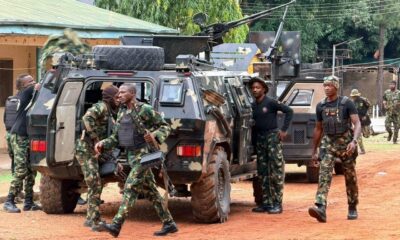
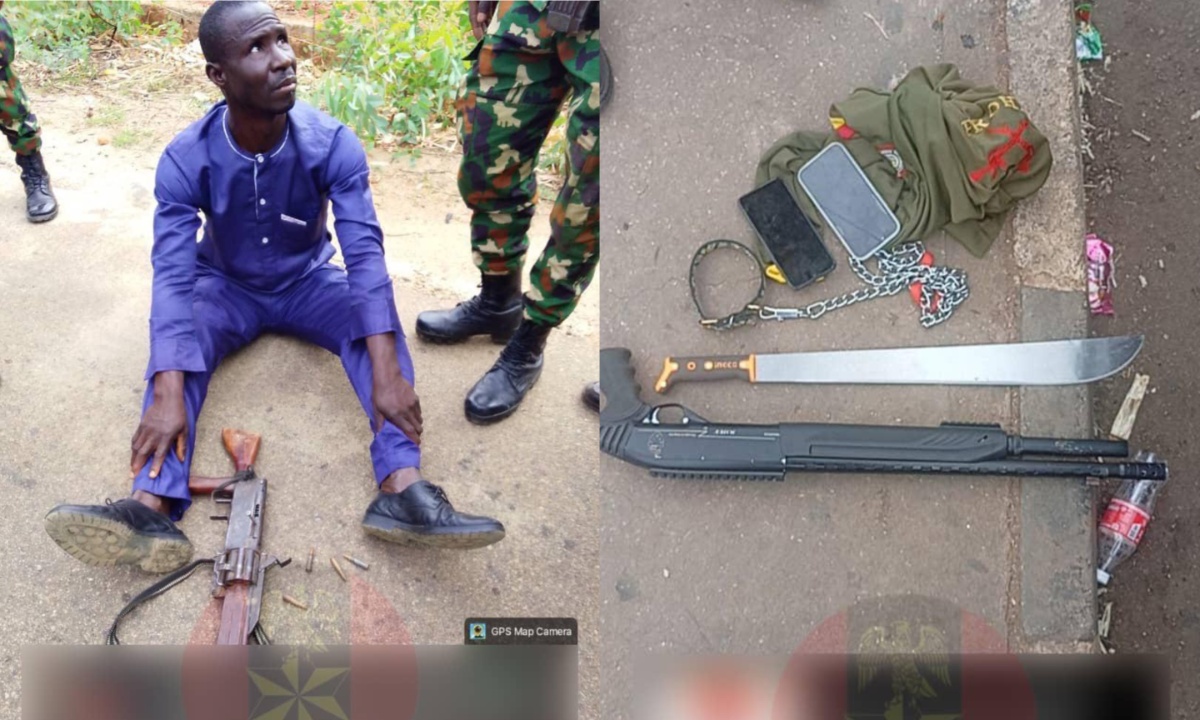
Plateau killings: Nigerian Army begins stop-and-search in Jos, arrests suspects


Barely three months before the January 16, 2027, presidential election, politicians are already heating up the polity with their political statements.
Some of the statements are capable of causing upheaval, ethnic division and tribal resentment, while others could tarnish the reputations of individuals.
However, the implications of some of these statements, particularly those capable of triggering a crisis, are of grave concern to Nigerians.
Recently, the chairman of the Edo State chapter of the All Progressives Congress, APC, Jarret Tenebe, threatened to deploy AK-47 firearms against anyone who stood against the party’s plan to deliver 2.5 million votes for President Bola Tinubu in the 2027 presidential election.
Tenebe issued the threat publicly while addressing APC supporters at a gathering in Benin City following the recent local government council election.
He said the state governor, Monday Okpebholo, had promised Tinubu 2.5 million votes from the state.
He stressed that the party would work to prove that the target was achievable and warned that anyone who attempted to frustrate the party’s efforts to achieve the feat would face the firepower of AK-47 rifles.
He claimed that the APC secured 2,158,600 votes in the state’s recent local government election, describing the figure as a feat that had never been recorded in any state before.
Referring to people he said might attempt to frustrate the party’s plans to deliver the target number of votes, he made reference to firearms, saying:
“Those who do not wish us well, who want to create an obstacle for us, I have a prayer for you.
“So, anybody who refuses, who wants to stand in our way, for us not to have those votes that we intend to give to Mr President, AK-47 fire.”
Tenebe’s remarks came amid a series of statements by political actors ahead of the 2027 general election.
In September, Sainna Buba, Borno State Commissioner for Youth and Sports Development, warned critics of the Babagana Zulum administration that those who “raise” their fingers against the government would have theirs cut off.
Buba spoke at a campaign inauguration organised by the City Boy Movement, a political support organisation backing Tinubu’s second-term bid.
In another incident, Muhammad Gadaka, the APC chairman in Yobe State, told women at a political rally in Nangere Local Government Area that he would pay the bride price of women whose husbands divorced them for voting for the ruling party.
Gadaka later apologised, saying his remark had been misunderstood and was intended as a joke based on a traditional relationship between the Gamawa and Kare-Kare communities.
Also, Danjuma Shekwolo, chairman of the Kuje Area Council in the Federal Capital Territory (FCT), told residents to support the APC or leave the council.
Shekwolo later backtracked, saying the remark was made at a meeting with APC youths and loyalists and was not intended to deny residents their rights based on their political affiliations.
In Osun State, Francis Fadahunsi, the senator representing Osun East, asked his supporters to attack members of the Accord Party ahead of the state’s August 15 governorship election.
Analysts believe that Tenebe’s statement amounts to saying that anyone opposed to Tinubu’s re-election in Edo State risks being killed with an AK-47 rifle or sustaining gunshot injuries.
However, political observers believe that the dangers and implications of such inflammatory political utterances are grave if they are not nipped in the bud. They argued that the failure of the relevant authorities to punish those who made similar statements in the past had emboldened people like Tenebe to follow the same path.
Implications
One of the immediate fallouts of Tenebe’s threat was the public display of an AK-47 rifle by Aminu Warkal, a House of Assembly candidate of the Nigeria Democratic Party, NDC, in Kano State.
Warkal was seen leaning halfway out of a moving vehicle at a political rally while displaying an AK-47 rifle and warning that if the APC wanted war, they were ready to respond in equal measure.
Some quarters believe that Warkal’s action was prompted by Tenebe’s threat in Edo State.
They argued that the failure of the police or the Department of State Services, DSS, to invite Tenebe for questioning emboldened Warkal to display the firearm publicly and threaten to respond to violence with violence.
However, unlike Tenebe, Warkal was immediately invited by the Kano State Police Command for questioning over the alleged unlawful display of the firearm.
Abdullahi Kiyawa, the police spokesperson in Kano, said in a statement that the alleged display, if established, would amount to a violation of the provisions of the Firearms Act.
He said Warkal’s action was capable of inciting fear, intimidating members of the public and breaching public peace and security.
Part of the statement read: “In line with its sustained intelligence-led surveillance, robust community engagement, and proactive security presence across all parts of the State, the Kano State Police Command, while on routine cyber patrol, came across a video clip circulating on social media platforms where one Aminu Abdullahi Warkal was seen openly displaying a firearm suspected to be a Pump Action Rifle during what appears to be a political gathering.
“The alleged unlawful display of firearms, if established, constitutes a clear violation of the provisions of the Firearms Act and is capable of inciting fear, intimidating members of the public and breaching public peace and security.
“On the directive of the Commissioner of Police, Kano State Command, CP Ibrahim Adamu Bakori, the said Aminu Abdullahi Warkal was invited to the Command Headquarters, Bompai, Kano.”
Kiyawa said the commissioner of police warned that the command would not tolerate lawlessness, thuggery or the display of weapons capable of threatening public peace, regardless of the status of the person involved.
He advised politicians and their supporters to conduct themselves peacefully and abide by the Electoral Act, the Firearms Act and other relevant laws.
Following Warkal’s invitation for questioning by the Kano State Police Command, Kennedy Iyere, a senatorial candidate of the Accord Party for Edo Central in the 2027 election and a prominent civil society leader, also called on the DSS to arrest and investigate Tenebe over his political remarks involving an AK-47 rifle.
Iyere made the call in a petition to the director of the DSS in Edo State, describing Tenebe’s remarks as a development capable of threatening peace, political stability and national security.
He urged the DSS to compel Tenebe to publicly retract the alleged remarks across various media platforms.
He noted that the development should not be treated casually, warning that failure to address the matter could trigger youth-led protests and political agitations across the country ahead of the 2027 general election.
He said the alleged remarks had already attracted widespread condemnation, adding that their potential consequences required immediate intervention by the security agency.
He urged the DSS to consider the alleged AK-47 remarks within the broader political and security environment in the country and take steps to prevent an escalation of tensions.
Also speaking on the implications of Tenebe’s utterance, Ganiyu James, an opposition politician in Lagos, said it could lead to violence, which might ultimately result in the loss of lives and property.
“The point is that when an APC member makes such inflammatory statements, it is normal and good, but when it comes from an opposition figure, it then becomes a threat to national security.
“Nobody has a monopoly on violence, and the earlier the APC understands that, the better for everybody in Nigeria. Nigeria belongs to all of us, and nobody can intimidate us simply because he has the backing of the ruling party.
“You can see how the APC government behaves. All the people who have been threatening others from Borno to Sokoto and from Abuja to Edo did not commit any offence because they are APC members.
"But as soon as an opposition figure in Kano displayed equal madness, the police were very quick to call him to order by inviting him for questioning. It is this kind of partial treatment of citizens that causes a crisis.
“You can’t have different sets of laws for different sets of people in the same country. What is sauce for the goose should be sauce for the gander.
"Anybody who makes inflammatory statements, no matter their political leaning, should be called to order. But when you allow some people to insult and threaten others while preventing others from doing the same, then you are courting trouble.
“What I am saying is that Tenebe’s utterance should not be allowed to go uninvestigated. He should be invited to explain what he meant by threatening to unleash AK-47 fire on those who stand against the APC’s plan to give Tinubu 2.5 million votes in 2027.
“Such a statement has grave implications if left unattended to. Others may want to borrow a leaf from it, and the resultant effect is obvious: violence, anarchy and bloodshed.”
2027: Edo APC chair, Tenebe’s AK-47 remarks worsen tension ahead general elections
The Nigeria Labour Congress (NLC) has given the Federal Government two weeks to reduce the price of petrol, warning that organised labour may take further action if the government fails to address the rising cost of fuel.
The labour union issued the warning amid growing concerns over the impact of high petrol prices on workers, transport costs, food prices and the general cost of living across the country.
It also called on Nigerians to unite against economic policies it said had worsened hardship for millions of citizens.
The position was made public at the first memorial celebration and symposium held in Lagos in honour of late activist Abiodun Aremu.
The event brought together labour leaders, human rights campaigners and pro-democracy activists, including the NLC, senior advocate Femi Falana and members of the Joint Action Front (JAF).
NLC President Joe Ajaero, who was represented by the union’s Acting General Secretary, Benson Upah, said the removal of the petrol subsidy had placed an enormous burden on Nigerian workers and low-income households.
He maintained that the government needed to take urgent steps to ease the pressure on citizens whose earnings had failed to keep pace with rising prices.
“The removal of fuel subsidy has devastated Nigeria’s working class and masses,” the NLC President stated.
According to the union, workers are increasingly struggling to meet basic needs because of the combined effects of expensive transportation, food inflation, higher electricity tariffs and the depreciation of the naira.
Ajaero said some workers now face difficult choices between paying transport fares to work and meeting other household expenses.
He also pointed to the increase in the prices of staple foods.
According to the figures presented at the event, a bag of rice that previously sold for about ₦30,000 now costs more than ₦80,000, while the price of a loaf of bread has risen from around ₦500 to approximately ₦1,500.
The labour leader further argued that higher electricity costs had put additional pressure on small businesses, with some struggling to remain operational.
He added that the weakening naira had made imported medicines, industrial materials and other essential products more expensive.
Ajaero blamed the situation on economic measures introduced without adequate consultation with Nigerians and without sufficient protection for vulnerable households.
He argued that the consequences of these policies had become increasingly difficult for workers to manage.
“The government has effectively declared war on its own people, pushing the majority to the fringes of survival,” he declared.
The NLC president maintained that the country’s economic difficulties reflected policy choices whose effects had fallen heavily on ordinary Nigerians.
He insisted that workers should not be expected to bear the full cost of economic reforms while their wages remain insufficient to cover basic living expenses.
Politics Nigeria earlier reported that the union’s two-week ultimatum was issued on October 9, according to the address delivered at the gathering.
The demand centres on an immediate reduction in the pump price of Premium Motor Spirit (PMS), commonly known as petrol.
Ajaero said the deadline was intended to compel the Federal Government to respond to the widening gap between workers’ salaries and the cost of essential goods and services.
He warned that the union would consider further steps if the government failed to meet its demand within the stipulated period.
“Most recently, the NLC issued a two-week ultimatum to the Federal Government, demanding an immediate reduction in the price of Premium Motor Spirit (PMS), also known as petrol.
“This ultimatum is not a mere bargaining chip but a solemn warning. If the government does not act within the stipulated timeframe, the NLC will have no choice but to seek remedial steps with all of us in this hall today.”
The union also questioned the affordability of petrol for workers earning the national minimum wage of ₦70,000 per month.
It recalled that when the minimum wage was set in July 2024, petrol sold for approximately ₦668.30 per litre, while prices had since climbed above ₦1,400 per litre in many parts of the country, according to the figures cited at the event.
“A worker earning ₦70,000 a month cannot afford to buy petrol at ₦1,400 per litre. The government has effectively rendered the minimum wage meaningless.
“The ₦70,000 minimum wage was inadequate when it was announced. It is now a cruel joke. The NLC will not accept a situation where Nigerian workers are expected to survive on starvation wages while the cost of living continues to rise,” the NLC President declared.
Beyond its demand for lower petrol prices, the NLC called on the Federal Government to take practical measures to stabilise the naira, reduce inflation and strengthen domestic refining capacity.
The union questioned whether the expected benefits of the removal of the petrol subsidy had materialised, particularly regarding investment in local refineries.
“The removal of the subsidy was justified on the grounds that it would attract investment in local refining. Where is that investment?”
Moreover, Falana who chaired the memorial event, also challenged the argument that subsidy removal was the only option available to the government.
He maintained that countries with different economic systems continue to support fuel, education, healthcare and other essential services through various subsidy arrangements.
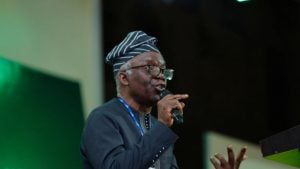
“As you are all aware, countries across the world, including major capitalist economies, such as the United States, Germany and France, subsidise not only fuel but also education, healthcare and other essential services.
“That is the reality today. A simple internet search will reveal announcements of various subsidies in different countries.”
The senior advocate argued that the Federal Government should be willing to reconsider its approach to fuel pricing and examine alternatives that could reduce the burden on citizens.
He said governments should be prepared to adjust their economic policies when circumstances change rather than present difficult measures as the only available option.
Falana also criticised the government’s position on petrol costs, particularly amid discussions about the landing cost of imported fuel.
He argued that the price at which petrol arrives in the country does not necessarily reflect what consumers eventually pay at filling stations because transportation and distribution expenses vary across locations.
“Here in Nigeria, with elections approaching, the government is telling us that the best it can offer is that the landing cost of fuel will be ₦1,350 per litre.
“When the government talks about landing cost, we must consider what that means for Nigerians in Abuja, Jos, Maiduguri and other parts of the country, where additional transportation and distribution costs may apply. That is what this administration has offered the Nigerian people.
“Among those seeking to take over power, only a few, including Omoyele Sowore and Donald Duke, have reportedly stated that, if given the opportunity, they would ensure that fuel sells for less than ₦500 per litre,” he said.
Another speaker at the event, Rashidat Adesina of the Joint Action Front, described the rise in petrol prices since the subsidy was removed in 2023 as a major setback for workers and poor households.
Adesina recalled that petrol previously sold for approximately ₦165 per litre before the policy change, after which prices rose to around ₦500 and later ₦600 per litre.
She said the prevailing prices cited at the gathering had reached between ₦1,350 and ₦1,400 per litre, depending on the location and filling station.
“We are now discussing prices of ₦1,350 to ₦1,400 per litre, depending on the location and filling station,” she said.
She challenged Nigerians to consider how workers could meet their daily needs when a significant portion of their earnings was threatened by rising energy and transportation costs.
“What does this mean for workers and poor Nigerians?” she queried.
Adesina explained that a worker earning the monthly minimum wage of ₦70,000 could purchase only 50 litres of petrol at ₦1,400 per litre, leaving no money from that calculation for food, rent, school fees, transportation or other necessities.
“The national minimum wage is ₦70,000 per month. At ₦1,400 per litre, an entire month’s minimum wage can purchase only 50 litres of petrol. That calculation does not include rent, school fees, food, transportation or other essential expenses,’’ she said.
She argued that the comparison illustrated the difficulties confronting low-income earners, especially those who depend on public transportation or petrol-powered vehicles to get to work and conduct their daily activities.
Adesina also referred to figures attributed to the National Bureau of Statistics concerning the country’s poverty threshold.
She said the reported figures reflected the vulnerability of households already dealing with rising prices and limited purchasing power.
“The consequences for ordinary Nigerians are severe. While workers and poor households struggle, sections of the business community continue to accumulate enormous wealth,” she said.
.
-
News4 days ago
Miners Association Seeks Support To Unlock $3bn Gemstone Export Potential
-

 Health4 days ago
Katsina health professionals declare 7-day warning strike
-
News2 days ago
Gunmen storm Plateau mining site, kill two persons
-
News1 day ago
NUCAP: Nigeria targets 20 million people with 3,700 telecom towers – Technology Times