Connect with us

News

We don’t need AI regulation — leave safety to us, Nvidia’s Jensen Huang says

info

Published

on

GettyImages 2219673294.jpg

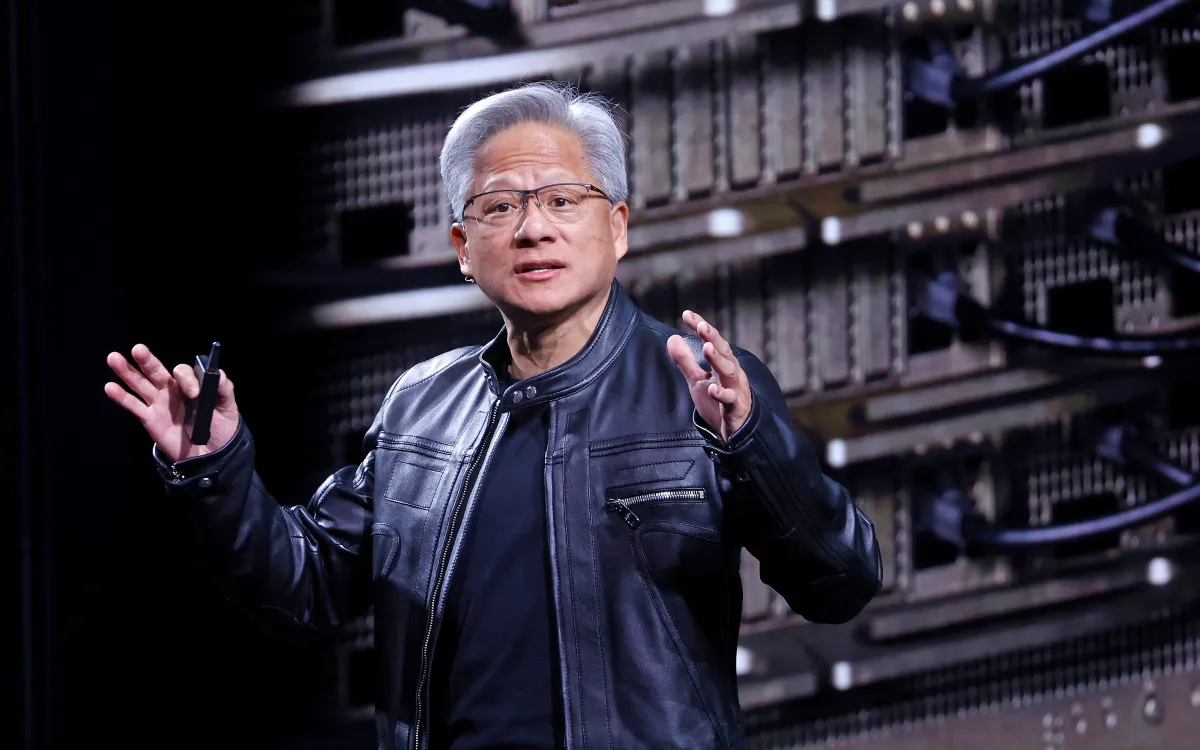
Nvidia founder and CEO Jensen Huang made his position on the dangers AI poses very clear while speaking at Salesforce’s Dreamforce conference on Tuesday. To him, AI isn’t some new form of “alien mind,” as at least one OpenAI safety researcher has described it. It’s just hardware and software, he says, built by humans. That means, in his view, it can be controlled by humans and existing laws.

“Safety is an engineering problem, not a legal one,” he said. “We’re developing software after all. We’re developing computing systems after all. It’s a complicated computing system, but it’s ultimately a computing system.”

Therefore, there’s no need for new laws or regulations to govern it, he argues. In fact, Huang sees little need for new laws at all. The free market, he argues, will be enough to pressure companies not to release unsafe products.

“If we’re not confident about the safety of the products, like all companies, like you and I, all the companies here, if you build a product or a service, and you’re not confident in its functionality, capability, or safety, then don’t release it. And so that’s a very obvious thing to do,” he said.

He continued: “You pace yourself until you are confident you’re releasing something that the market would appreciate. The market forces are already there. We don’t need any new laws. We don’t need new regulations. We just need companies to decide that when [to] run as fast as they can. I think innovation, speed, and safe products … it’s a false choice. You could definitely have both at the same time. So run as fast as you can. But if you feel at any given point in time the company’s out of control, or the product’s not going to be safe, you know, take a pause and make sure you get it right.”

In some ways, this is a comforting thought. If anyone in the world knows AI, it is Nvidia’s founder, who’s been building the hardware brains of AI since well before ChatGPT existed and now runs a company that also makes open source models, agents, harnesses, and sandboxes.

Then again, if we’re being cynical, his point of view is also unsurprising for someone who’s had his bread so well buttered by the AI boom. Why would he want regulation to come along and add in a layer of hinderance that could slow down Nvidia’s quest to sell ever more AI systems and software? As he also said in the interview: “I’m more ambitious than ever. As a result of our ambition, and with the product productivity boost that we get from AI, the sky’s the limit for us. The sky’s the limit for our company. The sky’s the limit for every industry, for every single country.”

Unfortunately, even companies with the best intentions ship faulty products with unintended consequences, even software. Remember the 2024 CrowdStrike bluescreen-of-death fiasco that grounded thousands of flights and caused other havoc for businesses? Then there are companies accused of deliberately acting with less-than-good intentions. Meta just paid $18 billion to settle a lawsuit over social media harms to children.

And AI has already caused harm, too, whatever the intentions or safety testing involved, from an OpenAI model hacking into Hugging Face to lawsuits against the AI lab over the suicides of young people who engaged in long conversations with its chatbot.

The “leave them alone” strategy, which would let these companies release products as they see fit, could be an unwise approach to AI safety as far as society is concerned. Though Huang is right that it’s possible existing product liability laws could cover AI — if AI doesn’t somehow kill us all before enough cases get through the courts to test that theory.

He didn’t discuss the other route, which seems close to taking shape: industry self-regulation. Huang’s approach has been more to champion open-weight models and companies’ use of them as a competitive counterweight to proprietary AI labs.

But right now, the industry has a short window to institute self-regulation and to encourage AI labs worldwide, even those in China, to see the wisdom in participating. As Microsoft CEO Satya Nadella said at the All-In Summit on Monday, “China should also deeply care about the same safety concerns if the United States cares about them, right? Why should it be different for them? It’s not like they won’t have the same hacking problem. It’s not as if they don’t want to make sure that their citizens are benefiting from AI, just like we would want our citizens to benefit from AI.”

For now, though, if Huang is a no on any new AI regulation, he may be influential enough to get his way. He also demonstrated this week that he, quite literally, has the ear of President Trump.

When you purchase through links in our articles, we may earn a small commission. This doesn’t affect our editorial independence.

Continue Reading
Click to comment

Leave a Reply

Your email address will not be published. Required fields are marked *

News

Tinubu’ll win presidency with 65 percent votes – Jibrin

info

Published

on

By

Abdulmumin Jibrin Kofa.jpg

Former member of the House of Representatives, Abdulmumin Jibrin, has claimed that President Bola Tinubu will win the 2027 election with about 65 percent of the votes.

Jibrin, who noted that 2023 is not 2027, said Tinubu and the All Progressives Congress, APC, will win the upcoming presidential election by a wide margin.

The former lawmaker spoke while featuring on Channels Television’s Politics Today on Wednesday night.

He said, “In 2023, President Tinubu got 38 percent of the votes because of the nature of what happened at that time, but take it to the bank, the president will have nothing less than 65 percent of the total votes cast in 2027.”

Recommended

Jibrin said the APC has a master plan to tackle the opposition and its candidates because the ruling party has studied them.

He added, “We understand that people are talking about the strength of the other opposition parties and figures, but what they fail to realise is that 2023 is not 2027.

“We studied all of these opposition figures, their modus operandi, their various opponents; we know them very well, and we have our master plan.

“Unfortunately, I will not be able to say something, but I can give you a hundred percent assurance that we are miles ahead of them and we will win the election.

“So, anything that is going to cause any little rifts and internal fighting, we don’t want it.”

Continue Reading

News

“If We Waited 30 Years to Get Here, We Can Beat Morocco” — Team Nigeria Dare Davis Cup History in Rabat

info

Published

on

By

WhatsApp Image 2026 09 17 at 9.09.59 AM.jpeg

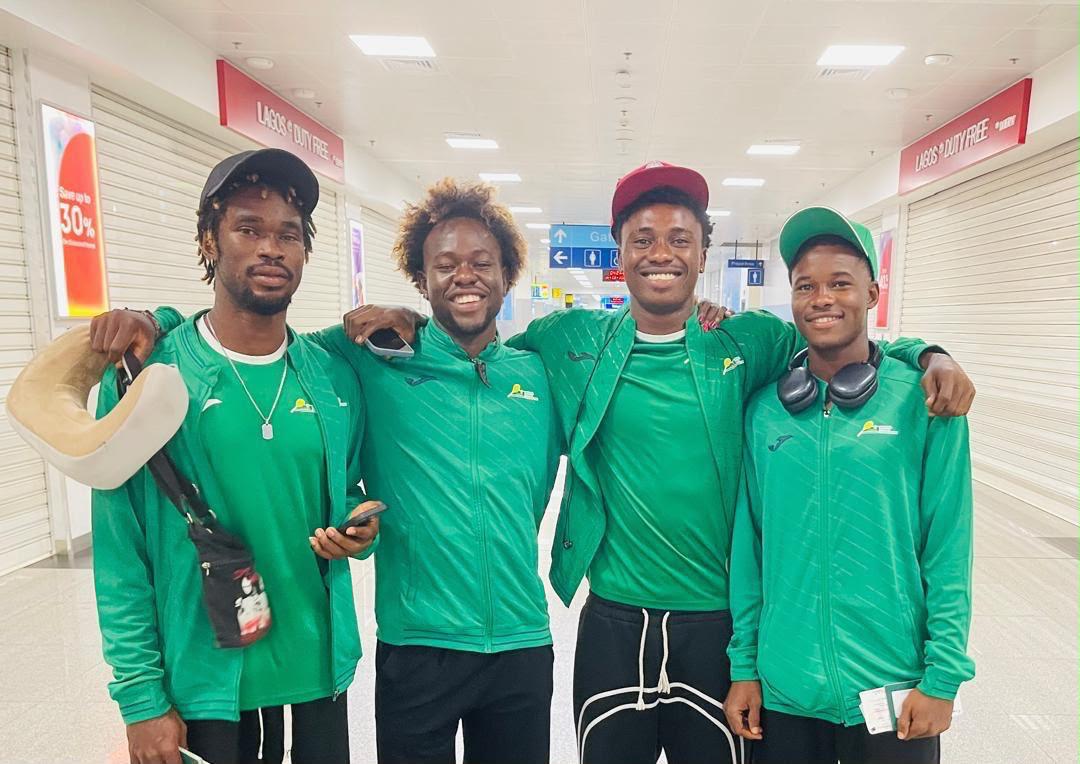
Team Nigeria have arrived in Rabat with a message of belief ahead of their Davis Cup World Group II showdown with Morocco: if they could end a wait of more than three decades to reach this stage, they can also end their winless record against the North Africans.

The Nigerian contingent has already begun intensive preparations for the September 19-20 tie at the Union Sportive des Cheminots de Tennis du Maroc, with the players determined to turn what appears a difficult assignment into another landmark moment for Nigerian tennis.

Nigeria have never defeated Morocco in their four previous Davis Cup meetings, but Secretary General of the Nigeria Tennis Federation, Shammah Aliyu Makpa, believes the team’s recent progress provides enough reason to approach the encounter with confidence rather than fear.

“We know it won’t be an easy task but we are also equal to the challenge,” Makpa said.

“This is another opportunity for us to break the jinx because we have never defeated Morocco in the Davis Cup before.

“If we can qualify for this stage after over 30 years of waiting, then I will say it’s still possible to defeat Morocco and qualify for the Davis Cup World Group I.”

That sense of possibility has shaped Nigeria’s preparations since arriving in Rabat.

Daniel Adeleye, Canice Abua, Michael Emmanuel and Yusuf Abubakar have already taken to the match courts, beginning with a light session shortly after their arrival before moving into more demanding morning and afternoon training.

The players are using the early arrival to adapt to the Moroccan weather and court conditions while head coach Benson Ishicheli works on tactics and possible doubles combinations.

Makpa said the objective is to ensure that when the first ball is struck, Nigeria’s players are prepared in every aspect.

“Yes, preparations are in top gear now as you can see,” he said.

“The team is here early enough to prepare and acclimatize with the weather. The technical crew and everyone here are doing their work to ensure that the team is ready mentally, physically and emotionally before the clash.”

There is good reason for the confidence within the Nigerian camp.

Nigeria earned their place in World Group II by defeating Uzbekistan 3-1 in Lagos in February, with several members of the squad now in Morocco playing decisive roles in that victory.

Canice Abua and Michael Emmanuel delivered a crucial doubles victory over Denis Istomin and Khumoyun Sultanov before Daniel Adeleye defeated Ilya Ignatov in the reverse singles to complete Nigeria’s triumph.

The achievement brought Nigeria back to this level of Davis Cup competition after a wait stretching more than three decades.

Now the players are being asked to produce another breakthrough.

Highly-rated youngster Oluwaseun Ogunsakin had also been expected to strengthen the squad in Rabat, although his chances of joining his teammates have become doubtful because of circumstances beyond his control.

For those already in camp, however, attention is firmly on the players available and the opportunity immediately in front of them.

Makpa also credited the National Sports Commission and Lagos Country Club for providing the support and facilities that enabled the team to prepare properly before leaving Nigeria.

But once competition begins, preparation will give way to execution.

Morocco have history on their side after winning all four previous Davis Cup encounters between the countries. Nigeria, meanwhile, arrive with the confidence generated by overcoming Uzbekistan and ending their long wait to reach World Group II.

That is why the Nigerian camp is refusing to view the country’s poor record against Morocco as an insurmountable barrier.

They have already ended one 30-year wait. In Rabat, their message is that another piece of history can be rewritten.

Continue Reading

Trending