Connect with us

Health

Plateau: 18 persons confirmed killed in recent attacks – IDA (Photos)

info

Published

on

271762397 141898571599943 2186638482576412051 n
Irigwe Development Association releases names of victims of Ancha attack
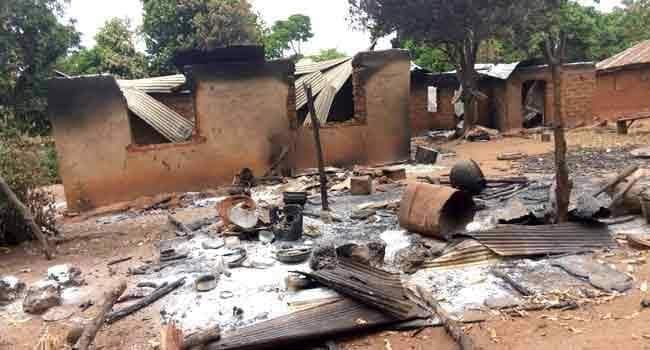
The Irigwe Development Association (IDA), has released the names of victims of Tuesday’s attack in Ancha community in Miango Chiefdom of Bassa local government area of Plateau State where 18 people, including a three-month-old baby.
In a statement by the National Publicity Secretary of IDA, Davidson Malison, stated that the heavily armed gunmen suspected to be Fulani militias, invaded the community in the early hours of Tuesday and took the people by surprise.
“The Rigwe Nation has been visited by yet another deadly and lethal attack by Fulani Terrorists (as testified by victims that survived) in the early hours of 12 midnight of Tuesday January 11, 2022, at Ancha village of Miango District, Rigwe Chiefdom of Bassa LGA, Plateau State.
“The attack which lasted for over 2 hours (12:00-2:30) undistracted and unchecked led to the killing of eighteen(18) people with six (6) others injured while over 24 households with over 100 residential rooms were razed down, other properties like motor vehicles , motorcycles and harvested food crops were also destroyed with many valuables stolen and carted away.
“Saddened to note, is that amongst those killed and rusted is a 3 month old baby which has justified an act of inhumanity to man.”
List of People Killed
1. Gideon Goh- 30 year old
2. Danladi James-26 year old
3. Yohanna Musa- 17 year old
4. Achi Alhaji -16 year old
5. Monday Abba- 52 year old
6. Musa Tegwi- 80 year old
7. Christiana Sunday -45;year old
8. Laraba Bitrus- 38 year old
9. Andrew Bitrus – 7 year old
10. Wiki Bitrus – 5 year old
11. Monday Bitrus- 3month old
12. Danjuma Rimbe -10 year old
13 Monday B Bitrus -19 year old
14 Moses Weyi – 21 year old
15 Mbe Weyi- 21 year old
16 Azumi Wreh-
17. Danladi David Musa -28 year old
18 . Garius Gado Sunday –
List of Injured Persons
1. Danlami Adams Aged 21 years
2. Taji Bulus Daniel aged 30 years
3. Weyi Aged 42 years
4. Danladi James Aged 22 years
4. Ishya Danjuma Aged 36 years
6. Monday Amadu Aged 26 years
Christmas Night Attack People Killed
1. Gideon Amba,33 year old
2. Laraba Sunday Iri,17 year old.
Injured
Veronica Sunday; 17 year old.
New Year Eve(31/12/2021) Attack Person Killed
1. Adamu Sunday, 38 year old
Injured Persons:
1. Bitrus Sunday, 31 year old
2. Mr Bitrus Doro,41 year old
3. Sunday Musa, 43 year old
4. Sunday Alex
Ancha Ambush (10/1/2022)
Death
Stephen Monday- 28year old
Injured
Talatu Stephen- Injured

Continue Reading
Click to comment

Leave a Reply

Your email address will not be published. Required fields are marked *

Health

NACA, Global Fund and Partners to convene national close-out meeting on COVID-19 response mechanism investments in Nigeria

info

Published

on

By

NACA picture.jpg

MTN ADVERT

The National Agency for the Control of AIDS (NACA), in collaboration with the Global Fund and key implementing partners, will convene a national close-out meeting on 25 June to reflect on the achievements, lessons learned, and lasting impact of the COVID-19 Response Mechanism (C19RM) investments in Nigeria.

The meeting, to be held in Abuja, will bring together representatives of the Federal Ministry of Health, state governments, development partners, civil society organisations, implementing partners, healthcare workers, and other stakeholders who played critical roles in implementing the C19RM grant between 2021 and 2025.

The Global Fund’s COVID-19 Response Mechanism was established to support countries in mitigating the impact of the COVID-19 pandemic while strengthening health systems and safeguarding progress against HIV, tuberculosis, and malaria. In Nigeria, the investment supported a wide range of interventions to strengthen public health preparedness and response capacities, including improvements in disease surveillance, laboratory systems, infection prevention and control, oxygen infrastructure, cold-chain systems, healthcare workforce capacity, and emergency response mechanisms.

The Director-General of NACA, Temitope Ilori, said, “We learned through COVID-19 that being prepared for one emergency isn’t just about that emergency, it’s about being prepared for any emergency.

“C19RM investments in emergency response mechanisms, supply chain resilience, and rapid deployment capacity are now embedded in our health systems planning and programming.”

PT WHATSAPP CHANNEL

The close-out meeting will provide an opportunity to showcase key achievements recorded under the grant, examine lessons from implementation, highlight innovations and best practices, and discuss strategies for sustaining the gains made through the investment.

The event will also feature presentations from implementing agencies and partners, stakeholder reflections, panel discussions, and the premiere of documentary and storytelling products developed to capture the human impact and legacy of the C19RM investment across Nigeria.

Tajudeen Ibrahim, executive secretary, Country Coordinating Mechanism (CCM) Nigeria, said, “The C19RM grant demonstrated the power of effective partnership, positioning, coordination, engagement, oversight and country ownership in responding to a public health emergency.

“Beyond supporting Nigeria’s COVID-19 response, the investments have strengthened critical health systems and facilitated pandemic preparedness and response capacities that will continue to benefit the country for years to come. As we close this chapter, our focus must remain on sustaining these gains and leveraging the lessons learned to build a more resilient health system for all Nigerians.”

Speaking ahead of the event, stakeholders noted that the close-out meeting is not only an opportunity to celebrate achievements but also to strengthen the collective commitment to building resilient health systems that can respond effectively to future public health emergencies.

As Nigeria continues to strengthen its health security architecture, the lessons and investments from the COVID-19 Response Mechanism remain an important foundation for future preparedness, disease control, and health system resilience.

READ ALSO: DRC Ebola outbreak tops 1,000 cases as death toll reaches 277- WHO

The close-out meeting is expected to attract senior government officials, development partners, public health experts, implementing organisations, and representatives from communities that benefited from the intervention.

Attendance Information

Attendance at the C19RM Close-Out Meeting is by invitation only and will include representatives from government institutions, development partners, implementing organisations, civil society, academia, and other key stakeholders involved in implementing the C19RM grant.

Members of the public and interested stakeholders who are not attending in person are encouraged to participate virtually through the event livestream.

Livestream Details: https://bit.ly/c19rm

About COVID-19 Response Mechanism (C19RM)

The COVID-19 Response Mechanism (C19RM) is a special funding mechanism established by the Global Fund to support countries in responding to the COVID-19 pandemic, mitigating its impact on HIV, tuberculosis, and malaria programmes, and strengthening health and community systems for future emergencies.


Continue Reading

Health

US HIV funding withdrawal from South Africa could cost lives, UNAIDS warns

info

Published

on

By

WinnieByanyima 0.jpg

MTN ADVERT

The Executive Director of the Joint United Nations Programme on HIV/AIDS (UNAIDS), Winnie Byanyima, has warned that the United States’ planned withdrawal of HIV/AIDS funding from South Africa could cost lives and undermine decades of progress in the fight against the disease.

Speaking ahead of a high-level United Nations meeting on HIV/AIDS, Ms Byanyima urged Washington to reconsider the decision and adopt a gradual transition plan to prevent disruptions to critical HIV services.

South Africa carries the world’s largest HIV burden, with about eight million people living with the virus. While the country funds most of its treatment programme, US support has remained crucial for prevention services, testing programmes and healthcare workers serving vulnerable communities.

Ms Byanyima said the funding cuts would have serious consequences for people who rely on these services.

“Taking it away is taking away life-saving support from the most vulnerable people,” she said.

PT WHATSAPP CHANNEL

Describing the move as “sad”, the UNAIDS chief warned that broader reductions in global aid funding were already affecting HIV prevention and treatment efforts in several countries.

She noted that the US President’s Emergency Plan for AIDS Relief (PEPFAR) contributes more than $400 million annually to South Africa’s HIV response, accounting for up to 17 per cent of the country’s HIV funding.

According to her, the programme has played a critical role in supporting testing, prevention and community-based healthcare services, particularly among populations at higher risk of infection.

Funding withdrawal

The warning comes days after the Trump administration announced plans to begin a phased withdrawal of HIV/AIDS funding to South Africa through PEPFAR.

US officials linked the decision to disagreements with Pretoria over a range of domestic and foreign policy issues, including South Africa’s land reform programme, Black Economic Empowerment policies and what Washington described as insufficient protection for the white Afrikaner minority.

The South African government has rejected those claims, maintaining that its policies are designed to address inequalities inherited from apartheid and are consistent with constitutional principles.

READ ALSO: UN commission alleges Israel has targeted Palestinian children since 2023

The funding dispute has raised concerns among public health experts because South Africa remains the epicentre of the global HIV epidemic. The country has more people living with HIV than any other nation and has relied on PEPFAR support for more than two decades to strengthen prevention programmes and health systems.

Although South African authorities have stressed that the procurement of antiretroviral medicines is largely financed through domestic resources, experts warn that cuts to prevention programmes, testing services and healthcare personnel could weaken the country’s broader HIV response and place vulnerable populations at greater risk.

UNAIDS has repeatedly cautioned that disruptions to HIV services could reverse hard-won gains in reducing new infections and AIDS-related deaths, particularly in countries with large treatment and prevention programmes.


Continue Reading

Trending