News
Everything new coming to Meta’s AI agent Muse

Meta’s personal AI agent Muse is only a few weeks old, and the social networking giant isn’t wasting any time building out what may be its biggest bet on consumer AI to date.
CEO Mark Zuckerberg kicked off the company’s annual Connect event in Menlo Park on Wednesday with a keynote that made one thing clear: Meta is going all-in on Muse.
The Muse agent (the physical avatar is named Jolly, according to Zuckerberg) is designed to handle everyday tasks by connecting to users’ apps and services, including email and calendars. At Connect, Zuckerberg introduced a slew of new capabilities and integrations to make Muse more useful and more deeply woven into users’ daily lives. Muse will be everywhere, if the user chooses, including on their Meta AI glasses.
Muse, which launched in early September, interacts across a user’s devices and digital accounts. The agent is powered by Muse Spark, Meta’s multimodal AI model built for agentic work. Meta has touted it as a more accessible agent than those offered by competitors — an AI helper that, from the jump, allows users to automate the busy work in their lives.
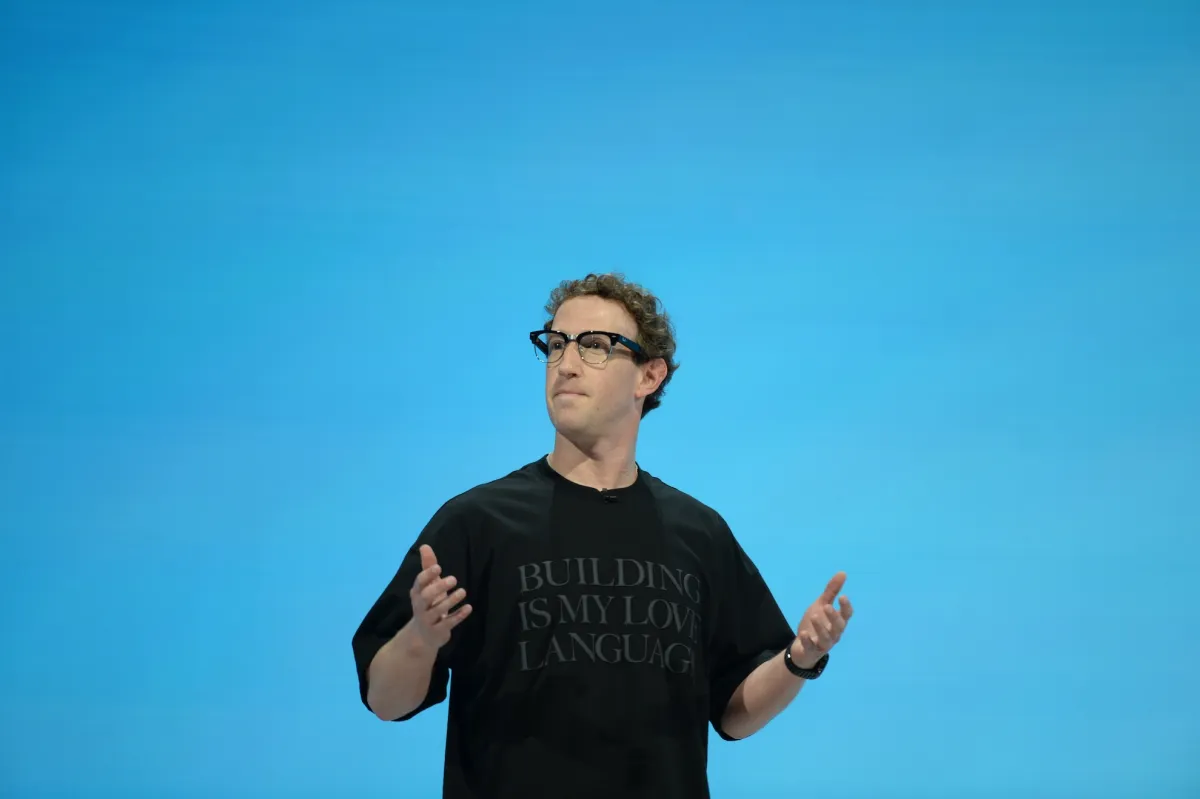
“The centerpiece of our vision for what we’re building is Muse,” Zuckerberg said as he kicked off a keynote donning khakis and a black T-shirt with the words “Building is My love Language” emblazoned across the front. “In the coming years, I expect that Muse is going to grow into the personal superintelligence that billions of people around the world are going to use to accomplish their goals and improve their lives.”
Zuckerberg also believes that Muse will make money for its users — and of course, eventually for Meta.
“We’re standing behind this by making Muse free for a huge number of tokens, with the expectation that over time we will profit by taking a small fee from transactions,” he said.
Here are the new features and capabilities that got our attention …
Muse gets its own digital avatar

One of the more fun announcements made Wednesday is that Muse users will soon have the ability to conjure a distinct digital avatar for their particular agent and then video chat with it in real time. A new AI model, Muse Realtime Avatar, has been developed to power the particular feature, the company says.
The idea is that Meta’s previously faceless AI software will be given a face, body, and voice, making them significantly more personable. There’s certainly a hint of Metaverse-ishness to this feature, which was demoed on stage at Connect. Users will be able to have live conversations with this avatar, giving it tasks and asking it questions.
Muse will also be integrated with Meta’s smart glasses line, the company announced. This means that users will be able to communicate with their agent merely by speaking to their glasses. The agent activates via a wake word, the company said, adding that it will be able to guide users through a personalized workout, log meals, book an appointment, and help them buy products they see.
Meta said Muse will work in the background and check back in when it’s done.
It’s not clear exactly when this feature will become available, although Meta says that it should launch sometime in “the coming months.”
Soon, you’ll be able to let Muse run your Mac

Meta says it is bringing Muse computer work to Mac. The company had previously talked about Muse coming to Mac, and spent more time on Wednesday providing a few new details. This means that users will be able to delegate tasks to the agent, and — much like other popular AI agents from OpenAI and Anthropic — Muse will be able to operate any app on a user’s desktop.
“You can have it help you run your small business, or just get work done for you,” Meta’s chief AI officer Alexandr Wang said Wednesday during the keynote. “You can walk away from your computer and it keeps working for you on all the jobs you lined up.”
Muse will get its own email address
Since Muse will always be working in the background, it will naturally need its own email address. Meta’s Wang announced it is developing that feature and will make it available “soon,” without providing a more precise timeline.
Users will also be able to add Muse to an email thread or forward emails from the agent to handle on their behalf.
Meta has locked in partnerships with companies like Stripe and Shopify, illustrating that the company sees Muse as an important tool for shopping.
Muse can access the entire Shopify product catalog agentically and use Lync and now Shop Pay to buy almost anything on the internet, according to Wang, who noted that Meta has also added more support for payments with PayPal.
The company also announced a string of new partnerships with retailers, including Best Buy, Gap, Sephora, Walmart, and Wayfair. Muse will be able to connect with these retail apps as well as with Expedia and soon, Instacart. Other connectors include GitHub, Granola, and Notion.
Wang noted that the company wants Muse to connect with small business too. Meta recently opened its platform to allow developers to build their own “connectors.” The company received more than 1,500 applications in less than week, he said, adding “I think this could be a generational opportunity to start building for a new platform as it takes off, and the response so far has been really great.”
When you purchase through links in our articles, we may earn a small commission. This doesn’t affect our editorial independence.




Google plans to extend its free artificial intelligence (AI) training programme to teachers in Nigeria in 2027, as the technology company steps up efforts to equip educators across Sub-Saharan Africa with skills to integrate AI into classroom teaching and learning.
The expansion, according to the technology company, will bring Nigerian educators into the Google AI Educator Series, an initiative designed to help teachers use AI responsibly to develop lessons, personalise instruction, improve classroom delivery and reduce administrative workloads.
Google said the programme would initially launch in South Africa in partnership with the South African Council for Educators (SACE), before expanding to Nigeria, Kenya and Ghana in 2027.
The training will combine virtual and in-person sessions, with a curriculum developed around the practical needs of teachers and the growing application of AI in education.

Google noted that more than 60% of Sub-Saharan Africa’s population is under the age of 25, highlighting the scale of the region’s young population and the potential for technology-enabled education to improve learning opportunities.
“The curriculum is designed by educators, for educators,” Google said, describing the initiative as a practical training programme to help teachers incorporate AI into their professional activities.
The curriculum will cover how educators can use AI to create engaging lessons, streamline administrative responsibilities and adapt teaching materials to accommodate students with different learning needs.
Teachers participating in the programme will also earn micro-credentials as they progress through the training, providing recognition of the AI competencies acquired.
Google said it would work with local partners, including Ubuntu Hub, to engage educators and support the planned expansion into additional African markets.
The initiative comes as technology companies increasingly explore the application of AI in education, particularly across regions where large classrooms, limited teaching resources and varying student learning needs present challenges to effective instruction.
Google noted that more than 60% of Sub-Saharan Africa’s population is under the age of 25, highlighting the scale of the region’s young population and the potential for technology-enabled education to improve learning opportunities.
Google backs AI tools for African classrooms
Beyond teacher training, Google is supporting the development of locally tailored AI-powered educational tools aimed at strengthening foundational literacy across African schools.
The company announced a partnership between Google DeepMind and Fab AI, a non-profit organisation focused on education in low- and middle-income countries, to support local innovators developing AI applications for education.
The initiative, backed by joint funding from Google.org and the Gates Foundation, will bring together a cohort of innovators from Kenya, Ghana and South Africa to develop educational solutions using Google’s open Gemma AI models.
Google DeepMind will provide computing credits and technical expertise to support the development of these applications, with an emphasis on using AI to improve teaching practices and learning outcomes.
The proposed tools will address three areas of classroom instruction: helping teachers prepare high-quality lessons aligned with national curricula, providing timely diagnostic feedback and assessments for students, and delivering practice-based coaching to strengthen teaching methods.
Google said small language models (SLMs) could make AI-powered educational applications more accessible in resource-constrained classrooms because they can operate on lower-cost devices and be adapted to local languages and national curricula.
The approach is intended to address some of the limitations associated with deploying larger AI systems in environments where reliable infrastructure and access to expensive computing resources may be constrained.
The first phase of the programme aims to support up to 500 teachers and 15,000 students, with the potential to reach more than two million learners over time.
Google also plans to make the resulting datasets, evaluation suites and open-source models publicly available, allowing researchers, developers and other organisations in the education ecosystem to adapt and scale the solutions.
What Google’s AI education plans mean for Nigeria
Although the initial AI tool development programme will focus on Kenya, Ghana and South Africa, Nigeria is among the countries scheduled to benefit from the expansion of Google’s teacher training initiative in 2027.
The planned rollout could give Nigerian educators access to practical AI skills at a time when schools and education stakeholders are exploring how emerging technologies can improve teaching methods, learning experiences and educational outcomes.
The emphasis on curriculum-aligned lesson planning, student assessment and personalised instruction also points to applications of AI that extend beyond generating educational content.
For Nigerian schools, however, the impact of the initiative will depend on how effectively teachers translate their newly acquired skills into classroom practice. Access to suitable digital devices, reliable internet connectivity and relevant educational resources will also influence how widely these tools can be adopted.
The distinction between training teachers to use AI and developing AI tools specifically for African classrooms is significant. While the educator series seeks to strengthen teachers’ capacity to work with the technology, the Google DeepMind and Fab AI partnership is designed to support locally developed applications that respond to specific educational needs.
Together, the initiatives reflect Google’s broader effort to place educators and local innovators at the centre of AI adoption in African education, combining professional skills development with technology designed around local classroom realities.
Google said stronger local partnerships and continued learning beyond initial training would be important in helping educators translate their AI knowledge into meaningful classroom practice.
-

 News3 days ago
Plateau APC 2027 Campaign Council inaugurated today in Jos
-
News4 days ago
NPFL Matchday 11: Shooting Stars Run Riot, Rivers United Held by Rangers as Bendel, Kano Pillars Claim Away Wins
-
News3 days ago
Nigerians’ data appetite drives MTN Nigeria revenue to ₦2.68tn – Technology Times
-
News2 days ago
Plateau Ndigbo Crown Chief Johnson Nwosu as New Igwe