Connect with us

News

NDC Reveals Peter Obi’s Plan For Fuel Subsidy Money

info

Published

on

Incollage 20260821 1057374792051032237141639020 1200x675.jpg

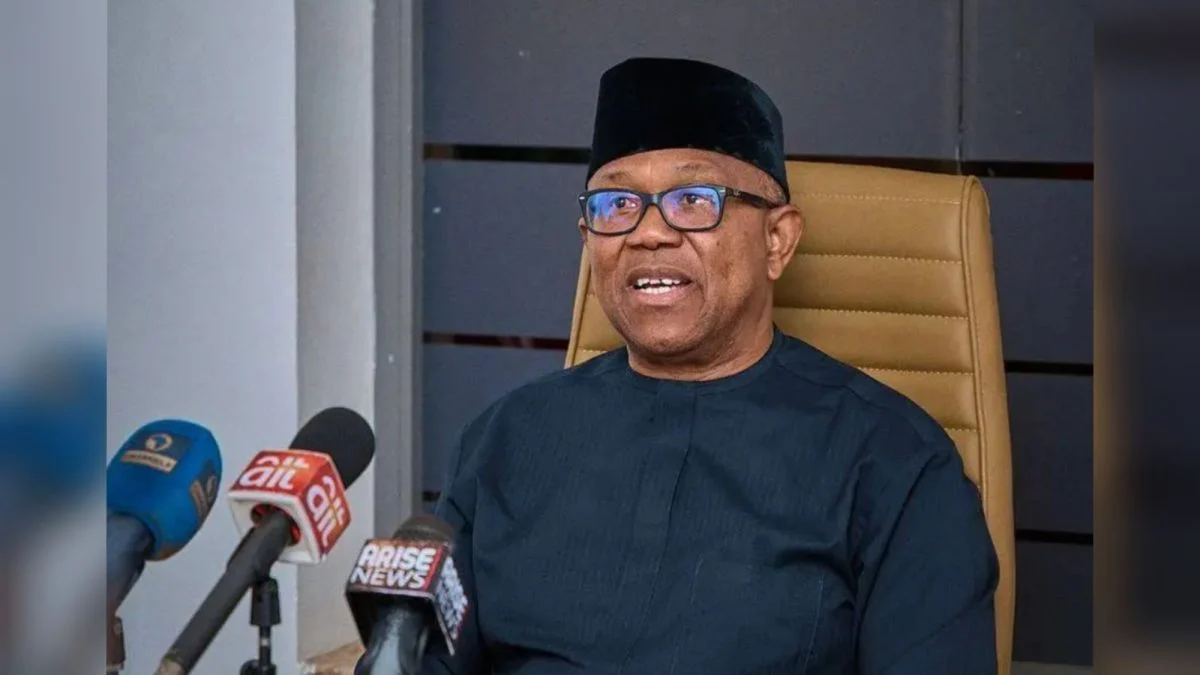
The Nigeria Democratic Congress (NDC) has said its presidential candidate, Peter Obi, would deploy funds saved from the removal of fuel subsidy directly to improve the welfare of Nigerians rather than transferring the resources to state governors.

Theo Abu Agada, the party’s Director of New Media and Strategic Communications, stated this while responding to renewed debate over the future of fuel subsidy ahead of the 2027 presidential election.

Agada said Obi had maintained a consistent position on subsidy removal and the deregulation of the downstream petroleum sector, arguing that the critical issue was how the resources generated from the policy were managed.

His comments came against the backdrop of a proposal by the African Democratic Congress (ADC) presidential candidate, Atiku Abubakar, for the restoration of fuel subsidy if elected in 2027.

President Bola Tinubu had announced the end of the petrol subsidy regime during his inauguration on May 29, 2023, triggering significant economic and political debate over the consequences of the policy.

According to Agada, Obi would neither return the subsidy regime nor allow the funds saved from it to be controlled by political office holders.

He said the NDC candidate would instead channel the resources into projects and programmes capable of directly improving living standards and stimulating economic opportunities.

“For Peter Obi and many of us who have, since 2012, advocated for the removal of the subsidy and the deregulation of the downstream sector, the policy position has always been the transparent management of the subsidy regime,” Agada said in a post on X.

He added that Obi would not “put the money in the pockets of the governors like Tinubu” or restore the influence of what he described as “oil cabals” that benefited from the former subsidy arrangement.

“We will put the money in the pockets of Nigerians and also channel the funds into building quality healthcare facilities, transport infrastructure, schools, and other programmes that will create jobs for Nigerians,” he said.

Agada also questioned the change in Atiku’s position on subsidy, recalling that the former vice president had previously supported its removal.

The debate over subsidy has become increasingly prominent ahead of the 2027 election as various presidential candidates offer competing prescriptions on how the government should address the economic hardship associated with the removal of the policy.
Nigeria Democratic Congress NDC Party Logo
Nigeria Democratic Congress (NDC) Logo

Meanwhile, the Director of the Abuja School of Social and Political Thought, Sam Amadi, has expressed confidence that Obi could defeat Tinubu and Atiku in the 2027 presidential election.

Amadi, speaking in an interview with Symfoni TV, argued that the existing political calculations surrounding Tinubu and Atiku did not guarantee either candidate victory.

He said Obi’s performance in the 2023 presidential election, particularly his support among younger Nigerians and his showing in several states, had demonstrated the potential for a major political realignment.

Amadi argued that the 2020 #EndSARS protests also contributed to a growing demand among young Nigerians for a different political direction, which he said had strengthened Obi’s appeal.

“There is this sense that Nigeria needs something new, and the restiveness and disruption during the 2020 EndSARS incident is a milestone for Obi,” he said.

He further claimed that Obi had secured significant support in the 2023 election, alleging that the former Anambra State governor won in Rivers, Plateau and some northern states but was not declared the winner by the Independent National Electoral Commission (INEC).

According to Amadi, Obi’s 2023 performance remains a major factor that could shape the 2027 contest, particularly if the electorate’s demand for political change continues to grow.

Continue Reading
Click to comment

Leave a Reply

Your email address will not be published. Required fields are marked *

News

Can the AI industry persuade data center opponents by getting rid of NDAs?

info

Published

on

9 DSCF1649.jpg

Amazon recently followed Microsoft’s lead and said it will no longer use nondisclosure agreements (NDAs) while negotiating with local governments over data centers.

On the latest episode of TechCrunch’s Equity podcast, Sean O’Kane, Rebeccan Bellan and I discussed Amazon’s announcement, which came in the middle of a longer blog post making the case that data centers are actually good for communities.

Rebecca was a bit skeptical that the recent spate of data center moratoriums will have a lasting effect, especially since the moratoriums only last for a year or two and “these data centers aren’t coming online for the next two, three, four, five years,” though I countered that data center backers definitely seem worried.

Sean, meanwhile, suggested that a big reason for the backlash is the industry’s poor communication.

“We’ve seen, through a lot of the controversy and backlash to AI and data centers, that the industry just does a really poor job explaining itself, and that they are obviously and constantly frustrated with the fact that most people can’t envision a world in which this stuff is useful for them,” he said.

Keep reading for a preview of our conversation, edited for length and clarity.

Sean O’Kane: It’s an interesting thing that it was sort of buried in the blog post and part of a larger story that Amazon’s clearly trying to tell. I guess I understand why they weren’t putting it in the foreground, but to me, this is at the root of so many of the problems that the tech industry currently faces when it comes to AI broadly, but data centers in particular. 

There are so many things that could be said about whether or not people should be worried about the effect that data centers have on their property values, on their electricity bills, on their water usage in the area, and whether or not those things are real problems, inflated problems, etc. etc.

I think so much of that just really goes back to the fact that a lot of these projects are being negotiated essentially in secret. Sometimes they’re being negotiated [with the public knowing] that it’s a data center, but just not knowing who’s actually going to use it or occupy it at any point. 

This is a long-standing issue with the tech industry. I always go back to the mid-2010s when Uber was expanding really fast. Uber was one of the companies that really used this tactic a ton when it came to working with local governments. In particular, I remember I was working at The Verge at the time and we had a freelancer write a story about a city outside of Orlando where Uber  was trying to negotiate tax subsidies to subsidize rides for people to use public transit after the Uber trip.

The whole thing was negotiated in secret. And not only that, which was frustrating on its face, but also, because of the secrecy, you could just see Uber getting really comfortable with asking for a lot of other stuff, too.

So there needs to be more of this. I’m glad Amazon’s doing this. We’ll see if it actually does have any positive effect, but people are pretty entrenched right now.

Rebecca Bellan: Yeah, I’m curious about what effect this will have and whether it will lead to communities successfully delaying or or killing any infrastructure that the companies need to build. What I’ve heard from some people I’ve spoken to, who deal with data centers every day, a lot of these moratoriums that are getting passed — and there are a significant number of them, including one recently in San Francisco, which is pretty ironic — but they’re only for like a year or two years. 

But these data centers aren’t coming online for the next two, three, four, five years. All of the buildouts are going to be massively delayed for a number of reasons from zoning to funding. Of course, if the pushback keeps going, then it might have an effect, but I often wonder just how much of an effect this political pushback is having on this.

Anthony Ha: The moratorium I’m most familiar with is the one in New York. I believe it’s a one year moratorium, and that’s on permits for large projects. [Technically, it’s until the state finalizes an environmental review process, which is expected to take a year.]

So already, there’s some wiggle room within that. And often, they’re framed as: “It’s not like we think [data centers are] bad, let’s not do this. It’s [that] we need to take the time to study this.” Which gives them a lot of room to say later on, “Actually, we’ve decided this is great. We love it.”

But you can tell that the people trying to build these data centers are worried, which is why you have these unhinged tweets from people like Trump or David Sacks. Only time will tell in terms how long and how deep that [community] resistance is, but I do think they are worried. 

It’s also noteworthy that Microsoft, earlier this year, made a similar announcement about not using NDAs. I don’t think that getting rid of the NDAs automatically is going to make the people who opposed these data centers be like, “Great, let’s let’s do it. I’m in.” But I think the beginning of that conversation is, “Well, we don’t even know what the heck you’re doing, because you’ve negotiated all this stuff in secret.” So it does seem like a good first step.

Sean: The larger problem here is just a communication problem, right? This is a problem I think that goes across the entire tech industry, but it’s especially acute now, because we’re living in the era of “going direct” and “you don’t need to talk to the media, the media is dead,” etc. 

And I’m not trying to beat that horse, because we’re in the media and [we] think we’re still relevant. But we’ve seen, through a lot of the controversy and backlash to AI and data centers, that the industry just does a really poor job explaining itself, and that they are obviously and constantly frustrated with the fact that most people can’t envision a world in which this stuff is useful for them. And that’s because, a lot of time, the [technological] ability’s not there, and in part because they’re just not explaining it well. 

I wrote a story last week about how it’s been a year since we’ve really heard Tesla beating its own drum about building towards what it originally was calling “sustainable abundance” and is now “amazing abundance” as its mission statement. It’s just wild to me that we’re a year into that, and the company still doesn’t have a very good definition of it, especially considering that they released this whole multi-page PDF laying it out when they announced this, and even Tesla’s biggest fans criticized Elon Musk and Tesla for how unspecific it was. It read like LLM nonsense.

Anthony: One of the things this has made me think about is just the narrative and this sense that for a while, it really felt like it was being pushed down our throats — this idea of, “This is inevitable, this AI-driven future, and get on board or you’re just going to be left behind.”

Obviously that future is barreling ahead in a lot of ways, but in a few key ways, there have been these obstacles. What I’ve really liked about that is this sense of “No, you actually have to make the case for it.” You can’t just say, “This is the future, shut up.” 

And then specifically about Tesla and the abundance thing, what was shocking to me is not so much that they haven’t come up with a definition of abundance, but that that was a promise that they were making in the first place. I think [that] speaks to how strange our relationship to Tesla, and particularly the people who are invested and ride-or-die for Elon, [has become.] It’s not about, is this company going to sell a lot of cars? It’s about this vision for remaking society. Or at least, that’s what they’re being sold.

When you purchase through links in our articles, we may earn a small commission. This doesn’t affect our editorial independence.

Continue Reading

News

2027: Ebonyi PDP guber candidate, Odii denies stepping down

info

Published

on

The governorship candidate of the Peoples Democratic Party, PDP, in Ebonyi State, Chief Ifeanyi Chukwuma Odii, has dismissed insinuations in some quarters that he has backed out of the contest.

Odii said he is in the race to win the election and wipe out hunger and poverty in the state and will not step down as insinuated.

He stated this in an interview with journalists at his Isu hometown, Onicha Local Government Area of Ebonyi State, on Saturday night.

He declared that his party gave him the ticket and that he was contesting to offer a lot to the people of the state who he said are yearning for good governance.

Odii described the statement by the Minister of Works, David Umahi, who said he will approach him to step down for Governor Francis Nwifuru, as political manoeuvring.

“My party, the Peoples Democratic Party gave me its mandate through consensus. That means they found me suitable, but there was a need for intervention. As such, I am contesting to be the governor of Ebonyi State because I have a lot to offer in government.

“On the issue of whether I would accept a request to step down, I am sure that is just political manoeuvring. I don’t think we have to undermine democracy. I believe every man knows what the constitution says, whether he is on the APC platform or the PDP platform, or whether he is my uncle.

“Like I said, I respect him, but I have not been asked by him to step down and I don’t think he should ask me to step down. I am contesting, and I want to say that I am still in the race. I am not giving up.

“I think you should be able to know me. You know my trajectory and how things have been. I am not even worried about the election because of myself.

“I have already got people who believe in me. I am very compassionate about how I want things to get better. When I look at how things are happening in Ebonyi, I am saddened.

“We should be talking about certain things and the general interests of the people, the betterment of Ebonyi, not only for today but for tomorrow.

“Good governance is what we need. Everybody should be concerned about it. A hungry man does not know whether he is coming from the South or the North.

“When you are hungry, nobody needs to tell you that you are hungry. We are trying to bring a government that will say goodbye to hunger in Ebonyi State,” the PDP gubernatorial candidate said.

He declared that he is contesting the governorship position to set Ebonyi State on a renewed path of progress, prosperity, and sustainable development.

2027: Ebonyi PDP guber candidate, Odii denies stepping down

Continue Reading

Trending