Connect with us

News

NCDC Unveils 20-year Devt. Plan For N’Central

info

Published

on

FB IMG 1789676092952.jpg


By Philomina Attah

The North Central Development Commission (NCDC) has unveiled a draft 20-year Economic, Infrastructural and Social Development Plan for the North Central region.

The plan covers 2027 to 2046 and seeks to transform Benue, Kogi, Kwara, Nasarawa, Niger, Plateau and the Federal Capital Territory (FCT) into a productive, connected, inclusive and resilient region.

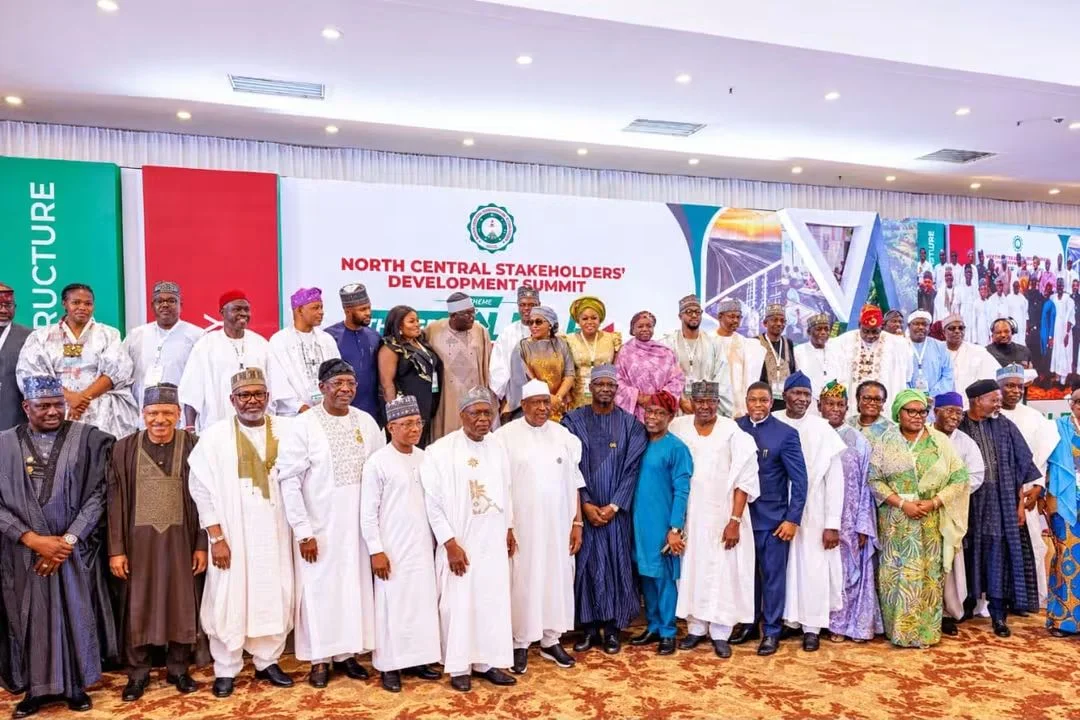
This is contained in a communique issued at the end of the NCDC Road Map and Stakeholders’ Development Summit held at the Abuja Continental Hotel, Abuja, from Sept. 14 to Sept. 15.

The communique was presented by the Chairman of the Technical Sub-Committee, Prof. Muhammad Nuhu, and adopted by participants at the close of the summit.

The theme of the summit was “The Great Leap Forward: A 20-Year Economic, Infrastructural and Social Development Plan for the North Central Region”.

The communique said the summit recorded 862 physical attendees and 49 online participants, including representatives of Federal Government, governors of mandate states and FCT, National Assembly members, traditional and religious leaders, development partners, private sector, academia, civil society and media.

It said the Managing Director of NCDC, Dr Cyril Tsenyil, welcomed participants and described the summit as beginning of inclusive, evidence-led development journey.

It added that the new NCDC logo was unveiled as symbol of unity and collective transformation.
According to the communique, the keynote speaker, Sen.

Iyorwuese Hagher, urged the region to convert its historic contributions, diversity, natural resources and human capital into shared prosperity.

It said the Governor of Nasarawa State and Chairman, North Central Governors’ Forum, Abdullahi Sule, underscored the region’s agricultural and mineral potential and formally presented the draft 20-year plan.

It said the Secretary to the Government of the Federation, Sen. George Akume, who represented the President, commended the consultative process and called for high-impact and fundable interventions.

The communique noted that North Central possesses extensive agricultural land, water, minerals, energy resources and strategic location, but assets had not translated to commensurate productivity and incomes.

It observed that fragmented planning; weak inter-state connectivity, insecurity, infrastructure gaps, limited value addition and inconsistent implementation had constrained regional growth.

It said security remains productive infrastructure, adding that plan must focus on catalytic, region-wide programmes with clear baselines and measurable outcomes.

The summit resolved to develop GIS-enabled regional economic database and map comparative advantages of each state during foundation horizon.

It resolved to build state-specific agricultural and livestock value chains around mechanisation, irrigation, storage, processing and export, and to formalise artisanal mining with mineral-processing clusters.

On infrastructure, it resolved to implement integrated programme connecting six states and FCT through strategic roads, rail, inland waterways and logistics, with priority to corridors unlocking agricultural land and markets.

It gave urgent consideration to Abuja-Lokoja road, regional rail, Baro inland-port logistics and dry-port connections.

It resolved to develop practical regional energy programme and integrate security, climate resilience and maintenance into project design.

On social development, it resolved to establish disaggregated human-capital and social-inclusion data system to guide interventions for children, youth, women, persons with disabilities and rural communities.

It also resolved to implement safe and inclusive education framework, expand STEM, technical and vocational pathways linked to regional value chains, and strengthen health access.

On security, it resolved to establish coordinated regional security and peace-building framework supporting statutory security institutions through intelligence sharing, early warning and inter-state coordination.

It also resolved to integrate security planning into farms, transport corridors, schools and markets and strengthen role of traditional institutions in peace-building.

On climate and environment, the summit resolved to develop North Central Climate and Disaster Resilience Programme with geo-referenced mapping of flood, erosion and drought hazards.

It resolved to undertake priority flood and erosion interventions, provide Safe Homes for climate-displaced persons, and adopt safeguard-before-scale principle for mining corridors.

On digital economy, it resolved to develop inclusive regional digital infrastructure programme, establish AI and digital-skills centres, and create innovation financing mechanism.

On financing, it resolved to match financing instruments to economics of each project, establish disciplined project-preparation pipeline, and mobilise public resources, development finance, PPPs, capital markets and diaspora capital.
On institutional delivery, it resolved to give plan durable legal backing, establish Programme Management Office within NCDC and define responsibilities across stakeholders, with public performance framework and regular reviews.

The summit further resolved that security, reliable data, inclusion, climate resilience, digital enablement and private-sector participation shall be treated as cross-cutting requirements.

It said young people, women, persons with disabilities, displaced persons and rural communities shall participate meaningfully in programme design.

Participants expressed appreciation to President Bola Tinubu for establishing NCDC and to governors of mandate states, FCT Minister, National Assembly and other stakeholders for their contributions.(NAN)(NAN)

Edited by Francis Onyeukwu

Continue Reading
Click to comment

Leave a Reply

Your email address will not be published. Required fields are marked *

News

2027: I’ll scrap Office of First Lady as Nigeria’s president – Sowore

info

Published

on

By

Omoyele soworee.jpg

The African Action Congress, AAC, presidential candidate, Omoyele Sowore has vowed to scrap the office of the First Lady if he becomes president in 2027.

Sowore explained that the Nigerian constitution does not give room for the office of the First Lady.

Featuring on Channels Television’s Politics Tonight on Thursday, Sowore said being elected president wouldn’t change his marriage, but his wife would not take on an official role as First Lady.

He said: “The Nigerian Constitution does not include a position called First Lady. Becoming president won’t end my marriage, but I won’t take on the role of First Lady.”

Recommended

He said women would still have a say in his government, but argued  that keeping a job for the president’s wife was using public money for a role that isn’t officially allowed by the Constitution.

Sowore added: “Women’s voices will be heard, but I don’t think we need a First Lady who is in a position that goes against the constitution and is just spending money that should be used for moving forward and building things.

“I’m just letting you know, based on our policies, there won’t be a position for the first lady during Sowore’s presidency.”

Continue Reading

Health

WHO urges safer care for people living with noncommunicable diseases

info

Published

on

By

HRiUNIUa4AAiLxt.jpg

The World Health Organisation (WHO) has urged African countries to strengthen patient safety in the care of people living with noncommunicable diseases (NCDs).

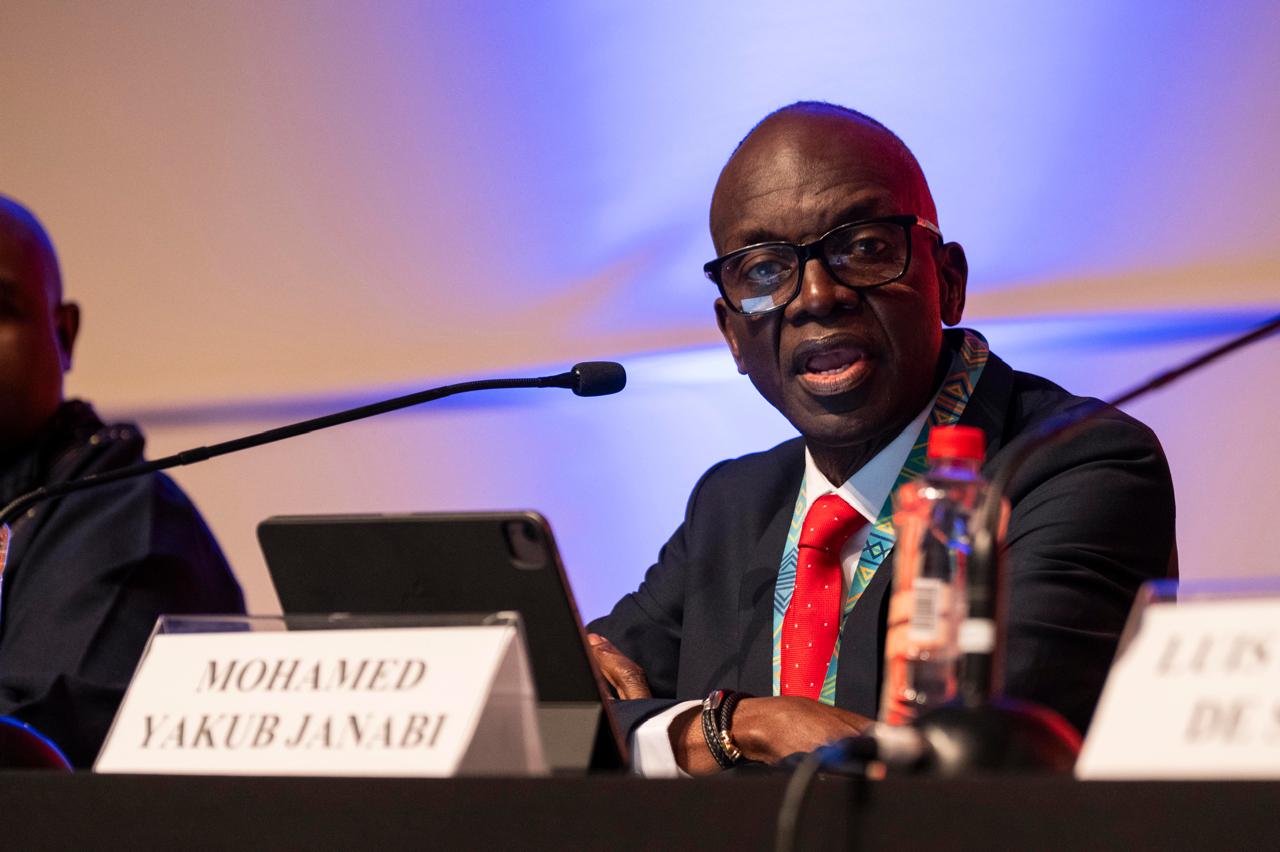
WHO Regional Director for Africa, Mohamed Janabi, made the call on Thursday in a message to mark World Patient Safety Day 2026, themed “Safe care for noncommunicable diseases”, with the slogan “Safe care for life!”

NCDs include conditions such as diabetes, cancer, heart disease and chronic respiratory diseases.

“For a person living with diabetes, cancer, heart disease or a chronic respiratory condition, health care is rarely a single encounter,” he said.

“It may involve years of consultations, tests, medicines, referrals and treatment. Each interaction should improve health, yet each can also expose a patient to avoidable harm.”

NCDs in Africa

Mr Janabi said NCDs caused at least 43 million deaths globally in 2021 and accounted for 37 per cent of all deaths in the WHO African Region in 2019.


PT WHATSAPP CHANNEL
Dangote Refinery AD

He said the proportion had increased from 24 per cent in 2000.

“Nearly two-thirds of NCD deaths in the Region are premature, compared with 41.7 per cent globally,” he said.

According to WHO, NCDs are also a major cause of long-term disability and loss of function in the region.

“Their growing burden is linked to risk factors including unhealthy diets, physical inactivity, hypertension, obesity and air pollution,” he noted.

Patients face several safety risks

Mr Janabi said patients living with NCDs could suffer harm from delayed or missed diagnoses, medication errors, adverse drug interactions, poor follow-up and inadequate communication when they move between health services.

He said the risks could occur at different stages of care, including diagnosis, treatment, rehabilitation, palliative care and self-management.

He added that stigma, discrimination and difficulties accessing essential medicines and health technologies could further increase the risks faced by patients.

“Expanding access to NCD services must therefore go hand in hand with improving their safety and quality,” Mr Janabi said.

Stronger primary healthcare

Mr Janabi further said stronger primary healthcare could improve continuity of care, enable earlier identification of health problems and help coordinate services across different levels of the health system.

READ ALSO: Ebola outbreak spreads to 61 health zones in DRC — WHO

He also called for health workers to receive practical guidance, reliable supplies and supportive workplaces where errors can be reported and used to improve care without fear of blame.

He urged African countries to integrate patient safety into NCD policies and programmes, strengthen systems for reporting and learning from harm, and invest in health worker training and the safe use of medicines and technologies.

He also called on patients and families to ask questions and raise concerns whenever aspects of their care are unclear.

“Every person should be protected from avoidable harm throughout their health journey,” Mr Janabi said.


Discover more from Premium Times Nigeria

Subscribe to get the latest posts sent to your email.

Continue Reading

Trending